
If you want to stop ice dams for good, you need to understand one simple truth: the entire surface of your roof needs to stay cold. That's it. When the roof stays at a uniform, cold temperature, snow melts evenly or not at all. You achieve this by stopping warm air from your house from getting into the attic in the first place.
This all comes down to a three-pronged attack: beefing up your attic insulation, sealing up air leaks, and making sure your attic has proper ventilation.
Understanding Why Ice Dams Form on Your Roof
Those icicles dangling from the edge of your roof might look pretty, but they're often a warning sign of a much bigger, more destructive problem. An ice dam isn't just a row of icicles; it's a solid ridge of ice that forms along the eaves, acting like a literal dam that traps melting snow behind it. And that trapped water has nowhere to go but up and under your shingles, then straight into your house.
The whole process actually starts inside your home. Heat from your living space naturally rises, and if your ceiling and attic aren't sealed up tight, that warm air floods into the attic. This heat warms the underside of your roof sheathing, causing the snow piled on top to melt, even when the outdoor temperature is well below freezing.
As the snow melts, the water runs down the slope of your roof. But when it gets to the eaves and gutters—the part of the roof that hangs out past the walls of your house—it hits a cold zone. Here, it refreezes instantly, creating a small lip of ice. This cycle of melting up high and refreezing down low continues, and that little lip grows into a massive dam, trapping an ever-deepening pool of water.
The Science Behind the Melt-Freeze Cycle
In the winter, you can think of your roof as having two different temperature zones. The main part of the roof, sitting right above your (now warm) attic, is above freezing. But the very edge of the roof, the eaves, is exposed to the frigid outdoor air and stays frozen solid.
This temperature imbalance is what fuels the entire ice dam problem. It’s a vicious cycle:
- Heat Escapes: Warm air finds its way from your living space into the attic.
- Snow Melts: The roof deck heats up from below, melting the snow from the bottom up.
- Water Refreezes: The runoff hits the cold edge of the roof and freezes solid.
- Dam Grows: The ice ridge gets bigger and bigger, trapping more and more water behind it.
This is exactly why just knocking off the icicles is a waste of time. Unless you cut off the source of the problem—the heat escaping from your house—the ice dam will just come right back after the next snowstorm.
The Real Dangers Hiding Behind the Ice
An ice dam is far more than a winter eyesore. The damage it can cause is serious, expensive, and often happens out of sight until it's a major disaster. For starters, the sheer weight of all that ice can tear gutters right off your house, pull shingles loose, and damage the soffits.
But the real threat is the standing water trapped behind the dam. Your roof is designed to shed water that's flowing down, not hold back a small pond. That water will find a way under your shingles and through the nail penetrations.
Key Takeaway: Ice dams are a symptom, not the disease. The root cause is almost always heat loss from your home combined with poor attic ventilation. If you ignore them, you're inviting water into your home's structure, which leads to a world of expensive problems.
Once that water gets in, it soaks the insulation in your attic, making it completely useless and creating a perfect environment for mold and mildew. From there, it can drip down into your exterior walls, wrecking drywall, causing paint to bubble and peel, and eventually rotting the very framing of your home. What starts as a little ice on your roof can quickly threaten your home's structural integrity and your family's health.
Your Attic: The Real Front Line in Preventing Ice Dams
If you're dealing with ice dams, the problem isn't your gutters or the icicles themselves. The real battle is happening right over your head, in the attic. This space is the number one source of ice dam formation, and treating it right is the only way to win the war for good.
The whole mess starts with a simple problem: warm air leaking from your house into the attic. This is what we call convective heat loss, and it’s the villain in this story. That escaping heat warms up the underside of your roof, melting the snow from the bottom up. Once that water hits the cold eaves, it refreezes, and the destructive cycle of an ice dam begins.
This diagram breaks down exactly how that warm attic creates a massive problem on your roof.
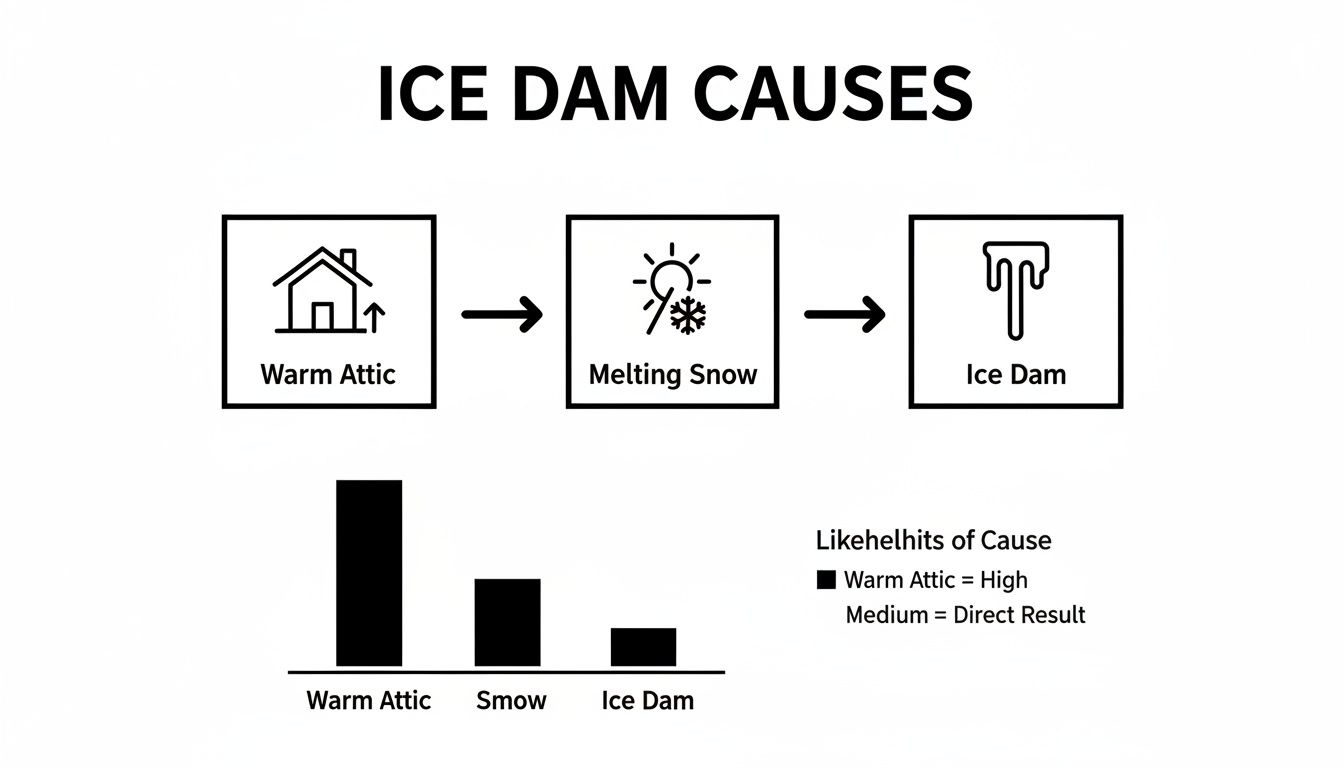
As you can see, stopping that heat from ever reaching the roof is the key.
First, Hunt Down and Seal Every Air Leak
Before you even think about adding insulation, you have to plug the leaks. Dumping a mountain of new insulation over existing air gaps is like wearing a winter coat with the zipper wide open—it just doesn't work. These gaps, or attic bypasses, act like little chimneys, shooting warm, moist air straight up to your roof sheathing.
Spending a weekend air sealing is probably one of the highest-impact DIY projects you can do for your home. Grab a good flashlight, some knee pads, and look for these common culprits on your attic floor:
- Plumbing vents and pipes: Check where they punch through the attic floor.
- Electrical wiring: Look for gaps around holes drilled for wires.
- Recessed "can" lights: These are notoriously leaky unless they're specifically rated as ICAT (Insulation Contact Air Tight).
- The attic hatch or pull-down stairs: The frame is almost always a major source of air leakage.
Use expanding foam sealant for the bigger gaps (up to about three inches) and a quality caulk for smaller cracks. Don't forget the attic hatch—apply weatherstripping around the perimeter to get a tight seal when it's closed. This isn't the glamorous part of the job, but it’s the absolute foundation for a permanent fix.
Understanding Attic Insulation and R-Values
With the leaks sealed tight, it's time for the insulation—the big, fluffy blanket that keeps your heat where it belongs. The effectiveness of insulation is measured by its R-value. The higher the R-value, the better it is at stopping heat transfer.
Here in Utah, a little bit of insulation just won't cut it. Your goal is to create such a thick thermal barrier that the temperature in your attic is almost identical to the temperature outside. When your attic is that cold, there’s simply no heat left to melt the snow on your roof.
Energy Star estimates that proper insulation can cut ice dam risks by up to 70% in snowy regions. For homeowners in Salt Lake City, where a big winter storm can drop heavy snow, energy auditors frequently recommend boosting attic insulation to an R-value of 60 to truly protect a home. You can learn more about how insulation is a primary defense against ice dams.
An R-value that high ensures your expensive heated air stays in your living room, not on your roof.
Choosing the Right Insulation for Your Attic
You’ve got a couple of solid choices for getting your attic's R-value up to where it needs to be.
- Blown-in Fiberglass or Cellulose: For most homes, this is the way to go. A professional crew uses a large hose to blow loose-fill insulation over everything, creating a seamless thermal blanket that covers every nook and cranny. It's the most effective way to reach that R-60 target.
- Fiberglass Batts (Rolls): These are the classic pink or yellow rolls you see at the home improvement store. They can work for DIY projects in wide-open, simple attics, but it's tough to get them fitted perfectly around wiring and pipes. Any small gap you leave seriously compromises their effectiveness.
Whichever material you go with, remember that depth is key. To hit that recommended R-60 level in a Utah attic, you're looking at a depth of roughly 18 to 22 inches of blown-in insulation. A well-sealed and deeply insulated attic doesn't just stop ice dams; it also slashes your heating bills all winter long, making it an investment that truly pays for itself.
Mastering Attic Ventilation for a Cold Roof
Think of your attic insulation as a warm winter coat. It’s fantastic at keeping your living space cozy, but it can’t stop ice dams on its own. It needs a partner: proper attic ventilation.
I know, it sounds a bit strange. Why on earth would you want cold winter air moving through your attic? The reason is simple. A steady, gentle flow of outside air is the secret to keeping your entire roof sheathing uniformly cold. When the underside of your roof is the same temperature as the outside, snow on top has no reason to melt from below.
This turns your roof into a consistently cold surface where snow either stays put or melts evenly when the sun comes out.
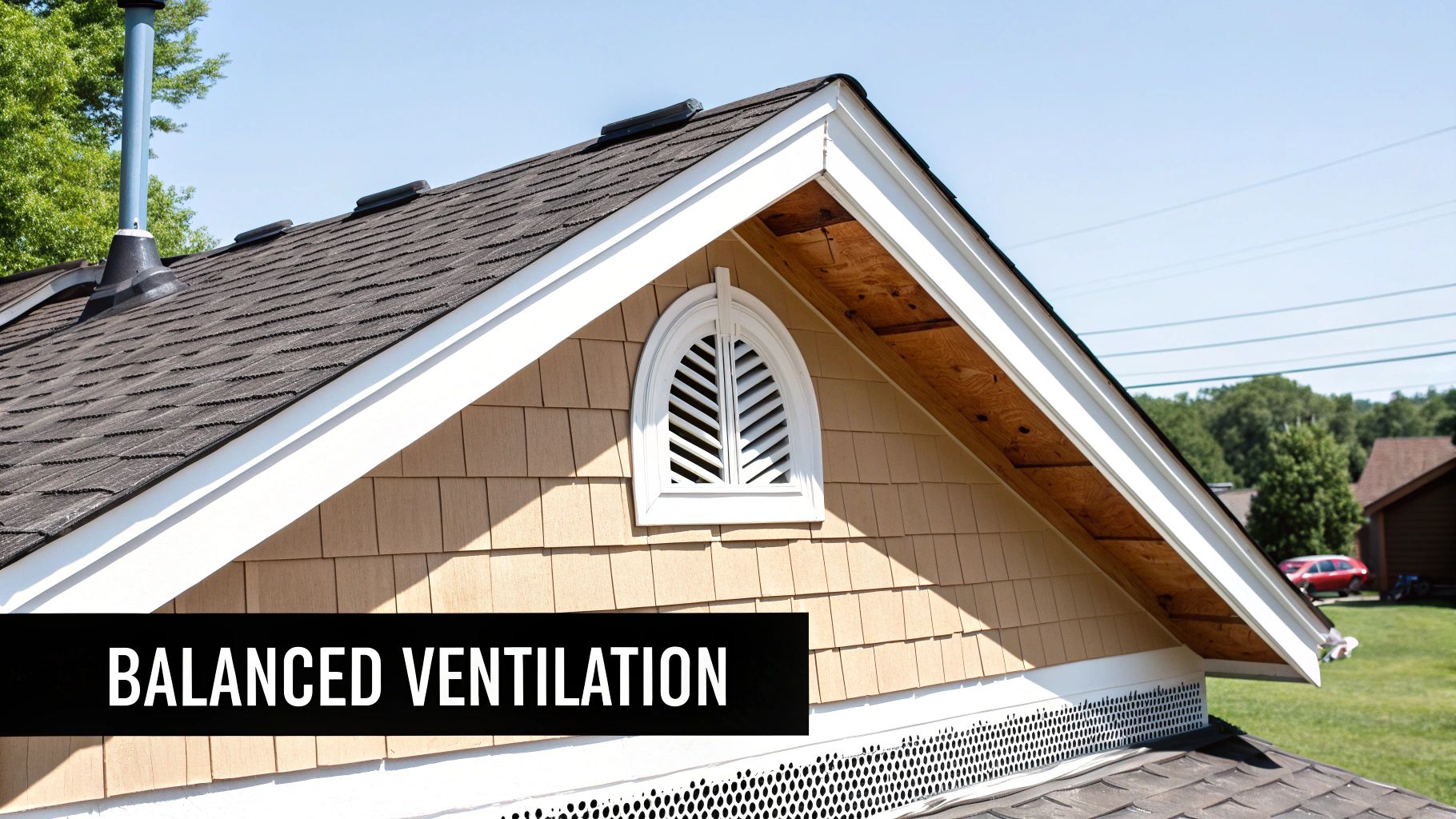
In the business, we call this a “cold roof system,” and it’s the gold standard for preventing ice dams for good. It’s about making your roof an active system where insulation and airflow work together, not just a passive surface waiting for problems to happen.
The Dynamics of a Balanced Ventilation System
Effective attic ventilation isn't about randomly adding a few vents. It’s all about creating a balanced system of intake and exhaust, much like your own lungs need to both inhale and exhale.
Here’s how it works for your attic:
- Intake Vents: These are positioned low on the roof, usually in the soffits (that’s the underside of your roof’s overhang). Their job is to pull in cold, dry air from outside.
- Exhaust Vents: These go high up on the roof, typically as a long ridge vent along the peak or as separate box vents. They let the slightly warmer, moist attic air escape.
This setup creates a natural air current. Cold air flows in through the soffits, washes along the underside of the roof deck, picks up any stray heat that made it past the insulation, and carries it out through the ridge vent. It’s a simple, elegant process that keeps your roof deck frosty all winter long.
Common Problems and Simple Fixes
I’ve seen plenty of homes with vents that just aren’t doing their job. One of the most common mistakes happens right after someone adds more insulation to their attic. It’s all too easy to shove that fluffy insulation right into the eaves, completely blocking the soffit vents.
Without that crucial intake air, the whole system grinds to a halt. The ridge vent can't push air out if nothing is coming in, and your attic quickly turns into a stagnant, warm air pocket that melts snow from below.
The fix for this is surprisingly simple and cheap: insulation baffles. You might also hear them called rafter vents. They are just inexpensive plastic or foam channels that you staple to the underside of the roof sheathing, right over the soffit vents. They create a clear, protected airway, so no matter how much insulation you add, the air can always get in.
A quick peek in your attic to check for blocked soffits is one of the most important things you can do to defend your home against ice dams.
Why Ventilation Is a Non-Negotiable Partner to Insulation
Air sealing and insulation are your front line, but ventilation is the crucial follow-through that makes the whole strategy work. Ice dams need three things to form: snow on the roof, heat escaping from your house, and freezing outside temperatures. Ventilation tackles that escaping heat head-on.
You can learn more about the critical role of ventilation in ice dam prevention from building science experts. By combining these strategies, you’re not just putting a bandage on a symptom—you’re fixing the root cause. You're creating a roof where ice dams simply can't get a foothold, giving you peace of mind every time the snow starts to fall.
Immediate Actions You Can Take This Winter
Fixing your insulation and attic ventilation is the long-term play for stopping ice dams for good, but what do you do when there's a foot of snow on your roof right now? Sometimes you need to take action immediately to get through the season.
Think of these as your winter first-aid kit. They're reactive measures designed to manage the snow and ice that's already there, giving you breathing room while you plan for those bigger, permanent fixes.
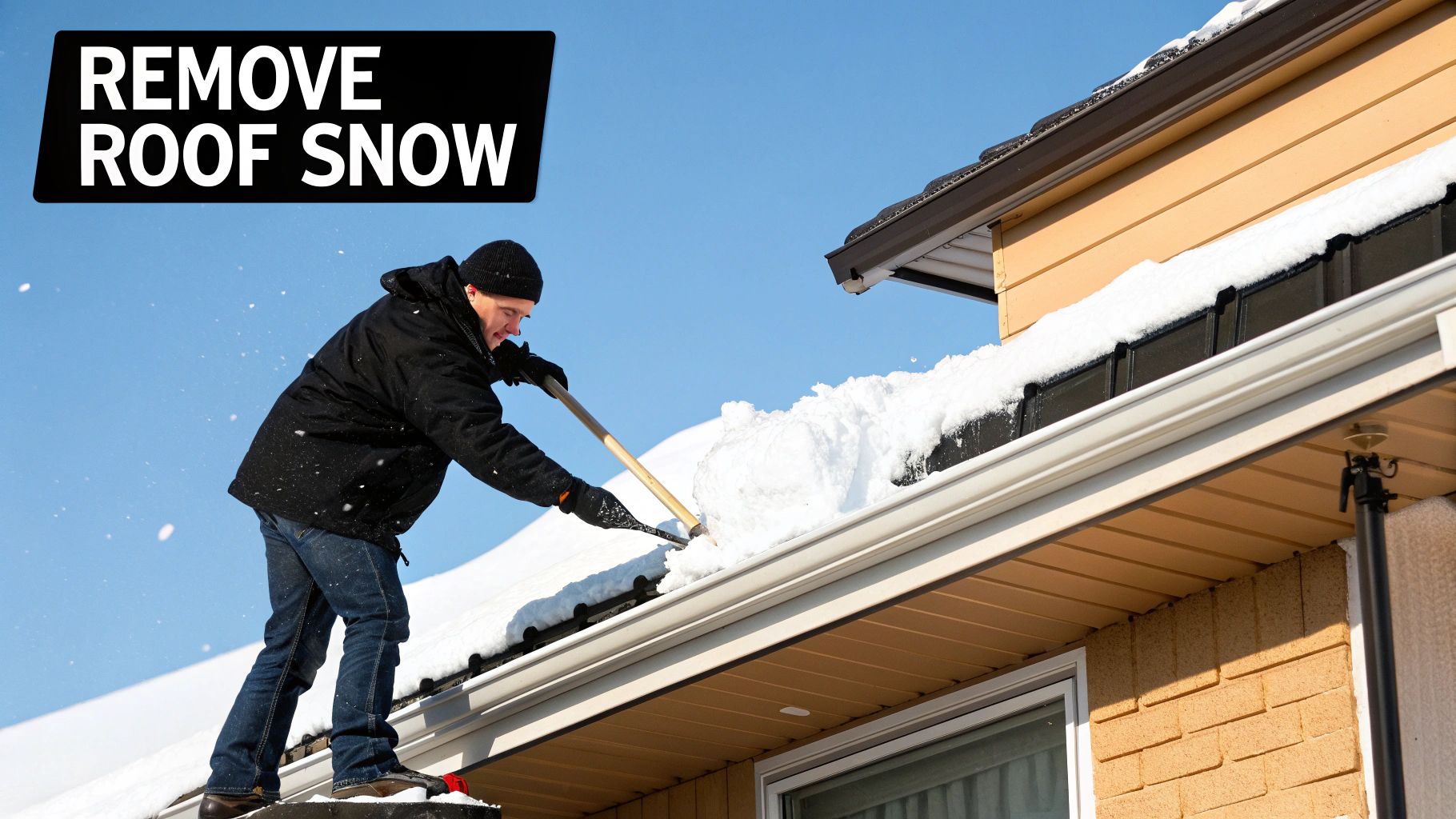
These tactics won't solve the underlying heat loss problem, but they are absolutely essential for damage control in the short term. They're all about managing the snow and meltwater before they team up to form a destructive ice ridge along your eaves.
Safely Rake Snow from Your Roof Edge
The single most effective thing you can do right now is remove the snow that fuels the ice dam. You don't need to climb a ladder; a long-handled roof rake lets you do this safely from the ground. By pulling the snow off the lower section of your roof, you take away the material that would otherwise melt, run down, and refreeze.
You don't have to clear the whole roof, which is good news. Just be strategic.
- Target the "Cold Zone": Your goal is to clear the first three to four feet of snow from the edge of your roof. This is where the water typically refreezes.
- Timing is Everything: Get out there right after a heavy snowfall, before the sun comes out and starts the melting process.
- Use the Right Technique: Always pull the snow straight down toward you, never scrape sideways. A good roof rake has small wheels or rollers on the end to keep it just above the shingles, preventing damage. Please, never use a metal shovel or try this from a ladder.
Ensure Your Gutters Are Clear
Your gutters are supposed to be an exit ramp for water, not a holding pen. If they're choked with fall leaves and twigs, they become the perfect foundation for an ice dam. Water pools, freezes solid, and the blockage just grows, forcing any new meltwater to back up under your shingles.
We see it all the time in northern climates—a big storm drops 6 inches or more of snow, and clogged gutters turn a minor issue into a major leak. Keeping them clear is a simple but powerful preventative step. If you want to dive deeper, you can learn more about just how clogged gutters contribute to ice dams and the damage they cause.
Before that first deep freeze hits, double-check that every gutter and downspout is completely clear. You want to give any meltwater a clean getaway.
A Quick Word on Heat Cables & De-Icing Pucks
You'll see heat cables and chemical de-icing pucks sold as an easy fix for ice dams, but I always tell homeowners to see them as temporary, last-resort tools. They don't address the root cause, which is heat escaping from your attic.Heat cables, if installed in a proper zigzag pattern, can melt channels for water to escape through an existing dam. But they run on electricity and can get expensive. De-icing pucks are a spot treatment at best. Use them if you're in a pinch, but don't count on them as your primary prevention strategy.
Knowing When to Call a Professional
There's a real satisfaction in tackling home projects yourself. Grabbing a can of spray foam to seal a few gaps or using a roof rake to pull down some snow are totally manageable jobs for most of us. But when it comes to ice dams, there’s a definite line between a smart DIY fix and a problem that’s way over your head.
Knowing where that line is can save you from a world of hurt. Pushing your luck can lead to botched repairs, a roof full of damaged shingles, or worse, a serious injury. Calling in a pro isn't giving up; it's making a smart call to protect your biggest investment.
Clear Signs It’s Time for Expert Help
So, when do you throw in the towel and pick up the phone? Certain red flags are impossible to ignore. If you spot any of these, it's time to bring in a contractor who deals with this stuff day in and day out. Waiting too long can turn a preventable issue into a full-blown disaster.
These are the tell-tale signs you need to call for backup:
- The Ice Dams Just Keep Coming Back: You’ve sealed the obvious leaks. You’ve raked the snow. But like clockwork, those icy monsters reappear every winter. This isn't bad luck; it's a sign of a deeper, systemic issue in your attic that you simply can't see from the ground.
- You See Water Stains Inside: The second you spot a brownish ring on your ceiling or a watermark on a wall, the game has changed. Water has officially breached your home's defenses. A pro needs to trace that leak back to its source, check for hidden mold, and fix the underlying cause.
- Your Roof Is Complicated: Homes with lots of peaks, valleys, dormers, and intersecting rooflines are an absolute nightmare to ventilate properly. It's a complex science, and a professional can do the math to figure out exactly what your unique roof needs to breathe correctly.
- The Attic Is a No-Go Zone: If getting into your attic feels like an obstacle course, or if you find old vermiculite insulation (which could contain asbestos) or see signs of mold, just stop. Professionals have the proper PPE and training to work in these hazardous spaces safely.
The Value of a Professional Assessment
When you hire a solid contractor from a company like Superior Home Improvement, you're not just paying for a couple of guys to show up. You’re paying for their experience, diagnostic process, and expensive tools that no homeowner has lying around in the garage.
A real professional assessment is more than just a quick peek in the attic. They use technology to find the exact sources of heat loss causing your ice dams.
One of the most powerful tools in their arsenal is an infrared thermal camera. This device literally makes heat visible, showing them hidden air leaks around light fixtures, cold spots from settled insulation, and heat bleeding through your home’s framing. It takes all the guesswork out of the equation.
They can also run a blower door test, which depressurizes your house to measure exactly how leaky it is. With that data, they can map out a strategy that targets the biggest offenders first. They'll also calculate the precise Net Free Vent Area (NFVA) your attic needs and design a balanced system to achieve it.
Peace of Mind and Long-Term Protection
At the end of the day, hiring a pro is about getting the job done right, with the right materials, and up to code. It's a level of confidence you just can't get from a weekend DIY project.
Think about what a good contractor brings to the table:
- Correct Material Selection: They know exactly which type of insulation works best for your attic and climate, and whether you need a vapor barrier.
- Guaranteed Workmanship: Reputable companies stand by their work with warranties. If something isn't right, they come back and fix it.
- Safety and Insurance: Let's be honest, working on high, slippery roofs and in cramped attics is dangerous. Professionals are insured, which protects you from any liability if an accident happens on your property.
Getting rid of a chronic ice dam problem is a true investment. When you're facing stubborn issues or have water coming into your home, calling a pro is the only way to ensure that investment pays off with decades of protection and peace of mind.
Your Questions About Ice Dams Answered
Even with a solid game plan, it's normal to have a few questions rattling around. The world of roofing, insulation, and ventilation can get pretty technical, fast. Let’s tackle some of the most common things homeowners ask when they're staring down this frustrating winter problem.
Getting these last few details straight will help you move forward with confidence, knowing you're making the right call for your home.
Are Heat Cables a Good Permanent Solution for Ice Dams?
In a word? No. Think of heat cables as a bandage, not a cure. They're great at melting channels through an existing ice dam so water can escape, but they do absolutely nothing about the real problem: the heat pouring out of your house and melting the snow to begin with.
They are a purely reactive tool. You have to remember to switch them on before the ice forms, and they can add a surprising amount to your electricity bill if you run them all winter. A true, permanent fix means getting into your attic to improve insulation and ventilation, which keeps the entire roof surface cold.
Use heat cables as a temporary stop-gap for a stubborn problem area while you budget for the real fix. The long-term, and much more cost-effective, solution is always found in your attic through proper air sealing and deep insulation.
Can I Just Throw Salt or Chemicals on an Ice Dam?
This is one of the most common—and most damaging—mistakes we see homeowners make. Tossing rock salt or chemical de-icers onto your roof is a truly terrible idea. These products, particularly sodium chloride (rock salt), are incredibly corrosive.
Here’s the kind of damage you can expect:
- Destroyed Shingles: The chemicals will eat away at asphalt and granules, drastically shortening the lifespan of your roof.
- Rusted-Out Gutters: Metal gutters, hangers, and downspouts will corrode and fail much faster.
- Dead Landscaping: The salty runoff poisons plants, shrubs, and the lawn directly below.
Some products might be marketed for this, but they offer minimal help for a serious ice dam and can easily cause thousands of dollars in new damage. If an ice dam is actively leaking into your home, the only safe way to get it off is to hire a professional who uses low-pressure steam.
How Do I Know If My Attic Is Properly Insulated and Ventilated?
You don't need to be a professional contractor to spot the tell-tale signs of an attic that's not doing its job. A few simple clues can tell you if too much heat is escaping through your ceiling.
The most obvious giveaway in winter is seeing frost on the nails or roof sheathing inside your attic. Pop your head up there on a frigid day. If you see white frost coating the tips of the roofing nails, that’s a smoking gun. It’s proof that warm, moist air from your living space is hitting the cold surface and condensing—the exact process you need to stop.
Another dead giveaway is patchy snowmelt on your roof. Take a look after a fresh snowfall. If you see spots where the snow has vanished while other areas are still covered, you're looking at a thermal map of where heat is bleeding out.
Of course, the only way to know for sure is with a professional home energy assessment. An expert can measure the R-value of your existing insulation and properly inspect your ventilation system for blockages or design flaws. This gives you a clear, data-driven plan for making the right upgrades.
If you're seeing warning signs like recurring ice dams or uneven snowmelt, it’s time to stop guessing and get a professional opinion. The experts at Superior Home Improvement offer free, detailed consultations to help Utah homeowners find the root cause of their winter roofing issues. Schedule your free estimate today and get a permanent solution for a safe, energy-efficient home.