
Let's be honest—when we think about air pollution, we usually picture the smog hanging over the Salt Lake Valley during an inversion. What most of us don't realize is that the air inside our homes can be far more polluted than the air outside.
Our homes are designed to trap air, which is great for energy efficiency but not so great when it comes to contaminants. Once pollutants find their way in, they tend to stick around.
Why Indoor Air Quality Is a Major Concern for Utah Homes
Modern homes are built to be tight. That tight seal is fantastic for keeping your heating and cooling bills down, but it creates a problem: pollutants get in and can't get out. This creates a sort of feedback loop where airborne contaminants from everyday life just build up over time.
Think about all the things in your house that release particles and gases into the air:
- Volatile Organic Compounds (VOCs): These are gases off-gassed from things you probably don't even think about, like new furniture, fresh paint, carpet, and even cleaning supplies. They're often behind those nagging headaches and can cause more serious issues down the road.
- Particulate Matter (PM2.5): These are tiny, invisible particles that come from cooking, burning candles, or your fireplace. They also sneak in from outside, hitching a ride on wildfire smoke and vehicle exhaust.
- Biological Pollutants: This is the stuff that makes you sneeze—dust mites, pet dander, mold, and bacteria. They love to hide in dusty corners and damp basements, making allergies and asthma flare up.
Here's a closer look at the common culprits we find in Utah homes.
Common Indoor Pollutants in Utah Homes and Their Sources
This table breaks down the most prevalent pollutants, where they come from, and how they can affect your family’s health. Recognizing these sources is the first real step toward clearing the air.
| Pollutant | Common Sources | Potential Health Effects |
|---|---|---|
| Particulate Matter (PM2.5) | Wildfire smoke, vehicle exhaust, cooking, burning candles, fireplaces | Respiratory irritation, asthma attacks, cardiovascular problems |
| Volatile Organic Compounds (VOCs) | Paints, new carpets, furniture, cleaning products, air fresheners | Headaches, dizziness, eye/nose/throat irritation, long-term organ damage |
| Carbon Monoxide (CO) | Malfunctioning furnaces, gas stoves, water heaters, attached garages | Fatigue, confusion, nausea, and can be fatal at high concentrations |
| Radon | Naturally occurring radioactive gas from soil that seeps through foundations | The second leading cause of lung cancer in the United States |
| Mold & Mildew | Damp basements, leaky pipes, bathrooms with poor ventilation | Allergic reactions, asthma triggers, respiratory infections |
| Dust Mites & Pet Dander | Bedding, carpets, upholstered furniture, pets | Allergies, asthma symptoms, skin irritation |
Knowing what's in your air demystifies the problem. Instead of a vague sense of "unhealthy air," you can start targeting the specific sources in your own home.
The Hidden Impact on Your Family's Health
There's a direct line between these invisible threats and your family's well-being. Do you have a child whose asthma always seems worse at home? Are seasonal allergies a year-round battle for someone in your family? Poor indoor air quality is very often the trigger. For young kids and older adults, the health risks are even more pronounced.
The scale of the problem is genuinely startling. Globally, household air pollution was linked to an estimated 3.2 million deaths in 2020, including 237,000 children under five. Since most of us spend 60–90% of our lives indoors, the air in our homes isn't a small factor—it's everything. You can dig deeper into these global IAQ statistics and their implications to see the bigger picture.
For us here in Utah, this isn't just a statistic; it's a local reality. Our seasonal inversions trap pollutants right on top of us. If your home isn't sealed properly, that contaminated outdoor air is seeping inside, day in and day out.
From Afterthought to Priority
It’s time to stop thinking of air quality as an afterthought. You wouldn't ignore a leaky pipe or a faulty wire, right? Managing your home's air is just as fundamental to maintaining a safe, healthy home.
The first step is simply understanding what you're up against. Once you recognize the unique challenges our Utah climate throws at us, you can start taking smart, targeted steps to clear the air and protect your family.
Practical Steps for Cleaner Air Inside Your Home
It’s one thing to know what’s polluting your home's air, but it’s another to actually do something about it. The good news is you don’t need to do a massive overhaul overnight. Improving your indoor air quality is best tackled as a series of strategic, prioritized actions.
Think of it as a practical game plan. You can start with simple habits and build toward more permanent solutions. By focusing on the areas that make the biggest difference first—like source control, ventilation, and filtration—you can take control of your indoor environment and make a real impact on the air your family breathes.
Start by Controlling Pollutant Sources at the Door
Hands down, the most effective strategy for cleaner air is to stop pollutants before they even get a chance to circulate. It’s always easier to prevent contaminants from getting inside than to try and remove them later. This really boils down to being more mindful of what you bring into your home and how you use certain products.
Here are a few common culprits and some easy swaps:
- Cleaning Products: Many off-the-shelf cleaners are loaded with harsh VOCs. Look for unscented, VOC-free options, or go old-school with simple solutions like vinegar and water. They work surprisingly well.
- Air Fresheners: Those plug-in fresheners and aerosol sprays? They mostly just mask odors with a cocktail of chemicals. For a healthier home, try simmering some spices on the stove or using an essential oil diffuser instead.
- Cooking Fumes: Make it a non-negotiable habit to use your range hood exhaust fan every time you cook, especially if you have a gas stove. This vents nasty particulate matter and combustion gases straight outside where they belong.
This simple flowchart shows just how easily outdoor pollution makes its way into our homes and, eventually, our bodies.
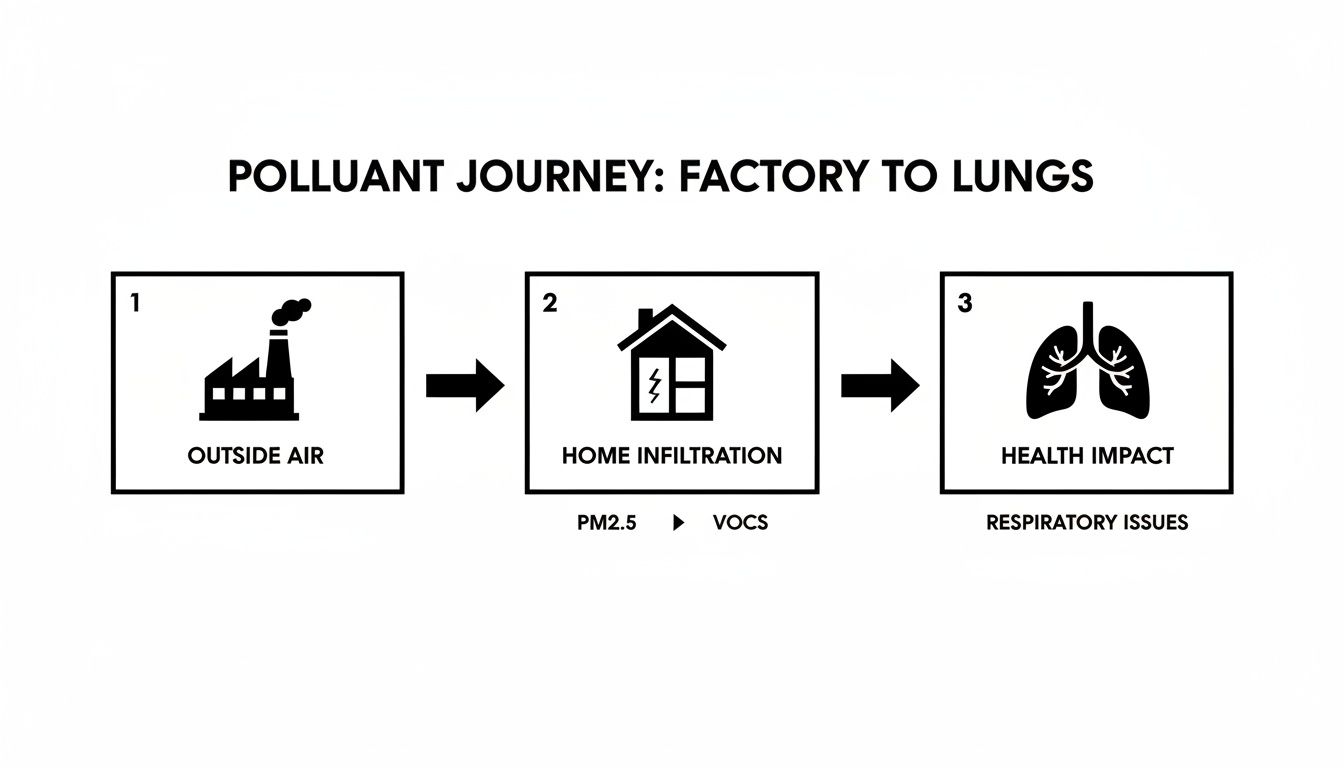
As you can see, your home's exterior—its windows, siding, and seals—is the last line of defense between you and the pollution outside.
Ventilate Your Home, But Do It Strategically
Ventilation is just a fancy word for swapping stale, polluted indoor air for fresh outdoor air. But here in Salt Lake City, that requires a bit of strategy. You can't just throw open the windows anytime, especially during a winter inversion or when wildfire smoke is blanketing the valley.
Your exhaust fans and windows are your two best tools here. Always run the bathroom fan during and after a shower to pull out moisture that can lead to mold. The same goes for the kitchen—running that exhaust fan while cooking is critical.
When it comes to opening windows, timing is everything. On a clear day, cracking them open for just 15-20 minutes can do wonders to flush out pollutants that have built up inside. During an inversion, keep an eye on the local air quality index. Often, the air is a bit cleaner in the afternoon after the sun has had a chance to work on the smog.
Upgrade Your Air Filtration System
Your HVAC system can be an absolute workhorse for cleaning your air, but only if it has a decent filter. Those cheap, flimsy fiberglass filters that many homes have are really just there to protect the furnace equipment, not your lungs. They let all the fine, health-damaging particles sail right on through.
A filter upgrade is one of the easiest and most cost-effective changes you can make. The key is to look at the MERV (Minimum Efficiency Reporting Value) rating.
- MERV 1-4: These are the basic, bare-minimum filters. They’ll catch large dust bunnies but not much else.
- MERV 8-10: This is a great sweet spot for most homes. They do a solid job of capturing dust mites, pet dander, and mold spores.
- MERV 11-13: If you have family members with allergies or own pets, this is the range for you. These filters trap much smaller particles like bacteria and some virus-carrying droplets.
A Quick Pro Tip: A higher MERV rating means the filter material is denser. While that’s great for air quality, it can restrict airflow and put a strain on older HVAC systems. For most modern residential furnaces, a MERV 11 filter is a safe and highly effective upgrade. Just be sure to change it every 60-90 days to keep things running smoothly.
The payoff for cleaner air goes far beyond just physical health. A cleaner indoor environment is directly tied to better brainpower. In fact, research shows that improved air quality can boost strategic decision-making performance by an incredible up to 60%. Discover more insights about the human impact of quality indoor air and see why it’s such a worthy investment.
Get a Handle on Your Home’s Humidity
Humidity plays a surprisingly big role in your home's air quality. Here in Utah's dry climate, we’re usually focused on adding moisture back into the air, but it’s a delicate balancing act. Too much humidity and you’re basically rolling out the welcome mat for mold and dust mites.
The sweet spot for indoor humidity is between 30% and 50%. You can easily track this with a cheap digital hygrometer from any hardware store. If you start seeing condensation on your windows or notice a musty smell, your levels are likely too high. Firing up those bathroom and kitchen exhaust fans is your best first move to get that excess moisture out.
How Your Home's Structure Impacts the Air You Breathe
We often focus on things like ventilation and air purifiers, and while they're important, they're really just treating the symptoms of poor indoor air. If you want to get to the root of the problem, you have to look at your home's fundamental structure—what we in the industry call the building envelope.
Think of your home's envelope as its protective skin. It’s the combination of your windows, siding, and roof that’s supposed to be the primary barrier between your family and the outside world. When that barrier gets weak, it’s like leaving the welcome mat out for outdoor pollutants.
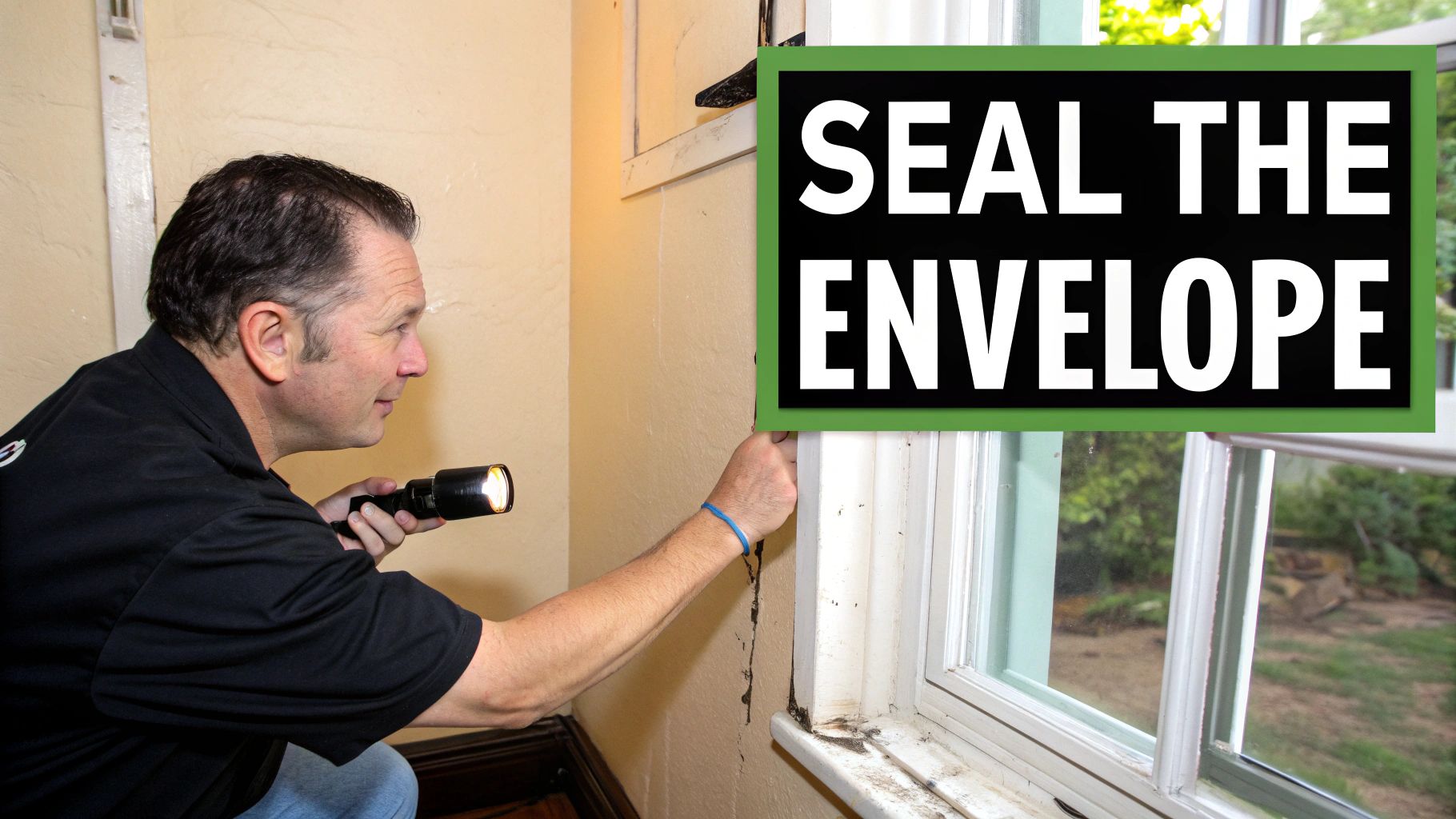
This is a huge issue in many older homes around Salt Lake City. Over the years, materials settle, caulking dries and cracks, and the seals around windows and doors just give up. The result is a network of tiny, often invisible, cracks and gaps.
The Problem With a Leaky Home Envelope
When a classic Utah winter inversion hits, the air outside gets thick with particulate matter (PM2.5) from traffic and industry. A leaky home envelope literally sucks that polluted air inside through a process called infiltration. It’s not just an open window letting in smog; it's the combined effect of hundreds of tiny gaps pulling that gunk into your living space.
These leaks are more than an air quality nightmare—they're also massive energy wasters. The same gaps that let in dust and pollen also let your expensive heated air pour out in the winter and your precious cool air escape in the summer. It's no coincidence that high energy bills often go hand-in-hand with poor IAQ.
Your home’s structure doesn’t just keep the weather out; it’s supposed to keep pollutants out, too. If you have drafty windows or aging siding, you’re fighting a constant battle against outdoor contaminants that you simply can't win with an air purifier alone.
Fortifying Your Home's Defenses
This is why smart home improvements are about so much more than curb appeal or energy savings—they're a direct investment in your family’s health. By reinforcing your home's envelope, you finally gain real control over your indoor environment.
From my experience, the upgrades that make the biggest difference in improving indoor air quality really boil down to two key areas:
- Air Sealing: This is the meticulous work of hunting down and sealing all the small cracks and gaps in your home’s exterior. We're talking about the spaces around windows, doors, and where different building materials meet.
- Component Upgrades: This means replacing old, failing parts of the envelope—like single-pane windows or worn-out siding—with modern, high-performance materials designed for today's world.
To help you decide where to focus your efforts, I've put together a quick comparison of the most common strategies.
IAQ Improvement Strategy Cost and Impact Comparison
This table breaks down different upgrades, giving you a clearer picture of where your investment will have the most impact on your Utah home's air quality.
| Strategy | Estimated Cost Range | Primary IAQ Benefit | Typical Maintenance |
|---|---|---|---|
| DIY Air Sealing | $100 – $500 | Reduces drafts and entry of large particles like dust and pollen. | Re-caulking every 3-5 years. |
| Professional Air Sealing | $1,000 – $3,000+ | Comprehensive sealing of the entire building envelope, significantly reducing infiltration of PM2.5. | Minimal; inspection every 5-10 years. |
| Window Replacement | $800 – $2,500+ per window | Creates a tight seal against pollutants, reduces condensation and mold risk, and blocks UV rays. | Regular cleaning and hardware checks. |
| Insulated Siding | $8,000 – $25,000+ | Adds a continuous layer of insulation, reducing air leaks and preventing moisture intrusion that leads to mold. | Occasional washing; inspections for damage. |
As you can see, each approach offers a different level of investment and return, but they all contribute to a healthier home.
Why High-Performance Windows Are a Game-Changer
Of all the structural improvements you can make, I've found that upgrading to modern, energy-efficient windows provides one of the biggest and most immediate boosts to indoor air quality. Old, single-pane, or even early-generation double-pane windows are almost always the weakest link in a home's envelope.
New triple-pane windows, like the ones we install at Superior Home Improvement, are engineered to do far more than just insulate. They feature multiple seals and advanced locking mechanisms that create an incredibly tight barrier, virtually eliminating the drafts that pull in outdoor pollution.
Even better, their superior thermal performance keeps the interior glass surface warmer in the winter. This simple fact drastically reduces condensation—that "sweat" you see on old windows. Less moisture means there's nowhere for mold and mildew to get a foothold, which removes a common and dangerous source of indoor air contamination.
By shifting your mindset from quick fixes to strategic upgrades, you can turn your home's structure from a liability into your greatest asset for healthier living. Fortifying your home's envelope is the most proactive and permanent solution for ensuring the air you breathe is clean and safe, year-round.
Upgrading Your Windows and Siding for Better Health
When we talk about clearing up indoor air, most people think about filters and vents inside the house. And they're not wrong—those are important. But they're also reactive; they're designed to handle pollutants that have already made their way inside.
If you want a more permanent, proactive solution, you have to look at your home's exterior. Fortifying your house against the outside world is where real change happens. This is why strategic upgrades to your windows and siding aren't just for looks—they're a cornerstone of a truly healthy home. Think of it as investing directly in your family's health by building a better barrier.
The Technology Inside Modern Triple-Pane Windows
Old, leaky windows are practically an open door for outdoor pollutants. Those drafts you feel aren't just chilly; they're carrying dust, pollen, and the fine particulate matter (PM2.5) that hangs in the Salt Lake City air during an inversion. Modern triple-pane windows, on the other hand, are engineered to be a formidable defense.
It's not just about having an extra pane of glass. The real magic is in how the whole system works together:
- Multiple Seals: High-quality weatherstripping and interlocking meeting rails create an incredibly tight seal when the window is latched, virtually stopping air from getting through.
- Inert Gas Fills: The small gaps between the panes are filled with argon or krypton gas. These gases are much denser than air, so they dramatically slow down heat transfer, which helps keep the interior pane of glass warmer in the winter.
- Low-E Coatings: These are microscopically thin metallic coatings that reflect heat (infrared and UV rays) without making your home darker. This protects your floors and furniture and cuts down on solar heat gain in the summer.
This combination creates a much more stable indoor environment, drastically reducing the pollutants that used to sneak in through your old, inefficient windows.
Preventing Mold Growth at its Source
Here’s a benefit of high-performance windows that most people overlook: they fight mold. In the winter, when warm, moist indoor air hits a cold windowpane, condensation forms. That moisture is the perfect breeding ground for mold and mildew.
By keeping the interior glass surface warmer, triple-pane windows prevent this condensation cycle from ever starting. This is a critical step in source control, as it removes the moisture that mold needs to thrive, protecting your family from the allergens and mycotoxins that these fungi release into the air.
Instead of constantly cleaning up mold spots, you're getting ahead of the problem by taking away the conditions it needs to grow in the first place.
How Insulated Siding Complements Your Windows
Windows are a huge piece of the puzzle, but they're still just one part of your home’s protective envelope. Insulated siding works right alongside high-performance windows to wrap your house in a continuous thermal and air barrier. This accomplishes two vital things for your indoor air quality.
First, it dramatically reduces thermal bridging—that's when heat escapes through the wood studs in your walls. This leads to more consistent interior wall temperatures, which further cuts down the risk of condensation and moisture problems inside the wall cavity itself.
Second, it helps seal up the thousands of tiny gaps and cracks in your home's original sheathing. This extra layer of defense minimizes air infiltration, making sure the air you're paying to heat and cool stays inside and polluted outdoor air stays outside. When you pair this with a professionally installed roof that prevents moisture intrusion from above, you create a cohesive system that seals your home from top to bottom.
This comprehensive approach is backed by global health findings. Research consistently shows that targeted home improvements focusing on housing design and ventilation are key strategies for reducing indoor air pollution. You can learn more about how home upgrades drive global health gains on Our World in Data, a resource that underscores the value of the energy-efficient upgrades we specialize in.
Ultimately, building a healthier home from the outside in creates a safer, more comfortable, and more cost-effective place to live for years to come.
Knowing When to Call in the Professionals
While there’s a lot you can do to clear the air in your home, some problems are more than a weekend project can handle. DIY solutions are great for maintenance, but they often just mask the symptoms instead of fixing the root cause.
If you’ve upgraded your filters, run your fans, and cleaned every surface but are still facing issues, that’s a big sign. It usually means the problem isn’t just in your air—it’s with your home’s structure itself.
Red Flags That Point to a Deeper Problem
Persistent issues often trace back to hidden flaws in the building envelope, which is the shell of your house that's meant to keep the outside out. Recognizing these red flags is your cue to stop guessing and bring in someone with experience.
Here’s what to watch for:
- Lingering Musty Odors: A damp, musty smell that just won't go away, especially around windows or in the basement, is almost always a sign of hidden moisture. This is a classic indicator of mold or mildew growing where you can’t see it, likely from a slow leak or condensation.
- Constant Window Condensation: Are your windows frequently foggy, sweaty, or have water pooling on the sills when it gets cold? That’s a clear signal your windows are failing. This constant moisture not only creates a perfect breeding ground for mold but also points to a massive source of energy loss.
- Stubbornly High Energy Bills: If your heating and cooling costs are through the roof no matter how you adjust the thermostat, your home is leaking. The same gaps and cracks letting all that expensive conditioned air escape are also letting outdoor pollutants pour in.
- Allergy Symptoms That Get Worse Indoors: Does your family’s asthma, allergies, or other respiratory issues flare up inside but seem to get better when you leave the house? Your home is likely the trigger, pointing to a high concentration of allergens that aren't being filtered or removed.
These aren't just minor annoyances. They are direct evidence that your home's defenses have been breached.
When you're dealing with symptoms like these, you’re past the point of just changing an air filter. An experienced contractor can perform a detailed assessment to diagnose the invisible problems with your home's envelope, pinpointing the exact source of air infiltration and moisture intrusion.
What a Professional Assessment Actually Looks Like
Calling in a professional isn't about getting a sales pitch; it's about getting a proper diagnosis for your home.
A seasoned home performance contractor, like the team here at Superior Home Improvement, will conduct a thorough inspection. We look at the things most people don't think to check—examining windows, siding, and attic spaces for signs of air leakage, failed seals, and moisture damage that are easily missed by an untrained eye.
This whole process is investigative. A real pro knows how to connect the dots between that musty smell in your basement and a set of poorly sealed window frames, or link your high energy bills to inadequate attic ventilation. We find the root causes and give you a clear, prioritized plan for a solution that will actually last.
Ultimately, a professional consultation gives you a roadmap. Instead of throwing money at quick fixes that don't work, you get an expert opinion on where to invest for the biggest impact on your health, comfort, and energy bills. It’s the most effective path to improving indoor air quality for good.
Answering Your Top Questions About Indoor Air Quality
As you start thinking about your home's air, a lot of practical questions naturally come up. I hear these all the time from homeowners in Utah who are ready to get serious about their family's health. Let's dig into some of the most common ones.
How Do New Windows Actually Make the Air Cleaner?
It’s actually pretty straightforward. Old, drafty windows are full of tiny, invisible gaps around the frames and sashes. These gaps act like open doors for all the stuff you don't want inside: dust, pollen, and especially that gritty inversion smog we get in the Salt Lake Valley.
When you install new, high-performance windows, you're creating a much tighter, more secure seal. It literally stops those outdoor pollutants in their tracks. Plus, their superior insulation means you won't get that condensation on the glass in the winter—a major source of moisture that can lead to mold and mildew. By sealing up your home's weak points, you take back control of your indoor environment.
Can't I Just Use an Air Purifier?
Air purifiers can definitely help, but they’re only one piece of the puzzle. Think of them as playing defense—they're constantly working to clean up pollutants that are already inside your house. It's a never-ending battle, and it can add up on your energy bill.
A portable air purifier is a reactive tool that cleans the air in one room. Structural upgrades, like new windows and air sealing, are proactive—they stop pollutants from ever getting inside. The best approach is combining both for a truly clean home.
For a long-term solution, you want to play offense. Sealing your home and upgrading windows prevents the problem at its source. That way, your purifier isn't working overtime just to keep up.
What's the Connection Between High Energy Bills and Bad Air Quality?
If you're wincing at your heating and cooling bills every month, it’s a huge red flag that your home is leaky. Those same cracks and gaps letting your expensive conditioned air out are also letting outdoor pollutants in.
Your HVAC system is forced to work double-time, struggling to maintain the temperature while also trying to filter out a constant stream of incoming dust, smog, and allergens. When you boost your home's efficiency with better windows and insulated siding, you’re closing those entry points for good. The result? A home that’s cheaper to run and healthier to live in.
How Does Utah's Climate Affect My Air Quality Indoors?
Living in Utah means dealing with some very specific environmental challenges that directly impact the air inside our homes. A well-sealed home isn't just a "nice-to-have" here; it's a critical health defense.
Here’s what we're up against:
- Winter Inversions: We all know it—the infamous inversion that traps PM2.5 and other gunk in the valley. That smog seeps right through gaps in old windows and doors, making indoor air just as bad as it is outside.
- Summer Wildfire Smoke: Smoke from wildfires can blanket the entire region for days or weeks. A leaky home offers almost no protection from these hazardous fine particles.
- Dry, Dusty Air: Our arid climate means there's always a lot of dust and pollen in the air, ready to find its way inside through any crack it can.
A tightly sealed home with modern, efficient windows becomes your family's clean-air sanctuary. It gives you the power to keep these serious local threats outside, so you can all breathe easier no matter what’s going on outdoors.
Ready to create a healthier, more energy-efficient home? The expert team at Superior Home Improvement specializes in triple-pane windows, insulated siding, and professional air sealing to protect your family from Utah's unique air quality challenges. Schedule your free, no-obligation consultation today!