
Tired of watching your money fly out the window with every utility bill? Do you find yourself constantly fiddling with the thermostat, chasing away drafts? What if I told you the best solution is actually an investment that pays you back over time? Making strategic energy-efficient home upgrades isn't just about going green—it's one of the smartest financial moves a homeowner can make. It's about taking control of your expenses, boosting your home's value, and making your space infinitely more comfortable.
Why Energy Efficient Upgrades Are Your Best Investment
Fighting high energy bills can feel like an uphill battle, especially here in Salt Lake City where we deal with scorching summers and frigid, snowy winters. It's easy to assume those costs are just a fact of life.
The truth is, a huge chunk of the air you pay to heat and cool is probably escaping right through your old windows, an outdated roof, or inefficient siding. These three elements—windows, roofing, and siding—make up your "home envelope." Think of it as a protective shell meant to keep your living space cozy and separate from the extreme temperatures outside.
When that shell is compromised, your HVAC system has to run constantly just to keep up. It's like trying to fill a bucket with a hole in the bottom; you're pouring energy in, but it’s leaking out just as fast. This is the real culprit behind those shockingly high utility bills and the frustrating hot and cold spots you notice from room to room.
The Financial Case for a Stronger Home
Strengthening your home's envelope isn't just about comfort; it's a solid financial play. Modern, energy-efficient materials are engineered to create a nearly airtight seal. This drastically cuts down on the energy your home needs to stay warm in the winter and cool in the summer.
The payoff is immediate. You'll see a noticeable drop in your monthly bills, and those savings just keep adding up over the years. It's an investment that starts returning value from day one.
These upgrades are also changing the real estate game. Energy performance isn't a "nice-to-have" feature anymore; it's something buyers expect. They know an efficient home means lower monthly costs and a better living experience, and they're willing to pay for it.
Investing in energy efficiency means your home works smarter, not harder. By sealing up energy leaks, you slash your monthly expenses, make your property more attractive to future buyers, and create a healthier, more comfortable home for your family.
A New Standard in Homeownership
The move toward high-performance homes is undeniable. The data shows that homes with certified energy ratings are setting a new standard in the market, shaping everything from buyer decisions to construction practices.
In 2024 alone, over 355,000 homes received HERS ratings, and nearly a third of all new homes built in the U.S. now meet this benchmark. On average, homeowners in HERS-rated homes save about $1,100 a year on energy costs compared to those in standard-built houses. That’s a powerful testament to the real-world value of these upgrades.
You can read more about how energy-efficient homes are reshaping the market and delivering tangible financial benefits. This isn't just a fleeting trend—it's a fundamental shift in what makes a house a great home.
Understanding Your Home's Protective Envelope
Think of your home like it's wearing a technical jacket designed for Utah's wild weather swings. This "jacket" is what we in the industry call the home envelope, and its entire job is to shield you from the scorching summer sun and the biting winter cold. The most important pieces of this protective layer are your windows, roof, and siding.
When these parts of your home are old, worn out, or just weren't very good to begin with, your house has to fight to keep you comfortable. It’s like trying to stay warm in a jacket with a busted zipper and holes in the elbows—the cold air gets in, and your body has to work overtime. Getting a handle on how each part of this envelope works is the first real step toward making smart, effective energy efficient home upgrades.
The graphic below really drives home the point that improving your home's envelope isn't just about one thing; it's about the powerful combination of comfort, savings, and value.
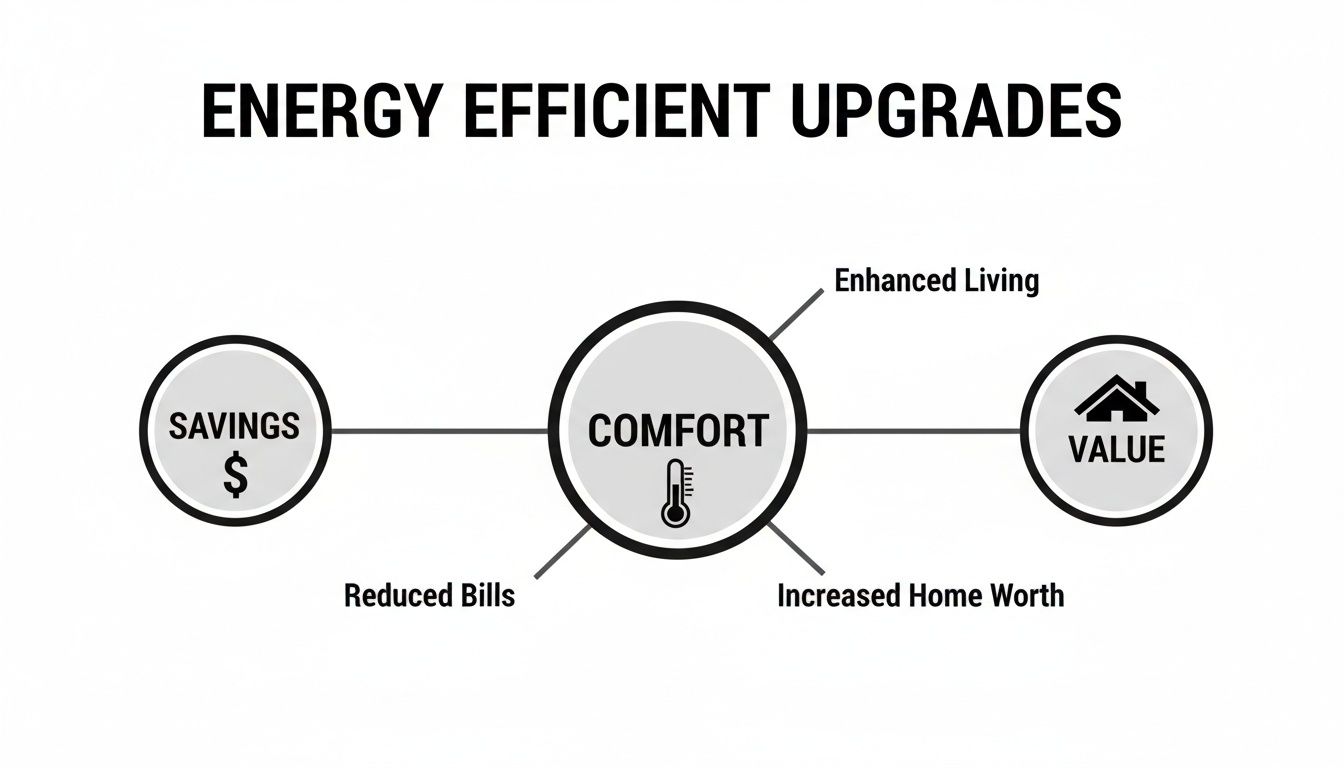
As you can see, these upgrades work together to create a better living experience, put money back in your pocket, and increase what your home is ultimately worth.
Windows: The Eyes and Weak Points of Your Home
Windows are notorious energy hogs. In many homes, they're responsible for a shocking amount of energy loss—up to 30% of your heating and cooling costs can leak right through inefficient windows. If you have old, single-pane windows, you basically have a thin sheet of glass between you and the elements, offering almost no resistance to the outside temperature. This is why rooms feel drafty in the winter and bake in the summer.
Thankfully, modern energy-efficient windows are engineered to fix this exact problem. They come packed with features that work together:
- Multiple Panes: Double or even triple-pane windows create insulating air gaps. These gaps are often filled with a harmless, dense gas like argon, which is far better at stopping heat transfer than plain old air.
- Low-E Coatings: This is the real magic. A low-emissivity (Low-E) coating is a microscopically thin, transparent layer of metal on the glass. It acts like a heat bouncer, reflecting heat back to its source—keeping your home’s warmth in during the winter and the sun’s heat out during the summer.
- Improved Frames: It's not just about the glass. Modern frames made from vinyl, fiberglass, or composite materials insulate much better than old aluminum or wood frames, cutting down on heat transfer and creating a much tighter seal.
Making the switch from old single-pane windows to new ENERGY STAR certified windows can easily save a typical Salt Lake City homeowner hundreds of dollars a year on utility bills.
Your Roof: The First Line of Defense
Your roof does a lot more than just keep the rain out. It plays a massive role in your home's overall temperature, especially during our intense Utah summers. A standard dark asphalt roof can get incredibly hot, absorbing solar radiation and reaching temperatures well over 150°F. All that heat has to go somewhere—and it radiates right down into your attic and living spaces, forcing your AC to run nonstop.
This is where cool roofing technology makes a huge difference. These advanced roofing materials have specially designed granules that reflect a huge chunk of the sun's invisible infrared radiation. By bouncing that heat away instead of soaking it up, a cool roof can stay up to 50-60°F cooler than a conventional roof on a hot afternoon. That simple change drastically cuts down on the heat pouring into your home, which lowers your cooling bills and even helps your HVAC system last longer.
Think of a cool roof like wearing a white t-shirt on a sunny day instead of a black one. The lighter color reflects sunlight and keeps you cooler—your roof can do the same for your entire house.
Siding: The Weatherproof Skin
Finally, your siding is the skin that wraps and protects the entire structure. If it's old, cracked, or was poorly installed, it's an open invitation for air and moisture to get into your walls. This leads to drafts, wasted energy, and can even cause rot and structural damage down the road.
Modern insulated siding systems create a seamless blanket of insulation around your home's exterior. This layer of rigid foam insulation sits behind the siding panels, wrapping your home in a continuous, weather-tight barrier. This does two critical things:
- Reduces Thermal Bridging: It covers the wall studs, which are terrible insulators and act like a highway for heat to escape your home.
- Creates an Air Barrier: It dramatically cuts down on air leakage, stopping those pesky drafts before they ever have a chance to get inside.
To help visualize how these key exterior upgrades stack up, here’s a quick comparison.
Comparing Key Energy-Efficient Upgrades
| Upgrade Type | Primary Energy Benefit | Typical Lifespan | Best For |
|---|---|---|---|
| New Windows | Prevents heat transfer (both in and out) and stops air leaks. | 20–25 Years | Immediately improving comfort and reducing HVAC strain. |
| Cool Roofing | Reflects solar heat to dramatically reduce summer cooling costs. | 20–30+ Years | Homes with high sun exposure and expensive summer AC bills. |
| Insulated Siding | Creates a continuous thermal blanket to stop heat loss and drafts. | 20–40+ Years | Older homes that feel drafty and have high heating costs. |
Each of these upgrades is powerful on its own. But when you start combining them, you create a truly robust and efficient home envelope. This unified system works together to keep your indoor climate stable, slashing your reliance on heating and cooling while delivering comfort that lasts for decades.
Supporting Upgrades for Maximum Energy Savings
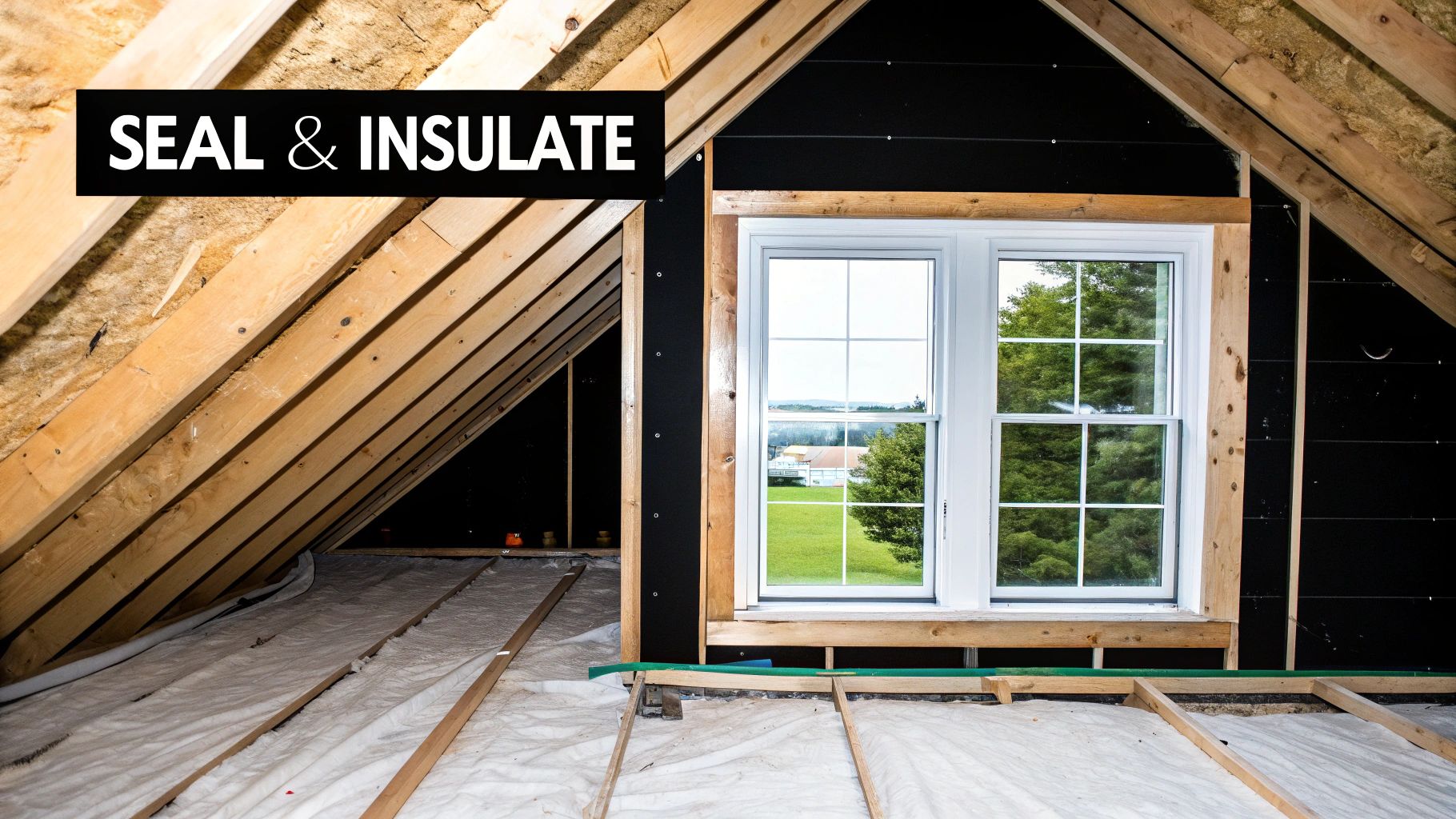
New windows, roofing, and siding are the heavy hitters—they form the main protective shell of your home. But the real magic happens when you pair them with a few key supporting players. This is how you go from making a good investment to a great one.
Think of it like building a high-tech boat. A strong hull is fantastic, but you still have to plug all the little leaks if you want to stay completely dry. Supporting energy efficient home upgrades like insulation and air sealing are what make your home truly "watertight" against wasted energy. These upgrades allow your bigger investments to perform at their absolute peak, creating a system where your HVAC can finally stop working so hard.
The Unsung Hero: Insulation
Insulation is easily the most important upgrade that most people overlook. Its job is simple: slow the movement of heat. During our cold Salt Lake City winters, it keeps the precious warm air you're paying for inside. In the summer, it's the barrier that keeps that scorching Utah heat from creeping into your living room.
Here's the problem: an incredible 90% of U.S. homes are under-insulated. The number one culprit is almost always the attic. Since heat naturally rises, a poorly insulated attic is like an open chimney, letting all that expensive warmth escape right through your roof.
An under-insulated attic is like wearing a winter coat without a hat. You lose a massive amount of body heat through your head, and your home loses a massive amount of energy through its attic. Properly insulating this space is one of the most cost-effective upgrades you can make.
Beefing up your attic insulation can slash your annual energy bills by up to 10% all on its own. It's a foundational fix that makes every other upgrade work better.
Finding and Fixing the Leaks with Air Sealing
Right behind insulation, air sealing offers one of the biggest bangs for your buck. This is the detective work of finding and sealing all the tiny, hidden gaps and cracks in your home's structure where air is leaking in and out. Individually, these gaps seem minor, but add them all up, and it's like leaving a window open 24/7.
Where do these leaks hide?
- Around Windows and Doors: Gaps in the framing and worn-out weatherstripping are major offenders.
- Ductwork: Leaky duct connections in your attic or crawlspace bleed heated and cooled air before it ever reaches your rooms.
- Utility Penetrations: Every spot where a pipe, wire, or vent goes through a wall is a potential pathway for air leakage.
By systematically sealing these weak points with caulk, spray foam, and new weatherstripping, you make your home dramatically more airtight. This simple but powerful step keeps your conditioned air where it belongs, making your home more comfortable and taking a huge load off your furnace and AC.
Quick Wins for Everyday Savings
Beyond the big structural fixes, a couple of simple tech upgrades can fine-tune your home's energy use and deliver immediate savings.
- Smart Thermostats: These clever devices learn your family's routine and automatically adjust the temperature when you're gone or asleep. That simple automation can shave about 8% off your heating and cooling costs without you lifting a finger.
- LED Lighting: This one's a no-brainer. Modern LED bulbs use at least 75% less energy and last up to 25 times longer than old-school incandescent bulbs. Swapping them out is an easy way to lower your electric bill every single day.
When you bring it all together—a well-built exterior, proper insulation, meticulous air sealing, and smart tech—you create a truly efficient home. Each upgrade supports the others, multiplying your savings and keeping your Salt Lake City home comfortable and affordable, no matter the season.
Calculating the Return on Your Home Upgrade Investment
It’s easy to see energy-efficient upgrades as just another big expense. But the smart way to look at them is as a powerful financial tool—an investment that adds real, lasting value to your property.
When you shift your perspective from a one-time cost to a long-term asset, you start to see how these projects pay you back in more ways than one.
The most immediate and satisfying return? Lower monthly utility bills. When new windows, roofing, or siding properly seal your home’s envelope, your HVAC system doesn't have to fight a losing battle against Salt Lake City's hot summers and cold winters. That translates directly into real money back in your pocket, month after month.
Understanding Your Payback Period
So, how do you measure the financial impact? We need to look at two key ideas: the payback period and the return on investment (ROI). The payback period is just a simple way of figuring out how long it takes for your energy savings to completely cover the initial cost of the project.
Let's walk through an example. Say a full window replacement costs $15,000. If those new windows save you $100 a month on your energy bills ($1,200 a year), your payback period is 12.5 years. ($15,000 divided by $1,200). After that point, every dollar you save is pure return.
Boosting Your Home's Resale Value
On top of the monthly savings, energy-efficient upgrades make your property significantly more attractive on the real estate market. Today’s buyers are savvy. They aren't just looking for a house; they're looking for a home that’s cheaper to own and more comfortable to live in from day one.
This isn't just a small perk anymore; it's a major trend. Features that improve efficiency are some of the fastest-growing trends in home listings. And with federal programs like the Inflation Reduction Act covering up to 30% of project costs, energy efficiency has moved from a niche interest to a mainstream must-have. You can see more on how efficiency is becoming a top selling point on Realtor.com.
Today’s homebuyers see energy efficiency as a non-negotiable feature. An updated home envelope signals lower ownership costs, enhanced comfort, and a forward-thinking investment, giving you a distinct advantage in a competitive real estate market.
A Look at Typical ROI for Major Upgrades
While every Salt Lake City home is different, we can look at some typical numbers to see what percentage of the cost homeowners get back when they sell.
- New Insulated Siding: This is a fantastic investment. Because it boosts both curb appeal and thermal performance, homeowners often recoup a huge portion of the initial cost.
- New Roofing: A new roof isn't just a repair; it's a critical selling point. A quality, energy-efficient roof can recoup over 60% of its cost at resale by giving buyers peace of mind and the promise of lower cooling bills.
- New Windows: According to the National Association of Realtors, homeowners can expect to get back around 70% of their investment in new windows when it’s time to sell.
It really is a win-win. You get to live in a more comfortable, less expensive home, and when you decide to move, you’ll see a serious return on your investment.
How to Find Local Rebates and Tax Credits
Making energy-efficient home upgrades is one of the smartest investments you can make, but let's be honest—the initial cost can feel daunting. The good news is you don’t have to foot the entire bill yourself. Right here in Utah, there's a powerful mix of federal, state, and local utility incentives designed specifically to help homeowners like you make these projects happen.
Think of these programs as a partnership. The government and utility companies want to see our community conserve energy, and they're willing to put money on the table to help you do it. By tapping into these incentives, you can slash your upfront costs, shorten the time it takes to see a return on your investment, and get those high-quality improvements done now instead of later.
Federal Tax Credits for Energy Efficiency
For most homeowners, the biggest financial win comes from federal programs. The U.S. government offers some really attractive tax credits as a reward for making your home more efficient. And we're not talking about a simple deduction—a tax credit is a dollar-for-dollar reduction in the income tax you actually owe.
The main program to have on your radar is the Energy Efficient Home Improvement Credit. This lets you claim a credit for 30% of the cost of certain home improvements, though there are annual limits.
What kind of upgrades does it cover? The big ones:
- High-efficiency windows and doors that meet specific ENERGY STAR standards.
- New insulation materials to stop that conditioned air from escaping.
- Energy-efficient roofing and siding designed to reflect the sun's heat.
What's great is that this credit can be claimed every year. That means you can tackle your projects in phases over time and maximize your savings along the way. Be sure to check the official ENERGY STAR federal tax credits page for the latest rules and qualifying products before you buy.
You can think of this as "stacking" your savings. A federal tax credit lowers your total project cost, and then a local rebate might put cash right back in your pocket. It's a powerful one-two punch that makes the whole investment far more manageable.
Utah State and Local Utility Rebates
Looking beyond the federal level, Utah homeowners have access to some fantastic programs right here at home. These are usually offered directly by utility companies to encourage customers to use less energy, which helps ease the demand on the power grid for everyone.
Our local provider, Rocky Mountain Power, has an excellent rebate program called Wattsmart Homes. They offer cash back for a whole range of smart upgrades.
For folks in the Salt Lake City area, some common rebates include:
- Insulation Upgrades: Get cash back per square foot when you add insulation to your attic or walls.
- Smart Thermostats: They often offer instant rebates when you buy a qualifying smart thermostat that helps cut down on waste.
- Appliance Recycling: You can even get a small reward for getting rid of an old, energy-guzzling refrigerator or freezer the right way.
These programs are generally straightforward, but the key is to check for eligibility and apply before you start your project. Some require pre-approval to qualify. You can find all the forms and fine print on the Rocky Mountain Power Wattsmart website. Taking a few minutes to explore these local options ensures you aren't leaving any money on the table.
Finding the Right Contractor for Your Upgrade Project
Deciding to upgrade your home for energy efficiency is a smart move. But even the best windows or most advanced HVAC system will fail you if they’re installed poorly. That's why the single most important decision you'll make isn't what to install, but who you hire to do the work.
Think of a great contractor as your project partner. They're the ones who ensure every seam is sealed, every window is plumb, and your investment actually pays off in lower energy bills and a more comfortable home. A botched job, on the other hand, can lead to endless headaches—drafts, moisture problems, and the gut-wrenching cost of having to do it all over again. Taking your time to find the right pro isn't just a good idea; it's essential.
Essential Criteria for Choosing Your Contractor
When you start interviewing contractors around Salt Lake City, don't be shy. You're hiring someone for a major project, and it's their job to prove they’re up to the task. To cut through the sales pitches, focus on these non-negotiables.
Here’s what really matters:
- Proven Experience: How long have they been in business? More importantly, how many projects like yours have they actually completed right here in Utah? Ask to see a portfolio.
- Proper Licensing and Insurance: This is a big one. Always confirm they have a current Utah contractor's license, liability insurance, and workers' compensation. This is what protects you if something goes wrong on your property.
- Industry Certifications: Look for official credentials from manufacturers or groups like ENERGY STAR. These aren't just fancy badges; they signify that the crew has received specialized training and knows the latest installation techniques.
- Clear, Detailed Estimates: A pro will give you a detailed breakdown of costs for both materials and labor. If you get a vague, one-line quote, consider it a major red flag.
Understanding Warranties and Consultations
A contractor who is confident in their work will back it up with a solid warranty. You need to pay attention to two different kinds. The material warranty comes from the manufacturer and covers defects in the product itself. The workmanship warranty comes from the contractor and covers the quality of the installation. You absolutely need both.
The first meeting should feel like a consultation, not a high-pressure sales pitch. A good contractor will take the time to inspect your home, listen to what you want to achieve, and walk you through your options. They should be able to explain why a certain product is the right fit for your home and how it will improve its performance.
A contractor's confidence is best measured by their guarantees. A robust workmanship warranty is a direct reflection of their commitment to quality installation and their belief that the job will be done right, protecting you long after the project is complete.
This careful vetting process is more crucial than ever. The market for home efficiency upgrades is exploding—it was valued at USD 200.0 billion in 2025 and is expected to soar to USD 325.8 billion by 2035. As you can see from these significant market trends, this isn't a niche market anymore; it's becoming the new standard. By picking a qualified, experienced contractor, you make sure your project is done right in an industry that’s growing faster every year.
Got Questions About Energy-Efficient Upgrades? We Have Answers.
Thinking about a major home improvement project always brings up a lot of questions, and that's especially true for energy-efficient upgrades. Salt Lake City homeowners just like you often ask us where to even begin, what to expect during the process, and—most importantly—if it's all really worth it in the end.
Let’s walk through some of the most common questions we hear every day. Getting these answers upfront will help you feel confident as you plan your project.
What's the Real Cost of These Projects?
This is always the first question, and for good reason. The honest answer is: it depends. The final price tag is shaped by the size of your house, the specific materials you select, and how big the project is. Swapping out every window in your home is a different financial conversation than blowing in new attic insulation.
But don't just look at the initial quote. You have to consider the whole financial picture, which includes long-term savings on your energy bills and some fantastic incentives. Federal tax credits can knock off up to 30% of the cost, and Utah has local rebates that can sweeten the deal even more, bringing that upfront investment down significantly.
How Long Does It Take to Make My Money Back?
Your payback timeline really depends on the project you tackle. Some upgrades start putting money back in your pocket almost immediately, while others are more of a long game.
- Quick Payback: Projects like air sealing drafts and beefing up your attic insulation are the low-hanging fruit. They are incredibly effective for their cost and often pay for themselves in just a couple of years.
- Long-Term Value: Bigger ticket items like high-performance windows or a new roofing system have a longer payback period. But from the moment they're installed, they dramatically improve your home's comfort and add serious, lasting value to your property.
A great way to think about it is that some upgrades improve your monthly cash flow, while others build long-term equity. Both are smart financial moves for any homeowner.
I'm Ready to Start, but Where?
For the most bang for your buck, focus on your home’s "building envelope" first—the shell that separates you from the outdoors. If you have old, leaky windows, they're probably your single biggest point of energy loss. A poorly insulated attic is another huge energy drain, letting all your expensive heated or cooled air escape right through the roof.
The best way to know for sure is with a professional home energy audit. An audit gives you a data-backed game plan, showing you exactly where your home is bleeding energy. This lets you put your money where it will count the most, sealing the biggest leaks first for maximum impact on your comfort and your wallet.
Ready to make your home more comfortable and stop overpaying on utility bills? The team at Superior Home Improvement is here to help you navigate every step, from choosing the right upgrades to a flawless installation. Contact us today for a free, no-pressure consultation and learn how our Energy Conservation Program can guarantee a more efficient home.