
The best triple-pane windows are more than just a home improvement—they're a serious upgrade in home comfort, insulation, and long-term energy savings. For homeowners in demanding climates like ours here in Utah, they represent a smart investment in creating a more efficient and peaceful home, especially with our punishing winters and blazing summers.
Why Triple Pane Windows Are a Smart Home Upgrade
Deciding on new windows is one of the biggest calls you’ll make for your home. It goes way beyond curb appeal; you're investing in your property's value, how much you spend on energy, and your day-to-day comfort. While double-pane windows have been the go-to for years, triple-pane technology is the next step up, especially if you're serious about building a resilient, cost-effective home.
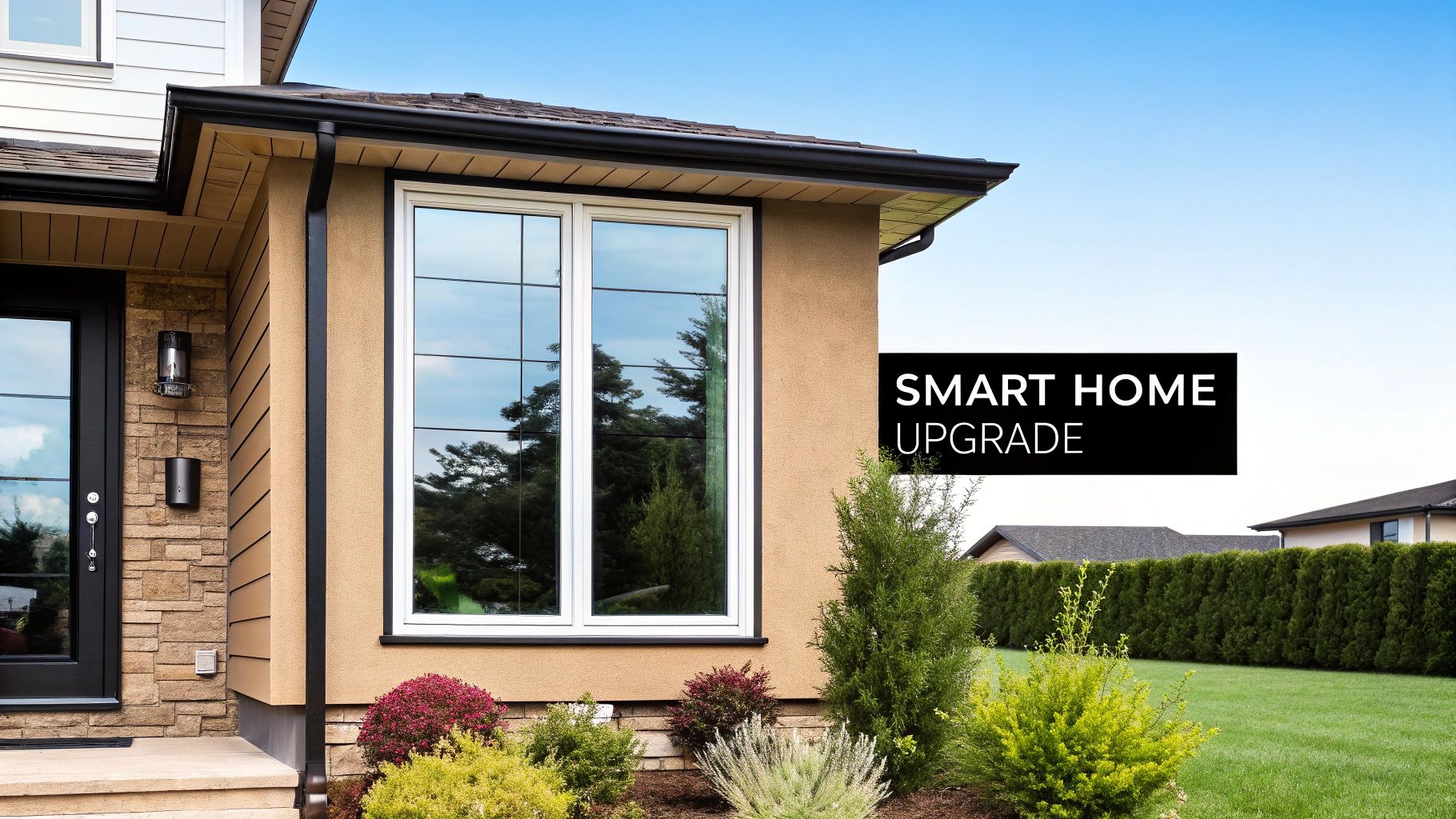
Beyond an Extra Pane of Glass
The real magic of a triple-pane window is in its construction. Instead of one or two layers of glass, you get three. These panes are separated by two pockets of insulating gas—usually argon or krypton—creating an incredibly effective thermal barrier.
This multi-layer system makes a huge difference in your home's ability to hold a steady temperature. When a Salt Lake City winter storm hits, it locks your expensive heat inside. Come July, it reflects the sun's heat back outside, giving your air conditioner a much-needed break. The end result? A home that feels more comfortable all year and lower utility bills. For anyone truly dedicated to peak efficiency, looking into passive house principles can provide a great roadmap, and high-performance windows are a cornerstone of that approach.
Key Benefits at a Glance
Making the switch to triple-pane windows brings a whole host of advantages that go far beyond just saving on energy. Here’s a quick rundown of what you’re gaining when you level up from standard double-pane models.
| Feature | Standard Double-Pane Windows | High-Performance Triple-Pane Windows |
|---|---|---|
| Insulation | Good thermal performance | Superior thermal performance and insulation |
| Noise Reduction | Noticeable sound dampening | Maximum noise reduction for a quieter home |
| UV Protection | Blocks a majority of UV rays | Blocks up to 86% of harmful UV rays, protecting interiors |
| Condensation | Prone to condensation in extreme cold | Highly resistant to interior condensation |
Key Takeaway: Moving to triple-pane isn't just a small step up. It’s a massive leap in how your home performs—from energy use and comfort to creating a quieter, better-protected indoor space.
Throughout this guide, we’ll get into the nitty-gritty of what defines the best triple pane windows. We'll cover everything from how to read performance ratings and choose the right frame materials to making sure the installation is done right. With this knowledge, you can make a confident choice that will pay you back for years.
Understanding Window Performance Ratings

When you're trying to pick the best triple-pane windows, you have to look past the frame and glass. The real story—the one that tells you how a window will actually perform in your home—is in the numbers on its performance label. Learning to read these ratings is like learning a new language that translates directly into lower energy bills and a far more comfortable house.
These aren't just technical terms. Think of them as the DNA of your window. They tell you exactly how well it will keep your home warm during a Utah winter and cool through a blistering summer. Once you understand them, you can make a smart, informed decision that’s right for your home.
Decoding the U-Factor
The first critical number you'll see is the U-Factor. This metric measures how well a window stops heat from escaping your home. It’s basically the inverse of the R-value used for wall insulation; with U-Factor, a lower number is always better.
A low U-Factor means the window is an incredible insulator, trapping the warm air you're paying for inside when it's cold out. For Salt Lake City, where winter nights often dip well below freezing, a low U-Factor is absolutely non-negotiable for an energy-efficient home. This is where triple-pane windows really shine, achieving much lower U-Factors than their double-pane cousins.
Pro Tip: For our Northern climate zone, you should be looking for windows with a U-Factor of 0.25 or lower. This meets or exceeds ENERGY STAR® recommendations and ensures you're getting a product truly built to handle our cold winters.
Managing Summer Heat with SHGC
Next up is the Solar Heat Gain Coefficient (SHGC). This rating tells you how much of the sun's heat a window lets through. The SHGC is a number between 0 and 1, and just like U-Factor, a lower number means less solar heat gets in.
In a four-season climate like we have here in Utah, the ideal SHGC is a careful balancing act. A low SHGC is fantastic for summer because it blocks unwanted solar heat, giving your air conditioner a break. But you don't want it to be too low, as some passive solar warmth in the winter can be a good thing, helping to heat your home naturally.
For our region, a moderate-to-low SHGC offers the best year-round performance. It keeps your home comfortable without sending your cooling costs through the roof.
Balancing Light and Efficiency
Finally, you have Visible Transmittance (VT). This one’s pretty straightforward: it measures how much visible light a window lets through, also on a scale from 0 to 1. Here, a higher VT is better, as it means more natural light and a brighter, more pleasant home.
The best triple-pane windows are engineered to give you a high VT while maintaining a low U-Factor and SHGC. This means you don't have to live in a cave to get top-tier energy efficiency. Modern glass coatings are amazing at blocking the heat-carrying infrared and UV rays while letting all that beautiful visible light pour in.
To help you keep these ratings straight, here’s a quick reference table.
Window Performance Metrics At a Glance
Use this table to quickly understand the key window ratings and what they mean for your home's energy efficiency and comfort in a four-season climate.
| Performance Metric | What It Measures | Ideal Range for Utah Homes |
|---|---|---|
| U-Factor | Rate of heat loss (insulation) | 0.25 or lower |
| SHGC | How much solar heat is blocked | 0.25 to 0.40 |
| Visible Transmittance (VT) | Amount of natural light let in | 0.50 or higher |
These metrics work together to define a window's overall performance. Finding the right balance is key to maximizing both comfort and savings.
The demand for windows that hit these high-performance marks is exploding. The global market for energy-efficient windows, driven largely by triple-glazed technology, is expected to jump from USD 17.61 billion in 2025 to USD 37.14 billion by 2035. Why? Because they are proven to drastically cut heat loss, which typically accounts for 20% of a home's total energy loss.
For Utah homeowners, this isn't just an abstract statistic. It translates into real-world savings, especially when a certified installation from a program like Superior Home Improvement's Energy Conservation Program can cut utility costs by up to 40%. You can explore more data on this expanding market and its drivers in this detailed industry report.
Comparing Window Frame Materials
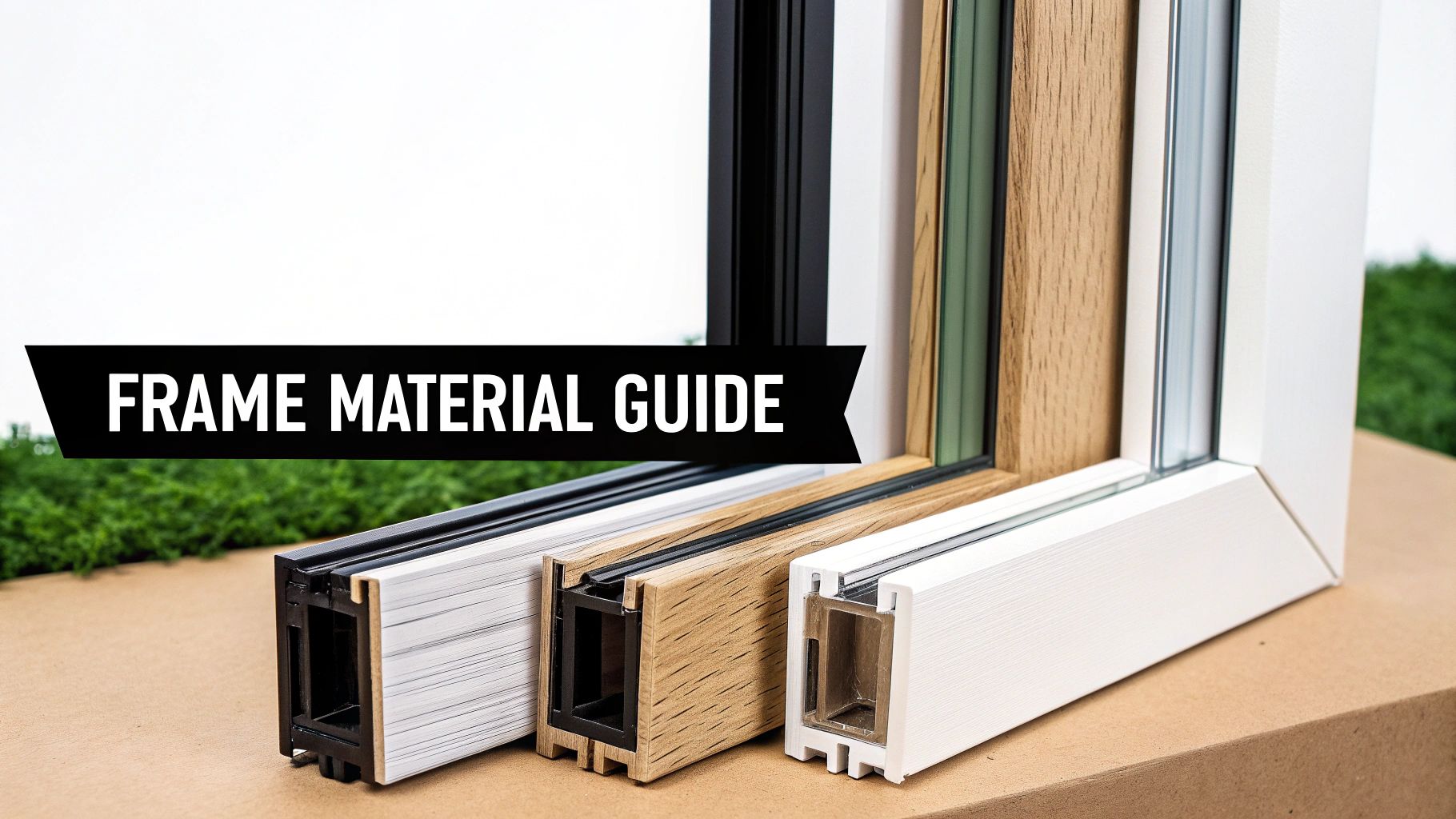
While the glass in a triple-pane window gets all the attention, the frame is the unsung hero holding everything together. The material you choose is just as critical as the glass itself, directly impacting thermal performance, how well it stands up to Utah's harsh sun, and how much time you'll spend on upkeep. It's a key piece of the puzzle in creating the best triple pane windows for your home.
Think about it: the frame has to be strong enough to support the significant weight of a triple-pane unit without bending, cracking, or failing down the line. It also has to be a great insulator on its own. After all, putting a high-tech glass package into a leaky, inefficient frame is like putting a high-performance engine in a car with flat tires—you just won't get the results you paid for.
Let's break down the main contenders.
The Practicality of Modern Vinyl
There's a reason vinyl frames are the most popular choice across the country. They hit a sweet spot between performance and value, putting them within reach for most homeowners. Today’s vinyl isn't what it was 20 years ago; it’s engineered with hollow, multi-chambered construction that creates dead air space, dramatically slowing down heat transfer.
For a Utah home, that means the frame itself helps keep your house comfortable, whether it’s 10°F in January or a blistering 100°F in July. They're also incredibly easy to live with—no painting, no staining, just a simple cleaning with soap and water. That’s a huge plus in our often dusty climate.
Of course, vinyl has its limits. While premium vinyl holds up great, some lower-quality versions can get brittle after years of relentless UV exposure. You're also typically limited to lighter colors, as dark vinyl can absorb too much heat and run the risk of warping.
The Strength of Fiberglass Composite
When you're ready for a step up in pure strength and longevity, fiberglass composite frames are hard to beat. Made from a matrix of glass fibers and resin, this material is unbelievably stable. One of its biggest selling points is how little it expands and contracts when the temperature changes.
In a climate like Salt Lake City’s, with its huge daily and seasonal temperature swings, that stability is a game-changer. Fiberglass expands and contracts at almost the exact same rate as the glass it's holding. This puts far less stress on the window's seals, which is critical for keeping the insulating gas from leaking out over the life of the window.
Key Insight: The structural integrity of fiberglass allows for much slimmer frame profiles. This translates to more glass and less frame, maximizing your natural light and views without compromising the strength needed to hold that heavy triple-pane unit.
Fiberglass can also be painted to match any color you can dream of, giving you far more design flexibility than vinyl. The main trade-off is the price; fiberglass is a premium material with a higher upfront cost.
The Timeless Appeal of Wood
Nothing can quite replicate the classic, warm look of a real wood frame. For historic homes or for homeowners who just love that traditional aesthetic, wood is often the only choice that feels right. It's also a fantastic natural insulator, contributing to the window's overall efficiency.
The big "but" with wood is the maintenance. To protect it from Utah's dry climate and intense sun, wood frames need to be diligently painted or stained to keep them from cracking, rotting, or warping. This is a serious long-term commitment that many people aren't prepared for.
A popular alternative is a wood-clad window, which aims to give you the best of both worlds. You get a beautiful, stainable wood interior with a durable, low-maintenance vinyl or aluminum shell on the outside. This gives you the look you want inside without the constant exterior upkeep.
Frame Material Head-to-Head Comparison
To make this decision a bit easier, here’s a direct comparison of the features that matter most to homeowners here in Utah.
| Feature | Vinyl | Fiberglass Composite | Wood |
|---|---|---|---|
| Durability | Good; high-quality vinyl resists fading and cracking. | Excellent; highly resistant to warping, UV damage, and temperature swings. | Good with proper maintenance; vulnerable without it. |
| Insulation | Excellent; multi-chambered designs provide great thermal resistance. | Excellent; very low thermal conductivity. | Excellent; naturally insulating material. |
| Maintenance | Minimal; requires only occasional cleaning. | Low; can be repainted if desired but doesn't require it. | High; requires regular painting or staining to prevent damage. |
| Cost | Most affordable option. | Premium option, higher initial cost. | High-end option, especially wood-clad. |
| Aesthetics | Good; limited color options, mostly lighter shades. | Excellent; can be painted any color, slim profiles. | Unmatched classic, warm appearance. |
Ultimately, the right frame material really comes down to your personal priorities. If you're trying to balance a budget with the need for solid performance and almost no maintenance, a high-quality vinyl is a fantastic choice. If you’re in your forever home and want maximum durability and design freedom, fiberglass is a top-tier investment. And for that irreplaceable classic character, wood remains a beautiful—if demanding—option.
Analyzing the True Cost and Return on Investment
When you start looking at the best triple-pane windows, it's easy to get hung up on the initial price. It's a significant home improvement project, after all. But to really understand the investment, you have to look past the upfront cost and see the whole financial picture—including the long-term return on your money. The real value isn't just in the price tag; it's measured in decades of energy savings and a bump in your home's equity.
Of course, the initial quote depends on a few things. The size and number of windows, the frame material you pick (like vinyl or a fiberglass composite), and any custom touches like special shapes or hardware will all play a part. Yes, triple-pane windows typically cost 10-15% more than their double-pane cousins, but that's just the beginning of the story.
Calculating Your Long-Term Energy Savings
The most obvious and immediate return you'll see is on your monthly energy bills. Let's face it, windows are usually the biggest culprits for energy loss in a house, letting heat escape in the winter and sneak in during the summer. By creating a much stronger thermal barrier, high-performance triple-pane windows take a massive load off your HVAC system.
And we're not talking about a small tweak here. This is a serious reduction in how much energy your home uses. For homeowners here in Utah, with our distinct four seasons, those savings add up fast. In fact, programs like Superior Home Improvement's Energy Conservation Program are so confident in the performance that they guarantee up to a 40% reduction in energy costs—in writing. That kind of predictability turns a home upgrade into a solid financial asset.
This is exactly why the market is exploding. Triple-glazed windows are the fastest-growing part of the energy-efficient window industry. One market analysis even predicts the triple-glazed swing window market will jump from $1.14 billion to $1.57 billion in just four years. This trend shows that homeowners get it: the superior insulation and up to 50% greater efficiency over double-pane windows deliver a real, tangible return. You can dig into the details of these market trends in this comprehensive report.
Boosting Your Home's Resale Value
Beyond what you save each month, high-quality triple-pane windows make your home more valuable when it's time to sell. Today's buyers are savvy. They know to look for features that mean lower utility bills, a more comfortable living space, and less outside noise. These are major selling points.
When a potential buyer sees that your home is equipped with premium triple pane windows, they don't just see glass and frames. They see a well-maintained, modern, and efficient property that will cost them less to own and operate, making your home more attractive than others on the market.
This kind of upgrade is a clear signal that you’ve invested in quality, which can justify a higher asking price and even help your home sell faster. And don't forget the aesthetic improvements, which also boost market appeal. Even small details can make a difference; you might be surprised by the impact of window treatments on home value and their contribution to your home's resale potential.
Unlocking Rebates and Incentives
Finally, remember to look for financial incentives that can bring down your initial investment. Many federal, state, and local utility programs offer tax credits or rebates for installing windows that are ENERGY STAR® certified. These programs are specifically designed to encourage homeowners like you to make energy-saving upgrades.
These incentives can slice a nice chunk off the net cost of your project, which means you'll see a return on your investment even sooner. It's always a good idea to research the latest programs or ask your installer what's available. When you add it all up—the energy savings, the increased home value, and the rebates—investing in the best triple-pane windows is a smart financial move.
Why Professional Installation Is Non-Negotiable
You can buy the best triple-pane window on the planet, but it's only half the battle. Think of it this way: even the most advanced, highest-rated window is basically useless if it’s installed the wrong way. Professional installation isn’t just a nice-to-have; it’s an absolute must if you want to protect your investment and actually see the energy savings you’re paying for.
A window isn’t just a piece of glass in a frame; it’s a complete system. Installing it is a precision craft. If the fit is off by even a fraction of an inch, you get gaps. Gaps lead to air leaks, and air leaks completely defeat the purpose of a high-efficiency window. Just like that, its insulating power is shot, and you’re back to losing the very energy you were trying to save.
And it’s not just about energy bills. A poorly installed window can become a weak point for water to get in, which can kick off a chain reaction of expensive problems like rot, mold, and even damage to your home’s structure.
The Anatomy of a Perfect Installation
So, what separates a professional job from a risky shortcut? A truly high-quality installation is methodical, following a specific process to create a perfect, weathertight seal that lasts.
Any certified installer worth their salt will:
- Take Precise Measurements: Before a single tool comes out, they’ll measure to ensure the new window is perfectly sized for the opening. This isn't just about fitting it in; it's about leaving the exact right amount of space for proper insulation and sealing.
- Prepare the Opening: This means carefully removing the old window and, just as importantly, inspecting the frame for any hidden damage or rot. You can't put a new window into a bad frame.
- Set, Level, and Shim: The new window has to be set perfectly level and plumb (straight up and down). Installers use shims to lock it into place, making sure it operates smoothly without putting stress on the frame or glass.
- Insulate and Seal: This is where the real protection comes in. The small gap between the window frame and your house’s framing gets filled with low-expansion foam insulation. Then, the exterior is sealed with top-tier caulk to form a waterproof barrier against Utah’s weather.
Following these steps ensures the window performs exactly as the manufacturer designed it to, giving you decades of comfort and real energy savings.
A common mistake is thinking any contractor can pop in a window. It takes specialized training. Certified installers know the specific quirks and requirements for different window types and home constructions—expertise that prevents very expensive mistakes down the road.
Warranties: A Tale of Two Protections
You really need to get your head around warranties to protect your investment, and it's important to know there are two completely different kinds. Confusing them can leave you high and dry if something goes wrong.
First, you have the product warranty. This comes straight from the manufacturer and covers defects in the window itself. We're talking about things like a seal failure between the glass panes (that foggy look), broken hardware, or flaws in the vinyl or composite frame. It’s your guarantee that the product you bought is sound.
But here’s the catch: that product warranty is often voided if the window isn't installed correctly.
That’s where the second layer of protection comes in: the workmanship warranty. This warranty is provided by the installer—like the 10-year guarantee offered by Superior Home Improvement. It covers the quality of the installation itself. If a problem pops up because of the installation, like an air leak from a bad seal or water damage, this is the warranty that has your back.
The only way to have complete peace of mind is to have both: a strong product warranty from the maker and a solid workmanship warranty from the installer. It’s the combination that ensures both the window and its installation are fully covered, so your new triple-pane windows deliver the performance you expect for years to come.
Choosing Your Ideal Triple Pane Windows
So, you're at the finish line. You've weighed the options, and now it's time to make a final call on the best triple-pane windows for your home. It all boils down to bringing three key pieces together: the right performance specs for Utah's climate, the best frame material for your house, and—this is crucial—an absolute commitment to getting them installed by a pro.
By now, you get it. A window isn't just a pane of glass. It's a complex system, and every single component has a job to do.
The trick is to stop looking at individual features and start seeing the whole picture. A window with a fantastic U-Factor in a sturdy vinyl frame is a great starting point, but you only get its full benefit with a flawless, airtight installation. It’s this combination of a top-tier product and expert craftsmanship that makes for a successful home upgrade that actually lasts.
Your Path to a Confident Decision
Ultimately, picking the right window means matching its technical strengths to what you actually need. If you live on a busy street in Salt Lake City, the incredible noise reduction of a triple-pane unit might be your top priority. But if you’re up in the mountains facing brutal winters, you’ll be focused on maximum insulation, which means the lowest U-Factor you can get, filled with an inert gas like argon.
This decision tree lays out the critical choice between going the DIY route or hiring a professional.
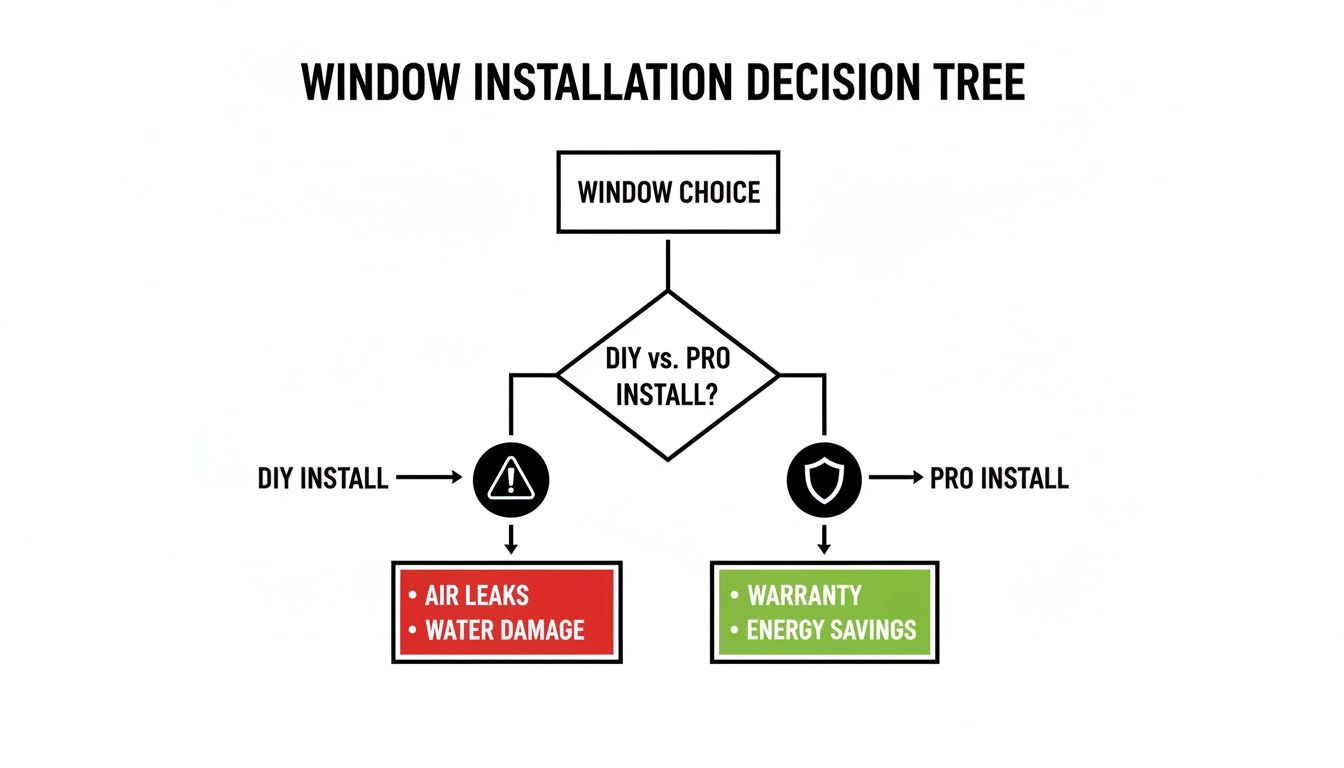
As you can see, the path you choose for installation is what separates real energy savings and a valid warranty from the risks of air leaks and water damage.
The last piece of the puzzle? A solid warranty that gives you real peace of mind. You need two things here: a manufacturer's warranty that covers the window itself against defects, and an installer's workmanship guarantee. For example, our 10-year warranty at Superior Home Improvement ensures the installation itself is perfect. When you have both, you’re completely covered.
By focusing on the total package—product, installation, and warranty—you're not just buying windows. You are investing in long-term comfort, proven energy savings, and the overall health and value of your home.
Now that you have a clear picture of why triple-pane windows are the right choice for your home, the next step is to get some personalized advice. A professional consultation is the only way to get a precise, tailored estimate for your specific project. It allows an expert to see your home's unique situation and recommend the perfect solution, making sure your investment pays off for decades to come.
Common Questions About Triple-Pane Windows
Making a big investment in your home, like upgrading to new windows, is bound to bring up some questions. It's smart to have them. When homeowners start looking into triple-pane windows, we find the same concerns pop up again and again—cost, real-world performance, and whether their house can even handle them.
Let's clear the air and tackle the big questions we hear from folks all over Salt Lake City and the rest of Utah.
How Much More Do Triple-Pane Windows Cost?
This is always the first thing people ask, and it's a fair question. You can expect triple-pane windows to cost about 10-20% more upfront than a really good double-pane window. But that initial price tag doesn't tell the full story, especially not here in Utah where we get all four seasons in full force.
Think of that extra cost as an investment that pays you back faster. The incredible insulation you get from three panes means you'll see a real drop in your energy bills, month after month. They keep the heat locked in during our cold winters and reflect the sun’s blistering heat in the summer. Those savings start chipping away at the initial cost difference right away.
Do Triple-Pane Windows Really Cut Down on Noise?
They absolutely do, and it's a difference you can actually hear—or rather, not hear. It’s not just a sales pitch; it's physics. A triple-pane window is a fantastic sound barrier for a couple of simple reasons.
First, you’ve got an extra pane of glass, which adds sheer mass that sound waves struggle to vibrate through. More importantly, you have two separate, gas-filled chambers. As outside noise tries to travel through, it has to move from glass to gas, back to glass, to gas again, and finally through the last pane. Each one of those transitions kills the sound wave's momentum, seriously muffling the noise that makes it into your home.
If you live anywhere near a busy street, a new construction project, or even just a noisy neighborhood, this is one of the first benefits you'll notice. It brings a real sense of peace and quiet inside your home that you can't put a price on.
Are Triple-Pane Windows Too Heavy for My Home?
That’s a perfectly reasonable thing to worry about. With an extra pane of glass, these window units are definitely heavier than their double-pane cousins. But for any professional installer worth their salt, this is just part of the job.
A proper, high-quality installation always starts with checking out the existing window frames and the wall structure around them. An experienced crew knows exactly what to look for to confirm your home can handle the extra weight. If any of the openings need a little reinforcement, that’s built right into the installation plan. It’s all about making sure the fit is secure, safe, and built to last.
Ready to see how the best triple-pane windows can transform your home's comfort and efficiency? The team at Superior Home Improvement provides free, expert consultations to give you a clear, upfront estimate tailored to your home. Discover your options and start your journey to a better home today at https://www.usasuperior.com.