
Picking an exterior paint color is hands-down the biggest design decision you'll make for your home. It’s what defines your curb appeal for the next decade, so the pressure is on. The real secret, though, isn't just about finding a color you love—it's about building a cohesive palette that works with your home's permanent features, not against them.
This guide lays out the same process we’ve used for years to help homeowners select colors with confidence, especially here in Utah where our intense, high-altitude light changes everything.
Your Home's First Impression Starts With Color
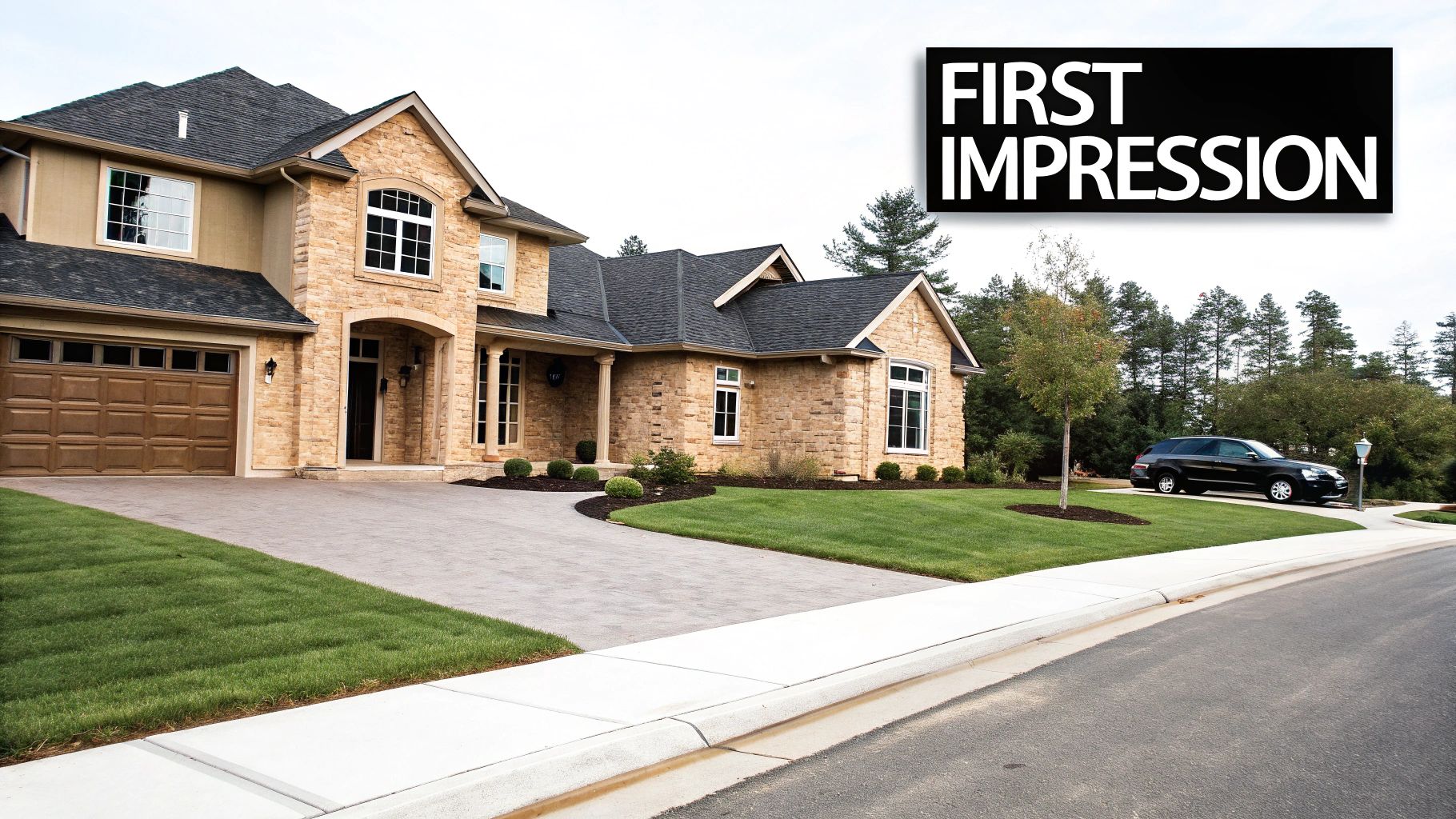
The color of your house is its handshake. It sets the entire mood before anyone even rings the doorbell. While that might sound intimidating, picking the right shade doesn't have to be a shot in the dark. A little strategy can turn a stressful choice into an exciting and creative project.
My goal here is to get you past the tiny paint swatches and into a more thoughtful process. We’re going to build an intentional palette that elevates your home's character and feels right for its surroundings.
Building a Lasting Exterior Palette
With over 50 years of experience painting homes across Salt Lake City and the Wasatch Front, we’ve learned that a methodical approach is the only way to get it right. It’s all about seeing the big picture and understanding how every element works together. A truly great exterior color scheme does a few things really well:
- Complements Fixed Features: It has to look good next to the things you can’t change, like brick, stone, and vinyl window frames.
- Enhances Architectural Style: The colors should feel authentic to your home’s design, whether you have a classic Sugar House bungalow or a modern build out in Daybreak.
- Fits the Environment: Your color choices need to feel at home in your neighborhood and stand up to the intense Utah sun.
While we're talking about paint, don't forget that other big-ticket items are just as important for a unified look. For instance, thinking through your roof tile colors that boost curb appeal is a huge piece of the puzzle. The way your siding, trim, and roof colors interact is what creates that polished, professional finish.
Your home’s exterior is a complete system. The best color choices arise not from looking at paint in isolation, but by seeing it as one part of a larger, interconnected design that includes roofing, landscaping, and architectural details.
This guide will walk you through our proven process, step-by-step. I'll give you the tools and the confidence to select a color palette you’ll love for years to come. From analyzing your home’s permanent fixtures to testing samples the right way, we’ve got you covered.
Take Stock of Your Home's Permanent Features
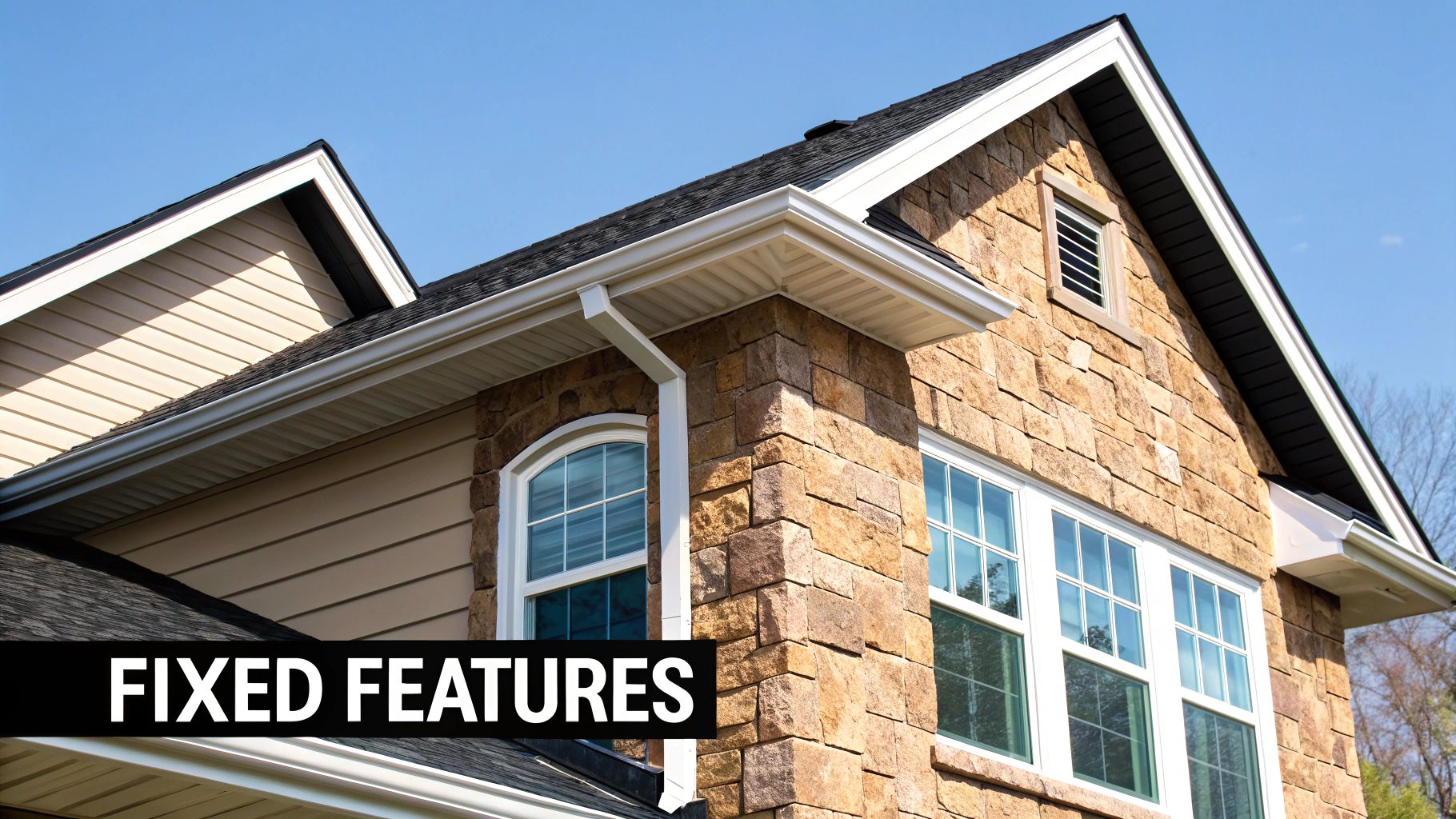
Before you even think about cracking open a can of paint, the most crucial first step is to really look at your house. I mean really look at it. Take a detailed inventory of all the parts you aren't going to paint. These fixed elements—your roof, any brick or stone, your window frames—are the true bosses of this project. They dictate your color direction more than any passing trend.
Think of them as the anchor for your entire color scheme. If you ignore them, you're almost guaranteed to end up with a disjointed look. A great exterior paint job feels intentional and cohesive, and that harmony starts by respecting what's already there.
Catalog Your Fixed Elements
Grab a notepad or just use your phone and walk around your property. Your mission is to document the colors and undertones of every non-painted surface. And don't just glance from the sidewalk; get right up close. That brick you thought was just "reddish-brown" might actually have specks of charcoal, cream, or even deep plum woven through it.
Those little details are your color clues. They're a built-in palette just waiting to be discovered, ensuring your final choices feel deeply connected to your home's character.
Here’s a quick checklist of what to zero in on:
- Roofing Material: Is it a cool-toned charcoal gray shingle, a warm, earthy brown, or something with a mix of colors? A terracotta tile roof, for instance, has powerful warm undertones that will demand a complementary siding color.
- Stone or Brickwork: Identify the main color and any secondary shades. A classic Salt Lake City home with local quartzite might feature a beautiful mix of warm golds and cool grays, giving you a couple of different color paths to explore.
- Window Frames: Are your windows a stark white vinyl, a softer almond, or a modern dark bronze or black? That frame color is a permanent piece of trim, so any new trim paint has to play nicely with it.
- Pathways and Driveways: Hardscaping counts, too. A warm-toned paver driveway or a cool gray concrete path is a big block of color that contributes to the home's overall feel.
The most successful exterior color schemes aren't invented out of thin air; they're discovered within the home's existing materials. Your stone, brick, and roof hold the secrets to a perfect palette.
Understand the Power of Undertones: Warm vs. Cool
Once you’ve noted the colors, the next layer is to figure out their undertones. This is just the subtle, underlying hue that gives a color its specific personality. Is that gray roof a cool, blue-gray, or is it a warm, brown-gray (what many designers call "greige")?
This distinction is everything. Trying to pair a cool-toned paint with a warm-toned roof can make both elements look slightly "off" or mismatched. For example, a creamy, yellow-based beige siding will likely clash with a crisp, blue-gray shingle roof. A much better fit would be a softer gray or a beige with a cooler, more neutral base.
Nailing this is one of the key professional tricks for ensuring a harmonious exterior.
Look Around the Neighborhood
Your house doesn't exist on an island. Take a slow walk or drive through your neighborhood—whether you're in a historic area like The Avenues or a newer development in Herriman—and just observe. The goal isn't to copy your neighbors, but to get a feel for the local aesthetic.
Does the area favor earthy tones that blend with the Utah landscape, or do you see more crisp, classic palettes? Choosing a color that’s wildly out of sync can make your house stick out for all the wrong reasons. A smart choice finds that perfect balance between expressing your style and respecting the neighborhood's character.
This little field trip can also be a huge source of inspiration. You might spot a siding and trim combination you absolutely love, which you can then adapt to fit your own home's unique features.
Lately, the trend has been a significant shift toward lighter, more neutral exteriors. A survey by The Harris Poll for Alside found that the top five siding colors homeowners prefer are off-white/cream, white, light gray, light brown, and medium blue. This lines up with sales data showing demand for white siding has more than doubled since 2018. If you're curious, you can dive into these popular exterior color trends and see how they might work for you.
Build a Cohesive Three-Color Palette
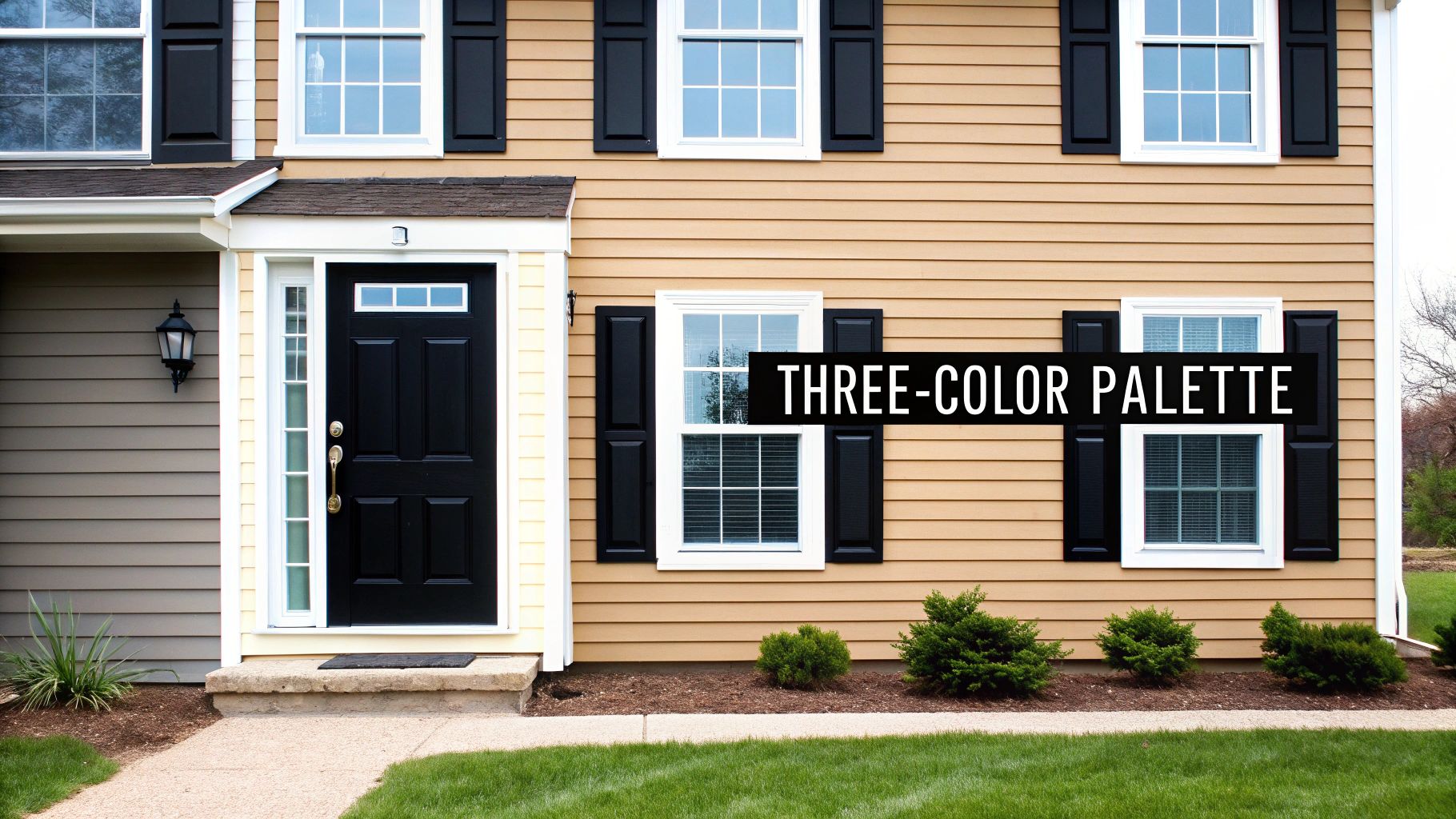
The secret to a stunning, professionally designed exterior isn't some complex color theory—it's a simple, proven formula. The most timeless and visually appealing homes almost always rely on a three-color palette. Getting this right is the key to a look that feels intentional, balanced, and completely pulled together.
This isn't about limiting your creativity; it's about giving it a solid framework. A well-defined palette is what separates a thoughtful design from one that looks chaotic or, just as bad, completely flat. Each color has a specific job, and when they work in harmony, they create a visual depth that truly elevates your home's curb appeal.
The Three Core Components
Think of your exterior palette as a team of three specialists, each with a distinct role. Once you understand what each color is supposed to do, the whole process of choosing exterior paint colors becomes much more intuitive.
Here’s the breakdown of your team:
- Field Color: This is your star player. It covers the largest surface—the siding—and sets the home's overall mood. It’s the first and most dominant color people will see from the street.
- Trim Color: This color acts as the outline, defining the home's silhouette. You’ll see it on window frames, door casings, fascia boards, soffits, and gutters. Its job is to create contrast and highlight architectural lines.
- Accent Color: This is where you get to inject some personality. The accent is used sparingly on features you want to draw attention to, like the front door, shutters, or even a decorative gable.
A successful three-color palette is all about balance. The field color establishes the home's character, the trim provides crisp definition, and the accent offers a final, memorable touch that says, "Welcome."
How to Approach Your Color Palette
There are several tried-and-true strategies for building your three-color scheme. The right one for you will depend on your home's style and the look you want to achieve.
Exterior Color Palette Strategies
| Palette Strategy | Description | Best For | Utah Example |
|---|---|---|---|
| Monochromatic | Uses different shades, tones, and tints of a single color. Creates a subtle, sophisticated look. | Modern, minimalist, or contemporary homes where the architectural form is the focus. | A Sugar House bungalow with light gray siding, charcoal trim, and a near-black front door. |
| Analogous | Uses colors that are next to each other on the color wheel (e.g., green, blue-green, blue). Harmonious and calming. | Craftsman, cottage, or traditional homes nestled in nature. | An Avenues Victorian with sage green siding, forest green trim, and a deep teal front door. |
| Complementary | Uses colors opposite each other on the color wheel (e.g., blue and orange). Creates high contrast and visual energy. | Homes where you want a bold, eye-catching statement, like a front door that really pops. | A Federal Heights home with navy siding, crisp white trim, and a vibrant coral-orange front door. |
| Triadic | Uses three colors evenly spaced on the color wheel. A balanced yet vibrant and dynamic approach. | Eclectic or artistic home styles; can be tricky to balance but offers a unique look. | A funky 9th and 9th bungalow using muted versions of a triadic scheme, like dusty blue, soft yellow, and a pale terra cotta. |
Each of these strategies offers a roadmap, helping you move from a handful of paint chips to a cohesive and beautiful final product.
Nailing the Field and Trim Combination
Your field and trim colors are the foundation of your entire look. The relationship between these two shades is what will define your home’s aesthetic, and they should always be chosen together, never in isolation.
A classic, can't-miss strategy is to create clean contrast. Pairing a light field color like a soft greige with a crisp, bright white trim gives a timeless, clean look that makes architectural details pop. It just feels fresh and welcoming.
On the other hand, a darker trim can deliver a much more powerful, modern statement. Picture a light gray siding paired with a deep charcoal or even a black trim. This high-contrast approach creates a bold, graphic effect that gives a home an instant, contemporary edge.
Finding That Perfect Accent Color
Your accent color is your chance to have some fun and direct the eye. Think of it as a final flourish used in small, impactful doses. The front door is the natural choice for an accent—it’s the focal point that welcomes guests.
This color can be a bolder, more saturated version of a shade already in your palette or something completely different. For a home with neutral gray siding and white trim, a deep navy blue or rich burgundy front door adds a touch of sophistication. For a more playful vibe, a bright yellow or a calming sage green could be the perfect finishing touch.
Just remember, your accent doesn't have to be loud to be effective. The goal is simply to create a point of interest that completes the visual story of your home, making the whole palette feel curated and thoughtfully designed.
Let's Talk About Utah's Unique Light and Climate
Here in Utah, picking an exterior paint color is more than just a matter of taste. It’s a practical decision, one that has to account for our intense, high-altitude sun and our wild four-season climate. A color that looks just right on a small paint chip in the hardware store can turn into something completely different once it’s up on your house, baking in the unfiltered sunlight we get along the Wasatch Front.
The quality of light here is just… different. It can dramatically change how a color feels from one hour to the next. That soft, subtle gray you loved might look crisp and modern on a cloudy morning, but by a July afternoon, it could seem almost white and totally washed out. On the flip side, the warm, golden light of a Utah sunset can cast a reddish glow, making cool-toned blues and grays feel entirely new.
This is exactly why I always tell people to watch their paint samples on every side of their house throughout the entire day. The color on your north-facing wall, which gets only indirect light, will look much deeper and cooler than the exact same color on your sun-drenched, south-facing wall.
How Sunlight Changes Everything
You really have to get a feel for how light plays with your chosen shades before you commit. The direction your home faces is probably the single biggest factor in this.
- North-Facing Walls: Light from the north is cool and indirect. Colors here will look darker and closer to their true hue since there isn't any warm light to mess with them. A light gray can easily look like a medium gray on this side.
- South-Facing Walls: This is where the sun beats down all day long. Colors will appear much, much lighter and can get completely washed out. I’ve seen a mid-tone beige look like a soft off-white in the peak afternoon sun.
- East-Facing Walls: You get that bright, warm morning light here. But as the day goes on, this side falls into shadow, making colors appear cooler and darker.
- West-Facing Walls: This side gets hit with that intense, warm light in the afternoon and evening. This is where you’ll see those dramatic, golden hues from the sunset, which can make any color feel instantly warmer.
The same gallon of paint can look like four slightly different colors on the four sides of your house. Testing samples on each wall and checking them at dawn, noon, and dusk is the only way to avoid a costly surprise.
The Practical Side of Picking a Color
Beyond just looks, your color choice has real-world impacts on your home’s energy efficiency and how long your siding will last. This is where a little strategy and climate-awareness pays off big time.
Dark colors soak up solar heat, which is a big deal during our hot Utah summers. All that absorbed heat can raise the surface temperature of your siding, which might cause materials like vinyl to warp, fade, or just break down faster under the constant UV assault. It also doesn't stop at the siding; that heat can transfer indoors, forcing your air conditioner to work that much harder.
On the other hand, lighter colors reflect that heat right back. Choosing a lighter shade for the main body of your house can keep both the exterior and the interior cooler, which you'll definitely notice on your summer energy bills. It’s a simple but incredibly effective way to work with our climate instead of fighting against it.
Don't Skimp on the Paint Itself
Choosing a high-quality, durable paint is just as critical as picking the right color. The global exterior paint market is a massive industry, valued at $35.5 billion in 2024, because homeowners are investing in both beauty and serious protection. A huge chunk of that market—over 77% in fact—is now water-based acrylic paints, prized for their durability and lower environmental impact. If you want to dive deeper, you can explore some great exterior paint market insights to see the technology behind modern formulations.
For a home in Utah, you need a paint that can handle our specific challenges. Look for formulations with:
- UV Protection: Absolutely essential to resist fading from our relentless sun.
- Flexibility: The paint needs to expand and contract with our wild temperature swings to prevent cracking and peeling.
- Moisture Resistance: It has to stand up to heavy winter snow and those sudden spring downpours.
When you think about both the shifting light and the practical demands of our climate, you're set up to choose an exterior paint color that not only looks incredible but also performs beautifully for years to come.
Test Your Colors the Right Way
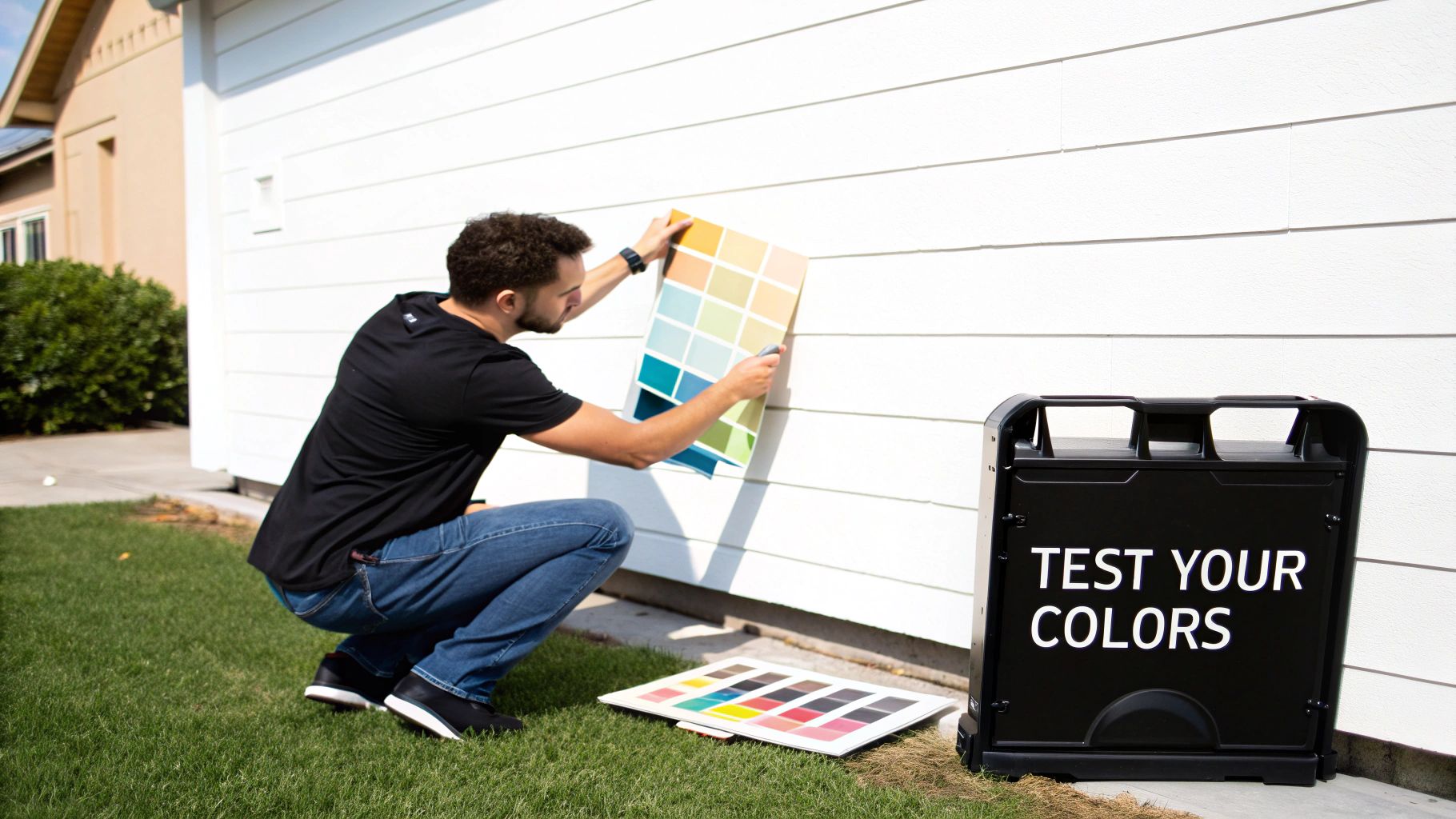
You’ve done the hard work of analyzing your home’s architecture and building a beautiful color palette on paper. Now comes the most critical step in the entire process—the one that separates a successful paint job from a very expensive mistake. You absolutely have to test your top choices on your actual house.
Relying on a tiny paper swatch you picked up under the fluorescent lights of a hardware store is a classic rookie error. That little chip just can’t tell you how a color will behave at scale, especially under Utah’s intense, ever-changing sunlight. This is where the theory ends and reality begins.
Go Big with Your Samples
Small, timid test patches just won't do. To get a real feel for how a color will look and feel on your home, you need to see it in a significant size. I always tell my clients to paint swatches that are at least 3×3 feet. A patch this large is big enough for your eye to properly register the color and its true undertones from the curb.
When you put up your samples, don't just paint a single spot. Pick a few key locations to see how the color behaves with different materials and in different light.
- Sun vs. Shade: Paint one large swatch on a wall that gets hammered by direct sun all day (usually south-facing) and another on a wall that lives mostly in the shade (north-facing). The difference can be shocking.
- Next to Fixed Features: Get a sample right up against your brick entryway, your stone foundation, or your vinyl window trim. You have to see how the new color plays with the elements that aren't changing.
The point of sampling isn't just to see if you like the color. It's to confirm that the color works with your specific home, in its specific environment, at all hours of the day. A color that looks like a perfect soft gray at 9 a.m. might look blindingly white or even lavender by 3 p.m.
Create a Complete Test Board
Painting a big square of your main color is a good start, but it’s only showing you one piece of the puzzle. To see the full picture, you need to test your entire three-part palette together. The best way I’ve found to do this is with a large piece of foam core or even a spare piece of drywall.
- Paint the Field Color: Cover most of the board with your main siding color.
- Add the Trim: Paint a wide stripe of your chosen trim color along one edge.
- Include the Accent: Then, paint a smaller block of your accent color (for the front door or shutters) next to the other two.
This all-in-one test board is your secret weapon. It lets you see exactly how the colors interact before a single can of paint is officially opened. You can move the board all around the house, hold it up in sunny and shady spots, and stand back at the street to get a true sense of the final look.
You might find that the trim color you adored on its own feels way too stark next to your main color, or that your fun accent shade just clashes in direct sunlight. This simple step catches those problems before they become a whole-house headache.
Take your time with this. Live with these large samples for a couple of days. Look at them in the bright morning light, the harsh midday sun, and the warm glow of the evening. This patient, methodical approach is the only way to guarantee that the beautiful vision in your head becomes a stunning reality on your home.
Partner With Professionals for a Flawless Finish
Even the most beautiful color palette can be ruined by a bad paint job. After you’ve done all the hard work of analyzing your home and testing samples, the final—and most crucial—step is making sure the paint is applied correctly. This is where bringing in an experienced, professional painting contractor is absolutely non-negotiable.
There’s an old saying in the industry that a great paint job is 90% preparation and 10% application. A true pro lives by this. They know that the real work happens long before a brush ever touches your siding. Rushing the prep phase is a surefire way to end up with peeling, bubbling paint in just a year or two.
It's All in the Prep Work
Proper surface preparation is the foundation of any paint job that’s built to last. It’s a ton of work, and it’s what really separates the reputable painters from the ones who just slap on a coat of color and call it a day.
Before a single can of paint is opened, a skilled team will:
- Thoroughly clean every surface to get rid of the dirt, mildew, and chalky old paint that prevents the new coat from sticking.
- Scrape away all the loose and peeling paint to create a smooth, solid base for the new finish.
- Sand down any rough spots and caulk all the gaps around your windows, doors, and trim. This creates that seamless, watertight seal you need.
- Prime any bare wood or repaired areas to ensure the final color goes on evenly and bonds properly to the surface.
This isn't just about making it look good; this detailed work ensures the paint acts as a protective shield against Utah's wild weather swings.
The quality of an exterior paint job is directly tied to the quality of the prep work. If a contractor tries to rush through surface preparation, they're cutting corners on the single most important factor for durability.
Quality Materials and a Warranty You Can Trust
A top-tier contractor won't just have a great process; they'll also insist on using high-quality materials and will stand behind their work with a solid warranty. Homeowners are investing more than ever in both looks and long-term performance, driving the global exterior paint market to a value of $14.78 billion in 2024. You can discover more insights about exterior paint trends on ResearchAndMarkets.com to see just how much value is placed on premium products.
A good painter will guide you to paints specifically formulated for our local climate and offer a comprehensive workmanship warranty that covers issues like peeling or blistering for several years.
When it comes to getting that perfect finish, teaming up with the right professionals is everything. The same principles apply to many home improvements, and you can find similar advice when choosing a professional installer for other projects. Combining your carefully chosen color palette with expert installation is the ultimate formula for incredible curb appeal and lasting peace of mind.
Got Questions About Exterior Paint in Utah? We've Got Answers.
Choosing the right exterior paint is a big decision, and living along the Wasatch Front brings its own unique set of challenges. We get a lot of practical questions from homeowners just like you. Let's get them answered.
How Long Should My Exterior Paint Job Actually Last in Utah?
Given our intense sun and relentless freeze-thaw cycles, a top-notch, professional paint job should realistically last you 5 to 10 years. The biggest factors are the quality of the paint itself, what kind of siding you have, and—this is the big one—how well the surface was prepped.
Paint on a stable material like fiber cement siding, for instance, is going to have a longer life than paint on wood, which naturally expands and contracts with the seasons. Investing in premium paint and hiring a crew that takes pride in their prep work is the only way to get a finish that truly endures.
Should I Match My Paint to My New Windows?
Not exactly. You don't want to "match" the color, you want to "complement" it. Think of your window frames as one of the permanent colors you have to work with.
- White Vinyl Frames: These are the easiest to work with. White is a classic for a reason and plays well with nearly any color you can dream up, from light and subtle to bold and dramatic.
- Dark Frames (Black, Bronze, etc.): If you've got modern dark frames, embrace them! They become a key feature. A dark frame creates a fantastic, crisp contrast against a lighter siding color—a look we're seeing more and more of in new builds around Salt Lake City.
Do I Really Need to Get My Paint Color HOA-Approved?
In almost every case, yes. Most HOAs in Utah have pretty specific guidelines, sometimes even a pre-selected list of approved color palettes. This is all about keeping a consistent, clean look throughout the neighborhood.
Expert Tip: Always, always check your HOA rules before you even start looking at paint chips. Skipping this step is a classic mistake that can lead to fines and the nightmare of having to repaint your entire house.
Is It Even Possible to Paint Vinyl Siding?
You bet it is, but it's not a standard paint job. It absolutely requires specific products and a very thorough process. You need to use a paint labeled "vinyl-safe," which is formulated to be more flexible so it doesn't crack as the siding moves.
These paints are also designed to reflect more heat, preventing the vinyl from warping in the summer sun. A good rule of thumb is to choose a color that isn’t drastically darker than the original siding, since dark colors absorb much more heat. This is one of those jobs where hiring a pro really pays off to make sure the surface is perfectly cleaned and prepped for a lasting bond.
Ready to transform your home's exterior with confidence? The team at Superior Home Improvement combines decades of experience with the highest quality materials to deliver a beautiful, durable finish that protects your investment. Schedule your free expert consultation today!