
When you're trying to stay warm through a harsh winter, the best windows you can install are triple-pane units with Low-E coatings and argon gas fills. Paired with a well-insulated frame material like vinyl or fiberglass, these features create a powerful barrier against the cold, saving you money and keeping your home comfortable.
Your Windows: The Front Line in the Fight Against Winter
If you've ever cranked up the thermostat only to still feel a chill, you know the frustration. That draft you can't seem to escape near the window isn't just in your head—it's a sign your home is losing heat, and your windows are almost always the prime suspect.
Think of your windows as the gatekeepers of your home's comfort. In a cold climate, they decide whether the expensive heat your furnace produces stays inside where it belongs or leaks out into the freezing air. Choosing the right ones is one of the most important decisions you can make for your home's energy efficiency.
The Hidden Cost of Old, Leaky Windows
Old, single-pane, or poorly sealed windows act like thermal holes in your walls. They offer very little resistance to the cold, letting precious warmth radiate right outside. This forces your furnace to run constantly, struggling to keep your home at a comfortable temperature. The result? Annoying drafts, inconsistent temperatures from room to room, and sky-high heating bills.
This isn't just a minor issue. The Department of Energy estimates that heat loss through windows can account for up to 30% of a home's total heating energy costs. That’s a huge chunk of your energy bill literally going out the window. It’s why upgrading to modern, energy-efficient windows isn't just an expense; it's a long-term investment in your home's performance and your own comfort.
It's a System, Not Just a Piece of Glass
High-performance windows are much more than just panes of glass in a frame. They are sophisticated systems engineered to create a robust thermal barrier, keeping the cold out and the warmth in.
And the protection doesn't have to stop at the window itself. Smart additions can bolster your defenses even further. For instance, high-quality insulating cellular shades are fantastic at trapping a layer of air against the glass, adding an extra layer of insulation. By understanding how all these pieces work together, you can transform your home's biggest weak spot into its strongest defense against the winter cold.
How to Read a Window's Energy Performance Label
When you're shopping for new windows, you'll inevitably come across a sticker full of technical jargon. Don't let it intimidate you. This label, developed by the National Fenestration Rating Council (NFRC), is basically a window's "nutrition facts." It's designed to tell you exactly how that window will stand up to the elements.
Learning to read this label is the single best way to make a smart, confident investment. Let's cut through the noise and break down the numbers that really matter for keeping a home warm and comfortable, especially in a place like Utah.
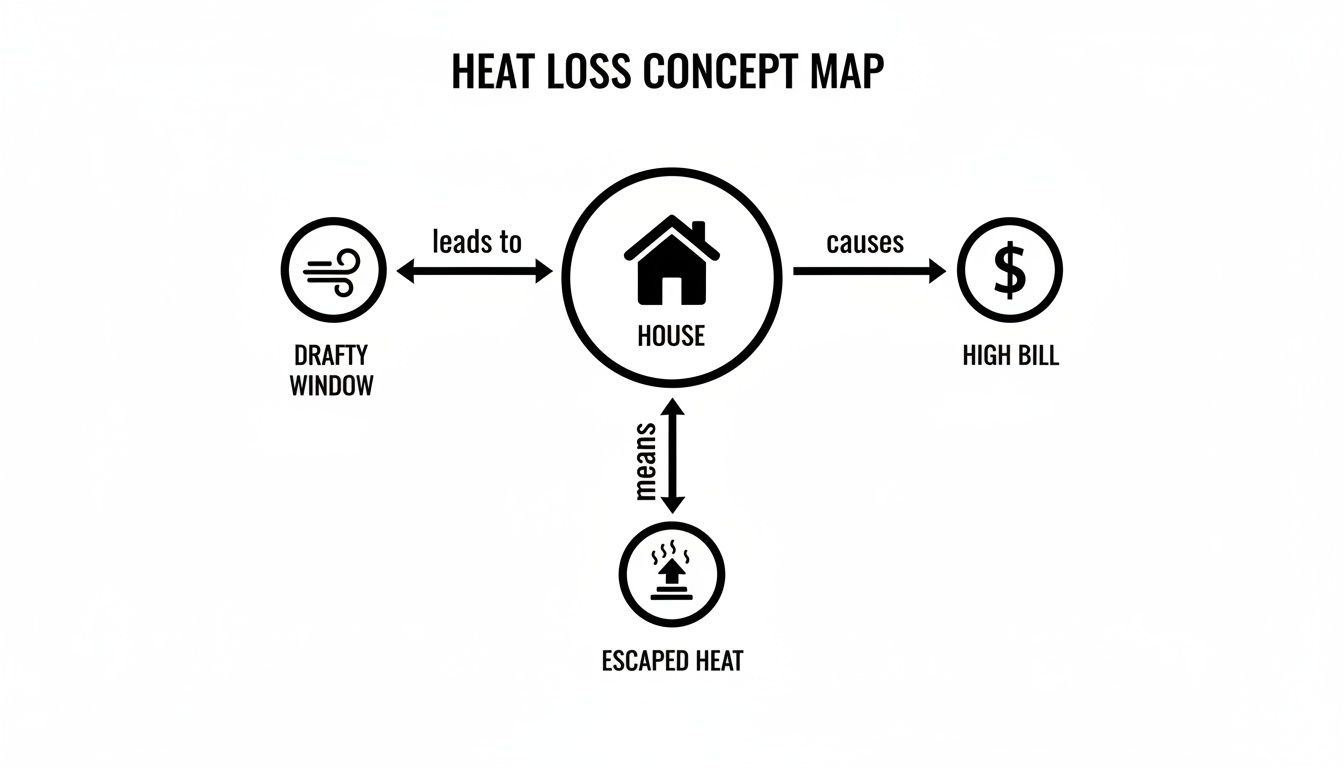
As you can see below, a poorly performing window is a major source of heat loss, which translates directly into higher energy bills. It's like leaving a door wide open in the middle of winter.
U-Factor: The Most Important Number for the Cold
The first and most critical metric for any cold climate is the U-Factor. This number tells you how well the window prevents heat from escaping your home.
Think of it like a golf score: the lower, the better. A low U-Factor means you have a top-tier insulator that’s going to keep the warm air you're paying for right where it belongs—inside. For a place with chilly winters, this rating is non-negotiable. We recommend looking for a U-Factor of 0.30 or lower. The absolute best performers, like high-quality triple-pane windows, can achieve even lower numbers.
A low U-Factor is the cornerstone of an energy-efficient window in a cold climate. It's the primary indicator of how well a window insulates, and it has a direct, measurable impact on your heating costs and winter comfort.
Solar Heat Gain: Using the Sun to Your Advantage
Next up is the Solar Heat Gain Coefficient (SHGC). This measures how much of the sun's natural heat the window lets into your home, rated on a scale from 0 to 1.
In cold climates, a higher SHGC can be a huge asset. On a sunny winter day, that window essentially becomes a passive heater, letting in free warmth from the sun and giving your furnace a much-needed break. It's all about finding the right balance.
For a deeper dive, the Window Design Guidance for New Homes in a Cold Climate study shows just how much impact a strategic SHGC can have, especially on south-facing walls where you can capture the most winter sun. High-performance windows can turn sunlight into free heat.
Other Key Ratings to Check
While U-Factor and SHGC are the big two for cold-weather performance, there are a couple of other ratings on the NFRC label that give you the full picture.
- Visible Transmittance (VT): This tells you how much visible light passes through the glass. A higher VT (closer to 1) means more natural daylight, which can make your home feel more open and reduce your reliance on artificial lighting.
- Air Leakage (AL): This is a big one for drafts. It measures how much air can seep through the window's joints. You want this number to be as low as possible—look for an AL rating of 0.30 or less to ensure a tight seal.
Now that you know what these numbers mean, you can look past the sales pitches and compare windows like a pro. This data empowers you to choose a product truly engineered to handle a cold climate.
To make it even easier, here’s a quick-reference table summarizing what to look for on that NFRC label.
Ideal Window Performance Ratings for Cold Climates
This table summarizes the key metrics and ideal values to aim for when selecting windows for a cold climate like Utah's.
| Performance Metric | What It Measures | Ideal Range for Cold Climates |
|---|---|---|
| U-Factor | Rate of heat loss (insulation) | 0.30 or lower (lower is better) |
| Solar Heat Gain (SHGC) | How much solar heat is transmitted | 0.40 to 0.55 (higher is often better) |
| Visible Transmittance (VT) | How much visible light gets through | 0.50 or higher (higher is brighter) |
| Air Leakage (AL) | How much air passes through joints | 0.30 or lower (lower is better) |
Focusing on these ratings will ensure you choose windows that not only look great but also deliver real, measurable savings and a more comfortable home year-round.
Understanding the Anatomy of a High-Performance Window
A great window is so much more than just a pane of glass. It’s a complete system, an engineered assembly where every single component works together to create a formidable barrier against the cold. Once you understand these individual parts, you’ll see exactly why certain windows are champions at keeping your home cozy and your heating bills in check.
The heart of any window’s insulating power lies in its glazing—the glass package itself. While old single-pane windows are a thing of the past, even standard double-pane units can really struggle when Utah’s winter winds start blowing. The real magic happens when you add more layers and specialized technologies between them.
From a Jacket to a Winter Coat: The Power of Multiple Panes
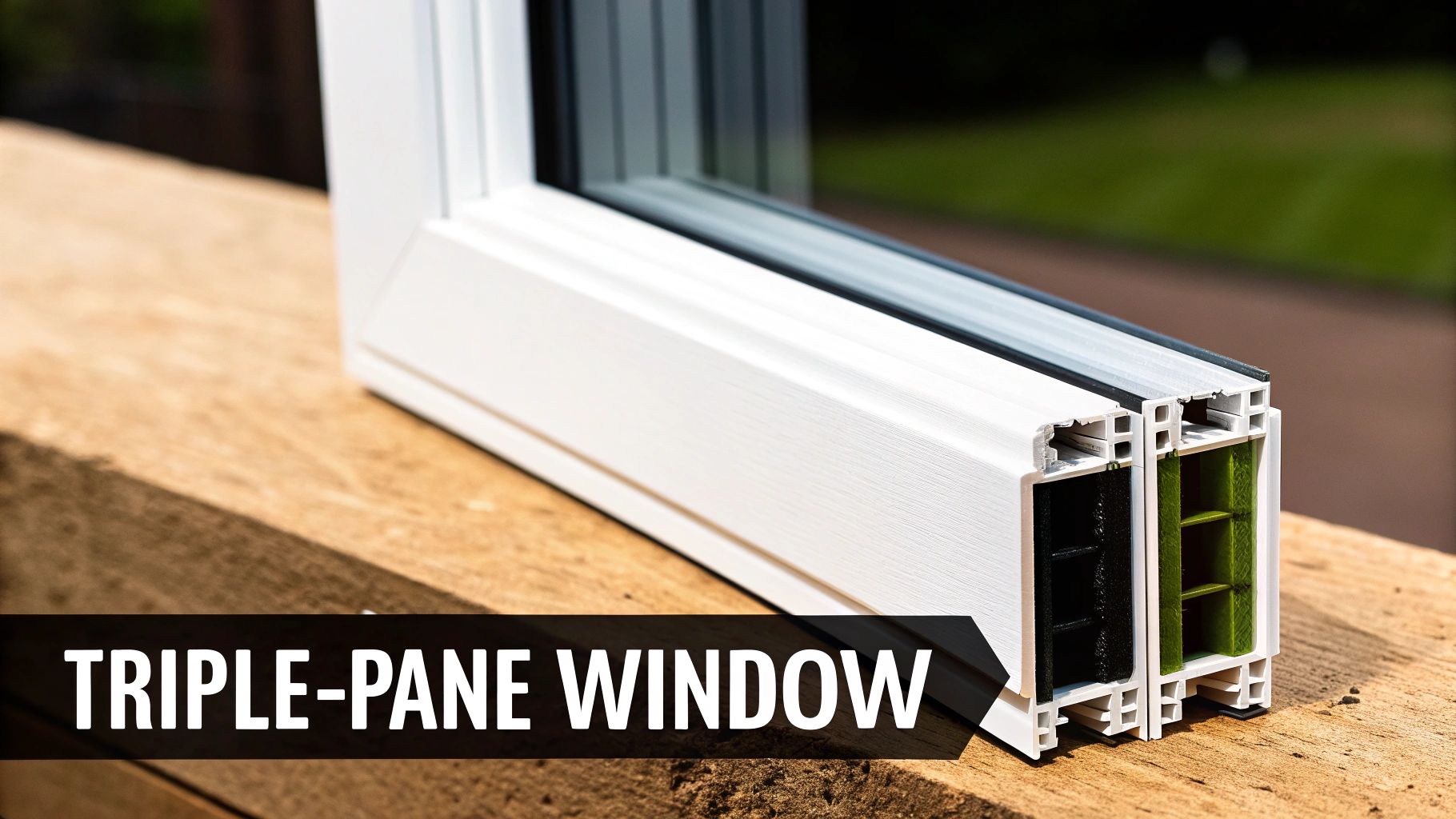
Think of jumping from a double-pane to a triple-pane window like upgrading your winter coat. A double-pane window is a decent jacket; it gives you a basic layer of protection and it’s a world better than nothing. It creates a single air gap that slows down heat trying to escape.
But a triple-pane window? That's your full-blown, multi-layered winter parka. The third pane of glass creates a second insulating air pocket, which drastically improves the window’s ability to fight off the bitter cold. This extra barrier is what drives the U-Factor down to incredibly low levels, making triple-pane the undisputed gold standard for the best windows for cold climates.
A triple-pane window doesn't just add one more layer of glass; it adds an entire extra insulating chamber. This design enhancement is one of the most effective ways to reduce heat loss, minimize interior condensation, and create a noticeably warmer and more comfortable living space.
The Invisible Shield: Low-E Coatings
Even with multiple panes of glass, your home’s warmth can still radiate straight through. This is where Low-E (low-emissivity) coatings come in. A Low-E coating is an ultra-thin, totally transparent layer of metallic oxides applied to one or more of the glass surfaces safely inside the sealed window unit.
This coating acts like an invisible heat-reflecting shield. During a cold winter, it reflects the precious heat generated by your furnace back into your room, stopping it from escaping outside. At the same time, it allows the sun's warming rays to pass through, giving you the benefit of free passive solar heat. It's a simple but brilliant technology that massively boosts a window’s insulating power without changing your view one bit.
The Insulating Blanket: Inert Gas Fills
The space between the glass panes isn't just empty air, either. In high-performance windows, that gap is filled with a dense, inert gas—most often argon or, in some premium models, krypton. These gases are much heavier and slower-moving than regular air.
You can think of this gas fill as a thick, cozy blanket tucked between the panes. Because argon molecules move so much more sluggishly than air molecules, they are terrible at transferring heat. This creates a much more effective thermal buffer, slowing down heat loss and further shrinking the window's overall U-Factor.
Comparing Window Glazing Technologies
This table breaks down how these glazing options stack up against each other, helping you see the clear progression in performance and what it means for your home.
| Glazing Feature | Standard Double-Pane | Advanced Double-Pane (Low-E & Gas Fill) | Triple-Pane (Low-E & Gas Fill) |
|---|---|---|---|
| Insulating Power | Basic | Good | Excellent |
| Heat Loss | High | Reduced | Significantly Reduced |
| Condensation Risk | Higher | Lower | Minimal |
| Best For | Mild climates | Moderate cold climates | Harsh, cold climates like Utah |
This combination of features—multiple panes, Low-E coatings, and gas fills—works as a team to create a complete thermal defense system for your home. Each component tackles a different way heat tries to escape, which is why a window armed with all three offers such superior, tangible results.
When you invest in a window with these advanced components, you aren't just buying glass. You are investing in a sophisticated system designed to keep your home warm, quiet, and efficient, ensuring you stay comfortable through even the harshest winter weather. That is the true anatomy of a high-performance window.
Choosing the Right Frame Material for Insulation and Durability
While the glass is the star of the show when it comes to a window's thermal performance, the frame is its unsung hero. It's the backbone holding everything together. The material you choose for that frame has a huge impact on insulation, long-term durability, and how much maintenance you’ll be doing down the road.
Think of it this way: you wouldn't put a high-performance engine in a car with a flimsy frame. The same goes for windows. The most advanced triple-pane glass package won't do you much good if it's held in place by a frame that bleeds heat and can't stand up to a Utah winter.
Why Materials Like Vinyl and Fiberglass Excel
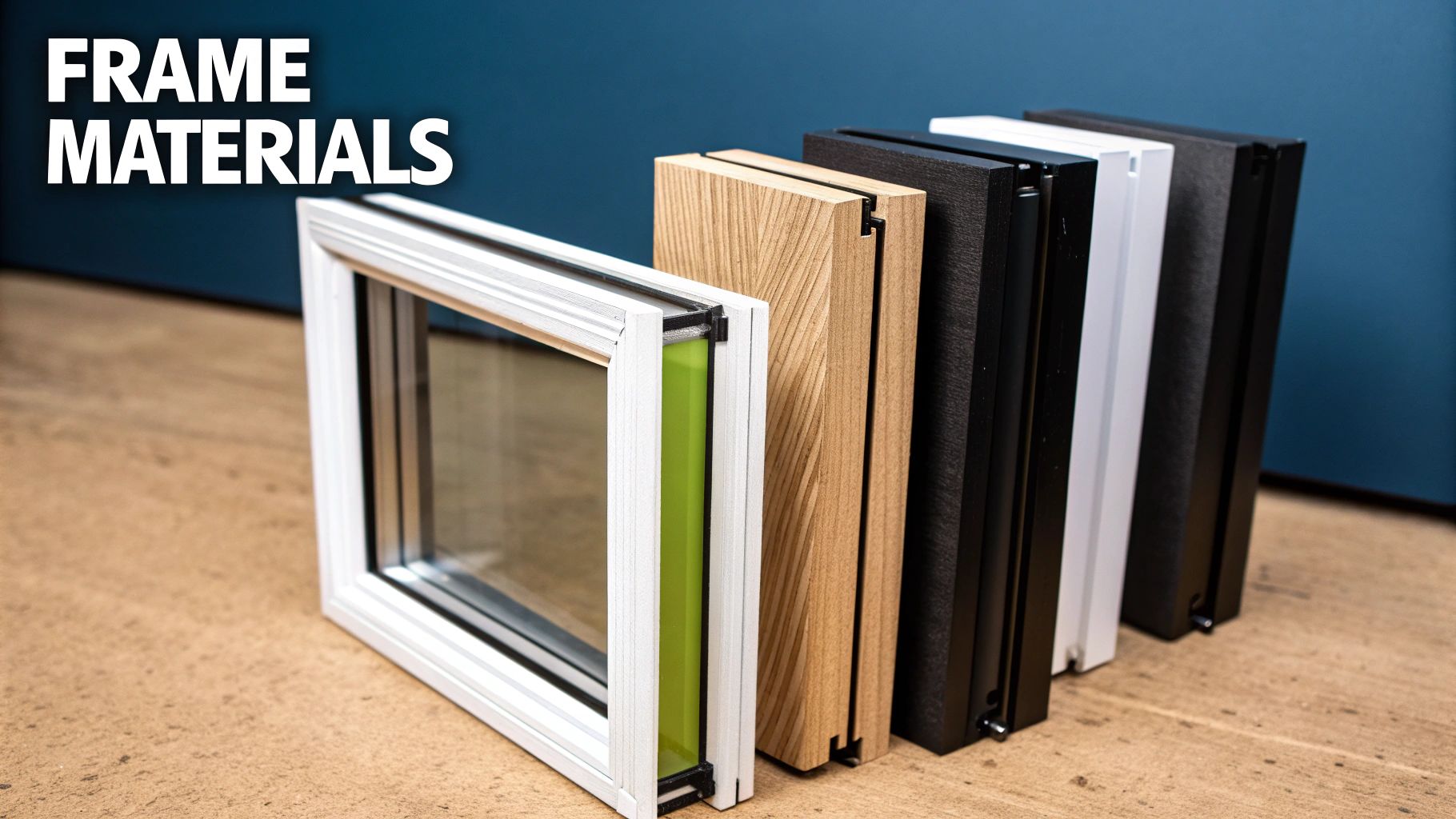
For anyone living in Utah or another cold region, vinyl (uPVC) and fiberglass frames are the top contenders, and for good reason. These materials are natural insulators, which means they’re inherently bad at transferring heat. They don’t act like a highway for cold to travel from the outside in, keeping the entire window unit warmer and more efficient.
But their advantages don't stop at insulation. Both vinyl and fiberglass are incredibly tough and require very little upkeep. They won't warp, crack, or rot when faced with the harsh temperature swings we get here. That stability is key because it means the window’s airtight seals stay tight for years, preventing those annoying drafts that can pop up as a window gets older.
- Vinyl (uPVC) Frames: This is a hugely popular and budget-friendly choice. Modern vinyl frames aren't just solid plastic; they're engineered with multiple hollow chambers inside. These air pockets create extra insulating barriers, slowing down heat loss even more.
- Fiberglass Frames: Known for being exceptionally strong and stable, fiberglass frames barely expand or contract as temperatures plummet or soar. This means they maintain a perfect seal and can easily handle the weight of heavy triple-pane glass units without breaking a sweat.
The Problem with Traditional Aluminum Frames
On the other end of the spectrum, you have traditional aluminum frames—a notoriously poor choice for cold climates. Aluminum is a metal, and like most metals, it's highly conductive. It moves heat with incredible ease. So when it's freezing outside, that standard aluminum frame gets ice-cold and creates a thermal bridge, letting your home's precious warmth flow right outside.
This thermal bridging doesn't just drive up your heating bills. It creates a secondary problem that can be just as frustrating: condensation. The frigid interior surface of the frame chills the air around it, causing moisture to bead up. This can lead to icy frost on your windows, water damage on your sills and walls, and eventually, a breeding ground for mold.
Modern aluminum windows often try to solve this with a "thermal break"—a strip of less-conductive material separating the inner and outer parts of the frame. While it helps, they still tend to underperform compared to vinyl or fiberglass in truly cold conditions.
What About Classic Wood Frames?
There's no denying the classic beauty of a wood window. Wood is a fantastic natural insulator and, from a purely thermal standpoint, it does a great job of slowing heat transfer. The catch? Maintenance.
In a climate with heavy snow and ice, wood frames require your constant attention. Without regular painting or sealing, they’re vulnerable to moisture damage, which leads to rot, warping, and peeling paint. A well-cared-for wood window can last a lifetime, but it’s a serious commitment—one that many people would rather avoid when high-performance, low-maintenance options like vinyl and fiberglass are readily available.
Ultimately, picking the right frame material is a balancing act between looks, budget, and—most critically—thermal performance. For the tough demands of a cold climate, a material with built-in insulation and long-term durability is the smartest investment you can make.
Why Great Windows Need Great Installation
You can pick out the most energy-efficient, top-of-the-line triple-pane window money can buy, but if it’s not installed correctly, those impressive performance numbers mean absolutely nothing. Think of it this way: a high-performance window is only half of the equation. The other half is how it’s expertly fitted into the unique opening of your home’s wall.
The gap between a window’s lab-tested potential and its actual, real-world performance is closed by the skill of the installer. A poorly installed window, no matter how expensive, is just another drafty piece of glass.
The High Cost of Cutting Corners
Even the smallest installation mistake can completely tank your investment. These errors are far more common than people think, and they can lead to a whole host of problems that cancel out the very benefits you paid for.
Common installation slip-ups include:
- Bad Seals: Tiny, invisible gaps around the window frame let air whistle through, creating constant drafts and driving up your heating costs.
- Missing Insulation: The space between the window frame and the wall’s rough opening has to be properly insulated. If it’s not, you’ve just created a "thermal bridge"—a superhighway for heat to escape your home.
- Faulty Flashing: When exterior flashing and sealing aren't done right, water gets channeled behind your siding. This is a recipe for wood rot, mold, and serious structural headaches down the road.
These aren't just minor annoyances; they actively sabotage your home's efficiency. In some cases, a brand-new, poorly installed window can perform worse than the old one you were so happy to get rid of.
The Installer: Your Performance Insurance Policy
This is exactly why hiring a true professional is so critical. It’s not just another line item on the invoice; it’s an insurance policy on your window's performance. An experienced crew understands the challenges of our local climate and knows exactly how to work with the different types of homes we have here in Utah.
Investing in expert installation is the only way to guarantee your new windows deliver every bit of the thermal performance, comfort, and energy savings promised on that NFRC label. It’s the final, crucial step that makes the whole project worthwhile.
A professional team makes sure every window is set perfectly level, square, and plumb to create a truly weathertight seal. They use the right materials and techniques to insulate the gaps around the frame, locking in your home's precious heat. At Superior Home Improvement, our certified installers and 10-year workmanship warranty give you the confidence that your investment is protected and will perform exactly as it should.
Ultimately, choosing professional installation means you actually get what you paid for.
Calculating the Return on Your Window Investment
It’s easy to think of new windows as just another home improvement project, but they’re much more than that. Think of them as a strategic financial investment that starts paying you back from day one. This is where all those technical details—like U-Factors and Low-E coatings—stop being abstract concepts and start putting real money back in your pocket.
The most obvious payback comes from your lower heating bills, but the value doesn't stop there. This is an investment that works for you in three distinct ways: immediate energy savings, a boost to your long-term property value, and a priceless improvement in your day-to-day comfort.
Quantifying Your Energy Savings
High-performance windows get to work the second they’re installed. By drastically cutting down on heat loss, they give your furnace a much-needed break. It simply doesn't have to work as hard or run as often to keep your home warm, which translates directly into lower energy bills, especially during our long Utah winters.
And this isn't just theory—the numbers back it up. Homeowners who make the switch to ENERGY STAR qualified windows can see annual savings between $149 and $304. In colder regions like ours, you can expect those savings to be on the higher end of the scale. You can dig into the specifics by checking out ENERGY STAR's official resources.
Boosting Property Value and Comfort
Beyond the month-to-month savings, new energy-efficient windows are a powerful selling point that can genuinely increase what your home is worth. When potential buyers tour a property, they see new windows as a clear sign of a well-cared-for home and an assurance of lower utility costs ahead.
But honestly, some of the best returns can't be measured in dollars and cents. Imagine eliminating those chilly drafts that always seem to find you, enjoying consistent temperatures from room to room, and appreciating the peace and quiet that comes from better sound insulation.
The ability to sit comfortably next to a window on a freezing day without feeling a chill is a quality-of-life upgrade that you'll appreciate every single winter. This enhanced comfort is an invaluable part of your return on investment.
When you add it all up—the lower bills, the higher property value, and the simple fact that your home feels better—it’s clear that high-performance windows are one of the smartest upgrades you can make. And with programs like Superior Home Improvement's Energy Conservation Program, those returns become even more of a sure thing.
Frequently Asked Questions About Windows for Cold Climates
Choosing new windows brings up a lot of questions, especially when you live somewhere with winters that don't mess around. Getting good, straight answers is key to making a confident investment in your home. Let's tackle some of the most common things homeowners ask when they're on the hunt for the best windows for cold climates.
Are Triple-Pane Windows Worth the Extra Cost?
For most of us here in Utah and other cold climates, the answer is a definite yes. Think of it this way: a good double-pane window with all the modern features is like a solid winter coat. It works. But a triple-pane window? That's the high-performance parka you grab when the temperature really plunges.
That third pane of glass creates a second pocket of insulation, which dramatically cuts down on heat loss. You'll see that reflected in a much lower U-Factor, but you'll feel it by being able to sit comfortably right next to your windows, even on the coldest nights. The higher upfront cost is almost always paid back over the life of the windows through lower heating bills and a huge leap in everyday comfort.
How Do I Know When My Windows Need Replacing?
Sometimes it's obvious—cracked glass, a frame that's clearly rotting away. But more often, the signs are about how the window performs.
If you can feel a noticeable chill or draft when you stand near your windows, that’s your home’s heated air literally flying out the window. It’s a dead giveaway that your windows are failing.
An even bigger red flag is condensation, fog, or frost that forms between the panes of glass. This means the airtight seal has broken, the insulating gas has leaked out, and moisture has gotten in. If you're wondering, "Why Are My Windows Foggy?", it’s often pointing to this exact problem. Honestly, if your windows are over 15-20 years old, they're from a different era of technology and are almost certainly a weak link in your home's energy efficiency.
Will New Windows Also Help Reduce Outside Noise?
Absolutely. This is one of the best side-perks of an energy-efficient window upgrade. The very same things that make a window great at blocking the cold also make it fantastic at blocking sound.
Here’s a quick breakdown of why:
- More Glass: Every pane of glass is a physical barrier that sound waves have to fight through.
- Denser Gas: The argon or krypton gas between the panes is much denser than regular air, which deadens sound vibrations as they try to pass.
- Varied Thickness: High-end windows sometimes use panes of different thicknesses, a clever trick that disrupts a wider range of sound frequencies.
Moving from old single-pane windows to new double- or triple-pane units can be a night-and-day difference, quieting noise from traffic, loud neighbors, or gusty storms.
Should I Install New Windows Myself?
I get the appeal of a DIY project, but window installation is one job where professional hands are non-negotiable if you want the performance you're paying for. The energy-saving specs on a window sticker mean nothing without a perfect, airtight installation.
A small mistake in installation—such as an improper seal or inadequate insulation around the frame—can lead to major problems like air and water leaks. These issues not only cause structural damage but can completely negate your window's efficiency benefits and may even void the manufacturer's warranty.
Hiring a certified professional isn't just an extra cost; it's insurance for your investment. It's the only way to guarantee your new windows will deliver the comfort and savings you're expecting for decades to come.
Ready to transform your home’s comfort and efficiency? The team at Superior Home Improvement has over 50 years of experience installing the best windows for Utah’s climate. Schedule your free, no-obligation consultation today and learn how our triple-pane windows and Energy Conservation Program can protect your home.