
Rising energy costs have homeowners across Utah searching for effective ways to cut down on monthly utility bills. While professional energy audits offer deep, data-driven insights, a comprehensive do-it-yourself inspection is an invaluable first step. It empowers you to identify the most significant sources of energy waste in your home and take immediate action. This practical home energy audit checklist provides a structured, system-by-system guide to pinpointing precisely where your home is losing precious heat in the winter and gaining unwanted heat in the summer.
From drafty windows and aging weather stripping to an under-insulated attic, each checkpoint on our list represents a tangible opportunity to improve your home’s comfort, lower your carbon footprint, and generate real savings. We'll walk you through what to look for, the simple tools you’ll need, and easy DIY fixes you can implement this weekend. For a more comprehensive guide and additional tips, refer to our detailed home energy audit checklist.
Crucially, this guide also clarifies when a simple fix isn't enough and it’s time to call in professionals for high-impact upgrades. Major improvements like installing new triple-pane windows, advanced insulated siding, or a modern, energy-efficient roof system are investments that deliver substantial returns. For example, a professionally installed roofing and window package from a specialist like Superior Home Improvement can reduce your annual energy bills by up to 40%. Let’s begin your journey toward a more comfortable, efficient, and cost-effective home.
1. Window Energy Performance Assessment (U-Factor and SHGC Rating)
A crucial first step in any home energy audit checklist is evaluating your windows, which can be responsible for 25% to 30% of residential heating and cooling energy use. A Window Energy Performance Assessment goes beyond simply checking for drafts. It involves identifying the specific thermal efficiency ratings of your windows, primarily their U-Factor and Solar Heat Gain Coefficient (SHGC), to understand exactly how they perform in Utah’s distinct seasons.
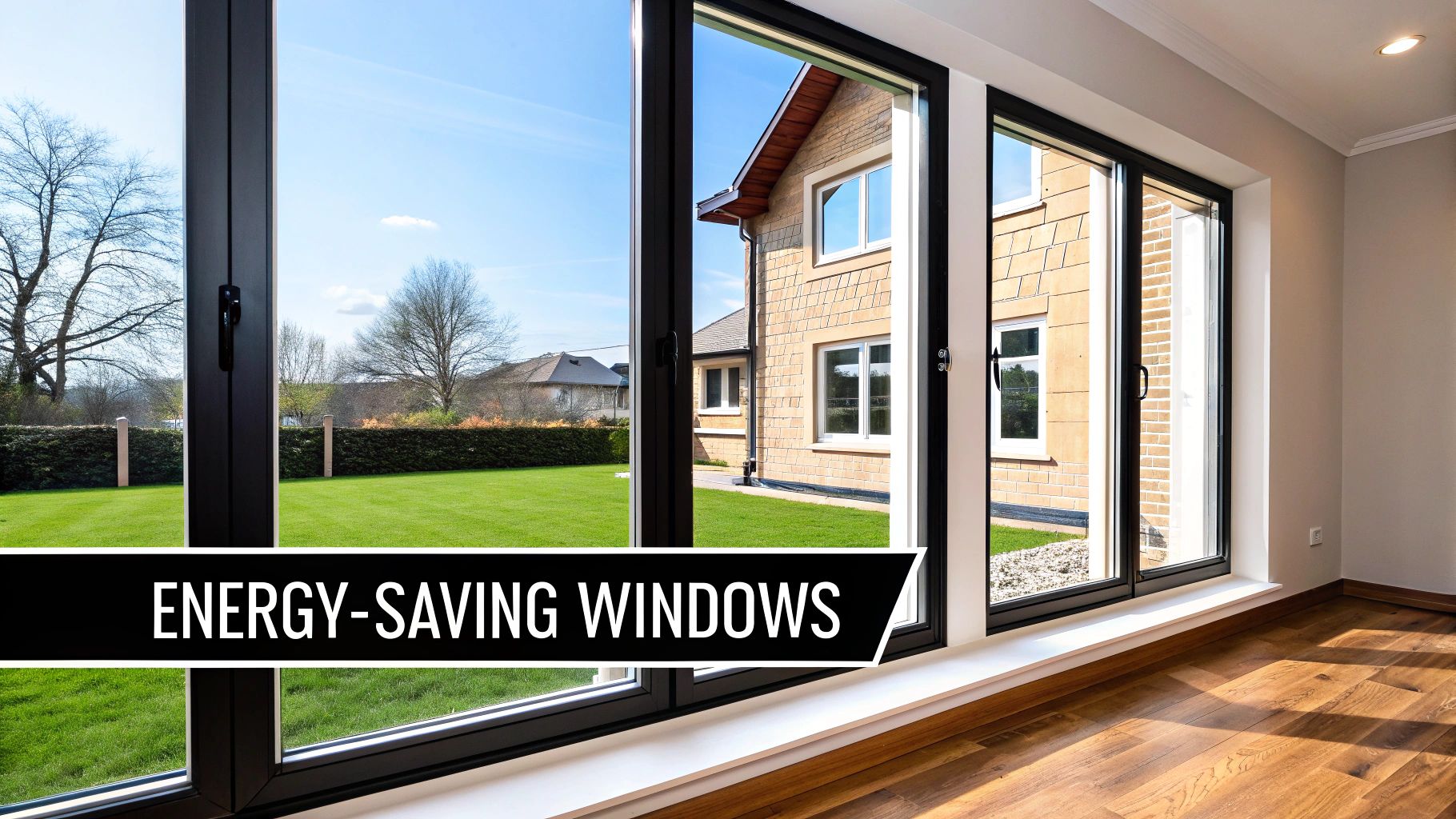
U-Factor measures how well a window prevents heat from escaping, with lower numbers indicating better insulation. SHGC measures how much solar radiation it allows to pass through, heating your home. An ideal window for a four-season climate like Utah’s has a low U-Factor to retain heat during frigid winters and a low SHGC to block unwanted solar heat during hot summers.
How to Assess Your Windows
Look for the National Fenestration Rating Council (NFRC) label on your windows, typically found on the glass or frame. This label provides certified U-Factor and SHGC ratings. If no label is present, your windows are likely older, unrated, and inefficient. For example, a single-pane window may have a U-Factor of 1.20 or higher, while a high-performance triple-pane window from Superior Home Improvement can achieve a U-Factor as low as 0.15.
Actionable Tips for Utah Homeowners
- Prioritize Strategically: Focus on south- and west-facing windows first. Upgrading these provides the biggest impact on reducing summer cooling costs.
- Seek Certification: Always request NFRC and ENERGY STAR certified windows to guarantee performance claims. This ensures you get the efficiency you pay for.
- Plan a Phased Upgrade: If a full replacement isn't feasible, use a free consultation to map out a phased strategy. Start with the least efficient windows or the rooms you use most.
- Holistic Approach: Combine window upgrades with an attic insulation and roofing assessment. A high-performance window is less effective if heat is escaping through a poorly insulated roof.
Upgrading from old single-pane to modern triple-pane windows can significantly enhance comfort and reduce energy bills. Homeowners in Salt Lake City often report heating bill reductions of 25-35% after making this switch, showcasing a clear return on investment.
2. Roof Condition and Thermal Performance Evaluation
Your roof is the home's primary defense against the elements, making its condition a critical component of any home energy audit checklist. This evaluation goes beyond looking for missing shingles; it involves assessing the roof's age, material, color, and ventilation to understand its impact on your home's thermal performance. In Utah, where intense summer sun and heavy winter snow are common, an inefficient roof can dramatically increase both heating and cooling costs.
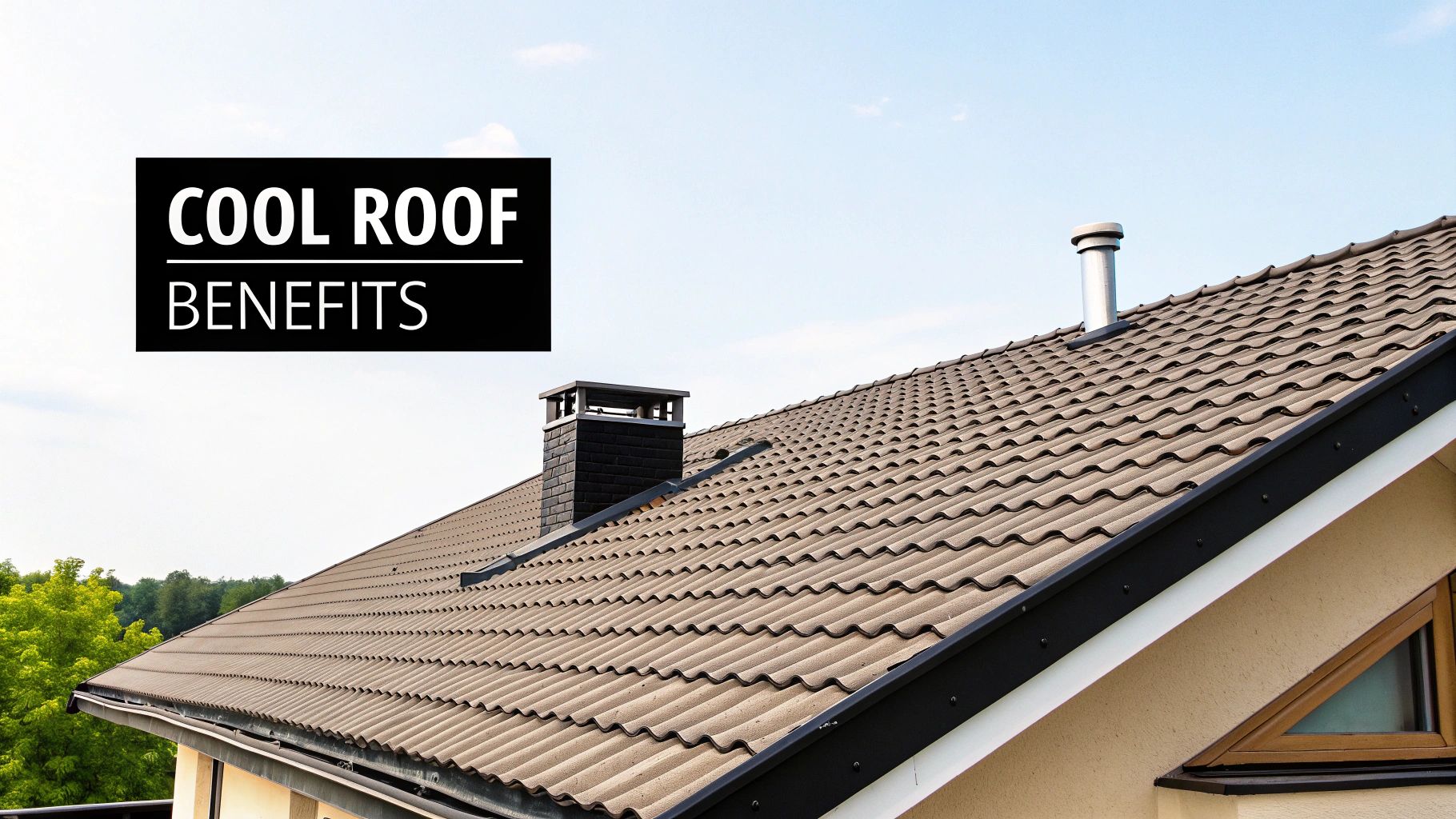
A key factor is solar radiation absorption. Traditional dark asphalt shingles can absorb up to 90% of solar energy, transferring that heat directly into your attic and living spaces. In contrast, modern "cool roof" materials, certified by the Cool Roof Rating Council (CRRC), reflect sunlight and can reduce attic temperatures by 20-30°F, significantly easing the load on your air conditioner.
How to Assess Your Roof
Start with a visual inspection from the ground using binoculars. Look for cracked, curling, or missing shingles, signs of moss or algae, and rusted or damaged flashing around chimneys and vents. Note your roof’s material and color. If you have an asphalt shingle roof that is over 15-20 years old and dark in color, it is likely a prime candidate for an energy-efficient upgrade. For example, a standard asphalt roof has a low solar reflectance, while a modern metal roof from Superior Home Improvement can reflect over 70% of solar rays.
Actionable Tips for Utah Homeowners
- Inspect Before Winter: Check your roof's condition in the fall to identify potential issues that could lead to ice dams and costly water damage during Utah's harsh winters.
- Choose Reflective Materials: If high cooling costs are your main concern, prioritize light-colored asphalt shingles or metal roofing to reduce summer heat gain.
- Pair with Insulation: For maximum impact, combine a roof replacement with an attic insulation upgrade. This creates a powerful thermal barrier that keeps your home comfortable year-round.
- Prioritize Durability: In foothill and mountain communities, select roofing materials with high wind-resistance ratings to withstand local weather patterns.
Upgrading to a modern, energy-efficient roofing system offers a dual benefit. Salt Lake City homeowners who switch to metal roofing often report a 15-20% reduction in summer cooling costs while also gaining a durable, 50+ year lifespan for their investment.
3. Wall Insulation and Air Sealing Assessment
While attic insulation often gets the most attention, your home's walls are a massive surface area that can account for 15% to 25% of total heat loss. A wall insulation and air sealing assessment is a critical part of any home energy audit checklist, evaluating the R-value of your insulation and identifying tiny cracks and gaps that let conditioned air escape. This two-part checkup reveals how effectively your home’s vertical envelope protects you from Utah’s harsh weather.
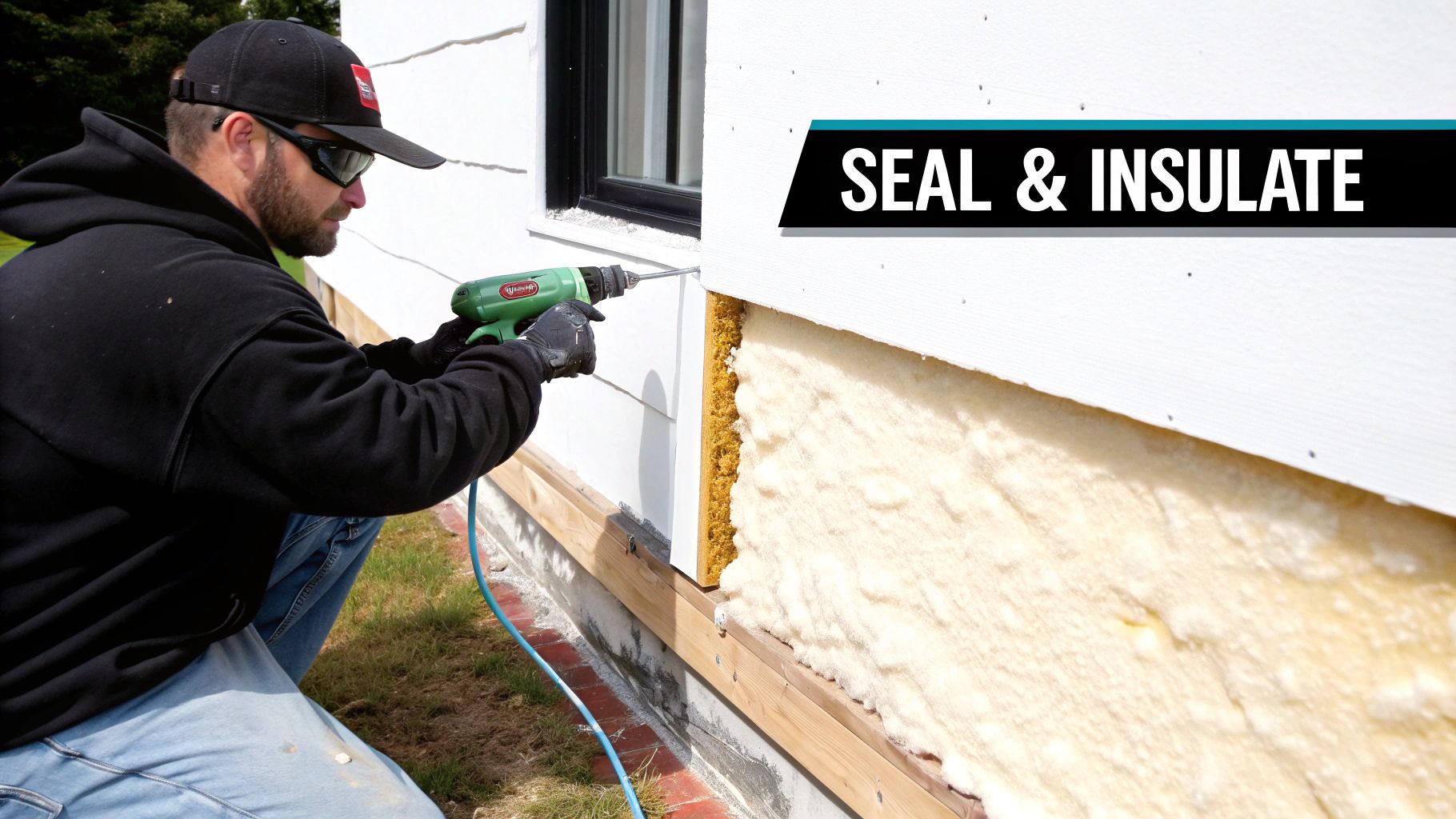
Many homes in Utah built between the 1970s and 1990s have wall insulation rated at R-11 or less, which is insufficient for today’s energy standards. Compounding this, air leakage through unsealed penetrations around outlets, pipes, and window frames can create significant drafts and energy waste. Upgrading your wall system provides a double benefit: improved thermal resistance and a more airtight barrier.
How to Assess Your Walls
A professional assessment often uses a thermal imaging camera to visually identify cold spots indicating missing or settled insulation. A blower door test can precisely measure your home's overall air infiltration rate, quantifying the impact of leaks. For a DIY check, you can carefully remove an outlet cover (with the power off) to peek into the wall cavity and identify the type and depth of insulation present.
Actionable Tips for Utah Homeowners
- Prioritize Air Sealing: The most cost-effective first step is sealing air leaks. Use caulk and foam to seal gaps around window frames, door trim, and any exterior wall penetrations.
- Focus on Problem Walls: Pay special attention to north-facing walls and those exposed to high winds, as they typically lose the most heat during winter.
- Combine Upgrades for Max Impact: The best time to add wall insulation is during a siding replacement. Superior Home Improvement can install insulated siding or add a layer of rigid foam sheathing underneath new siding, dramatically boosting your wall's R-value and weather resistance.
- Consider Blown-In Insulation: If your walls are uninsulated but your siding is in good shape, having cellulose or fiberglass insulation blown into the wall cavities is a highly effective, minimally invasive upgrade.
Upgrading from under-insulated walls to a properly sealed and insulated system can reduce heating costs by 10-15%. Homeowners in older Salt Lake City neighborhoods often report a significant increase in comfort and a noticeable reduction in drafts after completing a siding and insulation project.
4. Air Duct Sealing and HVAC System Efficiency Check
A vital, yet often overlooked, part of a home energy audit checklist involves your HVAC system's arteries: the air ducts. Your furnace and air conditioner can’t perform efficiently if the conditioned air they produce escapes before reaching your living spaces. Leaky ductwork in attics, crawlspaces, or unconditioned basements can account for 15% to 30% of heating and cooling energy loss, creating uncomfortable hot and cold spots and needlessly inflating utility bills.
An HVAC system check assesses the integrity of your ductwork and the performance of your furnace and AC unit. The goal is to ensure that every bit of heated or cooled air is delivered where it's needed most. In Utah's climate, where attic temperatures can soar above 130°F, uninsulated ducts can lose 10-15% of their cooling capacity just traveling from the AC unit to a vent, forcing your system to work much harder.
How to Assess Your HVAC System
Visually inspect accessible ductwork in your attic, basement, or crawlspace for disconnected joints, holes, or gaps. You can confirm leaks by holding a smoke pen or a thin piece of tissue near seams while the system is running. For a more precise measurement, a professional can perform a duct blaster test to quantify the exact amount of air leakage. Also, check the age and maintenance history of your furnace and air conditioner.
Actionable Tips for Utah Homeowners
- Seal, Don't Tape: Use mastic sealant or metal-backed foil tape to seal all visible leaks and joints. Standard cloth-backed duct tape is not a long-term solution and will quickly fail under temperature changes.
- Insulate the Ducts: Wrap ducts in unconditioned spaces with at least R-6 foil-faced insulation. This is especially critical for ducts running through hot attics or cold crawlspaces.
- Check System Sizing: After completing major building envelope upgrades like new triple-pane windows or insulated siding from Superior Home Improvement, have your HVAC system evaluated. An oversized system will cycle inefficiently, wasting energy and wearing out faster.
- Maintain Airflow: Change your furnace filter regularly (monthly is best) and ensure all supply and return air registers are clean and unblocked by furniture or rugs to maintain proper airflow balance.
Effectively sealing and insulating your ductwork can be one of the most cost-effective energy improvements you can make. Homes in older Salt Lake City neighborhoods with unsealed ducts often see a 20-30% improvement in heating and cooling efficiency after a proper sealing and insulation job.
5. Foundation and Basement Thermal Performance Review
Often overlooked in a standard home energy audit checklist, the foundation and basement are significant sources of heat loss, potentially accounting for 10% to 15% of your home's total energy waste. A Foundation and Basement Thermal Performance Review involves a detailed inspection of your basement walls, rim joists, and below-grade insulation. This assessment identifies thermal weak points where cold air infiltrates and conditioned air escapes, directly impacting your home’s comfort and utility bills.
In a climate like Utah's, an uninsulated or poorly sealed basement acts like a massive heat sink, pulling warmth from the living spaces above. Key areas of concern are the rim joists (the wooden perimeter where the foundation meets the house frame) and uninsulated concrete walls. Addressing these areas not only saves energy but also reduces drafts and prevents moisture issues like condensation and mold growth.
How to Assess Your Foundation and Basement
Start by visually inspecting the rim joists, which are located at the top of your foundation walls between the floor joists. Look for visible gaps, daylight, or old, compressed fiberglass insulation, all of which are signs of significant air leakage. Next, check the concrete foundation walls for moisture, cracks, or a lack of insulation. In finished basements, you may need to look for signs like cold spots on the walls or peeling paint, which can indicate poor insulation and moisture problems behind the drywall.
Actionable Tips for Utah Homeowners
- Prioritize the Rim Joists: Sealing and insulating the rim joists offers the highest return on investment for basement energy efficiency. Use closed-cell spray foam or carefully cut rigid foam boards sealed with caulk for an effective air and thermal barrier.
- Choose the Right Insulation: For foundation walls, rigid foam board is an excellent choice as it provides a continuous layer of insulation and acts as a vapor barrier. Proper installation, with the vapor barrier facing the warm side of the wall, is critical.
- Address Moisture First: Before adding any insulation, ensure your basement is dry. Seal all cracks in the foundation and confirm that exterior grading and drainage systems effectively divert water away from your home.
- Control Indoor Humidity: After sealing and insulating, monitor your basement's humidity levels, aiming for 30-50%. A dehumidifier may be necessary to maintain healthy indoor air quality and protect your investment.
Properly insulating your basement can dramatically improve comfort, with homeowners in Salt Lake City often noting that adjacent rooms are 10-15°F warmer in winter. A fully insulated and sealed basement can maintain comfortable temperatures year-round, transforming it into usable living space while lowering your overall energy consumption.
6. Attic Insulation Level and Ventilation Adequacy Check
The attic is often the single most significant source of heat loss in a home, making it a top priority in any home energy audit checklist. An Attic Insulation and Ventilation Check involves assessing the R-value of your existing insulation and ensuring your attic can "breathe" properly. In Utah's climate, a poorly insulated and ventilated attic wastes money on heating bills, promotes destructive ice dams in winter, and can shorten the lifespan of your roof.
Adequate insulation, measured in R-value, resists heat flow, keeping your conditioned air inside. Proper ventilation, through a system of soffit and ridge vents, removes moisture and excess heat. For example, many Utah homes built before 1990 have as little as R-19 in the attic, while modern standards recommend R-50 to R-60. Upgrading can reduce heating costs by 15-25%.
How to Assess Your Attic
Use a tape measure to determine the depth of your insulation. To estimate the R-value, multiply the depth in inches by the R-value per inch for your insulation type (e.g., fiberglass batts are around 3.2, blown-in cellulose is about 3.5). Then, inspect your soffit vents to ensure they are not blocked by insulation, which is a common cause of ice dams. Also look for signs of moisture, like condensation or frost on the underside of the roof sheathing, which indicates a ventilation problem.
Actionable Tips for Utah Homeowners
- Air Seal First: Before adding more insulation, use caulk or foam sealant to seal air leaks around plumbing vents, recessed light fixtures, and the attic hatch. Sealing these gaps can save an additional 5-8% on energy costs.
- Calculate Your Goal: ENERGY STAR recommends R-50 to R-60 for attics in Utah's climate zone. This translates to roughly 15-18 inches of blown-in insulation.
- Clear the Vents: Ensure there is a clear path for air to flow from your soffit vents to your ridge vents. Install baffles if needed to keep insulation from blocking airflow at the eaves.
- Combine with Roofing: The best time to address attic ventilation is during a roof replacement. A professional from Superior Home Improvement can ensure your new roofing system has a balanced ventilation strategy tailored to your home.
A comprehensive attic assessment is one of the most cost-effective upgrades you can make. It not only lowers utility bills but also protects your roof structure from moisture damage and improves year-round home comfort.
7. Door and Weather Stripping Air Sealing Assessment
While windows are a major source of energy loss, poorly sealed doors can quietly sabotage your comfort and efficiency, accounting for a surprising 5% to 10% of a home's heating and cooling energy waste. This part of your home energy audit checklist involves inspecting all exterior doors, including the often-neglected door to the garage and the attic hatch, for gaps and failing seals. Unlike major renovations, improving door seals is a low-cost, high-impact DIY project.
This assessment focuses on identifying worn-out weather stripping, damaged thresholds, and air leaks around the door frame itself. In many Utah homes, the same drafts felt near old windows are also present at entryways. Addressing these leaks provides an immediate boost in comfort by eliminating cold spots and can significantly reduce the workload on your HVAC system, especially during harsh winters and hot summers.
How to Assess Your Doors
Start with a simple visual and physical inspection. Look for cracked, compressed, or missing weather stripping around the door jamb. Close the door and check for any visible daylight around the edges. A more precise method is to hold a lit candle or incense stick near the frame; if the flame or smoke flickers, you have an air leak. Pay special attention to the attic hatch, which is frequently uninsulated and unsealed, creating a major chimney effect for heat loss.
Actionable Tips for Utah Homeowners
- Install Door Sweeps: Add a sweep to the bottom of all exterior doors and the door leading to your garage. This simple barrier effectively blocks drafts and pests.
- Replace Worn Weather Stripping: This is an easy DIY task. Remove the old, brittle stripping and replace it with new material from any hardware store. Check it every few years, especially on doors exposed to direct sun.
- Seal the Attic Hatch: A critical step often missed in a home energy audit checklist. Create an airtight seal by adding foam gasket weather stripping around the perimeter and attaching a rigid foam insulation panel to the back of the hatch door.
- Combine with Other Upgrades: The benefits of a sealed door are amplified when combined with other air-sealing measures. When you upgrade to high-performance windows, ensure your doors are sealed to create a complete, energy-efficient building envelope.
Addressing door drafts is one of the quickest ways to see a return on your efforts. For example, sealing a leaky garage entry door and an uninsulated attic hatch can reduce total heating loss by over 10%, making your home noticeably warmer and your energy bills lower.
8. Air Conditioner and Heat Pump Refrigerant Charge and Coil Cleanliness Verification
While upgrades to your home's exterior are critical, your HVAC system's performance is a major piece of the energy puzzle. This part of a home energy audit checklist involves verifying the correct refrigerant charge and cleanliness of your air conditioner or heat pump. An improperly charged or dirty system can lose 15-25% of its efficiency, forcing it to run longer and harder to cool or heat your home, directly increasing your utility bills.
An undercharged system, for instance, cannot effectively transfer heat, leading to poor cooling on hot Utah summer days despite high electricity consumption. Similarly, dirty evaporator or condenser coils restrict airflow and heat exchange, dramatically reducing the unit's capacity and overall performance. Identifying and correcting these maintenance issues offers a quick way to restore lost efficiency without needing a full system replacement.
How to Assess Your HVAC System
This assessment typically requires a professional HVAC technician. They use specialized gauges to measure refrigerant pressure and temperature to determine if the system has the correct charge specified by the manufacturer. They will also visually inspect the indoor evaporator coil and the outdoor condenser coil for dirt, debris, and blockages. For example, a Utah home with an older AC unit might be running low on refrigerant, causing it to cool ineffectively, while a simple cleaning can restore 15-20% of lost capacity in a unit with a dirty coil.
Actionable Tips for Utah Homeowners
- Schedule Proactive Maintenance: Hire a qualified HVAC technician to check refrigerant levels and clean coils annually. Schedule AC maintenance in the spring and heat pump service in the fall.
- Keep it Clean: Regularly clean the outdoor condenser unit by removing leaves, grass clippings, and other debris. Ensure at least two feet of clear space around the unit for proper airflow.
- Change Filters Religiously: Replace or clean your furnace and AC filters monthly during peak seasons. A clogged filter can reduce airflow and efficiency by 5-15%.
- Reassess After Upgrades: After installing high-performance windows or insulated siding from Superior Home Improvement, your home’s heating and cooling load will be significantly lower. Ask an HVAC pro to reassess if your system is now oversized, which can affect efficiency.
A well-maintained HVAC system works synergistically with a well-sealed building envelope. Ensuring your AC and heat pump run at peak efficiency means you get the maximum benefit and cost savings from your window, siding, and roofing investments.
9. Lighting Type and Controls Assessment (LED Conversion Opportunity)
An often-overlooked yet highly impactful part of a home energy audit checklist involves your lighting. This assessment evaluates every light fixture, from recessed cans to outdoor floodlights, to identify outdated technology like incandescent and CFL bulbs. Upgrading to Light Emitting Diodes (LEDs) is a quick-win retrofit that can reduce lighting energy consumption by 75-85%, directly lowering your monthly utility bills.
Unlike structural upgrades, swapping out light bulbs offers an immediate and noticeable return. A typical Utah home with over 50 incandescent or CFL bulbs can save $20 to $40 per month on electricity costs alone after a full LED conversion. Combining this with smart controls like dimmers and motion sensors further amplifies savings and enhances convenience.
How to Assess Your Lighting
Walk through your home, room by room, and create an inventory of every bulb type. Look for the classic pear-shaped incandescent bulbs or the spiral-shaped CFLs. Pay special attention to high-usage areas like the kitchen and living room, as well as frequently forgotten areas like garages, basements, and closets where lights are often left on. For example, replacing a single 60-watt incandescent bulb used four hours a day with a 9-watt LED saves over $12 annually.
Actionable Tips for Utah Homeowners
- Prioritize High-Use Fixtures: Begin by replacing bulbs in the most frequently used areas, like the kitchen, family room, and primary bedrooms, to see the fastest payback.
- Match Color Temperature: Select the right LED for the space. Use "warm white" (2700K) for a cozy, inviting feel in living areas and "cool white" (4000K-5000K) for task-oriented spaces like kitchens and home offices.
- Install Smart Controls: Add occupancy or motion sensors in low-traffic areas like bathrooms, laundry rooms, and garages to automatically turn lights off when not in use, saving an additional 10-30%.
- Upgrade Outdoor Lighting: Switch porch, landscape, and security lights to ENERGY STAR certified LEDs with timers or dusk-to-dawn sensors to prevent energy waste overnight.
While Superior Home Improvement focuses on the building envelope with windows, roofing, and siding, optimizing your lighting is a crucial complementary step. An efficient home is a system, and reducing your electrical load with LEDs ensures you get the maximum benefit from your larger structural investments.
10. Water Heater Efficiency and Hot Water Pipe Insulation Evaluation
Often overlooked in a standard home energy audit checklist, your water heater is a major energy consumer, accounting for up to 25% of your home's total energy use. This evaluation involves assessing your water heater's age, efficiency rating, temperature setting, and the insulation of its associated hot water pipes. A thorough check reveals opportunities for immediate savings and long-term efficiency gains, which is crucial for managing utility costs in Utah.
Older tank-style heaters, especially those over 15 years old, operate with significant standby heat loss, constantly using energy to keep water hot. Modern tankless and heat pump models can offer 30-50% greater efficiency. For example, a Utah home with a 20-year-old tank heater set to 140°F can waste $20-$30 monthly. Simply lowering the temperature and insulating pipes can save $5-$10, while upgrading to a tankless unit can save over $40 per month.
How to Assess Your Water Heater and Pipes
Start by locating your water heater’s manufacturing date and its Energy Factor (EF) or Uniform Energy Factor (UEF) rating on the label. A higher number indicates better efficiency. Check the temperature dial; the U.S. Department of Energy recommends 120°F for most households. Next, trace the hot water pipes leaving the unit, especially through unheated basements or garages, and feel for heat loss.
Actionable Tips for Utah Homeowners
- Adjust and Insulate: Lower the temperature to a safe and efficient 120°F. Wrap the first six feet of hot and cold water pipes with foam pipe sleeves for an easy, low-cost efficiency boost.
- Perform Annual Maintenance: Drain a gallon of water from the tank annually to remove sediment, which improves heat transfer and efficiency. If your DIY assessment reveals inefficiencies, consider scheduling a professional water heater service to ensure optimal performance.
- Reduce Hot Water Demand: Install low-flow showerheads and faucet aerators. These simple devices can reduce your hot water consumption by 25-30% without sacrificing pressure.
- Plan for Replacement: If your water heater is over 10-15 years old, start researching modern replacements. A heat pump water heater is an excellent choice, especially when combined with a well-insulated home featuring Superior Home Improvement's high-performance windows and siding.
Addressing your water heating system is a powerful step toward a more energy-efficient home. These checks and small adjustments can lead to significant monthly savings and reduce your home's overall environmental impact.
10-Point Home Energy Audit Comparison
| Item | Implementation Complexity 🔄 | Resource Requirements ⚡ | Expected Outcomes 📊⭐ | Ideal Use Cases 💡 | Key Advantages ⭐/Tips |
|---|---|---|---|---|---|
| Window Energy Performance Assessment (U-Factor & SHGC) | Moderate 🔄 — diagnostic measurements; replacement needs pro install | High ⚡ — measurement tools; triple-pane windows are capital-intensive | 📊 15–30% HVAC savings; improved comfort, UV protection ⭐⭐⭐ | 💡 Best for single/double-pane windows, south/west exposures, cold climates | ⭐ Long-term energy & noise reduction; request NFRC labels; prioritize high-ROI facades |
| Roof Condition and Thermal Performance Evaluation | High 🔄 — inspect structure, ventilation; replacement often required | Very high ⚡ — reroof costs vary by material (asphalt → metal) | 📊 10–25% cooling savings (cool roofs); extended roof life ⭐⭐ | 💡 Ideal for aged roofs, summer heat problems, ice-dam risk | ⭐ Extends lifespan, reduces attic temps; pair with insulation upgrades |
| Wall Insulation and Air Sealing Assessment | Moderate 🔄 — blower door, thermal imaging; sealing low-cost, full retrofit disruptive | Variable ⚡ — low for sealing, high for exterior/interior cavity work | 📊 10–20% HVAC savings; reduced drafts and steady temps ⭐⭐ | 💡 Older homes with R‑11 or missing insulation; visible drafts | ⭐ Air sealing = high ROI & quick payback; use thermal imaging; prioritize penetrations |
| Air Duct Sealing & HVAC Efficiency Check | Moderate 🔄 — duct testing/blower tests; may need HVAC pro | Moderate ⚡ — sealing costs low–moderate; replacement expensive | 📊 15–30% potential if ducts are leaky; improved comfort ⭐⭐ | 💡 Homes with hot/cold zones, attic ducts, or old HVAC equipment | ⭐ Reduces wasted conditioned air; extends equipment life; use mastic, not tape |
| Foundation & Basement Thermal Performance Review | Moderate–High 🔄 — rim joist sealing easy; below‑grade work can be complex | Variable ⚡ — rim joist low cost; exterior insulation/excavation very costly | 📊 5–15% HVAC savings; moisture and IAQ improvements ⭐⭐ | 💡 Homes with uninsulated rim joists, cold basements, moisture issues | ⭐ Quick wins: rim joist spray foam; always address moisture before insulating |
| Attic Insulation Level & Ventilation Adequacy Check | Low–Moderate 🔄 — measure depth, seal leaks, add insulation | Moderate ⚡ — attic upgrades $1k–$3k; blown‑in materials readily available | 📊 15–25% HVAC savings; highest R‑value per dollar ⭐⭐⭐ | 💡 Under‑insulated attics (R‑11–R‑19); homes with ice dams | ⭐ Top priority upgrade; air seal before adding insulation; ensure soffit‑to‑ridge ventilation |
| Door & Weather Stripping Air Sealing Assessment | Low 🔄 — simple inspection and replacement; DIY friendly | Low ⚡ — $30–$300 per door | 📊 3–8% immediate HVAC savings; noticeable draft reduction ⭐ | 💡 Worn exterior/garage/attic doors, sliding doors, attic hatches | ⭐ Fast, low‑cost ROI; replace strips every 3–7 years; install door sweeps |
| AC/Heat Pump Refrigerant Charge & Coil Cleanliness Verification | Low–Moderate 🔄 — technician maintenance; refrigerant work requires certification | Low–Moderate ⚡ — $100–$400 typical for cleaning/recharge | 📊 5–15% efficiency improvement; restores capacity ⭐⭐ | 💡 Older units, pre‑season maintenance, units with reduced capacity | ⭐ Quick, non‑disruptive gain; clean coils annually; repair leaks promptly |
| Lighting Type & Controls Assessment (LED Conversion) | Low 🔄 — audit bulbs/fixtures; swap bulbs and add controls | Low ⚡ — $2–$10 per LED bulb; controls vary | 📊 5–15% home electricity savings; fast payback (months) ⭐⭐ | 💡 Homes with many incandescent/CFL bulbs or high‑runtime fixtures | ⭐ Rapid ROI; reduces heat load; start with most‑used areas and add sensors/dimmers |
| Water Heater Efficiency & Pipe Insulation Evaluation | Low–Moderate 🔄 — pipe insulation easy; unit replacement complex | Variable ⚡ — pipe insulation inexpensive; tankless/heat pump high upfront | 📊 Pipe insulation: 10–15% on long runs; unit replacement: 30–50% savings ⭐⭐ | 💡 Old tanks (>10–15 yrs), long hot‑water runs, high hot‑water demand | ⭐ Insulate pipes and lower setpoint first; consider tankless/heat‑pump for major savings |
From Checklist to Action: Partnering for a More Efficient Home
You have now navigated the essential checkpoints of a comprehensive DIY home energy audit checklist. By meticulously inspecting your home from the attic to the foundation, you’ve moved beyond guesswork and into a data-driven understanding of where your energy dollars are going. You've identified the drafts around your windows and doors, assessed the R-value of your insulation, and scrutinized the performance of your critical HVAC and water heating systems.
This process transforms abstract utility bills into a tangible roadmap for improvement. The minor air leaks, inefficient light bulbs, and uninsulated hot water pipes represent immediate, low-cost victories you can tackle this weekend. These small adjustments are powerful first steps, building momentum and delivering instant, albeit modest, savings. They prove that you have direct control over your home's energy consumption.
The Power of a Prioritized Plan
The true value of completing your home energy audit checklist is the creation of a prioritized action plan. You can now clearly distinguish between the quick fixes and the high-impact, long-term investments. Perhaps your audit revealed that while your LED lighting is already optimized, your single-pane windows are the primary source of thermal loss, making them a top-tier priority for an upgrade.
Think of your findings in three distinct categories:
- Quick Wins (Low-Cost, DIY): This includes tasks like applying new weatherstripping, sealing visible air gaps with caulk, insulating hot water pipes, and replacing any remaining incandescent bulbs. These are the foundational improvements that plug the most obvious energy leaks.
- Intermediate Projects (Moderate Cost, DIY/Pro): This tier might involve adding more insulation to your attic, sealing accessible ductwork with mastic tape, or installing a smart thermostat. These projects require a bit more investment in time and money but yield a more significant return.
- Major Upgrades (High-Impact, Professional Installation): These are the game-changers. Your checklist may have pointed to critical failures in your home's building envelope, such as a poorly insulated roof, outdated and inefficient windows, or siding that offers zero thermal resistance. These are the areas where the most substantial and lasting energy savings are realized.
Bridging the Gap from Audit to Lasting Efficiency
While DIY fixes are crucial, the most profound and permanent gains in home comfort and energy efficiency are achieved by addressing the core components of your home's structure. An aging roof isn't just a leak risk; it's a massive surface area for heat transfer. Old, drafty windows can undermine the performance of even the most efficient furnace. Siding without proper insulation is like wearing a t-shirt in a blizzard.
This is where the insights from your home energy audit checklist meet professional expertise. Tackling these large-scale projects requires specialized knowledge, advanced materials, and precise installation to guarantee performance. Choosing the right triple-pane windows, installing a properly ventilated roofing system, or wrapping your home in a high-performance insulated siding system are not DIY tasks. These investments are meant to last for decades, and their effectiveness is directly tied to the quality of the installation.
By partnering with seasoned professionals, you transform your audit findings into guaranteed results. An expert can validate your observations, use advanced diagnostic tools to pinpoint hidden issues, and recommend solutions engineered for Salt Lake City’s unique climate. This collaboration ensures that your investment not only slashes your utility bills but also enhances your home's durability, increases its resale value, and creates a healthier, more comfortable living environment for your family. You’ve done the hard work of diagnosing the problems; now is the time to implement the most effective solutions.
Ready to turn your energy audit findings into guaranteed savings? The experts at Superior Home Improvement specialize in high-performance windows, roofing, and insulated siding designed to maximize your home's efficiency. Contact Superior Home Improvement today for a free, no-obligation consultation and learn how our Energy Conservation Program can transform your home.