
Thinking about how to shrink your carbon footprint at home without tearing down walls? It all starts with small, smart habits. You can get quick, real results just by rethinking how you use your thermostat, pulling the plug on devices, and swapping out old light bulbs.
Your Guide to an Energy-Efficient Home

Lowering your home's carbon footprint can feel like a huge project, but the best way to start is with simple, everyday actions. Most of us don't realize how much our daily routines and minor energy habits add up. The good news? Those are the easiest things to change.
These first steps do more than just save a little electricity. They make you more aware of your energy use and build a solid foundation for bigger, more impactful projects later on. By starting with these low-cost, high-return changes, you create momentum that makes the whole journey feel less daunting and more rewarding.
Master Your Thermostat and Climate Control
Your furnace and air conditioner are probably the biggest energy hogs in your house, often making up almost half of your utility bill. Getting them under control is your first big win. Especially here in Utah, with our hot summers and cold winters, managing your thermostat is key to cutting your carbon output.
Try setting your thermostat to around 68°F in the winter when you're home and 78°F in the summer. A programmable or smart thermostat takes the guesswork out of it, automatically adjusting the temperature when you’re asleep or out. This simple change can trim your heating and cooling costs by up to 10% a year.
A smart thermostat is more than a convenience—it actually learns your family's schedule. By avoiding the pointless heating or cooling of an empty house, it directly shrinks your carbon footprint and your monthly bills.
Combat Phantom Energy Drain
Did you know many of your electronics keep drawing power even when they're turned off? This is often called "phantom load" or "vampire power," and it can be responsible for 5-10% of your home's total electricity use. Your TV, coffee maker, gaming console, and phone chargers are all quiet culprits, sipping energy around the clock.
The fix is simple: unplug them. An even easier way to tackle this is to plug a group of devices—like your whole entertainment center or home office setup—into a single power strip. That way, you can cut power to everything with one flip of a switch.
Make the Switch to LED Lighting
If you're still using old incandescent bulbs, switching to modern LEDs is one of the fastest and cheapest ways to slash your energy use. LEDs consume up to 90% less energy and can last 25 times longer than the old-school bulbs.
This one swap has a ripple effect. You’re not just cutting down on your electricity bill for lighting, but you’re also saving money by not having to buy replacement bulbs nearly as often.
For a deeper dive into home efficiency, covering everything from daily habits to major upgrades, check out this guide on how to make your house more energy efficient. These initial wins pave the way for bigger projects like upgrading windows, roofing, and siding, which we’ll get into next.
Tackle Your Home's Biggest Energy Hogs
Once you've nailed down the quick wins and daily habits, the next big leap in cutting your home's carbon footprint is upgrading your major appliances. Your HVAC system, refrigerator, and water heater are the silent workhorses that secretly rack up the biggest energy bills. Swapping them out isn't just about shiny new hardware; it's a smart, strategic investment that slashes your emissions and utility costs for years to come.
Think about that 15-year-old furnace humming away in the basement. Sure, it still works, but it’s running on outdated technology and guzzling way more energy than a modern, high-efficiency unit. The same goes for that old fridge in the garage or that rumbling water heater. These appliances are a huge opportunity—a one-time upgrade that pays carbon-saving dividends every single day.
Where to Start? Focus on High-Impact Upgrades
Figuring out where to put your money first can be tricky, but it gets a lot simpler when you follow the energy. In most Utah homes, heating and cooling are the undisputed champs of energy consumption, which makes your HVAC system the obvious first target.
A modern, high-efficiency furnace and air conditioner can slash the energy you use for climate control by a staggering 20% to 50%. For a family in Salt Lake City, that’s a massive drop in natural gas and electricity use, which directly shrinks your carbon footprint.
If your current system is over 15 years old or you're constantly calling for repairs, replacing it with an ENERGY STAR certified model is one of the most powerful moves you can make. These units are built to meet strict EPA efficiency standards, so you know they’re designed to save energy and money.
The Refrigerator: A Quiet Energy Vampire
Your refrigerator runs 24/7, 365 days a year. While it doesn't have the raw power of an HVAC system, its constant operation really adds up, making it another top candidate for an upgrade. An old fridge, particularly one built before 2001, could be costing you over $200 a year just to keep things cold.
A new ENERGY STAR certified refrigerator uses about 9% less energy than models that just barely meet today's minimum federal standards. The savings get even bigger if you're replacing a real dinosaur.
Don't forget about the second fridge! Many of us have an old, inefficient refrigerator humming away in the garage or basement. Recycling that one appliance can save you up to $150 a year in electricity costs and cut a surprising amount of carbon emissions.
Hot Water Heaters and Other Smart Swaps
Heating water is typically the third-largest energy expense in a home. If your water heater is more than a decade old, it's almost certainly an energy hog compared to what's available now. It's time to look at upgrading to a high-efficiency tankless model or a heat pump water heater.
- Tankless Water Heaters: These heat water on demand instead of keeping a huge tank hot around the clock. This simple change can cut energy use by 24% to 34%.
- Heat Pump Water Heaters: These are the superstars of efficiency. They use electricity to pull heat from the surrounding air and transfer it to the water, making them two to three times more efficient than standard electric models.
Beyond the big three, don't overlook simpler ways to optimize your cooling. During Utah's hot summers, strategically using energy-efficient ceiling fans can make a room feel several degrees cooler, allowing you to turn up the thermostat and give your AC a much-needed break.
Making these key upgrades to your home's biggest energy consumers is a powerful, long-term strategy. It bridges the gap between small daily habits and the major structural improvements—like windows, insulation, and roofing—that we'll dive into next.
Fortify Your Home's Protective Envelope
Once you’ve handled the big appliances inside, the most powerful way to slash your carbon footprint is by strengthening the barrier between your home and the outside world. I like to think of a home's roof, windows, and siding as its "protective shell" or building envelope. When that shell is weak, your home is constantly leaking precious heated or cooled air, forcing your HVAC system to work overtime just to keep up.
This constant battle against the elements is a massive source of wasted energy and, by extension, carbon emissions. Beefing up this envelope is the best long-term strategy for a truly low-carbon home. It’s a permanent upgrade that pays you back every single day, especially here in Utah with our wild seasonal temperature swings.
This chart shows where homeowners typically focus their energy-saving upgrades.
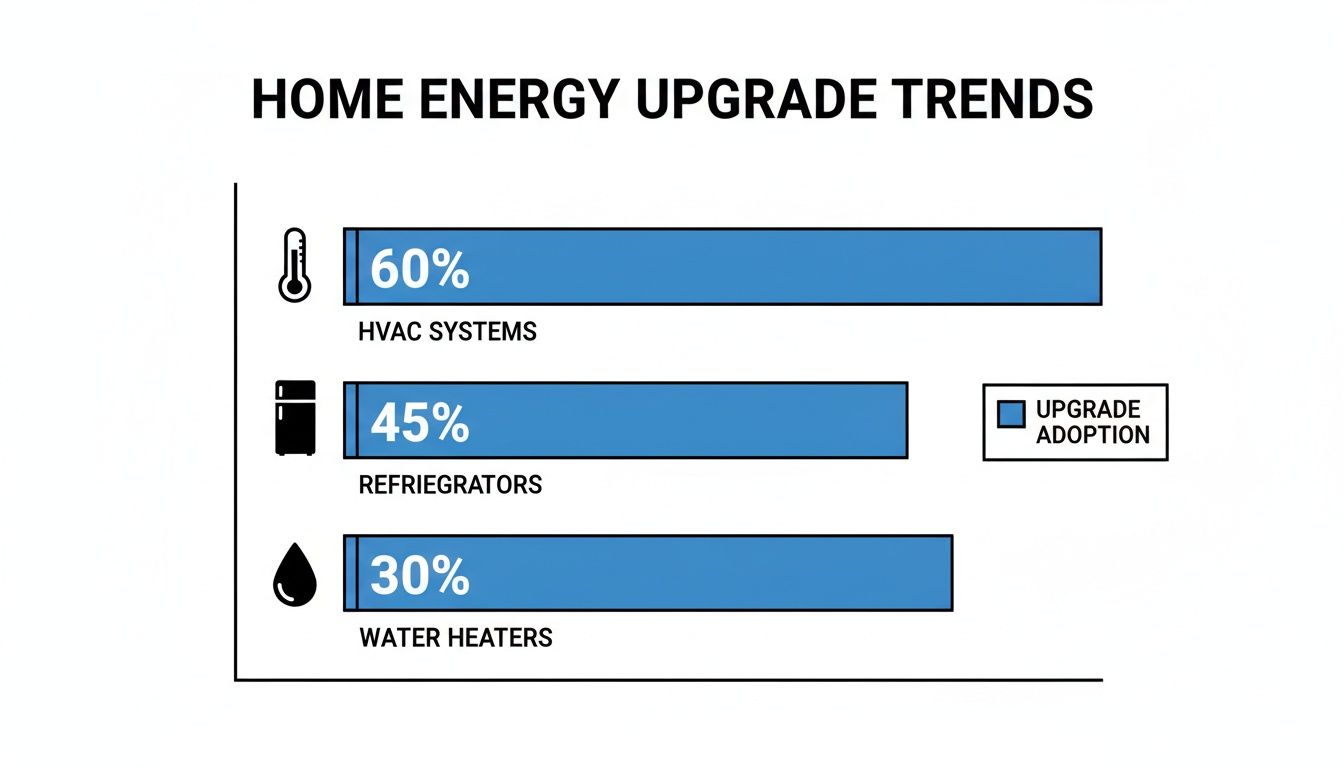
As you can see, HVAC systems are a top priority. But a strong building envelope is what allows that new, efficient system to actually perform at its best.
Windows: The Unseen Energy Drains
Old, single-pane windows are almost always the weakest link in a home's thermal defense. In fact, they can be responsible for 25% to 30% of your home's total heating and cooling energy loss. Just think of them as thermal holes in your walls, letting winter warmth pour out and summer heat creep in.
Upgrading to modern, high-performance windows makes an immediate and noticeable difference. Here’s what I tell my clients to look for:
- Triple-Pane Glass: Three layers of glass with insulating gas fills (like argon or krypton) sandwiched between them create a powerful barrier that dramatically slows heat transfer.
- Low-E Coatings: This is a microscopically thin, transparent coating that reflects infrared heat. In the winter, it keeps the heat inside your home; in the summer, it reflects the sun's scorching heat away.
- Quality Frame Materials: Materials like modern vinyl or fiberglass offer far better insulation than old aluminum frames, which can conduct heat and cold right through your walls.
By replacing those leaky old windows, you’re doing more than just improving your comfort—you're making a direct and permanent cut to your energy use and carbon footprint.
Your Roof: A Climate-Controlling Shield
Your roof is much more than a shield against rain and snow; it's a massive surface that can either absorb or reflect the sun's intense energy. This makes it a huge opportunity for shrinking your carbon footprint, especially as global emissions continue to rise. Projections show global fossil fuel emissions could hit 38.1 billion tonnes of CO₂ in 2025, and choices we make at home have a real, compounding effect. You can read an in-depth analysis on fossil fuel emissions to see how household choices fit into the bigger picture.
Here in Utah, where summer temps can really soar, a standard dark asphalt shingle roof can become a giant radiator. It can absorb up to 90% of solar heat, pushing attic temperatures to blistering levels and forcing your AC to run nonstop.
An energy-efficient "cool roof" does the exact opposite. By using materials with high solar reflectivity, it can lower roof surface temperatures by over 50°F. This simple change can cut a home's cooling energy needs by 15% to 25%.
Modern options like reflective designer shingles or metal roofing are specifically engineered to bounce sunlight back into the atmosphere. This not only keeps your house cooler but also helps reduce the "urban heat island" effect in our communities.
Insulated Siding: The Ultimate Home Wrap
While windows and roofing are critical, your walls make up the largest part of your home's exterior. Think of insulated siding as a warm blanket, wrapping your entire home in a continuous layer of thermal protection. It's a real game-changer.
Traditional siding offers very little insulation on its own. Insulated siding, on the other hand, has a rigid foam backing that's fused directly to the panel. This simple addition drastically increases the R-value (the measure of thermal resistance) of your walls.
The benefits are twofold:
- It Reduces Thermal Bridging: Heat loves to escape through the wooden studs in your walls, which aren't covered by the insulation inside. Insulated siding covers these studs from the outside, closing off this common pathway for energy loss.
- It Creates a Tighter Seal: The interlocking design of these panels creates a much more airtight barrier, which means fewer drafts and less air leakage overall.
A home wrapped in insulated siding holds its temperature far more effectively, meaning your furnace and air conditioner simply don't have to run as often. This consistent, year-round reduction in energy use leads to a significant and permanent drop in your home's carbon emissions.
The table below breaks down how upgrading these key components of your home's envelope compares to sticking with standard, older materials. It puts the carbon-reduction benefits into clear perspective for homeowners right here in Utah.
Home Envelope Upgrades Performance Comparison
| Component | Standard Option | Superior's High-Performance Option | Key Benefit for Carbon Reduction |
|---|---|---|---|
| Windows | Single-pane, clear glass with aluminum frames. | Triple-pane glass with Low-E coatings, argon gas fill, and insulated vinyl frames. | Drastically reduces heat transfer, cutting heating and cooling energy demand by 25-30%. |
| Roofing | Dark asphalt shingles that absorb up to 90% of solar heat. | "Cool Roof" reflective shingles or metal roofing. | Reflects solar heat, lowering attic temps by over 50°F and reducing AC runtime by 15-25%. |
| Siding | Hollow vinyl or wood siding with low R-value. | Insulated vinyl siding with rigid foam backing. | Wraps the home in a continuous thermal blanket, eliminating thermal bridging and reducing air leakage. |
Ultimately, combining these upgrades—new windows, a reflective roof, and insulated siding—is the most effective way to fortify your home against the elements, creating a truly comfortable, low-energy, and low-carbon living space.
The Financial Case for a Greener Home
While most of us want to do the right thing for the planet, let's be honest: home improvement projects have to make sense financially. The good news is that investing in your home's energy efficiency isn't just an environmental choice—it's one of the smartest financial decisions you can make.
These upgrades deliver real, tangible value from day one. We’re not talking about just trimming a few dollars off your utility bill. We’re talking about fundamentally changing your home's financial equation, turning what's often a homeowner's biggest monthly headache into a much more manageable cost.
Calculating Your Return on Investment
Every home improvement project has an upfront cost, but very few start paying you back immediately like energy-efficient upgrades do. The key concept here is the payback period—the time it takes for your energy savings to completely cover the initial investment. You might be surprised how short that period can be.
Imagine slashing your home's energy bills by up to 40%. It's not a fantasy; it's a proven outcome with the right upgrades. Globally, buildings are responsible for a staggering 39% of energy-related carbon emissions, mostly from heating and cooling. By improving your home's "envelope" (your windows, siding, and roof), you're tackling that problem head-on and pocketing the savings. You can learn more about how buildings contribute to the global carbon picture and see why these changes have such a big impact.
Let's bring it home to Utah. Old, leaky single-pane windows can account for 25-30% of your home's heating and cooling loss. With our local energy rates, that's like throwing $500 to $1,000 out the window every single year. This is where the payback calculation gets very real.
A Salt Lake City client told me their monthly heating bills dropped from $450 to just $280 after we installed a new set of high-performance windows. Those are the kind of real-world savings that make these projects a financial no-brainer.
Once you have a documented energy reduction, the math is simple. If an upgrade saves you $1,000 per year, a $7,000 project pays for itself in just seven years. After that, it's pure savings in your pocket, year after year.
Boosting Your Home's Resale Value
The financial benefits don't end with lower monthly bills. When it comes time to sell, energy-efficient features have become a huge selling point. Today’s homebuyers are savvy; they’re looking for homes that promise lower long-term costs and better comfort.
- Higher Property Value: Study after study shows that homes with green certifications or documented energy-efficient upgrades sell for a premium. Features like new triple-pane windows or a "cool roof" are powerful differentiators that can seriously boost your home's market value.
- Faster Sales: A home marketed as "energy-efficient" is often seen as move-in ready and a smarter investment. As a result, these properties tend to sell faster, reducing the time, stress, and cost of having your house on the market.
So, your investment works for you in two ways: it saves you money every month you live there, and it puts more money in your pocket when you decide to sell.
The Hidden Financial Perks of Upgrading
Beyond the obvious savings and resale value, a few other financial advantages are easy to overlook but add significant value over time.
Reduced Maintenance and Repair Costs
Let's face it, old materials fail. Modern, high-quality roofing is engineered to withstand Utah's heavy snow and high winds, reducing the risk of costly storm damage. Likewise, today's vinyl siding is built to be tough and fade-resistant, which means you can cross "paint the house" off your to-do list for good.
Protecting Your Interior
This is a big one that people often forget. High-performance windows with Low-E coatings do more than insulate; they block up to 99% of damaging UV rays. This keeps your furniture, wood floors, and artwork from fading, preserving the value of everything inside your home and saving you from having to replace them prematurely.
Finally, always look into incentives. Federal, state, and local utility programs frequently offer tax credits and rebates for installing ENERGY STAR® rated products. These programs can take thousands off the initial project cost, shortening your payback period even more and making a green home an undeniably savvy financial move.
Bringing It All Home: Partnering with a Pro
We've covered a lot of ground, from quick wins like programming your thermostat to the major impact of upgrading your home's entire protective envelope. At this point, you have the knowledge. Now it’s about making it happen.
This is where the rubber meets the road. While there's a lot you can do yourself, the big-ticket items—high-efficiency windows, new roofing, or insulated siding—are only as good as their installation. A tiny gap or an improper seal can wipe out the energy savings you paid for. To make sure your investment pays off, you need the right professional partner.
Why an Expert Installer is a Must
When you’re ready for the big upgrades, the contractor you hire is every bit as important as the products you select. They aren't just laborers; they're your guide to making sure the project succeeds. An experienced crew ensures every window, shingle, and panel performs exactly as engineered, locking in those energy savings for years to come.
It's especially important to find a contractor who gets the unique demands of Utah's climate. Local expertise is priceless when it comes to choosing materials that can stand up to both our blazing summers and frigid, snowy winters.
A professional installation isn't just about getting the work done. It’s about guaranteeing the performance you paid for. It’s the difference between hoping you'll save money on energy and knowing you will.
A trustworthy contractor also offers peace of mind. They stand behind their work and protect your home long after the job is finished.
What to Look for in a Trusted Contractor
As you start vetting companies, keep an eye out for these non-negotiables. They're the signs of a true professional you can count on.
- Decades of Experience: A long track record, like 50 years in business, is a great sign. It points to stability and a deep knowledge of what really works.
- Certified Installation: Make sure the crew is trained and certified by the manufacturer of the products you're buying. This is often required to keep your warranty from being voided.
- Solid Warranties: Look for a contractor who offers their own workmanship warranty, such as a 10-year guarantee, on top of the manufacturer's product warranty. This covers you if any problems pop up due to the installation itself.
- A Clear, Transparent Process: You should expect clear communication from start to finish. That means upfront pricing with no surprise fees, a realistic schedule, and a commitment to keeping you in the loop.
Your Next Step: From Plan to Action
The path forward is clear, and it doesn't start with a sledgehammer. It starts with a conversation. Your first move should be scheduling a professional consultation to get a real assessment of your home's unique needs.
An expert can spot the biggest energy drains in your home's envelope and lay out a practical, prioritized roadmap for upgrades. You’ll get a tailored plan showing where your money will make the biggest difference for your comfort, your wallet, and your carbon footprint. This is your chance to ask every question, see material samples, and find a partner to help build your home’s efficient, low-carbon future.
Common Questions About Home Carbon Reduction
Thinking about how to shrink your home's carbon footprint can bring up a lot of questions. That's completely normal. You're looking at making some big decisions, and you want to be confident you're choosing what's best for your home, your wallet, and the planet.
Let's dive into some of the questions we hear most often from homeowners right here in Utah. My goal is to give you clear, practical answers so you can move forward feeling sure-footed.
What’s the Single Most Effective Way to Reduce My Home's Carbon Footprint?
Daily habits like turning down the thermostat are great, but if you're looking for the biggest impact, it all comes down to your home's building envelope—the windows, siding, and roof. I always tell people to think of this as the protective shell around your living space.
Upgrading these elements creates a powerful thermal barrier that dramatically cuts down on how much energy leaks out. Here in Utah, with our hot summers and cold winters, that means your HVAC system doesn't have to work nearly as hard. It's the most significant and permanent way to slash both your carbon emissions and your monthly utility bills.
The biggest wins come from strengthening the shell of your home. It’s a one-time fix that delivers energy savings and carbon reduction every single day, year after year.
How Long Until Energy-Efficient Upgrades Pay for Themselves?
This is a big one. For major projects like new windows or a modern roof, you're typically looking at a payback period of 5 to 10 years. The exact timeline really hinges on a few things: how inefficient your home is right now, the specific products you install, and what you’re paying for energy.
But the financial relief isn't something you have to wait for. Many homeowners see a noticeable drop in their energy bills right away. That first lower bill is a great feeling! Plus, these kinds of upgrades instantly boost your home's resale value, giving you a return on your investment both now and in the long run.
Is Professional Installation Really Necessary?
One hundred percent yes. I can't stress this enough. The amazing performance promised by high-efficiency windows, siding, or roofing is completely dependent on a perfect installation. A tiny gap, a bad seal, or a panel that's just slightly off can wipe out all the potential energy savings.
Even worse, a botched job can open the door to bigger problems like moisture damage, drafts, and the materials failing way sooner than they should. A certified, professional installer knows how to get a perfect fit and follows the manufacturer's strict guidelines. This not only protects your investment but is almost always required to keep your product warranties valid, ensuring you get the performance and longevity you paid for.
Are There Utah-Specific Incentives for These Upgrades?
Absolutely. Utah homeowners have access to some great programs that can help soften the initial cost of these kinds of upgrades, making it that much easier to reduce your carbon footprint.
Here’s what you should be looking for:
- Utility Rebates: Companies like Rocky Mountain Power often have rebates available when you install products with an ENERGY STAR rating.
- Federal Tax Credits: The federal government also has a history of offering tax credits for specific home improvements that improve energy efficiency.
A good local contractor will be on top of all the current programs. They can be a huge help in finding and applying for any incentives you qualify for, which can trim the project cost and shorten that payback period even more.
Ready to turn these answers into action? The team at Superior Home Improvement offers free, no-obligation consultations to help you create a personalized plan for your home. https://www.usasuperior.com