
You can’t just pick a roof shingle because you like the color. The best shingle for your home is one that’s perfectly suited to your roof's design, your local climate, and any specific rules in your area. Think of it as an investment—the right choice protects your home for decades, while the wrong one can lead to headaches and costly repairs.
Matching Your Roof to Your Climate and Structure
Before you get lost in swatches and styles, we need to cover the non-negotiables. These are the factors dictated by your home's architecture and where you live. Getting this foundation right is everything.
It’s a lot like buying tires for your truck. You wouldn't slap summer highway tires on a rig you plan to take through Utah's snowy mountain passes. In the same way, the shingle that works great in Southern California would likely get shredded by a single Salt Lake City winter.
First, Look at Your Roof's Pitch and Structure
The slope of your roof, what we in the industry call its pitch, immediately narrows down your options. We measure pitch as a ratio of vertical rise to horizontal run. For example, a 4:12 pitch means the roof goes up 4 inches for every 12 inches it runs horizontally.
- Low-Slope Roofs (Below 4:12): Water doesn't run off these roofs very quickly, so standard shingles are a no-go. You’re looking at specialized materials like membrane roofing to prevent leaks.
- Standard-Slope Roofs (4:12 to 9:12): This is the sweet spot. Most homes fit in this range, giving you the widest selection of shingles—asphalt, architectural, metal, you name it.
- Steep-Slope Roofs (Above 9:12): Great for shedding snow and rain, but they’re a different animal to work on. Installation requires special safety gear and techniques, which means higher labor costs.
Beyond the slope, you have to think about weight. If you're dreaming of heavy, premium materials like slate or tile, your roof framing might need to be reinforced to handle the load. This isn't a guess—you'll need an experienced contractor or an engineer to give the green light.
Understand What a Utah Climate Demands
Living along the Wasatch Front means your roof has to endure a true four-season climate with some serious extremes. Choosing a shingle that can't handle it is just throwing money away.
Our biggest concern here is snow load. That heavy, wet spring snow puts an incredible amount of stress on a roof. Shingles have to be tough enough to not only hold that weight but also survive the constant freeze-thaw cycles that can tear lesser materials apart.
Then there’s the wind. Anyone who’s lived through a canyon wind event knows what I’m talking about. You need shingles with a high wind-resistance rating, ideally 110 mph or even 130 mph, to keep them from peeling off. And don't forget the intense summer sun, which requires strong UV protection to stop shingles from drying out and fading.
I see it all the time: a homeowner picks a beautiful shingle in a showroom, but it’s not rated for our weather. A pretty shingle that can't survive a Utah winter is a bad investment, plain and simple.
Don't Forget Building Codes and HOA Rules
Before you sign a contract, do your homework on the local rules. Utah has building codes that are very specific about roofing, especially concerning underlayment and installation methods to protect against ice dams. Any good local roofer will know these codes inside and out.
And if you have one, your Homeowners Association (HOA) gets the final say. They often have strict guidelines on approved materials, colors, and styles. Always get written approval for your selection before any materials are ordered. It's a simple step that can save you from the nightmare of having to tear off a brand-new, non-compliant roof.
Here's a quick checklist to keep these initial factors straight as you begin your search.
Initial Shingle Selection Checklist
| Factor | What to Assess | Why It's Critical in Utah |
|---|---|---|
| Roof Pitch | Measure the rise/run of your roof. | Determines if you need standard shingles or specialized materials for low or steep slopes. |
| Structural Load | Confirm your roof can support heavy materials. | Prevents structural damage, especially if considering heavy options like tile or slate. |
| Snow Load | Choose a durable shingle with a strong warranty. | Resists damage from the weight of heavy, wet snow and prevents ice damming. |
| Wind Resistance | Look for 110 mph+ wind ratings. | Critical for homes along the Wasatch Front and in canyon-wind-prone areas. |
| Freeze-Thaw Cycles | Select materials designed for temperature swings. | Prevents cracking and water infiltration as moisture repeatedly freezes and thaws. |
| UV Resistance | Check for UV-blocking granules or coatings. | Protects against the intense high-altitude sun, which degrades materials and fades color. |
| Building Codes | Consult a local contractor on Utah code. | Ensures your roof is installed with proper underlayment and ice/water shield. |
| HOA Approval | Submit your material and color choices. | A non-negotiable step to avoid fines or having to replace a non-compliant roof. |
Taking the time to address each of these points sets you up for a successful project and ensures your new roof is ready for whatever a Utah year throws at it.
A Practical Guide to Shingle Materials
Okay, you’ve done the foundational work—you know your roof pitch, you’ve considered our Utah climate, and you're aware of local codes. Now for the fun part: picking the actual shingles. The market has plenty of options, but for most homeowners, the choice really comes down to a few key players. Let's cut through the marketing jargon and look at what really matters for your home's performance, lifespan, and overall look.
The Reigning Champion: Asphalt Shingles
There's a reason asphalt shingles are on the vast majority of homes across North America. They hit that sweet spot of affordability, durability, and style that works for almost any house or budget. This isn't a new trend; it's the result of over a century of improvement. The global market for asphalt shingles topped $7 billion in 2023, and they cover more than 47% of residential roofs simply because they work well and are cost-effective. You can dig into the numbers yourself by checking out the asphalt shingle market trends on skyquestt.com.
But "asphalt" isn't a single product. You've got a few different tiers to choose from.
Your Asphalt Options: Good, Better, Best
- 3-Tab Shingles: Think of these as the entry-level option. They have a flat, uniform look and are the kindest to your wallet. They'll protect your home, but their lifespan is on the shorter side, usually around 15-20 years, and they don’t stand up to high winds as well as their thicker cousins.
- Architectural Shingles (or Laminate): This is the go-to choice for most homeowners today, and for good reason. They're built with multiple layers, which makes them thicker and creates a great-looking textured, dimensional appearance that mimics materials like wood. You get much better durability, wind resistance, and a longer lifespan, often 30 years or more.
- Designer Shingles (or Luxury): Sitting at the top of the asphalt family, these shingles are engineered to look like premium materials—think slate or cedar shake—but without the hefty price tag and maintenance. As the thickest and heaviest asphalt option, they deliver maximum durability and a truly high-end curb appeal.
The image below really drives home how your roof’s pitch, the local climate, and building codes all steer you toward the right material choice.
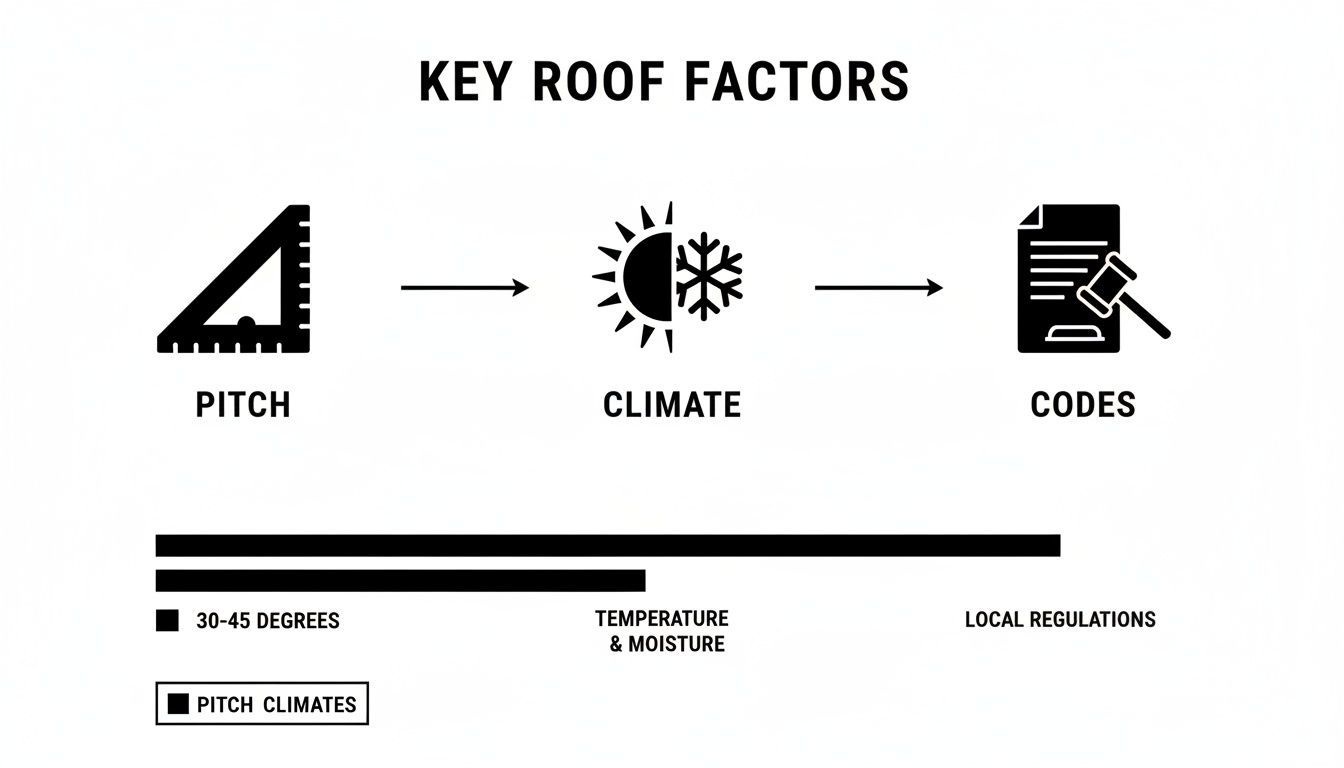
As you can see, choosing a shingle isn't just about color; it’s a decision based on your home's specific structural and environmental demands.
The Long-Term Performer: Metal Roofing
Metal roofing used to be something you'd only see on a commercial building or a rustic cabin, but it's quickly become a popular, stylish choice for homes. Yes, the upfront cost is higher than asphalt, but when you look at the big picture, the investment often pays for itself. A modern standing-seam metal roof offers a clean, sharp look that works just as well on contemporary homes as it does on traditional ones.
The biggest draws for metal are its incredible lifespan and toughness. A well-installed metal roof can last 50 years or more—that’s easily two or three times longer than a standard asphalt roof. It’s also extremely resistant to fire, rot, and insects. And for a place like Utah, its ability to shed snow is a huge advantage, seriously reducing the risk of destructive ice dams forming along your eaves.
One of the most important things to look for in both high-end asphalt and metal roofing is a Class 4 impact rating. This is the highest level of hail resistance a shingle can get. A Class 4 roof is built to withstand impacts from hailstones up to two inches in diameter, which could easily be the difference between a minor storm and a full roof replacement.
Understanding the Ratings: Impact and Fire Resistance
As you compare materials, you'll see a lot of technical ratings. These aren't just for show—they're standardized tests that tell you exactly how well a shingle will protect your home.
Impact Resistance
- Class 4: The best you can get. It’s tested to withstand a 2-inch steel ball dropped from 20 feet. If you live anywhere hail is a concern, this is what you want.
- Class 3: Withstands a 1.75-inch steel ball.
- Class 2 & 1: Offer lower levels of protection.
Heads up: many insurance companies will actually give you a discount on your homeowner's policy for installing a Class 4 roof because it drastically reduces their risk of paying out a big claim.
Fire Resistance
- Class A: The top rating, meaning the material is effective against severe fire exposure. The good news is that most fiberglass-based asphalt shingles and all metal roofs carry a Class A rating.
- Class B: Effective against moderate fire exposure.
- Class C: Effective against light fire exposure.
For anyone living near wildfire-prone areas, a Class A rating isn't just a nice-to-have; it's a critical layer of defense for your property and your family's safety. By balancing these practical factors—lifespan, aesthetics, and protective ratings—you can zero in on the perfect material for your home.
Balancing Curb Appeal and Energy Savings
Your roof isn't just a utility; it’s a massive part of your home's first impression, often making up 40% or more of what people see from the street. This makes your shingle choice a major decision that impacts everything from curb appeal to your monthly energy bills. A smart selection isn't just a replacement—it's an upgrade that pays you back.
Homeowners often get hung up on color, and I get it. But what many don't realize is that modern shingles mean you don't have to sacrifice performance for looks. You can truly have a beautiful roof that works hard for you.
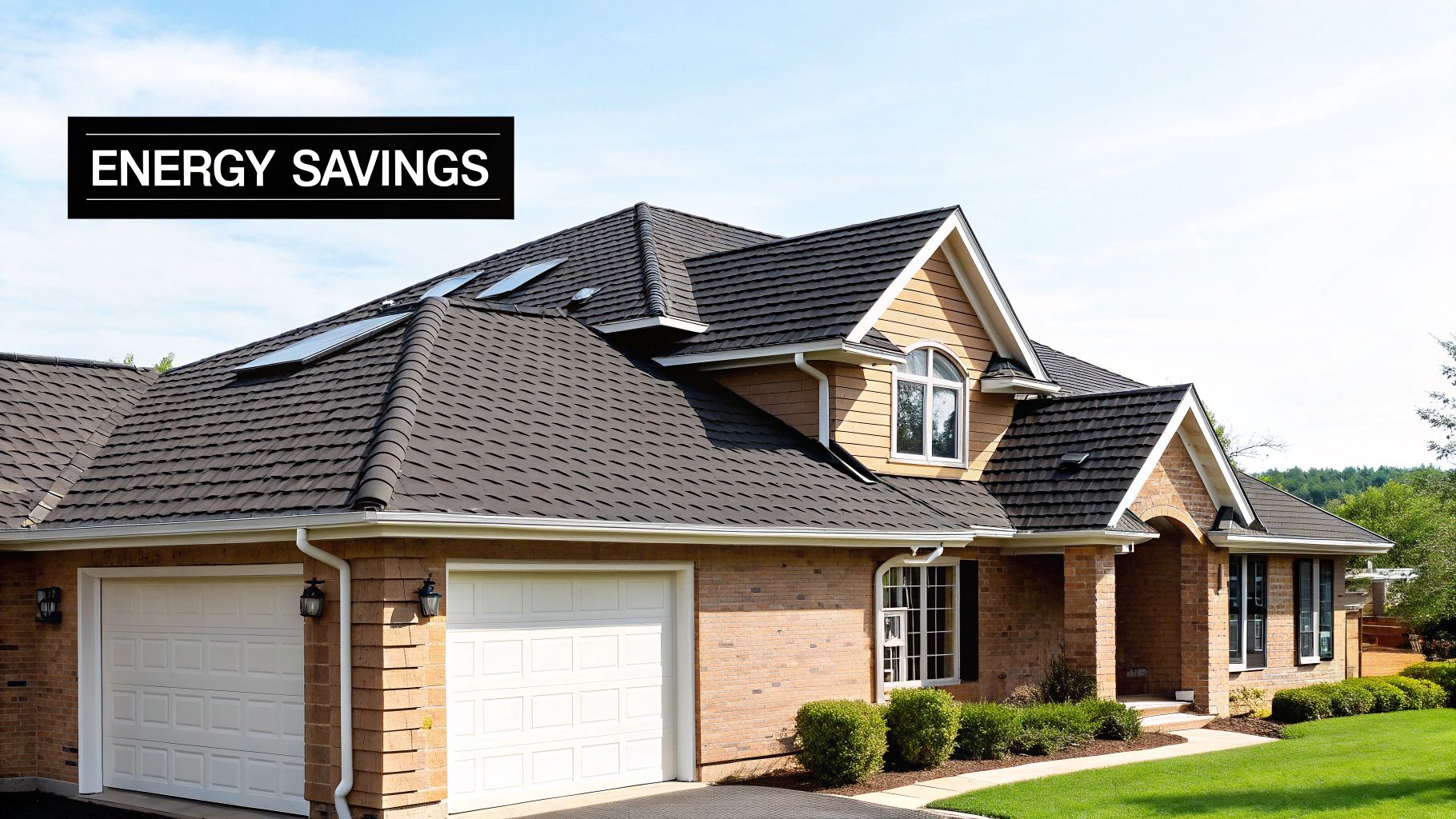
Unlocking Energy Savings with Cool Roof Technology
Here in Salt Lake City, the summer sun is no joke. A standard roof soaks up all that heat, radiating it straight into your attic and living spaces. Your air conditioner ends up running constantly just to keep things comfortable. This is exactly where "cool roof" technology makes a world of difference.
Don't assume "cool roof" means a stark white shingle. The real magic is in the granules. Manufacturers engineer these shingles with special reflective granules that bounce a huge portion of the sun's infrared radiation back into the sky instead of absorbing it.
The effectiveness of these shingles is measured by the Solar Reflectance Index (SRI). Think of it as a scorecard for heat reflection—the higher the SRI, the cooler your roof stays.
This isn't just a small tweak. The roofing industry is booming, projected to hit USD 199.55 billion by 2034, largely because of this push for energy-efficient homes. A good architectural shingle with an SRI over 30 can drop your roof's surface temperature by a staggering 50-60°F. For your wallet, that can mean 20-30% savings on your summer cooling costs.
Choosing a Color That Complements Your Home
While the energy savings are a fantastic bonus, you still have to love the way your roof looks every time you pull into the driveway. The goal is to choose a color that works in harmony with your home's siding, trim, and overall architectural style.
A good starting point is to aim for a pleasing contrast.
- Light-Colored Siding (White, Beige, Light Gray): This is the most flexible canvas. You can create a classic, bold look with darker shingles in charcoal, deep brown, or even dark blue.
- Dark-Colored Siding (Navy, Deep Green, Charcoal): To keep your home from looking too heavy, a lighter shingle is often the way to go. Shades of light gray or even a soft tan can provide a beautiful contrast.
- Brick or Stone Homes: Let the masonry be your guide. Pull out the undertones. Red brick, for instance, pairs beautifully with dark grays, blacks, and rich browns. If you have multi-tonal stone, find a shingle that picks up one of those subtle colors.
Your roof is a long-term commitment. Never, ever pick a color from a small sample in a brochure. Ask your contractor for full-sized shingle samples. Take them outside and lean them against your siding. Check on them in the morning light, at high noon, and in the evening to see how the color truly looks.
Your roof is a cornerstone of your home's exterior appeal. For more ideas on boosting your home's look, check out this practical guide to improving curb appeal.
Striking the Perfect Balance
So, how do you put it all together? The sweet spot is where a color you absolutely love also delivers the performance you need for our Utah climate. Luckily, manufacturers have caught on and now offer a huge range of cool roof options in colors that go far beyond white.
Let's imagine you have a classic red brick home in a sunny Salt Lake neighborhood. The traditional choice might be a black shingle. But what if you chose a deep charcoal gray shingle that has a high SRI rating? You get that same sophisticated, timeless look, but you're also reflecting a ton of solar heat. Your attic stays cooler, and your energy bills go down.
This is what a smart roofing decision looks like. It’s an investment that protects your home, saves you money, and boosts its value with a lasting first impression.
Looking Beyond the Price Tag: What's the True Cost of Your New Roof?
When that roofing quote lands in your inbox, it’s only natural for your eyes to jump straight to the bottom line. But experienced homeowners and contractors know that the initial price is just one chapter of a much longer story. The real cost of your roof is what you’ll spend on it over the next 20, 30, or even 50 years.
A suspiciously low bid often signals cheaper materials, less experienced labor, or cut corners—all things that lead to expensive repairs and a replacement far sooner than you planned. The smart way to approach this decision is by thinking in terms of lifecycle cost, which is simply the total cost divided by the roof's lifespan in years. It’s a game-changer.
Breaking Down the Initial Quote
So, what exactly are you paying for? A roofing estimate is more than just a truckload of shingles. It’s a complex mix of materials and skilled labor, all of which influence that final number.
Here's a quick look at the main drivers behind your initial investment:
- Your Shingle Choice: This is the big one. Standard 3-tab shingles are the budget option, but you get what you pay for. Upgrading to architectural or designer shingles costs more upfront but buys you a huge leap in durability, wind resistance, and lifespan.
- The Complexity of Your Roof: A simple, walkable gable roof is straightforward. But if your home has steep pitches, multiple valleys, dormers, and skylights? That's a different beast entirely. The job requires more material waste, intricate cuts, and a lot more time from a skilled crew.
- The Unseen Layers: What’s underneath matters just as much. High-quality synthetic underlayment provides a much better moisture barrier than old-school felt paper. Plus, there's always the chance the crew will find rotted or soft decking once they tear off the old roof. Replacing those sheets is a necessary, and additional, expense.
- The Labor Itself: Labor is a significant portion of the cost, and this isn't the place to skimp. A reputable, insured, and certified crew costs more for a reason—you're paying for their expertise, which ensures your roof is installed perfectly to meet code and manufacturer specs.
Long-Term Value vs. Upfront Savings
This is where the math really makes a difference. Let’s run the numbers on two typical scenarios I see all the time.
Scenario A: The "Budget" Roof
- Material: Basic 3-tab asphalt shingle
- Upfront Cost: $8,000
- Expected Lifespan: 15 years
- Lifecycle Cost: $8,000 ÷ 15 years = $533 per year
Scenario B: The "Investment" Roof
- Material: High-quality architectural shingle
- Upfront Cost: $12,000
- Expected Lifespan: 30 years
- Lifecycle Cost: $12,000 ÷ 30 years = $400 per year
Even though the architectural roof cost $4,000 more at the outset, it's actually $133 cheaper every single year you live in the house. In 30 years, you'd be getting ready to pay for your second "budget" roof (at an inflated price), while the investment roof would still be going strong.
This simple calculation shows why a laser focus on the initial quote can backfire spectacularly. Durability and longevity aren't just buzzwords; they’re what deliver real, long-term financial value.
Warranties: The Two Types of Protection You Need to Understand
Finally, your investment isn't fully understood until you know how it's protected. A new roof comes with two distinct warranties, and they cover very different things.
Manufacturer's Material Warranty: This comes directly from the shingle maker (like GAF or CertainTeed) and covers actual defects in the product. These can range from 20 years to a "limited lifetime" but are often prorated, meaning their value decreases over time. The big catch? This warranty is instantly voided if the shingles aren't installed exactly according to the manufacturer's strict guidelines.
Contractor's Workmanship Guarantee: This one comes from your roofer and covers any mistakes made during the installation. Think improper nailing, messed-up flashing around a chimney, or poorly laid underlayment. Honestly, this is the warranty that matters most in the short term. The vast majority of new roof failures aren't due to bad shingles; they're due to bad installation.
When a contractor offers a strong, multi-year workmanship guarantee, they're showing you they have total confidence in their team's skills. That guarantee is your single best defense against leaks and headaches down the road.
Finding a Trustworthy Roofing Contractor
You’ve done the hard work of picking out the perfect shingle, but that's only half the battle. The truth is, even the most expensive, high-tech roofing material on the market will fail if it isn't installed by a true professional. This is why choosing a skilled, trustworthy roofing contractor isn’t just a good idea—it’s the single most important decision you'll make to protect your home and your investment.
A great roofer is more than just a shingle installer. Think of them as your project partner. They're the ones who ensure every single detail, from the underlayment and flashing to the final nail, is handled with expert care. Your goal is to find a local pro who really gets the unique challenges here in the Salt Lake City area, like our heavy snow loads and punishing freeze-thaw cycles. You want someone with a rock-solid reputation for quality.
Questions Every Homeowner Must Ask
Going into a conversation with a potential roofer unprepared can feel intimidating. To really vet them properly, you need a solid list of questions. Don't be timid about this part; a genuine professional will have confident, ready answers for every single one.
"Are you licensed and insured here in Utah?" This is the absolute first thing you should ask. It's a deal-breaker. Ask to physically see their Utah contractor license, proof of general liability insurance, and their workers' compensation policy. If they don't have this coverage, you could be on the hook for any accidents that happen on your property.
"What’s your crew's experience with the specific shingle I've chosen?" Whether you’ve landed on an architectural asphalt or a standing-seam metal roof, you need a team that has installed that exact product dozens of times. Ask to see a portfolio with photos of recent, similar jobs they've completed.
"Who will be my point of contact on-site?" You need to know if a dedicated project manager or foreman will be there every day. This person is your lifeline for questions and ensures the crew is accountable and that communication flows smoothly.
"How do you handle site cleanup?" A professional crew respects your property. Ask them to walk you through their process for protecting your landscaping, driveway, and how they use magnetic sweeps to get every last stray nail.
These initial questions will help you quickly filter out the seasoned pros from the rest of the pack.
Red Flags to Watch Out For
Knowing what to look for is great, but it’s just as crucial to recognize the warning signs of a shady operator. If you spot any of these red flags, your best move is to thank them for their time and keep looking.
- High-Pressure Sales Tactics: A good contractor gives you a detailed estimate and the space you need to make a smart decision. Anyone trying to pressure you to "sign today for a special discount" is a massive red flag.
- Vague or Incomplete Quotes: Your estimate should be an itemized, detailed document. If it just says "New Roof – $15,000" without breaking down material costs, labor, and potential add-ons, it’s a sign of amateurism.
- Demanding Large Upfront Payments: A reasonable deposit to cover materials is standard practice. However, a contractor who demands 50% or more of the total cost before a single shingle has been delivered is a serious financial risk.
A detailed, written estimate is your best friend. It should clearly outline the scope of work, specific materials being used (including brand names), tear-off and disposal fees, underlayment type, and both the material and workmanship warranties. Without this document, you have no real way to compare bids or hold the contractor accountable.
Verifying a Contractor's Reputation
Once a contractor has passed your initial screening, it’s time to do some homework and verify their reputation in the community. Don't just take their word for it.
Start by digging into online reviews on sites like Google, Yelp, and the Better Business Bureau (BBB). Don't just look at the star rating; read the actual comments. Look for patterns in what people say about their communication, punctuality, and how they resolved any issues that popped up.
Next, ask them for a list of recent local references—and then actually call them. Ask those homeowners about their overall experience, if the project stayed on budget, and the ultimate question: would they hire that company again? It's also worth noting how contractors are adapting to new tools; for instance, some now use advanced drone roofing inspection software for more accurate and safe assessments. This final bit of due diligence is what allows you to hire with total confidence, knowing your home is in truly capable hands.
Common Questions We Hear About Choosing Roof Shingles
After you’ve done all the research, there are always a few lingering questions that pop up right before you’re ready to pull the trigger. Getting these sorted out is that final step to feeling completely confident in your decision. Let’s tackle some of the most common ones we hear from homeowners.
How Do I Know If I Need a Replacement or Just a Repair?
This is a big one. The answer really boils down to two things: the age of your roof and how widespread the damage is. If your roof is getting up there in years—say, pushing 20+ years for an older asphalt roof—or you're seeing problems all over the place, a full replacement is almost always the smarter long-term move.
What do "widespread problems" look like?
- Curling or Cracked Shingles: Take a look at the parts of your roof that get the most sun. If you see shingles curling up at the edges or developing cracks, it’s a clear sign they’ve become old and brittle.
- Major Granule Loss: Ever cleaned out your gutters and found piles of what looks like coarse black sand? Those are the protective granules from your shingles. Once they're gone, the shingle's core is exposed and defenseless.
- Lots of Missing Shingles: Losing a couple of shingles in a big windstorm can often be patched up. But if you have bald spots all over, it’s a sign the factory sealant has failed across the board.
On the other hand, if your roof is relatively young and you just have one or two isolated spots of damage—like a branch took out a few shingles—a professional repair is probably all you need. The only way to know for sure is to get an expert on the roof. They can spot hidden issues, like soft spots in the decking, that tell the real story.
Can New Shingles Be Installed Over My Old Ones?
You might hear this called a "roof-over" or a "layover," and while some building codes technically allow one layer of shingles over another, any reputable roofer will tell you to avoid it. It’s a shortcut that creates more problems than it solves.
For one, it adds an incredible amount of extra weight, which puts a lot of strain on your home’s structure. But the biggest issue is that it makes it impossible to inspect the roof deck—the wood foundation your entire roof is built on. Without tearing off the old layer, you have no way of knowing if there’s rot, water damage, or soft sheathing underneath.
A complete tear-off is the only way to do the job right. It ensures your new roof has a solid, flat surface to adhere to and is almost always a requirement to keep the manufacturer's warranty valid. Don't skip it.
What’s the Best Time of Year for a Roof Replacement in Utah?
Here in Salt Lake City, timing really matters. The sweet spot for a roof installation is from late spring through early fall, when you can count on daytime temperatures staying consistently above 40-50°F. This isn't just for our crew’s comfort; it's critical for the shingles themselves.
Every asphalt shingle has a sealant strip that’s activated by the sun's warmth. That heat is what allows the shingles to bond together, creating a single, seamless barrier against wind and water.
Trying to install a roof in the dead of winter is just asking for trouble. The cold makes shingles brittle, so they can easily crack when nailed. Worse, the sealant might not activate properly, leaving your brand-new roof vulnerable to wind damage from the very first storm. It can be done in a pinch, but you’ll always get the best, most durable result in moderate, dry weather.
Ready to make a confident choice for your new roof? The team at Superior Home Improvement has over 50 years of experience helping Utah homeowners select and install the perfect roofing system. We combine top-tier materials with a 10-year workmanship warranty for total peace of mind. Schedule your free, no-pressure consultation today at https://www.usasuperior.com.