
When homeowners start thinking about a new exterior, the first question is always the same: "What's this actually going to cost?" Let's get right to it. For a typical vinyl siding project in 2026, you can expect the total cost to fall somewhere between $6,000 and $18,000.
Most homeowners land right in the middle, paying around $12,000 for the complete job. This breaks down to a range of about $3 to $12 per square foot, which covers both the siding materials and professional installation.
Your 2026 Vinyl Siding Cost Breakdown
Think of these numbers as a solid starting point for your budget. They give you a realistic ballpark figure to see if new siding fits into your financial plans before you get too far down the road.
Of course, the final price tag can swing quite a bit. It’s influenced by everything from the grade of the siding you choose to the unique architectural details of your home. For instance, a standard 2,500-square-foot house could see costs anywhere from $7,500 for a basic job to over $30,000 for a premium installation, with most mid-range projects settling between $15,000 and $20,000. You can explore a more detailed siding cost analysis from Angi.com to see how various factors play out.
National Siding Cost Ranges
To really understand the numbers, it helps to look at them from a few different angles—like the cost per square foot versus the total for the entire house.
The chart below gives you a great visual for what this looks like on an average home. You can see how a project can start on the lower end but quickly climb depending on the materials and complexity involved.
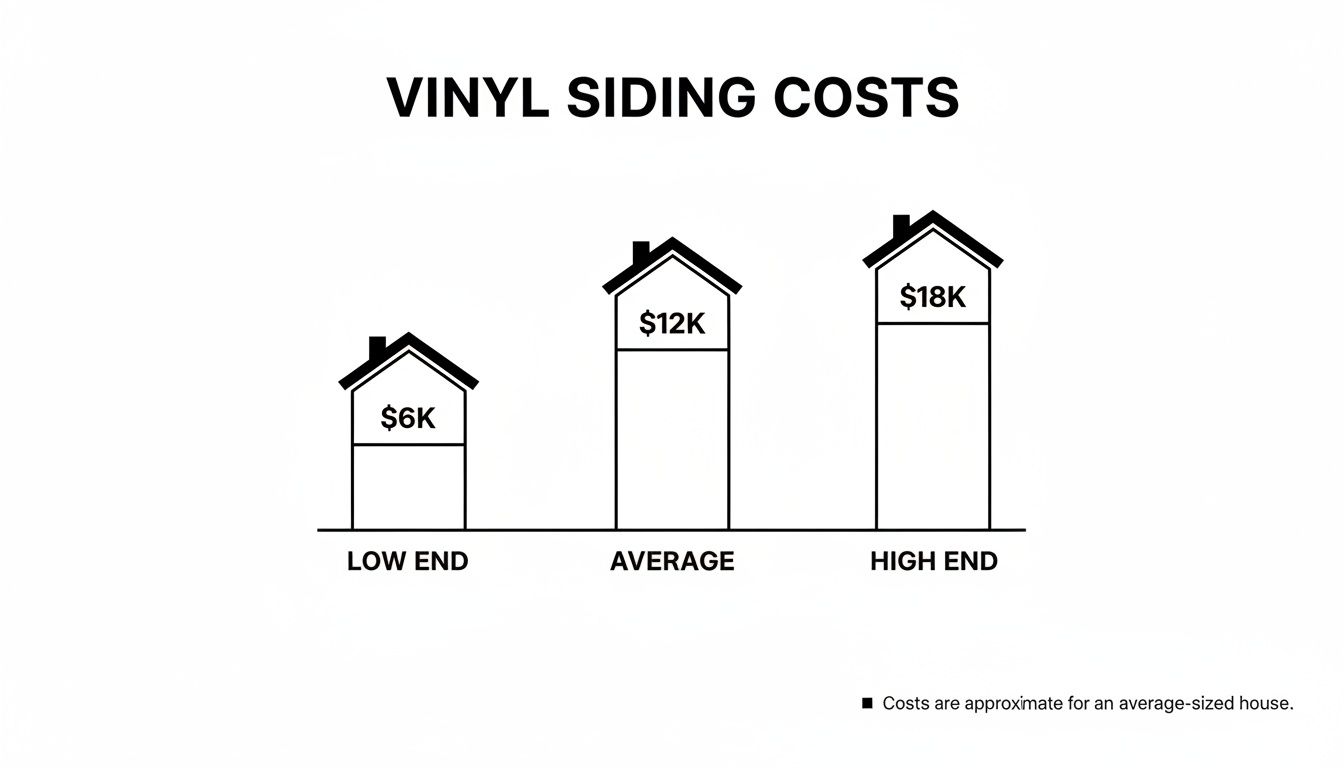
This visual really drives home why getting a detailed, itemized quote from a professional is so critical.
For a quick summary, here’s a table outlining the key cost metrics for 2026.
2026 Vinyl Siding Installation Cost at a Glance
This table provides a high-level overview of the typical costs you can expect for a full vinyl siding installation.
| Cost Metric | Average Range |
|---|---|
| Cost Per Square Foot (Installed) | $3 – $12 |
| National Average (Whole House) | $12,000 |
| Typical Project Range (Whole House) | $6,000 – $18,000 |
These figures give you a reliable frame of reference as you begin planning your home's exterior transformation.
What Drives Your Final Siding Installation Cost
When homeowners start getting quotes for a siding project, the wide price range can be a real head-scratcher. Why isn't there just one straightforward price? It's a lot like buying a car—the base model has a starting price, but the final cost shifts once you add leather seats, a sunroof, or a more powerful engine.
Siding is no different. Your final quote is a direct reflection of your home's specific needs and the choices you make. Everything from the quality of the vinyl you select to the nooks and crannies of your home’s architecture plays a part. A one-size-fits-all price just isn't possible.
Once you know what makes the price tick up or down, you're in the driver's seat. You can balance your budget with your vision for the project, making sure you get the performance and curb appeal you want without any financial surprises.
Material Quality and Thickness
Let's be clear: not all vinyl siding is the same. The product's quality is one of the biggest factors in your final cost. The panel's thickness, for instance, has a huge impact on its durability, rigidity, and price tag. Cheaper, builder-grade siding might save you money upfront, but it’s often thinner, more prone to cracking, and doesn't do much for insulation.
On the other hand, thicker, premium-grade siding is built to last. These beefier panels can take a beating from hail and are far less likely to warp or buckle under Utah's hot summer sun.
A great example is a premium insulated panel. It’s not just a durable outer shell; it adds a real layer of thermal resistance to your home. That extra investment can actually start paying for itself through lower energy bills.
So while premium materials cost more at the outset, they almost always deliver better long-term value and peace of mind.
Your Home’s Architectural Complexity
The shape of your house is another major piece of the puzzle. A simple, one-story rectangular home is the most straightforward job. The crew can work efficiently on long, flat walls with minimal custom cuts, which keeps labor costs down.
That all changes when the architecture gets more complicated. The more complex your home, the more time and skill it takes to get the job done right, and that’s reflected in the labor costs.
Here are a few things that add to the complexity and cost:
- Multiple Stories: Working on a second or third story means setting up scaffolding and taking extra safety precautions. It's slower, more involved work.
- Dormers and Gables: Every peak and valley requires an installer to make precise, angled cuts to ensure the siding looks clean and, more importantly, stays watertight.
- Lots of Windows and Doors: Each and every opening has to be perfectly framed and sealed. A house with thirty windows takes significantly more time than a house with ten.
- Intricate Rooflines: Odd angles where the roof meets the walls demand custom-fit pieces and careful attention to detail.
Each of these features adds hours—and sometimes days—to the project. You're paying for a skilled installer's time to meticulously handle these details so you don't end up with leaks or a sloppy-looking finish down the road.
How Home Size and Complexity Scale Your Budget
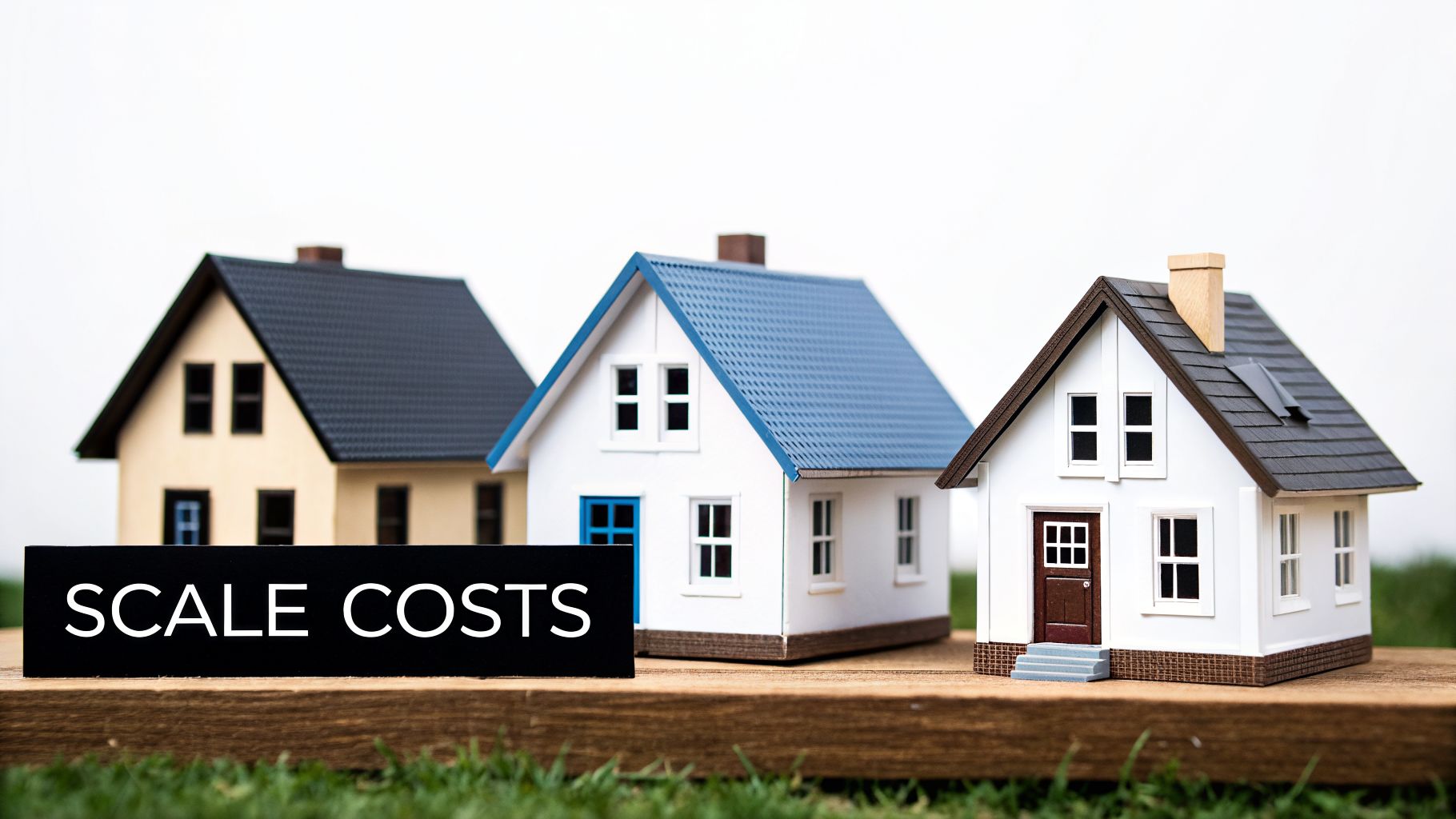
While per-square-foot pricing is a great way to start estimating, the single most predictable factor in your vinyl siding budget is the size of your house. It’s a simple equation: a larger exterior requires more material and, just as important, more labor hours to get the job done right. This direct relationship between size and cost is the foundation of any solid estimate.
Think of it like painting a room. A small bedroom takes a lot less time and paint than a massive, open-concept living area. Siding works on the same principle, just on a much bigger scale. As your home's total square footage goes up, so does the amount of siding, trim, and fasteners you'll need.
This straightforward connection lets us project costs with a good deal of accuracy. Even though architectural details can add some wrinkles, the total area that needs to be covered will always be the biggest driver of your final price tag. It gives us a reliable baseline for building your project's budget.
From Small Homes to Large Estates
You can really see the impact of home size on the average cost to install vinyl siding when you look at some real-world examples. The numbers show a clear, proportional jump in project costs as the square footage grows.
For instance, siding a smaller 1,500-square-foot home might land somewhere between $3,750 and $16,125. For a more common 2,500-square-foot house, that range expands to $6,250 to $26,875. Once you get to larger properties, like a 3,500-square-foot home, you can expect prices from $8,750 all the way up to $37,625.
This predictable scaling is especially important for Salt Lake City homeowners with larger properties or for investors managing several houses. Understanding how costs grow helps you create a realistic financial plan for a major exterior upgrade.
The total project cost isn’t just about the siding itself. It also includes essential but often overlooked tasks like removing old materials and disposing of debris, which also scale with the size of your home.
Overlooked Costs That Scale With Size
Beyond the new siding and the labor to install it, a few other necessary expenses grow right along with your home’s square footage. It's smart to account for these from the start to avoid any surprises down the road.
- Siding Removal: Tearing off old wood, aluminum, or vinyl siding is a labor-intensive job. A larger home means more material to remove and more hours on the clock, which can easily add $1,400 or more to the total bill.
- Debris Disposal: All that old material has to go somewhere. The cost to rent a dumpster and pay disposal fees is directly tied to the volume of debris you generate, which is naturally greater for bigger houses. This can tack on an extra $300 to $500.
- Permits and Delivery: While not always huge expenses, delivery charges for large material orders and city permit fees can also increase with the overall scope of the project.
Successfully managing these scaling costs is a big part of any home improvement project. For anyone looking to sharpen their financial planning, learning how to create a budget you can actually stick to is an invaluable skill.
The True Return on Your Siding Investment
When you see the price tag for new vinyl siding, it's natural to focus on that single number. But looking only at the upfront cost misses the bigger picture. A quality siding job isn't just an expense; it's a hard-working investment that starts paying you back the day it's installed.
Thinking of siding as just a cosmetic update is a huge mistake. The real value isn’t just in the material itself but in what it does for your home—and your wallet—over the next few decades. From lower utility bills to a serious bump in your property value, new siding works for you long after our crew has packed up.
More Than Just a Pretty Exterior
One of the biggest payoffs, and one that homeowners often underestimate, is the boost in your home's thermal performance. This is especially true if you opt for insulated vinyl siding. Your home’s walls represent a massive surface area, and if they're poorly insulated, you're constantly losing heated air in the winter and cool air in the summer.
Insulated siding wraps your home in a continuous blanket of protection, acting like a thermal shield. It keeps the air you're paying to heat or cool right where it belongs: inside. You’ll immediately notice a more comfortable, stable indoor temperature, your HVAC system won't have to work nearly as hard, and your energy bills will drop.
Homeowners who upgrade to insulated vinyl siding can see a significant improvement in energy efficiency. This upgrade can lead to a return on investment of over 80% when it comes time to sell, making it one of the smartest exterior renovations you can make.
The Financial Payback of Siding
Beyond the monthly energy savings, new siding adds value in a few other key ways. It’s one of those rare projects that improves your day-to-day life while also strengthening your financial position.
Here’s a look at how that investment breaks down:
- Increased Curb Appeal and Home Value: Let's be honest, a fresh, modern exterior makes a huge difference. That pride you feel pulling into the driveway translates directly into higher property value. A home with clean, updated siding is simply more appealing to potential buyers and can command a higher price.
- Reduced Maintenance Costs: Think about the weekends and cash spent repainting or repairing old, cracked wood siding every few years. Vinyl siding puts an end to that cycle. A simple, occasional wash is all it needs to look fantastic, freeing up your time and your budget for things you actually enjoy.
- Durable, Lasting Protection: New siding is your home’s armor against Utah's weather—from the intense summer sun that can warp and fade old materials to our freezing winter storms. It shields your home’s structure from moisture, pests, and rot, helping you avoid much costlier repairs down the road.
Why Quality Installation Is Your Best Insurance
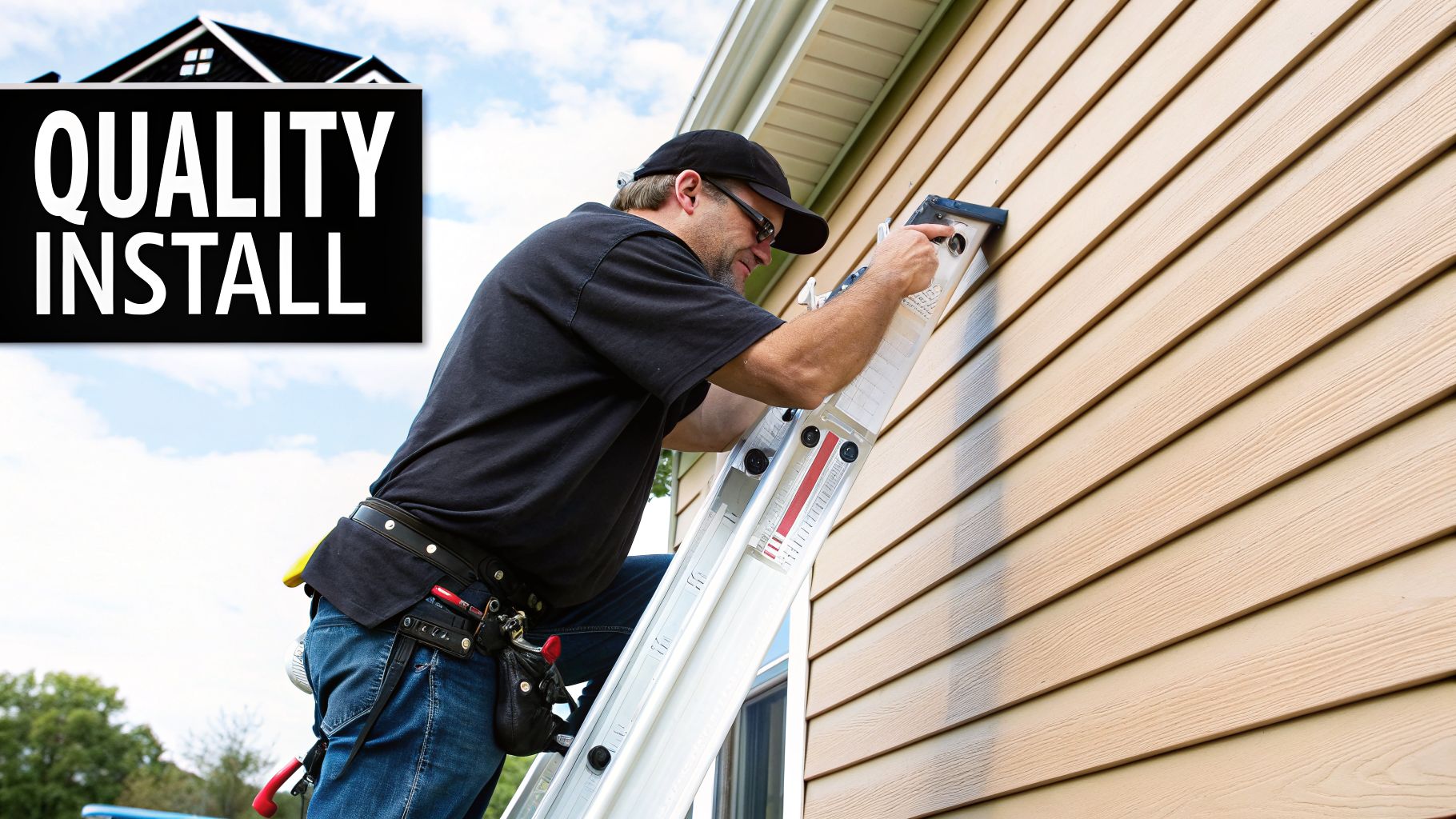
When you're looking at quotes to install vinyl siding, it’s completely natural to gravitate toward the lowest price. But from years of experience in this business, I can tell you that hiring the cheapest installer often becomes the most expensive mistake a homeowner can make.
The real worth of your new siding isn't just in the vinyl panels. It's in the craftsmanship of the team putting it on your home.
Think of it this way: you wouldn't buy top-of-the-line snow tires for your car and then have them installed by someone who doesn't know how to mount and balance them properly. No matter how great the tires are, they won't perform right. Siding is exactly the same.
The Hidden Price of a Bad Siding Job
A sloppy installation is far more than just a cosmetic problem—it's a direct threat to your home's structure and your wallet. When siding is installed incorrectly, it opens the door for all the problems you were trying to prevent in the first place.
That bargain-bin price can lead to a ton of expensive fixes down the road:
- Water Damage: If seams aren't sealed right or flashing around windows is missed, water will find a way in. This leads directly to wood rot, mold growth, and serious damage to your home's frame.
- Warping and Buckling: Vinyl siding has to expand and contract with the weather. If an installer nails the panels on too tightly, they have nowhere to go. The first hot Utah summer will cause them to warp, buckle, and create an ugly, wavy mess.
- Sky-High Energy Bills: Gaps between poorly fitted panels act like open windows. Your heated or cooled air escapes right out, forcing your furnace and AC to work overtime just to keep up.
This is where you see the true value of a professional, certified contractor. An expert crew makes sure every single panel is secure but can still breathe, every seam is weathertight, and the entire system works as a single, protective shield.
Your Best Defense Is a Professional Installer
Choosing an experienced installer who stands behind their work is your best insurance policy against future headaches. A certified team knows the specific techniques required for a job that not only looks great but will hold up for decades. They understand how to handle the unique challenges of your home's layout and our local climate.
A professional installation does more than just boost your curb appeal. It guarantees your siding will perform exactly as it was designed to, protecting your home and the investment you’ve made in it.
At Superior Home Improvement, our installers are factory-certified, and we back every job with a 10-year workmanship warranty. This is our commitment to you that the project will be done right the first time, giving you total peace of mind and protecting the value of your home for years to come.
Getting an Accurate and Trustworthy Siding Estimate
Alright, you've got a good handle on siding costs and quality. Now comes the crucial part: finding the right contractor to bring your vision to life. Getting an estimate is so much more than just collecting numbers. It's your first real interview with a potential contractor, and it’s your best chance to make sure there are no hidden fees or surprise charges waiting for you down the road.
Think of a trustworthy quote as the blueprint for your project. It needs to be detailed, transparent, and leave absolutely no room for guesswork. If a contractor hands you a vague, one-line estimate, that’s a major red flag. It often means they're either inexperienced or intentionally leaving room to inflate the bill later on.
Finding a Reliable Contractor
First things first: get multiple quotes. We always recommend getting at least three. This isn't just about shopping for the lowest price; it's about comparing the scope of work each company includes. Doing this is the single best way to spot an outlier, whether their price is suspiciously low or way too high.
When you're trying to find a pro for your siding job, it can be helpful to see how other trades operate. You can find guides on vinyl installation costs and contractors for things like fencing, and while the product is different, the core principles of vetting a professional are exactly the same.
Before you even think about signing a contract, do your homework and verify each contractor’s credentials. A true professional will have no problem showing you their license and proof of insurance. This is non-negotiable—it protects you from liability and ensures they stand behind their work.
What to Look For in an Estimate
A dependable quote breaks down every single part of the job. It's an itemized list that gives you the complete financial picture, which is essential for understanding the average cost to install vinyl siding on your specific home.
An estimate should be a crystal-clear document. If a contractor gets cagey about providing a detailed breakdown of costs, you have to ask yourself what they might be hiding. Transparency from the very beginning is the foundation of a great project.
At a minimum, your quote should include these essential line items:
- Materials: A clear list of the siding type, brand, trim, and all accessories, with quantities and costs per unit.
- Labor: The cost for the installation crew's time and expertise. This should be clearly defined.
- Removal and Disposal: Any charges for tearing off your old siding and properly hauling away the debris. Don't let this be a surprise fee.
- Permits: The cost of pulling any necessary building permits with your local municipality.
- Warranty Information: Specific details on both the manufacturer’s material warranty and the installer's own workmanship guarantee.
Frequently Asked Questions About Siding Costs
Even after seeing all the numbers, it's natural to have a few more questions bubble up as you get closer to making a decision. It happens on every project. Let’s tackle some of the most common ones we hear from homeowners just like you.
How Long Does Installation Take?
This is always a big one, and for good reason—you want to know how long your home will be a work in progress! For a typical, average-sized home, you can expect the installation to take somewhere between 5 to 14 days.
Of course, that timeline can shift. A surprise spring snowstorm, a more complex architectural design, or discovering a need for repairs after we remove the old siding can add a little time. We always aim for efficiency without ever sacrificing quality.
Is Insulated Siding Really Worth the Extra Cost?
For anyone living in Utah, our answer is an emphatic "yes." While you'll see a higher number on the initial quote, this is one of those upgrades that truly pays for itself over time.
Insulated siding acts as a thermal blanket for your home, reducing heat transfer and keeping your indoor temperatures more stable. This translates directly into lower energy bills and a more comfortable living space year-round, making it an investment that pays you back.
Think of it this way: you’re not just buying siding, you're buying a more comfortable home and smaller heating and cooling bills for years to come.
How Does Vinyl Compare to Fiber Cement Siding?
Another great question. Both are fantastic, long-lasting products, but they cater to different priorities and budgets. Here’s the simplest way to look at it:
- Vinyl Siding: This is your best bet for a budget-friendly, high-value solution. It’s durable, comes in a huge range of colors, and is virtually maintenance-free. It’s the perfect “set it and forget it” option.
- Fiber Cement Siding: This is a more premium product with a higher price tag for both materials and installation. It’s fantastic at mimicking the deep, rich look of real wood and is incredibly tough, but it will need to be repainted every 10 to 15 years to stay looking its best.
Ready to get a clear, transparent estimate for your home? The team at Superior Home Improvement is here to help. Schedule your free, no-obligation consultation today!