
If you're in a Utah home that feels chilly near the windows in January and too bright and hot by late July, you're not dealing with bad luck. You're dealing with window performance.
A lot of homeowners start shopping for replacement windows after the same pattern repeats for a few seasons. The furnace runs constantly. One room is always drafty. West-facing windows turn the living room into a greenhouse in the afternoon. Then the utility bill shows up and makes the problem impossible to ignore.
The tricky part is that window shopping gets technical fast. Sales pages throw around terms like Low-E, argon, U-factor, and SHGC as if everyone already knows what they mean. Often, homeowners are unfamiliar with these terms. And in Utah, generic advice like "just buy triple-pane" misses an important point. Salt Lake City's climate asks windows to do two jobs at once. They need to hold heat in during cold stretches and manage strong solar gain during bright, high-altitude days.
That's why choosing the best energy efficient windows isn't really about picking the most expensive option. It's about choosing the right mix of glass, coatings, frame material, and installation quality for your specific home.
Why Your Windows Are Costing You Money
On a January morning in Utah, the thermostat may read 70, yet the chair by the window still feels like the worst seat in the room. Then July arrives, that same window pours heat and glare onto the floor, and the AC starts chasing comfort the way your furnace did in winter.
That pattern usually points to the window assembly, not just the glass. Heat slips through the frame, the glass, the spacer between panes, and any small gaps around the unit. Air leakage adds another layer of trouble. The impact is significant because the U.S. Environmental Protection Agency notes that heat gain and heat loss through windows are responsible for a large share of home heating and cooling use in its ENERGY STAR window guidance.
Windows are part of the home's outer shell
Homeowners often see a window as a view and a source of daylight. A contractor sees a hole in the wall that has to manage temperature, sunlight, and air movement at the same time.
If that opening performs poorly, you notice it in several ways:
- Cold and hot spots: The room feels uneven even when the thermostat says everything is fine.
- Higher furnace and AC runtime: Your HVAC system has to keep correcting what the windows let through.
- Condensation concerns: Colder interior glass can attract moisture during winter.
- Less usable space: Furniture near weak windows becomes the place nobody wants to sit.
The room that feels "hard to heat" often has a window problem before it has a furnace problem.
Utah makes weak windows easier to spot
Utah is not a one-season window market. Salt Lake City and nearby areas get cold winters, bright summers, big day-to-night swings, and stronger sun because of elevation. That last point trips up many homeowners. High-altitude sunlight can add a surprising amount of heat, even on days that do not feel especially hot outdoors.
So the goal is not "get the lowest U-factor possible" or "buy triple-pane and be done." A good Utah window has to balance insulation with solar control. In plain English, it needs to slow heat loss in winter without turning your south- or west-facing rooms into a greenhouse in summer.
That trade-off shows up in real buying decisions. A glass package that works well in Minnesota may block useful winter sun you would want in Utah. On the other hand, glass that welcomes too much solar heat can make afternoon comfort worse, especially on west-facing walls.
Why old windows drain money in two directions
Older windows waste money in a way homeowners can feel but do not always label correctly. In winter, indoor heat escapes and colder glass surfaces make the room feel chilly, so people turn the thermostat up. In summer, solar heat enters through the glass, indoor temperatures rise, and the AC has to pull that extra heat back out.
It works like carrying water in a bucket with a crack in the bottom and no lid on top. In one season, energy leaks out. In another, heat pours in. Either way, you pay for the correction.
Some homeowners try lower-cost fixes first, such as weatherstripping, caulk, heavier curtains, or installing heat-reducing solar screen panels. Those can help in the right situation, especially if the main issue is harsh afternoon sun. But they do not solve every problem if the frame, glass package, or original installation is underperforming.
What improves first when windows improve
Lower utility bills matter, but comfort usually changes first.
The floor near the window feels less cold. The furnace cycles less aggressively. Afternoon light becomes easier to live with. Rooms that used to feel drafty or overheated start feeling steady, which is what most homeowners wanted all along.
That is why window replacement decisions in Utah should start with the house and its exposures, not with a blanket rule about buying the thickest glass available.
The Anatomy of an Energy Efficient Window
A high-performance window is built in layers, and each layer has a job. That matters in Utah, where the same window may face subfreezing nights in January, intense sun at altitude, and hot summer afternoons a few months later.
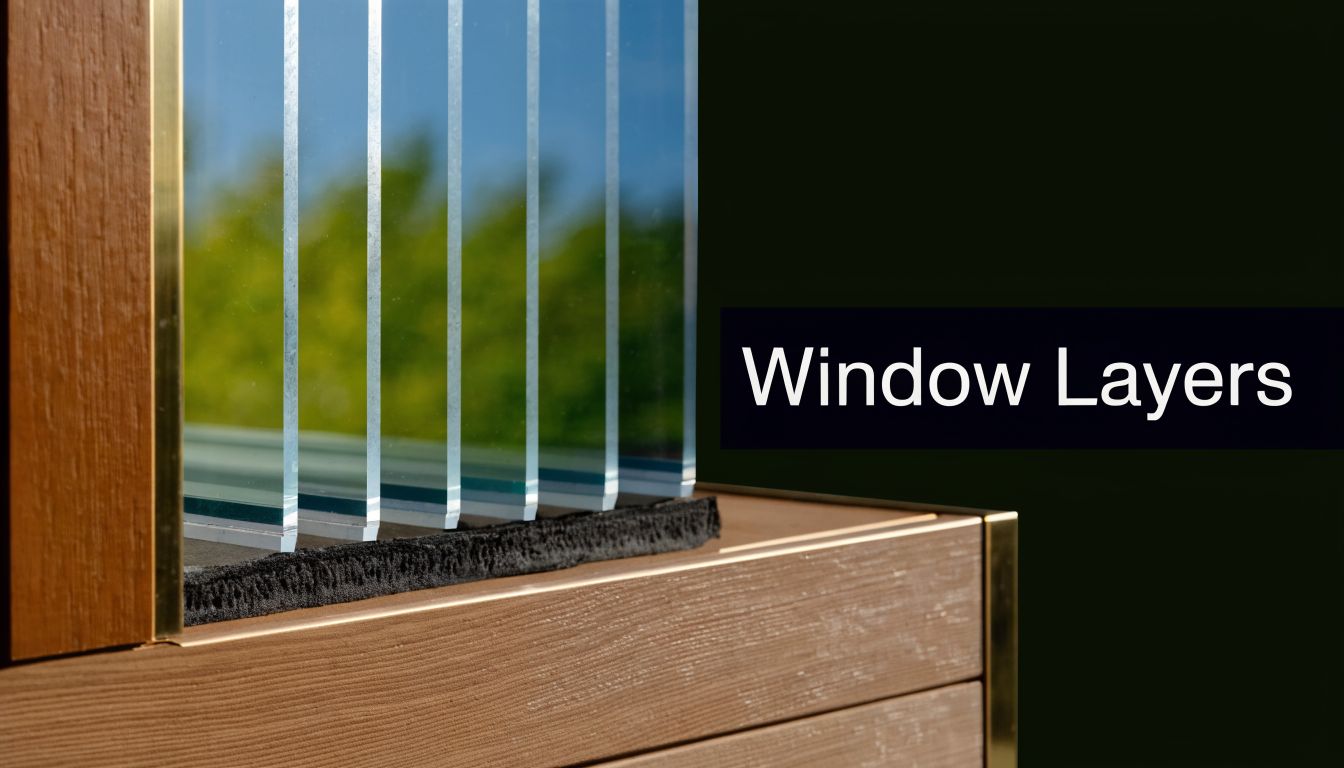
A good way to judge a window is to stop viewing it as just glass in a frame. It is a small wall system that also has to let in light. If one part is weak, the whole unit loses ground on comfort and efficiency.
The glass layers do the basic insulating work
Single-pane glass offers very little resistance to heat flow. Double-pane windows improve on that by sealing a space between two panes. Triple-pane units add one more pane and one more insulating space, which can improve thermal performance.
That does not mean triple-pane is always the automatic winner for every Utah home.
In Salt Lake City and other Wasatch Front areas, window selection is often a balancing act. More panes usually help lower heat loss in winter, but the full glass package also affects how much useful winter sun gets into the house. A homeowner with big south-facing windows may want a different setup than someone trying to tame a west-facing room that overheats every summer afternoon.
The gas fill slows heat movement between panes
The space between panes in a better window is usually filled with argon or another insulating gas instead of plain air. That gas slows heat transfer, much like the dead air space inside a well-insulated wall slows temperature movement.
You never see it, but it works all day.
In winter, it helps indoor heat stay inside longer. In summer, it slows outdoor heat trying to move inward through the glass. That is one reason two windows that look almost identical can perform very differently once the weather turns.
If you are trying to improve a sun-heavy room without replacing every window right away, some homeowners also consider installing heat-reducing solar screen panels on the most exposed sides of the house. That is not a substitute for a better window unit, but it can help manage glare and solar heat in the right spot.
Low-E coating manages radiant heat
Low-E means low emissivity. In plain English, it is a microscopically thin coating on the glass that changes how heat is reflected.
This is the part that often confuses homeowners, so here is the practical version. Heat does not move only through drafts or direct contact. It also moves by radiation. Low-E coatings help control that invisible heat flow.
In winter, the right Low-E coating can reflect more indoor heat back toward the room. In summer, it can reduce how much solar heat comes through the glass. For Utah homes, that detail matters because our bright, high-altitude sun can be helpful in one season and punishing in another.
Spacers and seals keep the system working
The edges of the glass matter too. Spacers separate the panes, and the seals keep the gas fill in place. If those parts are poorly made or fail early, the window loses performance over time.
This is also why condensation at the edge of older glass units is often a warning sign. The center of the glass gets the attention, but the perimeter is where many window systems start to break down.
The frame can support the glass package or weaken it
Homeowners often focus on pane count and ignore the frame. That misses a big part of the decision.
The frame affects insulation, air leakage, durability, and how well the sash stays aligned over time. Fiberglass is popular in Utah because it handles temperature swings well and stays comparatively stable. Vinyl can perform well too, depending on build quality and reinforcement. Wood offers good insulation but needs more upkeep. Aluminum is strong, but without a thermal break it tends to transfer heat more readily than other frame materials.
The larger point is simple. An energy-efficient window is a group of parts working together:
- Glass panes slow heat transfer
- Gas fills improve insulation between panes
- Low-E coatings control radiant heat
- Spacers and seals protect long-term performance
- Frames affect insulation, air leakage, and durability
When those parts are matched well, the window stops acting like a weak spot in the wall and starts performing like a deliberate part of the home's insulation system.
How to Read Window Performance Labels
You are standing in a showroom in Salt Lake City, looking at two windows that seem almost identical. Same style. Similar price. Both are described as energy efficient. Then you look at the NFRC label and see a row of numbers that feels more like a lab report than a buying guide.
That label is what lets you compare windows on something firmer than sales language. It works like a nutrition label for the product. The numbers are standardized, so you can line up one window against another and see where they differ.
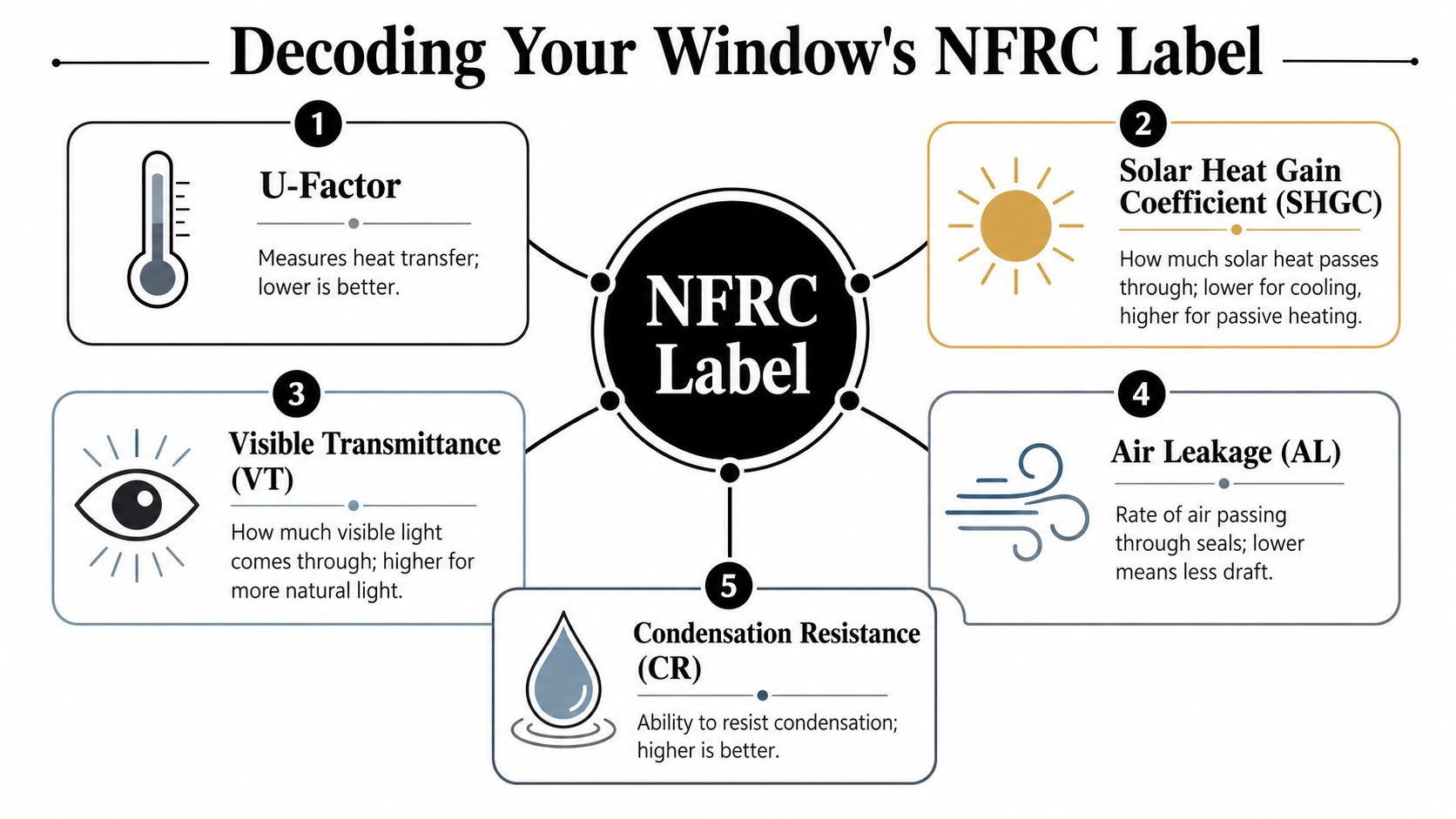
Start with U-factor and SHGC
For Utah homes, these are usually the first two numbers to read. They matter because Utah asks windows to do two jobs. Hold heat in during cold winters, and control solar heat during bright, dry summers at high altitude.
U-factor
U-factor measures how quickly heat moves through the whole window assembly. Lower numbers mean less heat transfer.
A simple way to read it is this. U-factor tells you how leaky the window is to temperature. A lower U-factor is like a better insulated cooler. It slows heat moving out in January and slows outdoor heat pushing in during July.
That matters in Utah because winter comfort is not just about the furnace keeping up. It is also about whether the glass feels cold when you sit near it. Lower U-factor windows usually feel less chilly on cold mornings, especially on north-facing walls.
SHGC
SHGC stands for Solar Heat Gain Coefficient. It measures how much of the sun's heat the window lets into the house. Lower numbers block more solar heat. Higher numbers let more solar heat pass through.
Many homeowners misunderstand this point. A low SHGC is not automatically the best choice for every window in Utah. Salt Lake City has four real seasons, lots of sunshine, and strong solar exposure because of the elevation. That means the same sun that overheats a west-facing room in August can help warm a south-facing room on a clear winter afternoon.
So instead of asking, "What is the best SHGC?" ask, "What job does this window need to do on this side of my house?"
- North-facing windows: usually benefit from a low U-factor, because they get less useful winter sun
- South-facing windows: may benefit from a balanced SHGC, depending on overhangs and shading
- West-facing windows: often need lower SHGC to reduce late-day summer heat
- East-facing windows: can go either way, depending on morning sun and room use
That trade-off is the part generic window advice often skips. Triple-pane glass with the lowest possible SHGC is not automatically the smartest choice for every Utah home.
The other label numbers help fill in the picture
Once you have checked U-factor and SHGC, look at the supporting ratings:
- Visible Transmittance: how much daylight comes through the glass
- Air Leakage: how much air slips through the window assembly. Lower is better for reducing drafts
- Condensation Resistance: how well the window resists interior moisture buildup. Higher is better
These numbers help explain why two windows with similar insulation ratings can still feel different in daily use. One may keep a room brighter. Another may cut drafts better. Another may do a better job avoiding condensation during winter.
If you are comparing insulation language across different parts of the house, this garage door r-value guide for homeowners gives a useful parallel. Windows use different rating systems, but the goal is similar. You are trying to slow unwanted heat movement through the building shell.
A short video can also make the label easier to decode before you sit down with quotes:
What the label means in real life
A good label reading session should answer practical questions. Will this room feel cold near the glass in winter? Will the upstairs west bedroom heat up every summer afternoon? Will the window bring in light without turning the room into a greenhouse?
Low-E coatings, gas fills, frame quality, and installation all affect those outcomes, but the NFRC label gives you the clearest starting point for comparison.
You do not need to memorize every rating. You do need to slow the conversation down enough to see the numbers. If a quote leaves out NFRC values, ask for them. If a salesperson keeps saying "high performance" or "premium glass" without showing the label, ask which U-factor and SHGC you are buying.
Choosing the Right Frame and Glass Package
This is the part where window selection becomes practical. Homeowners usually don't choose a window based on one feature. They choose based on a mix of budget, appearance, maintenance tolerance, and how the house behaves during the year.
The frame and the glass package should be treated as a pair. A strong frame with the wrong glass isn't a great fit. A good glass package inside a weak frame isn't either.
Comparing common frame materials
Some frame materials work better for certain homeowners than others. Here's a simple side-by-side view.
| Material | Pros | Cons | Best For |
|---|---|---|---|
| Vinyl | Lower maintenance, solid thermal performance, widely available | Quality varies a lot by manufacturer, some profiles are bulkier | Homeowners who want value and straightforward upkeep |
| Fiberglass | Stable in temperature swings, strong, supports high-performance glass packages well | Usually costs more than vinyl | Homes exposed to strong sun, temperature swings, and long-term use |
| Wood | Traditional appearance, warm interior look | Requires more maintenance, more vulnerable if neglected | Historic or style-driven homes |
| Composite | Can balance durability and appearance well | Product differences can be hard to compare | Homeowners who want a middle ground between performance and design flexibility |
What matters in Utah frame selection
Utah's climate puts pressure on frames. Strong sun, winter cold, and seasonal movement can expose cheap construction. That's why stability matters.
Fiberglass often gets attention for good reason in climates with broad seasonal swings. It tends to stay dimensionally stable, which helps seals stay consistent. Vinyl can still be a good option, but it pays to compare brands carefully because the quality gap between entry-level and premium vinyl is wide.
Wood remains attractive, especially in older or architecturally detailed homes. But homeowners should go into that choice with open eyes. Wood asks for maintenance. If that work gets skipped, the performance and appearance can both suffer.
If curb appeal is part of your project, frame finish matters too. For homeowners weighing whether to restore visible trim or coordinate new windows with exterior upgrades, this resource on improving property value with window painting gives a useful design-focused perspective on how frame appearance influences the overall look of the home.
Glass package decisions homeowners often miss
Homeowners often ask, "Should I get double-pane or triple-pane?" That's a fair question, but it's incomplete.
A better question is: What glass package belongs on this side of my house?
Different exposures do different things:
- South-facing windows: These may benefit from a glass package that allows useful winter sunlight while still controlling excess heat.
- West-facing windows: These usually need stronger solar control because afternoon sun is harsher.
- North-facing windows: These often call for strong insulation because they get less helpful winter sun.
- Large fixed windows: These can be efficient because they don't open, which reduces leakage points.
Style also changes performance
Window style influences efficiency because operable parts create more opportunities for air leakage.
In general:
- Picture windows tend to be efficient because they stay sealed shut.
- Casement windows often seal tightly when closed.
- Double-hung windows can still perform well, but they have more moving parts.
- Sliding windows can be practical, though seal quality matters.
If you want a large view wall, a fixed picture unit with strategically placed operable windows often performs better than making every section operable.
A practical way to choose
When I walk a homeowner through options, I usually narrow the decision with four filters:
- Comfort problems first: Are you fighting winter drafts, summer overheating, or both?
- Exposure second: Which rooms get morning light, harsh west sun, or little direct sun?
- Maintenance tolerance: Are you willing to maintain wood, or do you want a lower-upkeep material?
- Appearance and budget: Once performance is right, choose the finish and profile that fit the home.
That order matters. If you reverse it and shop by looks first, you can end up with a window that photographs well and performs poorly where you need it most.
Optimizing Windows for the Utah Climate
You can feel Utah through the glass.
On a January morning in Salt Lake City, one room can feel bright and comfortable because it catches low winter sun. Another room on the same day can feel chilly near the window, even with the heat running. By July, that pattern can flip. The west-facing room that felt pleasant in winter can turn hot by late afternoon because Utah's sun is intense, and the higher elevation increases that exposure.

That is why generic advice falls apart here. Utah is not a simple cold-climate market, and it is not a simple hot-climate market either. You are balancing winter heat loss, strong solar gain, dry air, and wide day-to-night temperature swings.
Why triple-pane is not always the default answer
Triple-pane windows can be an excellent choice. If you are replacing old single-pane units, dealing with cold bedrooms, or trying to reduce outside noise, the extra pane and gas fill can make a real difference.
But pane count alone does not decide comfort in Utah. Glass also controls how much solar heat enters the room. A very insulating window can still be the wrong fit if it blocks useful winter sun on the south side, or if it allows too much summer heat on the west side.
A better approach is to treat U-factor and SHGC like two thermostat settings you are trying to balance. U-factor measures how easily heat escapes through the window. Lower numbers mean better insulation. SHGC, or Solar Heat Gain Coefficient, measures how much of the sun's heat gets through the glass. Lower numbers block more solar heat. Higher numbers let more in.
In Utah, those two numbers have to work together.
Utah rewards a room-by-room strategy
A lot of homeowners want one package for the whole house because it feels simpler. Sometimes that works. Often, it leaves money or comfort on the table.
South-facing windows may benefit from a glass package that allows some winter solar heat into the home. West-facing windows often need tighter solar control because afternoon sun is harder to manage. North-facing windows usually need strong insulation because they get little direct solar help. East-facing windows sit somewhere in the middle and often depend on how you use the room.
That means the best energy efficient windows for a Utah home may include different glass packages in different parts of the house.
Where triple-pane tends to earn its price
Triple-pane often makes the most sense in places where insulation matters more than solar gain:
- North-facing rooms with little direct sun
- Bedrooms where cold-window discomfort is a common complaint
- Higher-elevation homes or exposed sites with stronger winter weather
- Rooms where sound reduction is part of the goal
- Homes with persistent comfort problems near the glass
If a room feels cold even when the furnace is keeping up, triple-pane may solve a problem that a lower-cost option only improves a little.
Where high-performance double-pane can be the smarter fit
A well-specified double-pane unit can be the better buy in rooms where solar balance matters more than chasing the absolute lowest U-factor:
- South-facing rooms that benefit from winter sun
- Projects with a tighter budget
- Homes that already have good insulation and air sealing elsewhere
- Areas where overheating and glare are bigger concerns than winter chill
- Open living spaces where you want strong performance without paying for triple-pane everywhere
That is the trade-off many Utah homeowners miss. The goal is not to buy the most window. The goal is to buy the right response for each exposure.
How to judge the balance
Here is the practical way I explain it to homeowners.
If a window's U-factor is like the insulation value of a coat, SHGC is like how much sunshine gets through the fabric. A heavy coat helps on a cold day. If the sun is warming you at the same time, you may not want a coat that blocks all of that benefit. In another room, especially on the west side in summer, too much sun through the glass works against your cooling system.
So for Utah, a good window package usually includes:
- A low enough U-factor to reduce winter heat loss
- An SHGC matched to the window's orientation
- Low air leakage for better comfort near the frame and sash
- A frame and glass package that hold up through seasonal temperature swings
A west-facing wall with a lot of glass often needs a lower SHGC than a south-facing breakfast area. Using the same glass everywhere can create a house that performs unevenly. One room stays comfortable. Another overheats. A third still feels cold by the window in January.
A simple Utah decision framework
If you are reviewing quotes, use this process:
Mark each window by direction
South, west, north, and east matter more in Utah than many homeowners expect.Write down the problem in each room
Cold floor, hot afternoons, glare on the TV, fading furniture, condensation, or drafts.Match the glass to the problem
Some rooms need more insulation. Some need more solar control. Some need both.Price the upgrade where it matters most
Triple-pane in every opening may be worth it. It may also be overkill in rooms that already get helpful winter sun and do not have major comfort issues.
The best Utah window plan is usually tuned, not uniform.
Why Expert Installation and ROI Matter Most
A Utah homeowner can buy a window with strong lab ratings and still feel a cold draft in January. That usually means the weak point is not the glass. It is the installation.
I see this on replacement jobs more often than homeowners expect. The window itself may have the right U-factor and SHGC for the room, but if the crew leaves gaps around the frame, skips careful flashing, or forces the unit into an out-of-square opening, the house will feel the mistake every windy day and every cold night. At Utah's elevation, with sharp temperature swings and strong sun, small installation errors show up fast.
A window works like a winter coat. High-performance fabric helps, but if the zipper does not close and cold air gets in around the seams, you are still uncomfortable.
What proper installation actually includes
Good installation starts before the new unit goes in. A careful crew checks the opening for rot, water damage, movement, and framing problems that could keep the window from sitting flat and sealing tightly. After that, the details matter:
- Flashing that sheds water correctly: Water should move out and away from the opening, not get trapped behind trim.
- Insulation around the perimeter: The gap between the window frame and the rough opening needs the right insulation, installed without overpacking it.
- Air sealing at the interior and exterior: This controls drafts and helps the window deliver the comfort you paid for.
- A level, square fit: If the frame is twisted, locks, weatherstripping, and moving sashes do not work the way they should.
Those steps sound small. They are not. A premium glass package installed poorly can perform like a midrange window.
Where return on investment actually comes from
Homeowners often ask for a simple payback number. Real projects are messier than that.
Your return usually comes from four places. Lower heating and cooling use is one part. Better comfort is another, and for many families, that is the deciding factor because they are solving cold bedrooms, overheated west-facing rooms, or condensation near the sash. You may also get tax benefits for qualifying products, and updated windows can help resale if the old units were clearly dated or failing.
The federal government offers an Energy Efficient Home Improvement Credit for certain qualifying exterior windows and skylights, with annual limits and product requirements explained by the IRS on its page for the Energy Efficient Home Improvement Credit. The main practical point is simple. Ask the contractor to identify which exact window configurations qualify before you sign.
Savings claims need context. A house with single-pane aluminum windows has more room for improvement than a house with fairly recent double-pane units. A home with west-facing glass, poor air sealing, and comfort complaints may see a bigger day-to-day benefit than a shaded home that already performs reasonably well. In Utah, orientation, installation quality, and the glass package you chose for each room often matter as much as the brand name on the quote.
Why written guarantees matter
A written guarantee changes the conversation from sales language to accountability.
If a contractor is willing to spell out what is covered, what conditions apply, and whether labor is included, you have something concrete to compare. That is more useful than broad promises about efficiency. Product warranties, workmanship warranties, and any performance guarantees should be separate and easy to read.
One local example is Superior Home Improvement, mentioned in the publisher background for this article, which describes an Energy Conservation Program tied to specific window packages and written performance terms for qualifying projects. The value is not the marketing phrase. The value is that the homeowner can review the terms in writing and ask where responsibility starts and stops.
What to ask before signing
Bring these questions to the estimate appointment:
- What are the NFRC ratings for this exact configuration, not just the brochure sample?
- How will you insulate and air seal the gap around the frame?
- What flashing method will you use for this wall type?
- Who handles trim, drywall, and any water-damage repairs if the opening needs work?
- What qualifies for the tax credit, and will you list that product clearly on the proposal?
- What is covered by the manufacturer, and what is covered by your labor warranty?
Clear answers usually signal a careful process. Vague answers usually lead to callbacks, comfort complaints, and a window project that cost too much for what it delivered.
Your Window Buyer's Checklist and FAQs
A good quote should answer the same questions a good mechanic answers before you approve a repair. What exactly are you getting, why is it the right fit, and what happens if the result falls short? Windows are no different. In Utah, that matters even more because the right choice for a south-facing room in Salt Lake City may be the wrong choice for a west-facing bonus room that bakes in July.
Use the checklist below to compare proposals without getting distracted by showroom language or one-size-fits-all recommendations.

Your shortlist for comparing quotes
- Get the exact NFRC ratings: Ask for U-factor, SHGC, and air leakage for the exact size and style being quoted, not a brochure sample. A picture window and a double-hung version of the same product often perform differently.
- Match glass to orientation: Ask whether the recommendation changes for south, west, east, and shaded north-facing rooms. Utah sun at high altitude can be a benefit in winter and a burden in summer.
- Check the whole package: Frame, spacer, glass coating, and gas fill work together. A strong glass package in a weaker frame can still leave you with comfort complaints near the opening.
- Ask how the opening will be sealed: The window is the product. The opening is the system. If the gap around the frame is not insulated and air sealed correctly, the ratings on the label will not match what you feel in the room.
- Compare fixed and operable units separately: Fixed windows usually post better performance numbers. That does not mean every opening should be fixed. It means you should know where you want ventilation and where you want the best thermal performance.
- Read warranty categories line by line: Glass, frame, hardware, finish, and labor may all have different terms.
- Verify tax-credit eligibility: Ask the contractor to list the qualifying product clearly on the proposal so you can keep the paperwork.
- Get comfort claims in writing: If a bid promises lower bills, less condensation, or fewer drafts, ask what is documented and what assumptions those claims depend on.
FAQs homeowners usually ask late in the process
Are smart windows worth watching?
Yes, for certain homes. Electrochromic glass, sometimes called dynamic glass, can change tint to control glare and solar heat. The U.S. Department of Energy describes dynamic glazing as a way to manage daylight and heat gain more actively than standard static glass does on its energy-efficient windows overview at energy.gov.
That said, this is still a niche choice for most replacement projects. In Utah, it tends to make more sense on homes with large areas of west-facing glass, big view windows, or rooms that overheat even after you improve insulation and air sealing.
Do newer frame materials matter, or is it mostly about glass?
They matter more than many homeowners expect. Glass handles a lot of the heat transfer, but the frame is the border around the whole system. If the border expands too much in temperature swings, or conducts heat too easily, overall performance suffers.
The National Fenestration Rating Council explains that window ratings apply to the whole product, not just the center of the glass, on its guide to labels and certified products at nfrc.org. That is why fiberglass, well-made vinyl, wood, and composite options can each make sense depending on the opening, the exposure, and the look you want to keep.
Can window upgrades really come with guaranteed savings?
Sometimes, but read those promises carefully. Energy savings depend on what you have now, how leaky the old units are, your thermostat settings, shading, and how much glass your home has. A house with failing single-pane windows has more room for improvement than a house with fairly recent double-pane units.
The reason is simple. Utility bills are shaped by the whole house, not windows alone. The Federal Trade Commission advises consumers to review energy claims carefully and ask for the conditions behind advertised savings at consumer.ftc.gov.
Will new windows help resale value?
Often, yes. Buyers may not ask about U-factor by name, but they do notice rooms that feel comfortable, windows that open smoothly, and glass that does not look fogged or dated. New windows can also support a cleaner inspection and a better first impression if the old units show rot, seal failure, or obvious wear.
How do I know whether I need full replacement or a smaller fix?
Start with the symptoms. If the issue is limited to weatherstripping, a hardware repair, or a minor air leak on an otherwise solid unit, repair may buy you time. If you have failed seals, recurring condensation between panes, noticeable drafts, warped frames, or windows that no longer operate reliably, replacement is usually the more practical long-term call.
A simple test helps here. If you keep changing how you use the room because of the window, closing blinds all day, avoiding a chair near the glass, or adjusting the thermostat to compensate, the window system is no longer doing enough.
The best energy efficient windows for a Utah home are the ones that balance insulation and solar control for the way that specific room behaves through all four seasons. In Salt Lake City's climate, that usually means avoiding blanket advice and choosing a package that fits the sun exposure, elevation, and comfort problems you live with.
If you want a second opinion on window options for your Utah home, Superior Home Improvement offers consultations focused on climate-specific performance, installation quality, and realistic energy-saving expectations so you can compare products with clearer information.