
A Utah homeowner usually asks a practical question first. What is triple glazed windows, and will the extra cost pay off in comfort and lower utility bills?
Triple glazed windows use three panes of glass with two sealed spaces between them. Those spaces are often filled with insulating gas, which slows heat movement much like adding a second liner to a winter coat. The goal is simple. Keep indoor heat from escaping as quickly in winter, and reduce outside heat gain in summer.
For Utah homes, that matters because the climate asks a lot from a window. Cold snaps, high summer sun, and large day to night temperature swings can expose the limits of older or builder-grade glass packages. Before blaming the window alone, it also helps to identify household air leaks, since air leakage around a frame and heat transfer through the glass are separate problems.
The key decision is not just what triple glazing is. It is whether your home, your budget, and your location in Utah make it a smart upgrade. A well-chosen unit can improve comfort and efficiency, but the result also depends on frame quality, glass coatings, and careful installation by a local professional such as Superior Home Improvement.
Your Home's First Line of Defense Against the Elements
A familiar Utah scenario goes like this. Winter hits, the furnace runs, and the living room still feels cold near the window wall. Then summer arrives and the same room turns bright and hot by midafternoon. Many homeowners assume the HVAC system is the problem, but the glass is often part of the story.
Before replacing windows, it can help to identify household air leaks, because drafts around the frame and heat transfer through the glass are two different issues. A leaky old frame can make a decent window perform badly. A poor-insulating glass package can make a tight room still feel uncomfortable.
Why windows affect comfort so quickly
Your body notices cold glass and overheated glass faster than is commonly anticipated. If the inside surface of a window gets cold in winter, the area near it often feels uncomfortable even if the air temperature in the room seems fine. In summer, strong sun through the glass can push a room beyond what the thermostat setting suggests.
Triple glazing addresses that by giving the window assembly more insulation than standard options. Think of it as upgrading from a light jacket to a winter coat with a liner. The extra layer doesn't just change a lab rating. It changes how the room feels when you sit next to the window.
A window isn't only there to let in light. It also controls how much heat leaves, how much heat enters, and how comfortable the room feels hour by hour.
What homeowners usually want to know
Most busy homeowners don't want a lecture on glass technology. They want answers to practical questions:
- Will it cut drafts and cold spots: Often, yes, when the problem is heat transfer through the glass or poor installation.
- Will it help in summer too: It can, especially in rooms that take hard sun.
- Is it always the right upgrade: Not always. Climate, orientation, frame condition, and installation quality all matter.
That's the useful way to approach triple glazing. Not as a buzzword, but as one tool for making a Utah home quieter, steadier, and less expensive to heat and cool.
How Triple Glazed Windows Create a Thermal Shield
A triple-glazed window slows heat loss and heat gain by stacking several protective features into one unit. The glass matters, but its performance primarily comes from how the panes, gas spaces, coatings, spacers, and installation work together.
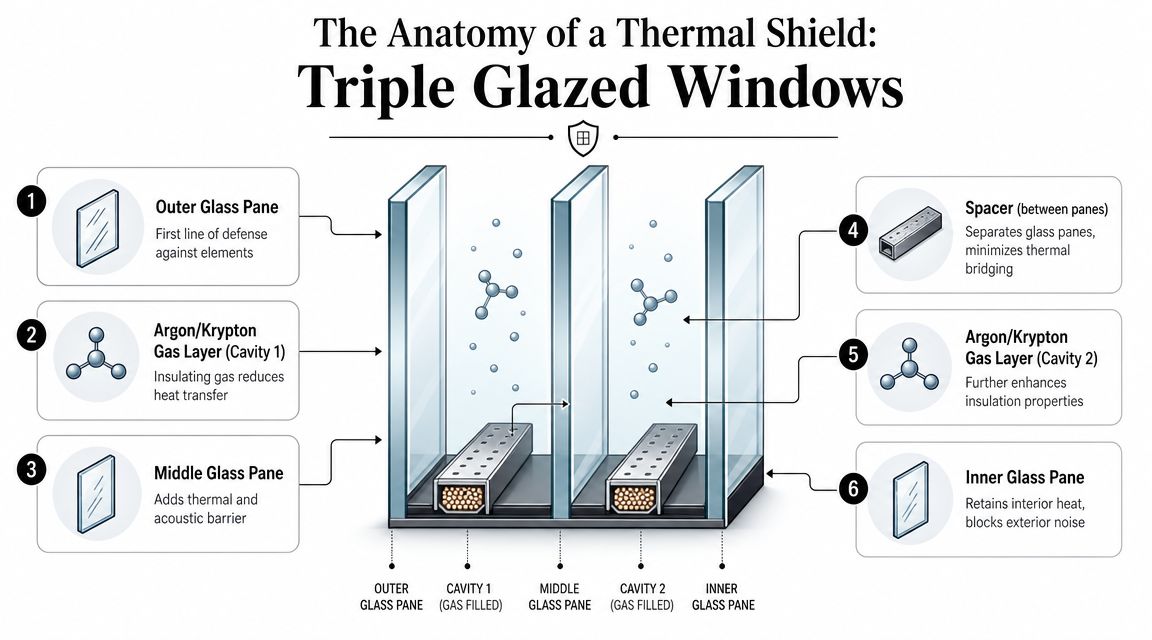
The three panes create two insulated barriers
Triple glazing uses three panes of glass with two sealed spaces between them. Each space slows the movement of heat, so the window has to work through more than one barrier before warmth escapes in winter or outdoor heat enters in summer.
A useful comparison is a winter coat with an inner liner. One thin layer helps a little. Several layers with trapped air between them help much more. A triple-pane window applies that same idea to glass.
For Utah homeowners, this matters most during temperature swings. A cold Wasatch Front morning and a sunny afternoon put windows under constant stress. Triple glazing helps the indoor side of the glass stay closer to the room temperature, which usually means fewer cold spots near the window and a steadier feel throughout the day.
The gas fills act like insulation inside the window
The spaces between panes are often filled with argon or another insulating gas instead of regular air. These gases slow heat transfer better than plain air, so less energy passes through the window.
You do not need to memorize the chemistry. What matters is the result. The gas pockets work like the loft inside insulated outerwear. They create a buffer zone that makes it harder for heat to move from one side to the other.
That same principle shows up in HVAC sizing. Contractors use load calculations to estimate how quickly a home gains or loses heat through walls, ceilings, and windows. Cobre Valley Air LLC on Manual J gives a good plain-English example of why reducing heat transfer at the window can affect comfort and system demand.
Low-E coatings reflect heat where you want it
A Low-E coating is a microscopically thin layer on the glass that reflects radiant heat. In winter, it helps keep indoor heat inside. In summer, the right coating can reduce unwanted solar heat coming through the window.
This is one reason pane count alone does not tell the whole story. Two triple-pane windows can behave differently if they use different coatings or place those coatings on different glass surfaces.
Spacers, seals, and installation complete the shield
The edge of the glass unit is easy to overlook, but it plays a big role. Spacers keep the panes separated, and better spacer systems reduce heat loss around the perimeter where windows often struggle. Seals keep the gas in place and moisture out.
Installation matters just as much. A high-performance glass package installed with gaps, poor air sealing, or out-of-square framing will not deliver the comfort a homeowner expects. That is especially important in Utah, where wind, dry air, strong sun, and winter cold can expose installation shortcuts quickly. A local installer such as Superior Home Improvement should evaluate the full opening, frame condition, and orientation, not just the glass package.
Why this system feels different in daily life
The benefit is not just a better lab number. It is sitting near a window in January without that cold radiating feeling. It is a west-facing room that stays more manageable on a bright summer afternoon. It is a house that feels more even from room to room.
That is what the thermal shield really means. Triple glazing gives you multiple lines of defense working together, which is why the best buying decision comes from looking at the full window system, your Utah climate, and the quality of the installation.
Decoding the Numbers Behind Window Performance
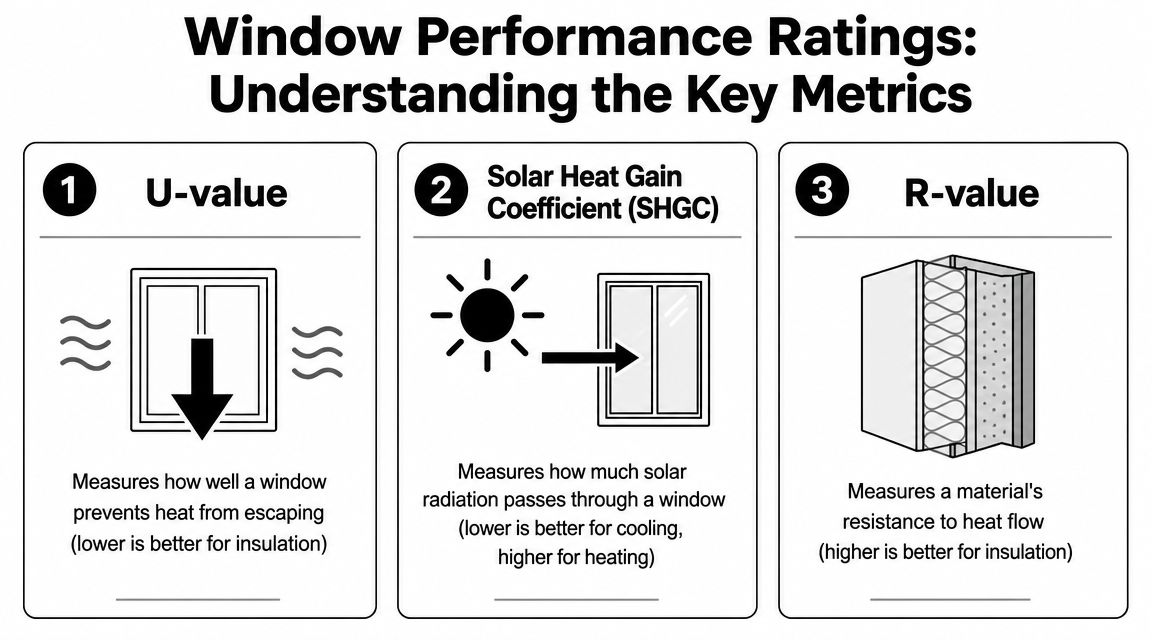
Window labels can look technical fast. U-factor, SHGC, and R-value tend to blur together unless someone translates them into plain English. For a homeowner, each number answers a different question about how the room will feel.
U-factor tells you how easily heat escapes
If you remember one metric, make it U-factor. Lower is better. A low U-factor means the window does a better job resisting heat flow.
A simple way to picture it is this. If your house is a thermos, U-factor tells you how fast heat leaks through the window. Lower numbers mean the thermos works better. That usually translates to warmer interior glass in winter, fewer cold zones near windows, and less strain on your heating system.
The NFRC consumer guide notes that triple glazing uses three glazing layers, low-E coatings, and gas fills to achieve very low U-factors, but it also says the added layer lowers solar heat gain relative to some double-glazed low-E configurations. That's why triple glazing isn't automatically the best choice for every home or every room (NFRC consumer guide on triple glazing).
SHGC affects summer heat and winter sun
Solar Heat Gain Coefficient, or SHGC, tells you how much solar radiation passes through the window. Homeowners often find this concept confusing. Lower isn't always better. Higher isn't always better either.
In a room that gets blasted by summer sun, a lower SHGC may help keep cooling loads down. In a room where winter sun is useful and overheating isn't a concern, a different balance may make more sense. Window selection should match the house, the orientation, and how you use the room.
Glass ratings should support the way the house actually faces the sun. A window that works well on one elevation may not be the smartest pick on another.
R-value is the flip side of insulation
Homeowners often hear about R-value because it's common with insulation products. Higher is better. It expresses resistance to heat flow. You don't need to get deep into the math. Just know that U-factor and R-value both deal with insulation performance, but window labels often emphasize U-factor more directly.
If you're replacing windows as part of a bigger efficiency plan, it helps to look at the house as a system. That includes sizing and load calculations for heating and cooling equipment. If you've never seen how that process works, Cobre Valley Air LLC on Manual J gives a useful homeowner-friendly explanation of why equipment decisions should match the home's actual heat gain and heat loss.
What the label means in daily life
Here's the practical translation:
- Low U-factor: Better insulation and better winter comfort.
- Balanced SHGC: Better control over solar heat entering the room.
- Higher R-value: More resistance to heat flow.
Once you understand those three, product labels stop looking like code and start looking like decision tools.
Triple Glazing vs Double Glazing An Honest Comparison
The easy version is that triple glazing usually insulates better. The honest version is that it also costs more, weighs more, and can reduce daylight compared with some double-glazed setups. That's why the right choice depends on your priorities.
Where triple glazing pulls ahead
Triple glazing adds another pane and another sealed space, so it usually has the edge on heat loss. For homes where window comfort is a major complaint, that matters. People often notice the difference not just on utility bills, but in how close they're willing to sit to the glass during winter.
Noise performance can also improve, although that depends on the full window design, not just the pane count. If the goal is a more buffered, stable indoor feel, triple glazing tends to align well with that.
Where the tradeoffs show up
The extra pane adds real weight. In a typical 4 mm / 4 mm / 4 mm build, a triple-glazed unit weighs about 30 kg/m² versus 20 kg/m² for a comparable double-glazed unit, which increases dead load and handling complexity during installation (Glass TS on triple glazing weight and performance).
That heavier unit can affect older frames, installation logistics, and how carefully the opening needs to be evaluated before replacement. It also means labor quality matters more.
Triple Glazing vs. Double Glazing At a Glance
| Feature | Double Glazing | Triple Glazing |
|---|---|---|
| Glass construction | Two panes with one sealed space | Three panes with two sealed spaces |
| Insulation | Strong upgrade over older windows | Higher insulating potential |
| Weight | Lighter | Heavier |
| Installation difficulty | More straightforward | More demanding because of added load |
| Daylight | Often allows slightly more light | Can block more sunlight because of the extra pane |
| Upfront cost | Lower | Higher |
A lot of homeowners assume the comparison is just about energy. It isn't. It's also about structure, daylight, and whether the home can support the upgrade cleanly.
If your priority is maximum thermal performance, triple glazing often wins. If your priority is balancing cost, weight, and daylight, a well-chosen double-glazed window can still make sense.
Is Triple Glazing Worth It for Your Utah Home
You feel this question on a January morning before you calculate it on a spreadsheet. The furnace is running, the room is technically heated, and the space beside the window still feels chilly enough that you avoid sitting there. In many Utah homes, that gap between thermostat temperature and actual comfort is what pushes triple glazing from a nice idea into a serious option.
What the field data says
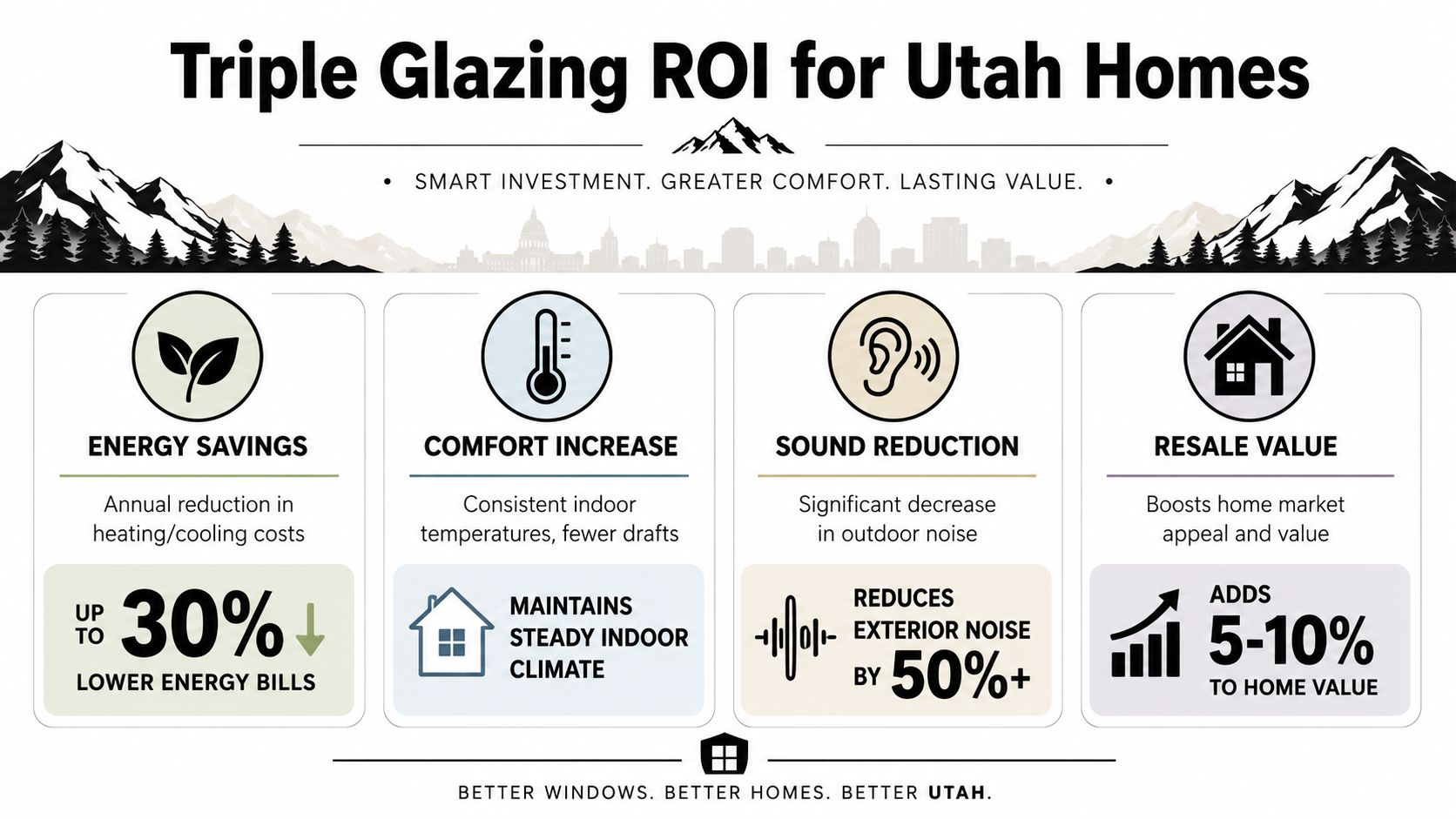
Measured results help more than sales claims. Researchers at the U.S. Department of Energy's Pacific Northwest National Laboratory reported that, during two 10-week test periods, triple-pane windows saved an average of 12% on heating and 28% on cooling for a 1,500-square-foot house. The same report says triple glazing can cost about 10% to 30% more upfront than double glazing (PNNL field data on triple-pane window savings).
That range matters for Utah because our climate asks windows to do two jobs. They need to slow heat loss during cold stretches and reduce unwanted heat gain during hot, sunny periods. Triple glazing often helps with both, but the payoff depends on your house, your exposure, and how long you plan to stay.
When the higher cost makes practical sense
A simple way to look at it is to treat triple glazing like a heavier winter coat for your home. You pay more for the extra layer, but the benefit shows up in the rooms where the weather presses hardest against the glass.
It tends to make more sense if several of these apply:
- You have rooms that are uncomfortable near the windows. This is common in bedrooms, living rooms, and spaces with large glass areas.
- Your home gets strong sun exposure. South- and west-facing rooms in Utah can swing from cold mornings to hot afternoons.
- You plan to stay for years, not months. Comfort improvements are immediate, while energy savings build over time.
- You are already improving the house as a system. Windows work best alongside air sealing, insulation, and smart equipment choices.
If you are comparing upgrades across the whole house, it helps to review windows alongside other recommended HVAC improvements. That keeps you from expecting one product to solve every comfort problem by itself.
A Utah homeowner decision framework
For Utah homeowners, I suggest three filters.
First, ask whether the problem is comfort, energy cost, or both. If your current windows mainly look dated but the rooms feel fine year-round, triple glazing may be harder to justify. If you notice cold drafts, interior glass that feels icy in winter, or rooms that heat up fast in summer sun, the case gets stronger.
Second, ask where the home sits on the exposure scale. A house in a windy area, at higher elevation, or with broad west-facing glass usually gets more value from better-performing windows than a sheltered home with modest window area. Utah is not one climate experience. A home in Park City and a home in St. George can both benefit from high-performance glass, but the reasons and payback can look different.
Third, ask who is installing it. Triple glazing only pays off if the finished window performs the way it was designed to perform. That makes the contractor choice part of the value equation, not a separate issue. Superior Home Improvement is one local example of a company that positions triple-pane replacement as part of a broader energy-conservation approach rather than as a pane-count upsell.
That is usually the right way to judge it. If triple glazing gives you better comfort in the rooms you use, lowers seasonal strain on your heating and cooling system, and is installed correctly for Utah conditions, it can be worth the added cost. If your main goal is the lowest upfront price, a well-specified double-pane unit may be the better fit.
Installation and Maintenance Best Practices
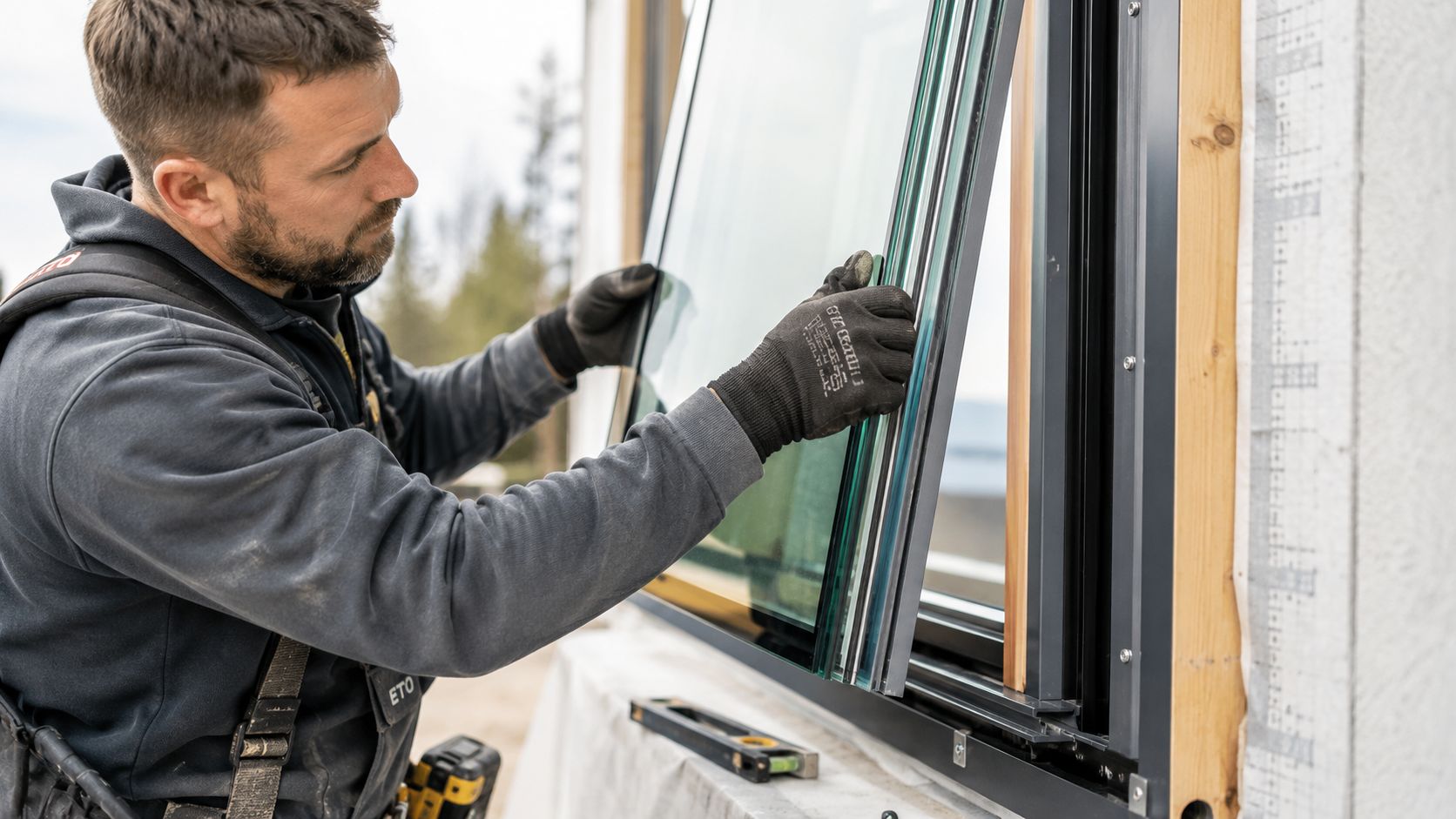
A triple-glazed unit can perform beautifully on paper and still disappoint in a real house if the installation is sloppy. That's especially important here because the glass unit is heavier and less forgiving than a basic replacement window.
Why installation quality matters more with triple glazing
The added weight changes the job. The crew has to handle more load, check the opening carefully, confirm the frame condition, and create a weather-tight seal that won't allow air or water to sneak around the unit. If the frame is out of square or the flashing details are poor, you can lose much of the benefit you paid for.
In older homes, this matters even more. Some openings need repair or reinforcement before the new unit goes in. That's not a red flag. It's part of doing the work correctly.
What to look for during the install
Homeowners don't need to supervise every screw, but you should expect a clear process:
- Opening inspection: The installer should check frame condition, moisture issues, and structural fit before setting the unit.
- Careful handling: Heavier glass requires proper lifting and support, not shortcuts.
- Air and water sealing: The perimeter details should be treated as part of the system, not an afterthought.
- Final operation check: The sash should open, close, and lock smoothly without binding.
Good windows don't rescue poor installation. Poor installation can erase the value of good windows.
A short visual can help you know what proper fit and sealing should look like during a replacement project.
Maintenance is usually simple
The good news is that maintenance isn't complicated. Clean the glass with manufacturer-safe products, keep tracks and weep areas clear, and inspect the perimeter seals as part of normal home upkeep. If operation changes, condensation appears between panes, or the frame begins to shift, call a qualified installer rather than waiting.
Most of the long-term success comes from the front end. Choose the right unit. Install it correctly. Then maintain it like any other high-value exterior component.
Your Triple Glazing Questions Answered
Even after homeowners understand the basics, a few practical concerns usually remain. These are the ones I hear most often.
Will triple-pane windows make my house too dark
They can reduce daylight compared with some double-glazed options. Industry explainers note that triple glazing blocks more sunlight than double glazing because of the extra pane, so that tradeoff is real (Beams Renovation on triple glazing pros and cons).
The better question is whether that reduction matters in your specific rooms. In a bright south-facing room with strong sun, you may welcome a little moderation. In a shaded room that already feels dim, glass selection deserves extra attention.
Can an older home handle the extra weight
Sometimes yes, sometimes not without prep work. Triple glazing is heavier, so the existing frame and opening need to be evaluated carefully. Older homes often benefit from replacement, but the installer should confirm the structure can support the unit and that the opening can be sealed properly.
That's one reason quotes can vary. One company may price the glass only. Another may account for the carpentry needed to support it.
Is triple glazing only for cold climates
No. It's often associated with cold-weather performance, but the insulating design can help in hot weather too by slowing unwanted heat movement. In Utah, many homeowners care about both ends of the year. A room that loses heat in winter can also gain too much in summer.
That said, performance still depends on the whole window specification, not just the extra pane. Solar gain, orientation, and installation all matter.
Does triple glazing always pay for itself
Not automatically. The payback depends on your climate, heating and cooling patterns, existing windows, and how long you'll stay in the home. Some households value the comfort improvement as much as the utility savings. Others need the numbers to work more quickly.
That's why I don't recommend treating triple glazing as a default upgrade. It should solve a real problem in a real house.
What's the first step if you're considering it
Start with an in-home assessment, not a product brochure. You want someone to look at the current windows, the orientation of the house, the frame condition, and the rooms that bother you most. A good recommendation should explain whether triple glazing is the right fit, where it makes sense, and where another option may be enough.
If you want a practical recommendation for your Utah home, Superior Home Improvement can assess your existing windows, explain whether triple-pane replacement fits your climate and budget, and provide a no-obligation estimate based on the actual conditions of your home rather than a one-size-fits-all sales pitch.