
A 3-ton heat pump installed in 2026 usually costs $8,930 to $14,160, and that's an accurate starting point for Utah homeowners shopping this year. If you're seeing quotes below that, or way above it, the difference usually comes from what's included, what's missing, and whether the system is properly built for a Utah winter.
If you're reading this, you're probably doing what most homeowners do. You got one quote that seemed cheap, another that felt absurd, and now you're trying to figure out whether someone's ripping you off or whether HVAC pricing has just gone sideways. Fair question.
It has gone sideways. The cost of a 3-ton heat pump has nearly doubled since 2022, driven by inflation, material costs, and labor rates, according to 2026 3-ton heat pump pricing data. And in Salt Lake City, generic national advice misses the one detail that matters most. Cold-climate heat pumps cost more, but they're often the right call for homes that have to survive a real winter.
The Complete 3-Ton Heat Pump Cost Breakdown
A Utah homeowner sees a 3-ton heat pump online for a few thousand dollars, then gets a $12,000 quote from a contractor and assumes the bid is inflated. Usually, it isn't. They are looking at two different numbers.
A system-only price is the equipment sitting on a pallet. An installed price is the equipment, labor, startup, permit work, and the job required to make that system heat and cool your house through a Salt Lake summer and a Wasatch Front winter. Industry cost data from HVAC.com's heat pump pricing guide puts installed heat pump pricing in a broad national range that lines up with what homeowners are seeing in the field, but Utah often trends higher when the quote includes a true cold-climate model instead of a basic unit.
That cold-climate premium is where many homeowners get blindsided.
Estimated 3-Ton Heat Pump Costs 2026
| System Tier | Unit Only Cost | Total Installed Cost |
|---|---|---|
| Standard efficiency split system | $2,980 to $7,990 | $8,930 to $14,160 |
| High-efficiency split system | $2,980 to $7,990 | Up to $14,160 |
| Packaged heat pump | Not separately specified | $8,250 to $12,365 |
Use that table as a starting point, not a promise. In Utah, two 3-ton quotes can differ by thousands because one contractor priced a standard heat pump and the other priced equipment that can hold capacity better in freezing weather.
What an installed price should include
A fair quote needs to show the full job, line by line. If it doesn't, expect change orders later.
Look for these items:
- Equipment and matched components: Outdoor unit, indoor coil or air handler, and the controls or accessories needed for an approved matched system
- Installation labor: Removal of old equipment, setting the new system, refrigerant line connections, electrical connections, startup, and testing
- Refrigerant charging and commissioning: Proper charge, airflow setup, and verification matter. A poorly commissioned heat pump will underperform even if the equipment is good.
- Permits and code work: Any contractor who stays vague here is giving you a reason to be cautious
- Haul-away and disposal: Low bids often leave this out
Practical rule: If the quote does not list it, do not assume you are getting it.
National sizing guidance from ENERGY STAR's heat pump resources is useful for understanding the category, but it does not explain Utah pricing very well. A 3-ton system that looks fine on paper in a mild climate may need better low-temperature performance, different controls, or backup heat planning here. That adds cost, and in many homes it is money well spent.
Why your quote might still land outside the “normal” range
Some houses are easy. Many Utah houses are not.
If the existing ductwork is undersized, the return air is poor, the electrical panel is tight on capacity, or the refrigerant line set needs to be replaced, the project price goes up fast. Add a cold-climate upgrade and you can easily see why one Salt Lake City bid lands near the low end while another comes in much higher for the same square footage.
That does not mean the expensive quote is automatically better. It means you need to see what each contractor included, especially the model family, low-ambient performance, electrical scope, and any duct corrections.
One more thing. If you are planning a broader electrification project, compare the HVAC quote with your water heating plans at the same time. These expert hot water system recommendations are a useful reference for homeowners thinking about total efficiency, not just the heat pump itself.
Key Factors That Determine Your Final Price
Two homes can both need a 3-ton system and still get very different bids. That's normal. What matters is whether the quote explains why.
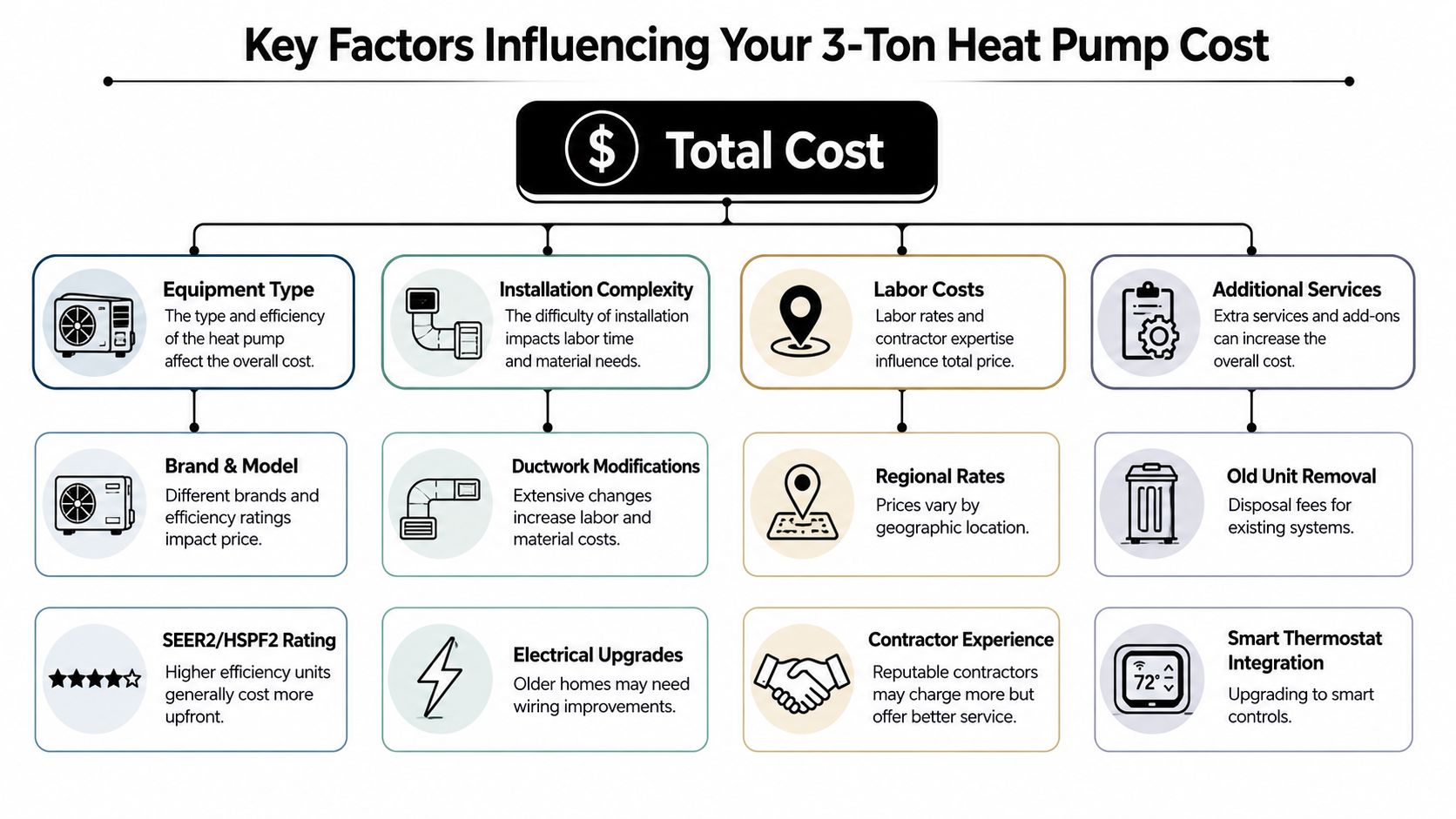
A 3-ton heat pump delivers 36,000 BTUs per hour of heating and cooling capacity, and moving from 13 to 14 SEER equipment to 19+ SEER equipment pushes installed pricing from $8,930 up to $14,160 because higher-efficiency systems use more advanced components and compressors, according to Carrier's 3-ton heat pump sizing and pricing overview.
Efficiency costs more for a reason
When you see SEER, HSPF, or similar ratings on a quote, don't tune out. That's where a lot of the price spread starts.
Higher-efficiency systems usually cost more upfront because the equipment is more advanced. Better compressors, more advanced controls, and improved cold-weather performance all add cost. In return, the system can operate more efficiently over time.
That doesn't mean every homeowner should buy the highest-rated model on the page. If the jump in price doesn't match how long you plan to stay in the home, or if the rest of the house leaks energy through old windows and poor insulation, the premium may not be the smartest first dollar to spend.
Installation complexity drives the messy part of the quote
This is the part cheap bids hide.
One contractor may quote a simple equipment swap. Another may include the work required to make the system perform. Those are two very different proposals, even if both say “3-ton heat pump.”
Here's what usually changes the labor side:
- Tight installation access: Attics, crawlspaces, and older basements slow the job down.
- Ductwork modifications: Heat pumps often expose airflow problems that old furnace systems tolerated.
- Electrical work: Older Utah homes may need wiring changes or panel-related work before the system can be installed properly.
- Control upgrades: Sometimes the thermostat and control setup need to be changed to run the system correctly.
A cheap HVAC quote often buys a heat pump install. It doesn't always buy a heat pump system that works well.
Brand matters, but not as much as workmanship
Homeowners spend too much time comparing logos and not enough time comparing scope.
Yes, brand affects price. Some manufacturers charge more because of product line positioning, parts availability, warranty support, or model features. But the bigger issue is still installation quality. A well-installed mid-tier system usually beats a premium unit installed by a sloppy crew.
That's especially true in Utah, where a system has to handle cold mornings, dry air, altitude, and homes with mixed construction quality. The wrong airflow setup, poor refrigerant charging, or lazy sizing can undo the benefits of expensive equipment fast.
What I'd focus on first
If you're reviewing bids, prioritize these in order:
- Correct sizing: The system has to match the house.
- Cold-weather performance: Utah isn't a mild-climate market.
- Duct and electrical scope: Missing items here become change orders later.
- Installer reputation and detail level: Clear paperwork beats smooth sales talk.
- Brand and upgraded features: Important, but secondary.
If a quote looks thousands lower than the others, don't assume you found a bargain. Assume you found something missing, then make the contractor prove otherwise.
Heat Pump Costs in Salt Lake City and Utah
A Salt Lake homeowner gets three bids for the same 3 ton heat pump and sees a spread of several thousand dollars. That usually happens because the systems are not the same.
Utah pricing breaks on one question. Is the contractor quoting a standard heat pump, or a cold-climate model built to keep producing heat in real winter weather? National guides blur that line, and that's why they miss what Utah homeowners pay.
The Utah premium most guides ignore
Cold-climate heat pumps often cost more than standard equipment, and that extra spend shows up fast in Utah bids. For regions with real winter conditions, analysts at Urban Green Council found a common $1,000 to $2,000 premium for cold-climate heat pump equipment in their cost analysis of AC-to-heat-pump swaps.
That premium is usually money well spent here.
Salt Lake City is not a mild-climate market. You need a system that can still heat the house on cold mornings without leaning too hard on backup strips or a gas furnace. If the equipment falls off when temperatures drop, the "savings" from a cheaper bid disappear in higher operating cost and worse comfort.
Why I recommend cold-climate models in Utah
If you want a heat pump to carry real heating load along the Wasatch Front, buy for January, not October.
The U.S. Department of Energy notes that some heat pumps struggle to provide enough heat in colder weather, while cold-climate models are designed to perform better at low outdoor temperatures, according to its heat pump guidance for homeowners. That is the difference that matters in Utah.
Here's what that usually gets you:
- Stronger winter output: Better performance when temperatures drop.
- Less backup heat use: Lower chance of the system relying heavily on expensive supplemental heat.
- Fewer comfort complaints: More stable indoor temperatures during cold snaps.
Buy a Utah heat pump like it has to survive Utah winter. Because it does.
Why quotes vary so much around Salt Lake City
The biggest price swings in the Salt Lake area usually come from scope, not salesmanship. One contractor may be pricing a basic equipment swap. Another may be including a cold-climate unit, electrical work, control upgrades, permit costs, line-set changes, snow-appropriate placement, or duct fixes needed to make the system work.
That is why one-line proposals are a bad sign. If a quote just says “3 ton heat pump install” and nothing else, you have no way to compare it fairly with a detailed bid.
In Utah, two contractors can look at the same house and solve two different problems. One prices a box replacement. The other prices a heating system that will hold up through a Salt Lake winter. That difference is why bids can vary by thousands, and why the lowest number is often the most expensive mistake.
How Incentives and Efficiency Reduce Your Net Cost
A Salt Lake homeowner gets two bids for a 3 ton heat pump. One is cheaper on paper. The other includes a better cold-climate unit that qualifies for the federal tax credit. After the credit, the price gap can shrink fast. In Utah, that is often the difference between buying a system that struggles in January and one that carries the house through winter.
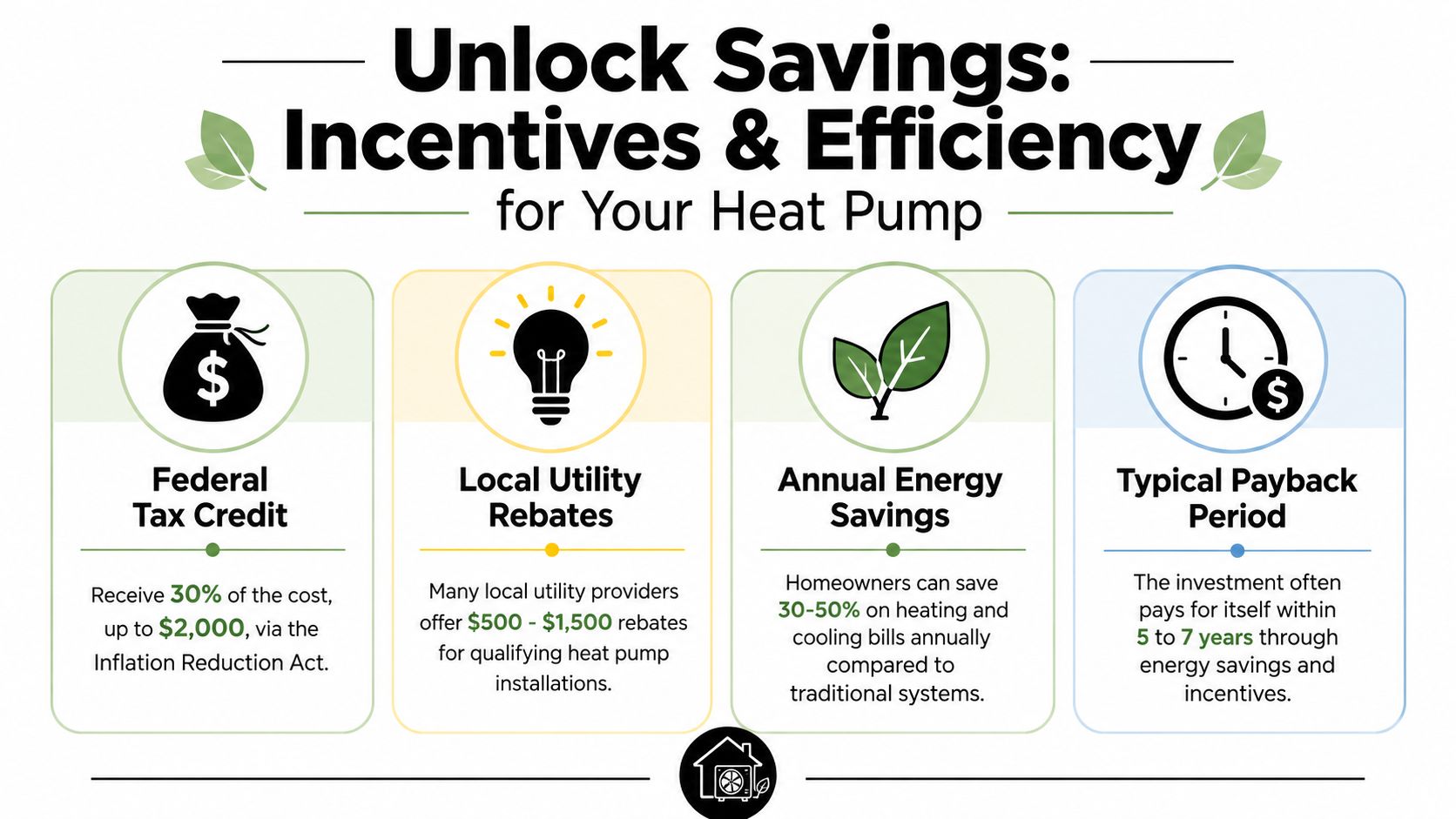
The federal Energy Efficient Home Improvement Credit can cover 30% of qualifying project costs, up to $2,000 for a qualifying heat pump, according to the IRS guidance on the 25C energy efficiency tax credit. DOE also says air-source heat pumps can cut electricity use for heating by about 50% compared with electric resistance heating such as furnaces and baseboard systems, based on its homeowner guidance on air-source heat pumps.
The tax credit changes the real price
Check the credit before you judge any bid.
A higher quote that includes qualifying equipment can end up being the smarter buy. That is especially true in Utah, where a cold-climate model often costs more up front but avoids the performance drop and backup heat dependence that cheap equipment can bring in real winter weather.
I tell homeowners to compare bids in two columns:
- Sticker price: What you pay the contractor
- Net price after credit: What the project effectively costs if your install qualifies
- Expected winter performance: Whether the system is built for Utah cold or just mild-weather marketing
That last point matters more than generic online cost guides admit. A low-end system with a tax credit is still a low-end system. If it cannot hold temperature well during a Wasatch Front cold snap, the monthly bill and comfort complaints can wipe out the initial savings.
Efficiency shows up in more than the utility bill
Better efficiency lowers operating cost. It also changes how the house feels.
A well-chosen heat pump runs longer and steadier instead of blasting on and off all day. Rooms stay more even. The system is quieter. You rely less on strip heat or other expensive backup heat during cold stretches if the equipment was selected correctly.
This short video gives a helpful overview of the savings side of the decision.
My advice on timing and savings
Do not wait until the old system fails during a freeze. Emergency replacements usually lead to rushed decisions, thin quote comparisons, and equipment choices based on what is sitting in a warehouse.
Do this instead:
- Verify federal eligibility early: Ask whether the exact model and installation scope qualify.
- Request net-cost pricing: Make each contractor show the pre-credit and post-credit numbers.
- Ask about backup heat strategy: In Utah, this affects winter operating cost more than many buyers realize.
- Look at the house, not just the equipment: Air leaks, poor insulation, and duct problems can drag down the return on a new system.
- Vet the installer carefully: Use this guide to choosing reliable contractors before you sign anything.
A high-efficiency heat pump in a drafty house still has to fight the house every day.
The best value comes from matching three things. Qualified equipment, available incentives, and a home that is not wasting the heat you are paying to produce. That is how Utah homeowners keep the net cost in line without buying a system they regret by the first hard winter.
How to Get Accurate Bids and Hire a Contractor
A Salt Lake homeowner gets three bids for the same 3 ton heat pump. One is far lower than the other two. That usually means one thing. The scope is different, and the missing pieces are the parts that get expensive in Utah homes.
A low quote can leave out duct repairs, electrical work, permits, startup testing, or the cold-climate equipment needed to hold capacity in winter. Then the extras show up later, or the system never heats the house the way you expected.
Demand a real load calculation
Start with sizing. If the contractor does not run an ACCA Manual J load calculation, the bid is not ready.
Consumer Reports and ACCA guidance warn that contractors who size by rough square-foot rules often mis-size equipment, which can raise operating costs and shorten system life. The same general problem shows up in pricing. A $4,500 quote may leave out $3,000+ in duct upgrades, while a $12,000 quote may include load calibration and electrical retrofits, according to this detailed breakdown of hidden heat pump quote differences.
That matters even more in Utah. A house along the Wasatch Front can need a different setup than a generic national guide assumes, especially if you are comparing standard equipment to true cold-climate models. If someone walks in, eyeballs the house, and says “you need a 3-ton” without showing the math, I would move on.
What a strong quote should show
A usable bid is specific. You should be able to compare it line by line with the next one.
Make sure the quote spells out:
- Equipment details: Brand, model family, and whether it is standard or cold-climate equipment
- Sizing method: Confirmation that a Manual J load calculation was performed
- Included work: Duct changes, electrical upgrades, thermostat or controls, permits, removal of old equipment, and startup testing
- Excluded work: Anything not covered, in plain language
- Warranty terms: Equipment warranty and labor warranty
The best contractor usually documents the job better.
How I'd vet a contractor in Utah
Keep the screening simple and strict.
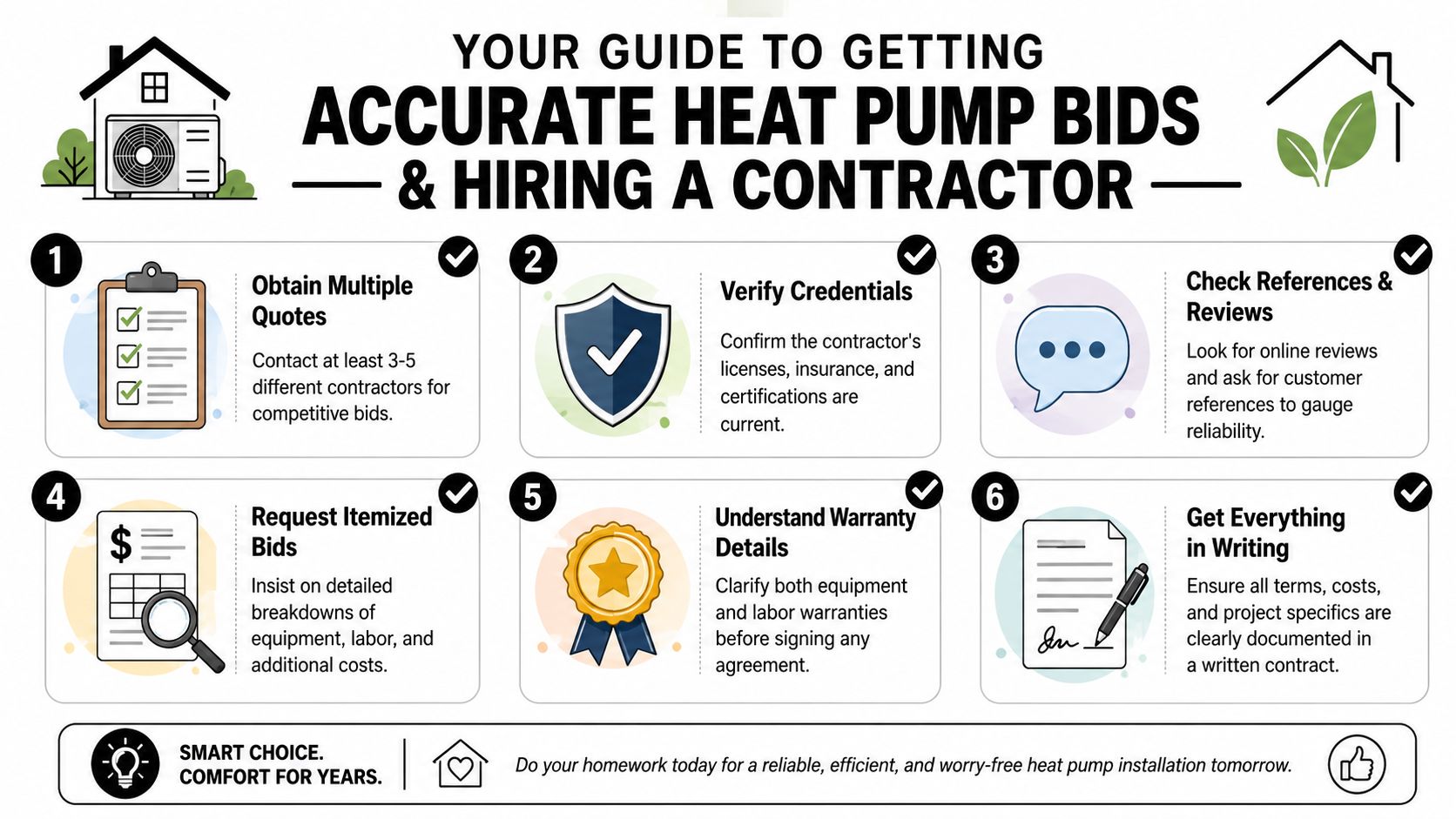
Get at least three detailed bids
One-page price sheets are useless for comparison.Verify license and insurance
Read this guide to choosing reliable contractors before you sign anything.Ask how the system will perform in Utah winter
The contractor should explain capacity at low temperatures, defrost behavior, and backup heat strategy in plain English.Ask what they found with your ducts and airflow
Bad airflow is one of the biggest reasons two Salt Lake bids can differ by thousands of dollars for the same house.Ask who handles commissioning
A proper install includes refrigerant setup, airflow verification, control setup, and final performance checks.
Red flags I wouldn't ignore
These are the warning signs that show up again and again:
- No load calculation
- One lump-sum price with no scope
- No mention of ducts, airflow, or electrical
- No clear answer on cold-weather performance
- Pressure to sign right away
- Big promises with little documentation
If you want a fair price, stop chasing the lowest number. Compare the scope, the equipment, and the contractor's willingness to explain the hard parts. In Utah, that is how you avoid paying twice for the same job.
If you're planning efficiency upgrades in Utah, don't look at HVAC in isolation. Superior Home Improvement helps homeowners improve the full performance of the home with energy-efficient windows, roofing, siding, and insulation-focused exterior upgrades that make heating and cooling systems work better. If your house is losing comfort through the shell, fixing that first, or alongside a heat pump project, can make every dollar you spend go further.