
New windows usually do increase home value, but not dollar for dollar. Nationally, homeowners typically recoup about 67% to 69% of the cost at resale, and replacing single-pane windows with ENERGY STAR-certified models can also cut annual heating and cooling costs by an average of 13%.
That's the part many homeowners miss. The key question isn't just whether new windows add value. It's how that value shows up.
Some of it appears in resale math. Some of it shows up in lower utility bills. And some of it shows up in a place appraisers often don't capture well at all: buyer confidence. A home with worn, drafty, aging windows feels like deferred maintenance. A similar home with clean, efficient, recently installed windows feels move-in ready. Buyers respond to that difference, even when the appraisal doesn't fully reflect it.
For Utah homeowners, that gap matters more than usual. Window performance isn't cosmetic in a four-season climate. It affects winter comfort, summer cooling load, noise control, and how expensive a house feels to own.
Do New Windows Really Increase Home Value
Yes, but the honest answer is more nuanced than most articles make it sound.
When homeowners ask, do new windows increase home value, they're usually picturing one number on paper. In practice, value comes through three channels at once: resale recovery, monthly operating savings, and buyer perception. The first is easy to measure. The third often matters just as much.
Two similar homes, two different buyer reactions
Consider two otherwise similar houses on the market. One has original single-pane windows that still open and close, but buyers notice drafts, exterior noise, and a tired appearance. The other has newer, efficient windows with clean lines and a tighter seal. Even before anyone talks about inspection reports, buyers tend to treat the second home as lower risk and easier to live in.
That reaction affects offers. It also affects how long buyers hesitate.
Appraisers, however, don't always reward that difference in a direct way. If the old windows are still functional, they may not add much on paper for the replacement alone. Buyers still care, though, because windows touch comfort, maintenance expectations, and curb appeal all at once.
Value is part math, part marketability
A window project can improve the way your home presents from the street, especially when the old frames make the exterior look dated. If you're evaluating the visual side of the project, Cultivate House Detailing's curb appeal guide is a useful companion because it puts windows in the broader context of exterior presentation.
Here is a practical approach:
- Resale value: You may recover a meaningful share of the project cost when you sell.
- Livability value: You may cut heating and cooling waste and make the home more comfortable now.
- Marketability value: Buyers may perceive the home as better maintained and less costly to update after closing.
New windows often matter most when buyers are comparing your home with another option in the same price band.
That's why the broad “yes” answer is incomplete. New windows can increase value, but the biggest payoff often comes from making your home easier to sell, easier to justify, and easier for a buyer to choose.
Calculating the Return on Investment for New Windows
Window replacement usually returns about 67% to 69% of its cost at resale, based on the same Opendoor summary of Remodeling Magazine's Cost vs. Value data cited earlier. Put plainly, this is rarely a full-dollar payback project. It is a project that tends to preserve a meaningful share of the money you put into it while improving how buyers judge the house.
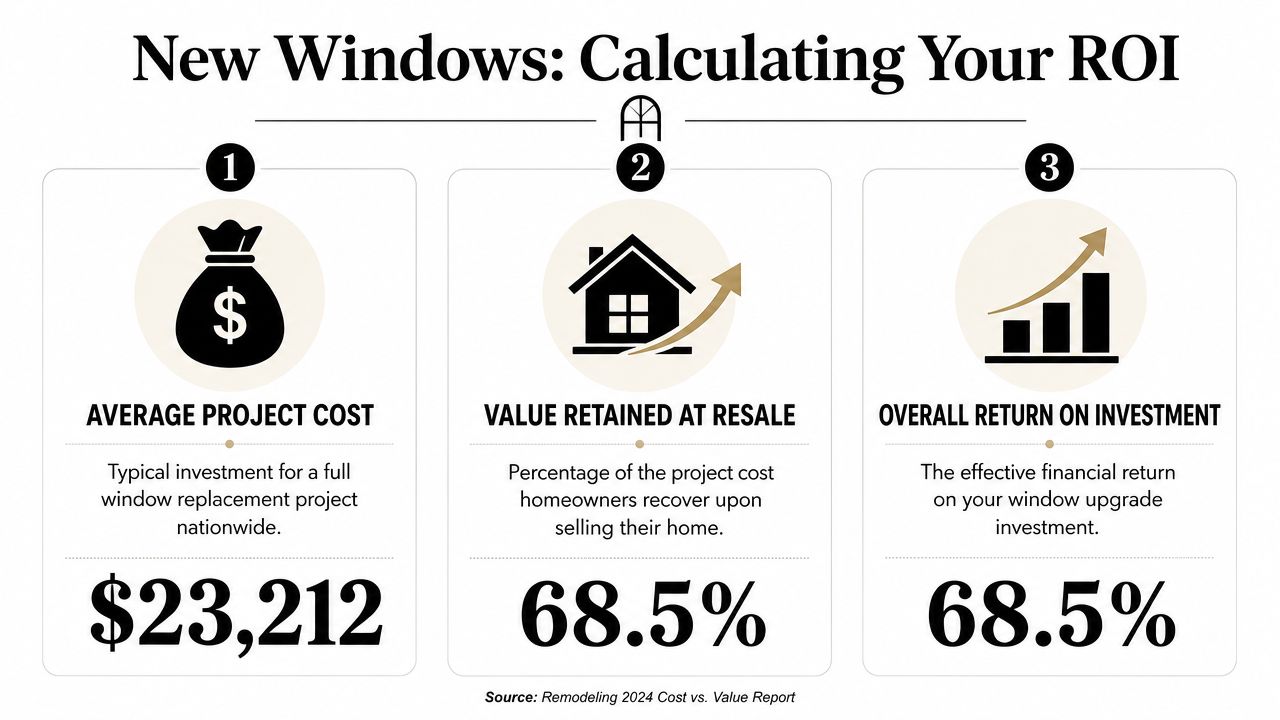
The same source places a standard full-home window replacement at roughly $15,000, with an associated value increase of about $10,500 to $12,000. It also reports average resale value around $13,766 for vinyl window replacement, while total project costs often range from $6,000 to $21,000 nationwide. That spread matters because ROI is sensitive to scope, window type, and the price ceiling in your neighborhood.
What the resale math actually means
Homeowners often make one of two errors. They expect windows to add the full project cost to the appraisal, or they treat the job as pure maintenance with no resale benefit.
Both views miss the middle ground, which is where window ROI usually sits.
A more accurate way to frame it is this: new windows often produce a partial financial recovery plus a marketability gain that may not show up cleanly in an appraisal adjustment. For Utah sellers, that distinction matters. A buyer comparing two similar homes may pay more, or negotiate less aggressively, for the one that does not come with an obvious window replacement bill after closing.
Formal value versus market value
This is the part many articles skip. ROI on windows has two layers:
| Measure | How it shows up |
|---|---|
| Appraisal value | Often reflects a portion of the project cost, especially if the old windows were still functional |
| Marketability value | Shows up in buyer perception, fewer objections, stronger offer confidence, and sometimes faster sale timing |
| Total owner return | Combines resale recovery with the practical benefit of having already solved a visible house issue |
That distinction helps explain why a project with a 67% to 69% resale recovery can still be a sound use of capital. Buyers do not evaluate homes the way spreadsheets do. They discount properties for visible future work, and windows sit in a category buyers notice quickly because they affect appearance, comfort, and expected utility costs all at once.
How to judge whether the numbers work for your house
Use the published ROI range as a baseline, then pressure-test it against your local situation.
| Consideration | Practical takeaway |
|---|---|
| Expected resale recovery | Roughly 67% to 69% based on the earlier-cited Opendoor summary |
| Cost range | Projects vary widely, from $6,000 to $21,000, so bid accuracy matters |
| Best candidate homes | Houses with aging, inefficient, damaged, or visibly dated windows |
| Biggest mistake | Overspending on premium window packages in a neighborhood that will not support the added cost |
If you're comparing windows against other projects, a broader review of home renovation return on investment helps put the decision in context. In many cases, windows are less about chasing the highest headline ROI and more about protecting asking price from buyer pushback.
The practical rule is simple. Treat window replacement as a project that can recover a solid share of its cost and reduce the discount buyers try to claim for deferred maintenance. That is often where the true return shows up.
The Hidden Payback from Energy Savings and Comfort
Resale is only part of the return. New windows start paying back long before you list the house.
According to Newman Windows' investment analysis, replacing single-pane windows with double-pane ENERGY STAR-certified units reduces annual heating and cooling costs by 12% to 25%, with a documented national average of 13%. That translates to roughly $465 to $568 in yearly savings for a typical U.S. home. The same source notes that windows and doors account for 25% to 30% of a home's heating and cooling load.
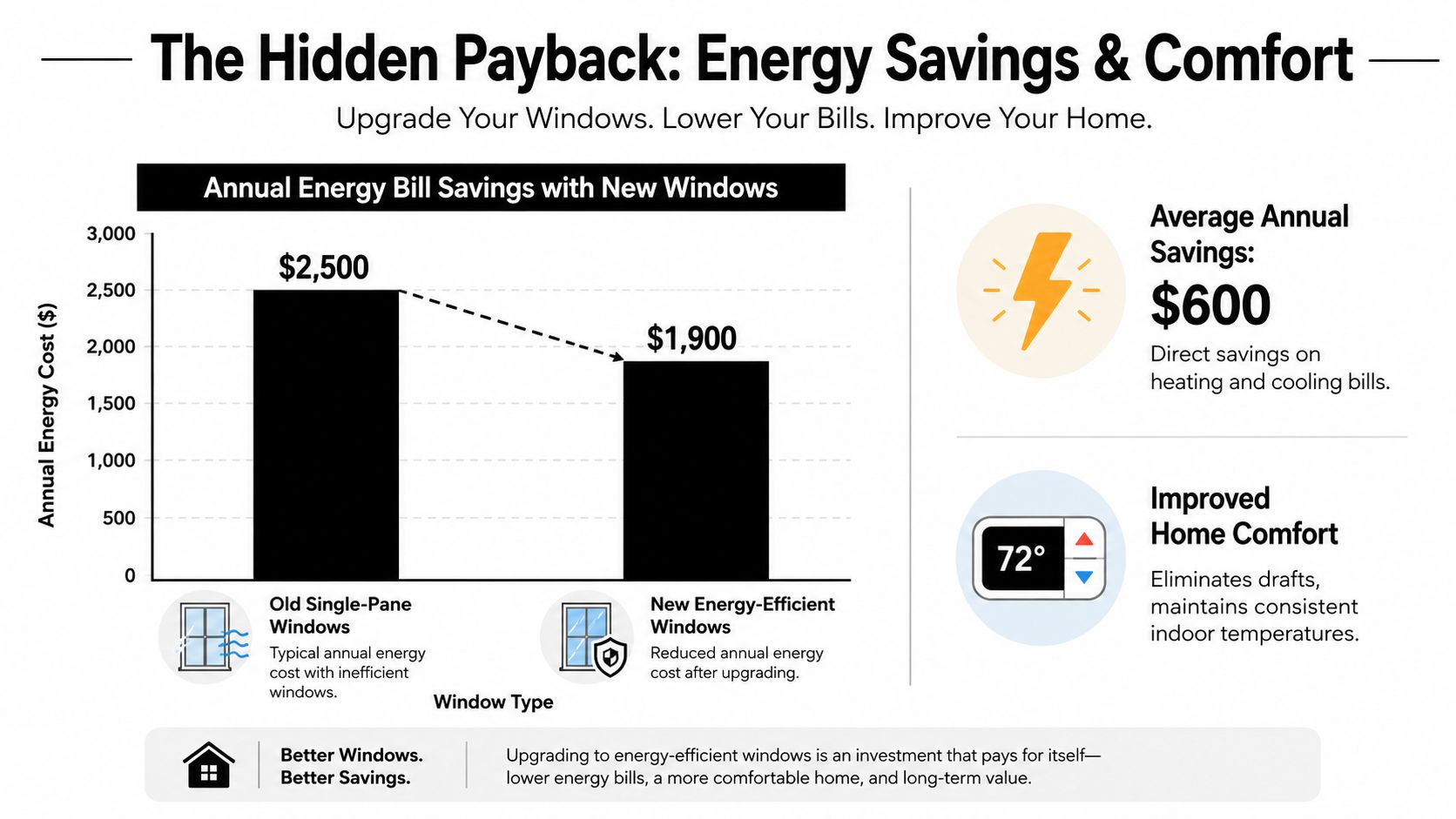
Why windows change the monthly cost of living
Homeowners often focus on sticker price and resale recovery because those are easy to discuss. Utility waste is quieter. You feel it every month, but you may not label it as a window problem.
When old single-pane units leak conditioned air, your HVAC system has to work harder to maintain indoor temperature. That's why this upgrade can produce a direct, recurring financial benefit instead of a one-time resale bump.
The same Newman Windows source adds an important Utah-specific point: in colder climates such as Utah, triple-pane, argon-filled, low-E-coated systems can reduce home energy use by up to 30%.
The non-financial return is still real
Comfort matters because buyers notice it, and so do you. Window replacement can help with:
- Draft control: Rooms near older glass often feel colder in winter and hotter in summer.
- Temperature consistency: Better glass packages and tighter installation reduce hot and cold spots.
- Noise reduction: Multi-pane systems usually create a calmer interior environment.
- Interior protection: Low-E coatings can help reduce harsh sun exposure on finishes and furnishings.
This short video gives useful visual context on how efficiency upgrades affect performance in everyday homes.
Lower utility bills are only half the story. A comfortable home also feels more expensive, better maintained, and easier to justify at your asking price.
That's why window replacement often performs better in the housing market than in a narrow spreadsheet. Buyers don't just buy features. They buy the experience of living in the house.
Factors That Influence Your Window Replacement ROI
Two window projects can cost similar amounts and produce very different results. The difference usually comes down to product choice, installation quality, and the condition of the windows you're replacing.
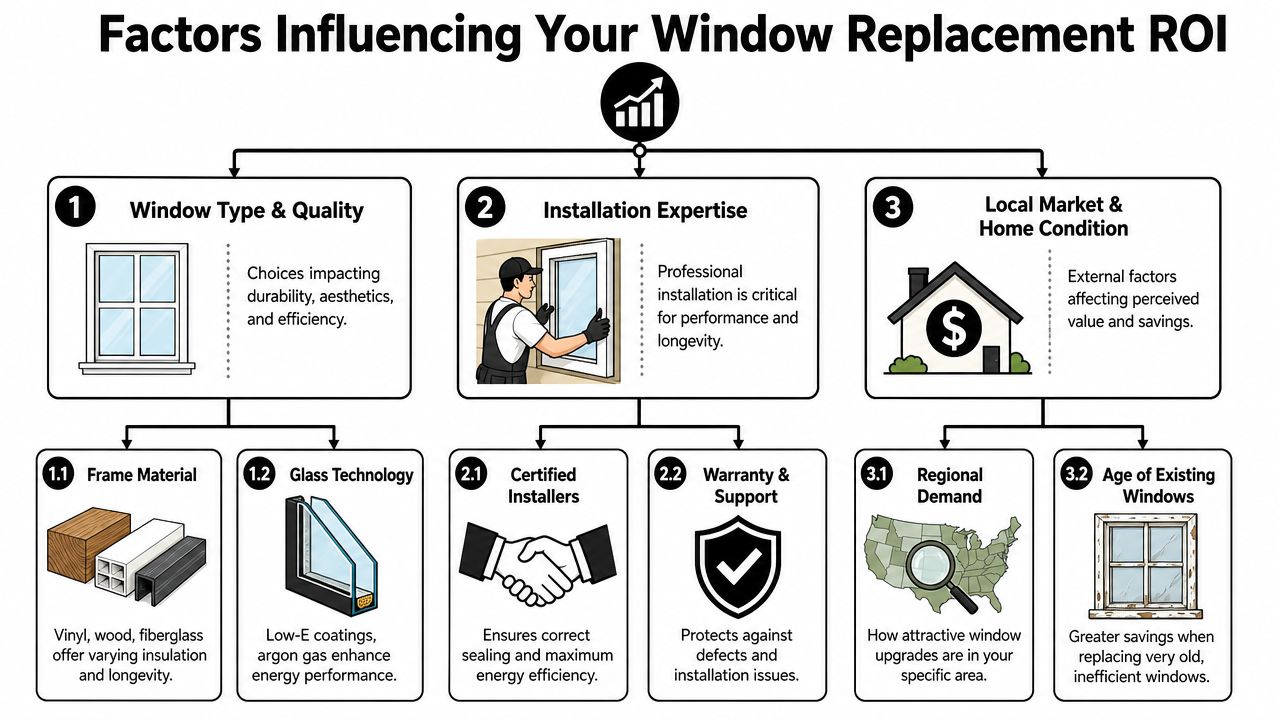
Start with what you have now
Replacing failing single-pane windows is a different decision from replacing functional, newer double-pane units. The worse your existing windows perform, the stronger your likely return in both comfort and buyer appeal.
A practical homeowner should assess:
- Visible deterioration: Rot, failed seals, sticking sashes, condensation between panes.
- Performance issues: Drafts, uneven room temperatures, outside noise.
- Aesthetic drag: Frames and styles that make the whole exterior look older than it is.
If your current windows are creating daily frustration, buyers will probably notice too.
Product choices affect perception and performance
Not all upgrades carry the same value signal. Buyers may not know every technical specification, but they can feel the outcome.
A strong spec package usually includes:
| Decision area | Why it matters |
|---|---|
| Frame material | Affects durability, maintenance needs, and appearance |
| Glass package | Double-pane, triple-pane, low-E coatings, and gas fills influence efficiency and comfort |
| Style match | The right proportions and finish improve the home's overall presentation |
For Utah homes, climate should drive the choice. A product that performs well in a mild market may not be the best fit where winter cold and summer heat both matter. That makes triple-pane and advanced glazing more compelling here than in places with less temperature swing.
Installation is where good products succeed or fail
A premium window installed poorly can underperform a mid-range window installed correctly. Seal quality, flashing details, squareness, and fit determine whether the product delivers the comfort and efficiency you paid for.
Ask contractors direct questions about:
- Who installs the windows. Employee crews and trained specialists usually provide more consistency than loosely managed subcontracting.
- How the opening is prepared. Proper prep affects weather-tightness and long-term durability.
- What warranty support looks like. Good paperwork matters, but responsive follow-through matters more.
Don't judge a window quote by glass alone. The installation method often determines whether the promised performance shows up in your utility bills and in daily comfort.
The highest ROI usually comes from choosing the right level of product for your market, then making sure the install quality protects that investment.
Deciding When Window Replacement Is Worthwhile
The most useful question isn't “Will windows add value?” It's “Will they solve a problem buyers or appraisers will care about?”
That distinction is where many homeowners make expensive mistakes.
According to the discussion summarized in this Reddit thread on appraisal versus buyer value, appraisers may not add much for new windows if the old ones were still functional. Yet the same discussion points to National Association of Realtors data showing homeowners often recover 70% to 80% of window replacement cost because the upgrade improves buyer appeal and sale speed.
The appraisal gap is real
A formal appraisal asks, in effect, whether the market has hard comparable evidence for a value adjustment. If your old windows still worked, an appraiser may treat replacement as maintenance or modernization rather than a major value event.
Buyers don't think that way.
They walk through the home and ask themselves different questions:
- Will I need to replace these soon?
- Will utility bills be painful?
- Will this house feel drafty in January or hot in July?
- Am I inheriting a project right after closing?
That's marketability value. It's the premium attached to reduced hassle.
Three common scenarios
Use this framework to decide whether replacement makes sense now:
Failing single-pane windows
This is the clearest case for action. If windows are visibly old, inefficient, or problematic, replacement can improve livability now and reduce a major objection at resale.
Functional but dated windows before a sale
This is a strategy call. You may not see a large appraisal bump, but newer windows can still help the home show better and feel easier to buy.
Functional modern windows
This is usually the weakest short-term resale case. If your current windows are already in decent condition, the project becomes more about comfort, energy performance, and personal ownership horizon than immediate value gain.
If replacement removes a buyer objection, it's often worthwhile even when the appraisal doesn't fully credit it.
That's the key insight most homeowners don't hear. The project can be financially sensible without producing a dramatic line-item jump in appraised value.
A Smart Investment for Utah Homeowners
Utah changes the equation because windows do more work here.
Cold winters, hot summers, strong sun, and big day-to-night temperature swings put pressure on the building envelope. In that environment, windows aren't just trim with glass. They're part of the home's operating system. Poor-performing units make rooms less comfortable, push up heating and cooling demand, and create the kind of buyer hesitation that's hard to overcome in a showing.
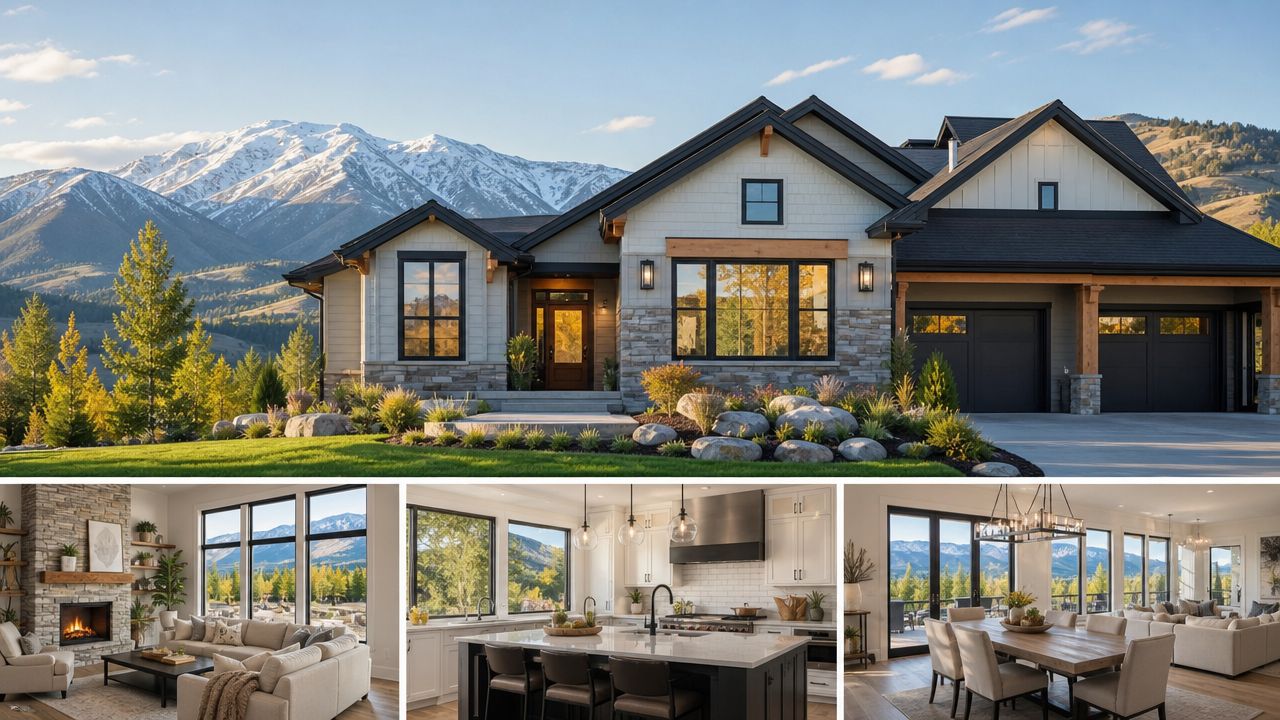
What matters most in this market
For a Utah homeowner, the best window investment usually has four traits:
- Climate-appropriate glass performance: Products should be selected for real seasonal swings, not generic national averages.
- Tight installation standards: Even strong windows underperform if the install allows air leakage.
- Visual fit with the home: Good windows should improve the exterior, not look like an afterthought.
- Proof of performance: Written guarantees and clear specifications reduce guesswork.
Utah is also one of the places where higher-efficiency packages make more sense than they might elsewhere. When a home sees both heating and cooling pressure across the year, better glass and better sealing can influence both monthly costs and buyer confidence.
The practical conclusion
If your current windows are original single-pane units, visibly deteriorated, or making the house harder to heat and cool, replacement is usually a rational investment. If you're in a holding period of several years, the monthly comfort and energy benefits carry more weight. If you're preparing to sell, marketability becomes the deciding factor.
The biggest mistake is treating all window replacements as equal. The right project in Utah is usually one that improves efficiency, comfort, appearance, and sale readiness at the same time. The wrong project is overpaying for features your house or market won't reward, or choosing a contractor who can't translate a good product into real-world performance.
For homeowners here, the smart move is to evaluate windows the same way a careful buyer would. Ask whether the upgrade lowers future hassle, lowers operating cost, and makes the home feel more finished the moment someone walks in.
If you want a Utah-specific assessment, Superior Home Improvement offers consultations focused on energy-efficient exterior upgrades built for local conditions. Their Energy Conservation Program combines triple-pane windows, certified installation, and a written utility-savings guarantee of up to 40% reduction, which makes them a strong option for homeowners who want clearer performance expectations before committing to a major project.