
When homeowners in Utah start looking at replacing their windows, the first question is always about the price. On average, you can expect the cost of energy-efficient windows to fall somewhere between $750 to over $2,200 per window, and that includes professional installation.
That's a wide range, I know. But the final number really depends on the frame material, the style of window, and the specific energy-saving features you choose.
Your Upfront Cost for Energy Efficient Windows in Utah
Replacing your windows is a significant home improvement project, and it's smart to go in with a clear understanding of the investment. It helps to think of this cost not just as an expense, but as a down payment on lower energy bills, a more comfortable home, and a bump in your property value down the road.
The final price tag you see is really a mix of two things: the cost of the window itself and the cost of the skilled labor needed to install it perfectly. The product cost is where you have the most control, and it's driven by the window style, frame material, and the glass package. A simple, fixed picture window is always going to be less expensive than a big, complex bay window with moving sashes.
Comparing Window Material Costs
The frame material you choose is probably the single biggest factor that will swing your budget one way or another. Each option comes with its own trade-offs in terms of cost, durability, and how well it insulates.
- Vinyl Windows: This is the go-to for many Utah homeowners because it's usually the most affordable. Vinyl gives you great energy efficiency and is incredibly low-maintenance.
- Fiberglass Windows: Sitting in the mid-range, fiberglass is known for being exceptionally strong and durable. These frames are fantastic for Utah's climate because they won't warp or crack with our wild temperature swings, and you can paint them to match your home.
- Composite Windows: Typically the most premium option, composite frames blend the strength of wood with the hassle-free nature of vinyl. They offer top-tier insulation and a high-end, classic look.
This chart gives you a quick visual on how these materials stack up against each other price-wise.
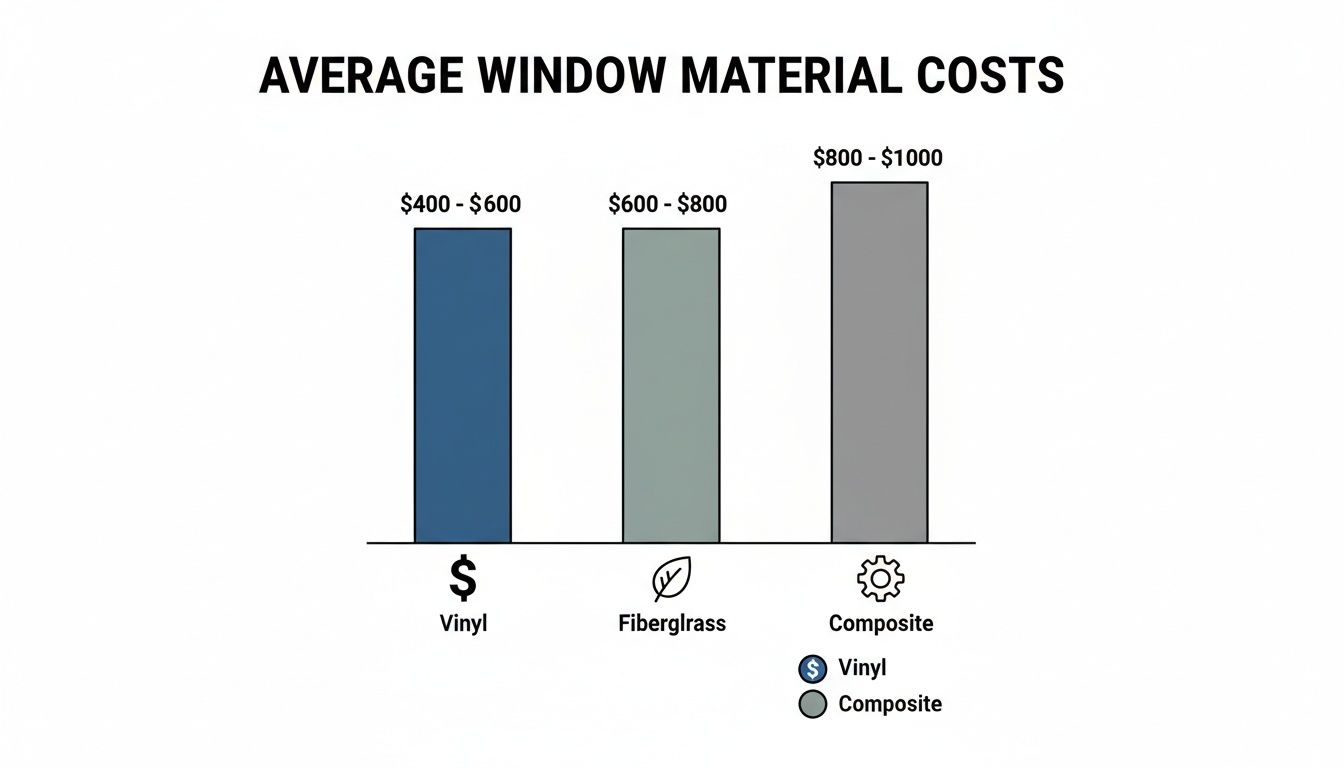
As you can see, while vinyl has the lowest upfront cost, fiberglass and composite materials can be a smarter long-term investment due to their superior performance and longevity.
Estimated Price Ranges by Window Type
To help you get a real-world idea of what to budget, let's look at some typical price ranges for the most common window styles found in Utah homes.
The table below breaks down the average price ranges for common energy-efficient window types and frame materials, factoring in standard professional installation.
Estimated Cost Per Window in Utah (Including Installation)
| Window Type | Vinyl Frame Cost | Fiberglass Frame Cost | Composite Frame Cost |
|---|---|---|---|
| Double-Hung | $800 – $1,400 | $1,100 – $1,900 | $1,300 – $2,300 |
| Casement | $900 – $1,600 | $1,200 – $2,100 | $1,500 – $2,600 |
| Sliding | $750 – $1,300 | $1,000 – $1,800 | $1,200 – $2,200 |
| Picture (Fixed) | $650 – $1,200 | $900 – $1,700 | $1,100 – $2,100 |
Think of this table as a starting point. These are just averages, and things like custom sizes, special grid patterns, or high-performance glass (like triple-pane with argon gas) will move these numbers.
Consider this your foundational guide for building a realistic budget. In the next sections, we'll dive into the specific features and factors that can push these estimates up or down.
What Really Drives Your Final Window Price
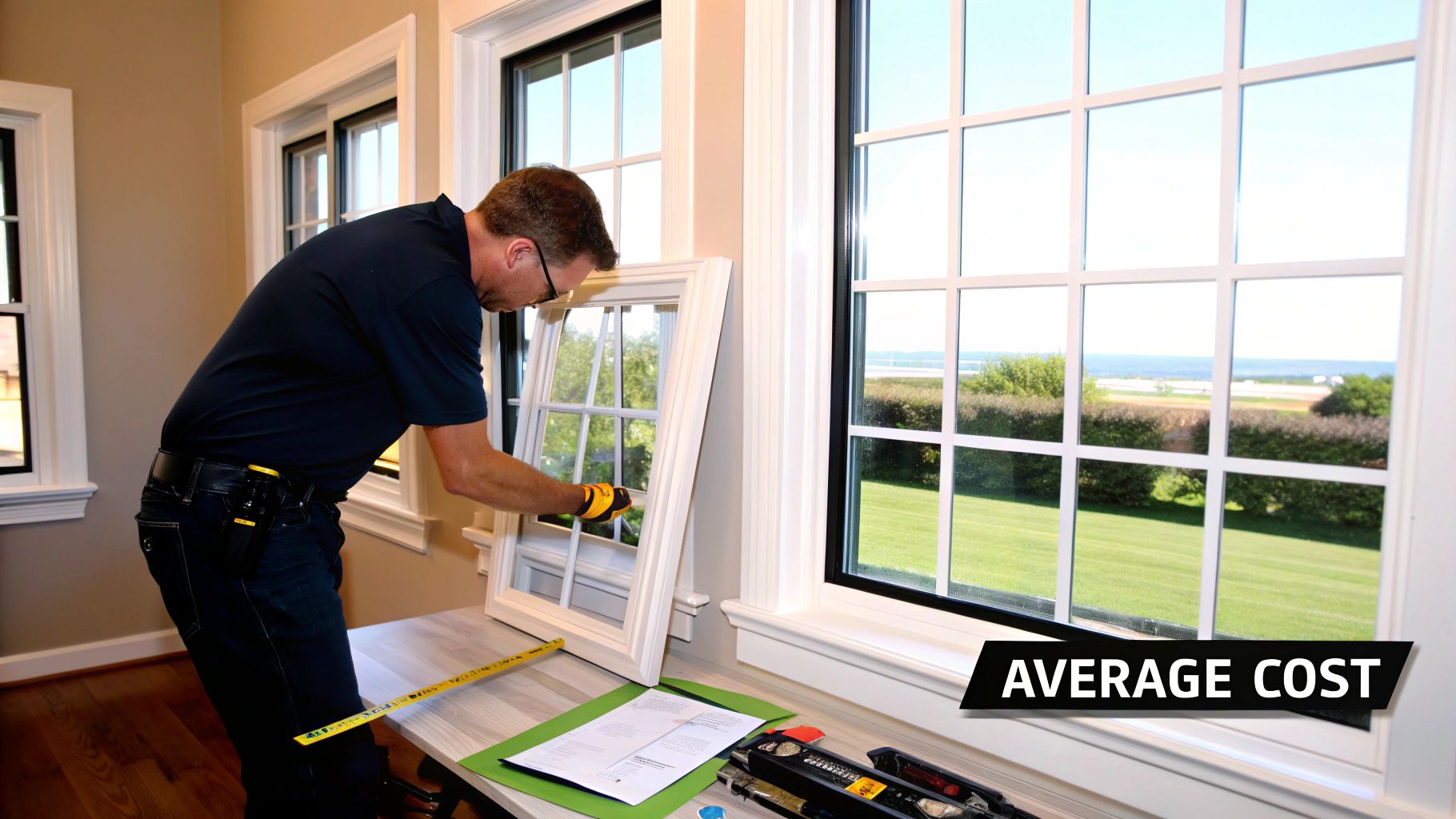
Those initial price ranges are a good starting point, but the details are what really fine-tune the final cost of energy efficient windows. It's a lot like buying a car—the base model has a sticker price, but adding that sunroof or a more powerful engine changes the final invoice. Windows are no different. The upgrades you choose will directly impact both the price tag and how well they perform for you.
And homeowners are definitely choosing to upgrade. The residential sector is leading the charge in energy-efficient windows, making up a massive 68.2% market share. It’s clear people are tired of seeing their money fly out of drafty, old windows. Here in North America, we account for 43.3% of that market, thanks to stricter energy codes and a bigger push for sustainability. You can discover more insights about the growing energy-efficient windows market if you want to dig into the trends.
Double Pane vs. Triple Pane Glass
One of the biggest decisions you'll face is whether to go with double-pane or triple-pane glass. This choice alone has a huge ripple effect on your home's comfort, how much outside noise you hear, and, of course, your project's budget.
-
Double-Pane Windows: This is really the modern standard. Two sheets of glass are separated by a sealed space, which is a massive insulation improvement over old single-pane windows. They're a solid, cost-effective choice for boosting efficiency.
-
Triple-Pane Windows: Now, for Utah's climate—with our hot summers and bone-chilling winters—triple-pane windows are a serious upgrade. A third pane of glass creates two insulating chambers, which drastically slows down heat transfer and pretty much eliminates that annoying interior condensation. They do cost about 15-25% more than double-pane, but they deliver superior energy savings and do a fantastic job of muffling outdoor noise.
When you're weighing double vs. triple-pane, you're really balancing your immediate budget against long-term performance. For many Utah homeowners, the extra comfort and bigger energy savings from triple-pane windows make the higher initial investment well worth it down the road.
Invisible Upgrades with Very Visible Benefits
Beyond just counting the panes of glass, there are a few "invisible" technologies that work behind the scenes to keep your home comfortable. These features are non-negotiable if you want to get the best possible performance out of your new windows.
Two of the most important are Low-E coatings and argon gas fills.
A Low-E (low-emissivity) coating is an incredibly thin, transparent layer of metallic oxide that gets applied to the glass. It’s like a bouncer for heat. In the winter, it reflects heat back into your room to keep it warm. In the summer, it reflects the sun's intense heat away from your house, helping it stay cooler.
Argon gas is a safe, non-toxic gas that's denser than air. Manufacturers fill the space between the panes with it to slow down heat movement even more. Think of it as adding another layer to your winter coat—it traps air and keeps you much warmer.
Customization and Structural Changes
Finally, any time you move away from standard, off-the-shelf options, you can expect the price to adjust.
- Custom Sizes and Shapes: If your home has beautiful arched windows, circles, or just odd-sized rectangles, they'll need to be custom-built. That extra work in the factory naturally adds to the cost.
- Grid Patterns: Want that classic look with grids (or grilles) between the glass panes? That adds a layer of complexity to the manufacturing process, which is reflected in the price.
- Structural Alterations: This is the big one. If you're dreaming of making a small window larger or changing its shape, that's no longer just a window replacement—it's a small construction project. This involves reframing the wall and is a separate, significant cost to factor in.
Calculating Your Return on Investment
Let's be honest, putting in new windows is a big expense. But it's one of the few home upgrades that actually starts paying you back from the moment it's installed. Think of it less as a cost and more as a long-term investment in your home's value and your wallet. You'll literally see the returns every month when you open your utility bill.
The payback really comes down to simple energy savings. Old, drafty single-pane windows are like leaving a door cracked open all winter long. Your furnace is constantly fighting a losing battle, and you're paying for it. New, high-performance windows seal those leaks, letting your HVAC system finally take a break and saving you money in the process.
Estimating Your Annual Energy Savings
So, what kind of savings are we actually talking about? While every home is unique, we have some solid data to work with for Utah homeowners. Imagine knocking up to 15% off your heating and cooling bills just by getting rid of those old windows. It's not just a sales pitch; ENERGY STAR estimates that certified windows can save homeowners between $71 and $105 annually, and that's just a starting point. As energy prices climb, those savings only become more valuable. You can even dig into the nationwide research on energy-efficient window savings to see the bigger picture.
The features you choose have a direct impact on how much you save. For instance:
- Triple-Pane Glass: Here in Utah, we get all four seasons in full force. That extra pane of glass is a game-changer for insulation, drastically cutting down on heat loss in the winter and keeping your home cooler in the summer.
- Low-E Coatings: This is an invisible, microscopic layer that works like a bouncer for heat. In the winter, it reflects heat back into your room, and in the summer, it blocks the sun's heat from getting in. Your air conditioner will thank you.
Understanding the Payback Period
This leads us to a key idea: the payback period. Simply put, this is how long it takes for your energy savings to completely cover the initial cost of the windows. Once you hit that point, every dollar you save is pure profit.
Payback Period = Total Project Cost ÷ Annual Energy Savings
Let's run a quick example. If your project costs $15,000 and you're saving $500 a year, the payback period is 30 years. But hold on—that number doesn't tell the whole story. When you start adding in rebates and the increase in your home's value, that timeline often gets a lot shorter.
While a 20 or 30-year payback might seem long, remember what you get in the meantime. From day one, your home is more comfortable, quieter, and looks a whole lot better. The financial return is just one piece of the puzzle.
Boosting Your Home's Resale Value
Beyond the monthly savings, new windows are a huge selling point when it comes time to move. Today's homebuyers are smart—they know that old, foggy windows mean high energy bills and a big replacement project looming on the horizon.
Walking into a home with high-quality, modern windows sends a clear message: this place has been cared for and it's built to be efficient. This single upgrade can make your property stand out, often leading to a quicker sale and a better offer. That bump in home equity is another powerful layer of your return, making the investment in energy-efficient windows one of the smartest financial moves you can make for your home.
Utah Rebates and Tax Credits That Lower Your Costs
The initial sticker price for new windows is just the starting point. Savvy Utah homeowners know there are ways to bring that final cost down, and it all comes down to taking advantage of rebates and tax credits. Think of these as a thank-you note from the government and utility companies for making a smart, energy-conscious choice.
Ignoring these programs is literally leaving cash on the table. Both federal and local incentives are designed specifically to lower the net cost of energy efficient windows, making a crucial home upgrade much easier on the wallet. You just need to know where to find them and what the rules are before you sign on the dotted line.
Federal Energy Tax Credits
One of the biggest financial perks comes straight from Uncle Sam. The Energy Efficient Home Improvement Credit is a fantastic program that lets you claim a credit for your window project, which directly shaves down what you owe in taxes.
Here’s the breakdown of what you need to know:
- Credit Amount: You can claim 30% of the project cost, with a cap of $600 per year for windows and skylights.
- Window Requirements: The windows have to meet specific ENERGY STAR criteria for the Northern Climate Zone, which covers all of Utah.
- Documentation: Hang onto your receipts and, most importantly, the Manufacturer's Certification Statement. This is the document that proves your new windows are efficient enough to qualify.
This federal credit is a powerful way to knock down the total investment. Since it's an annual credit, not a lifetime one, it gives you some nice flexibility if you're planning to tackle your window replacement in phases.
A word of caution: make absolutely sure the specific windows you're buying qualify. Before you finalize anything, ask your contractor for that official Manufacturer's Certification Statement. It's the key to getting your credit.
Local Utah Utility Rebates
On top of the federal help, many Utahns can find even more savings right here at home. Local utility companies often run their own rebate programs to nudge customers toward using less energy. These can mean a direct check in your hand after the project is wrapped up.
For instance, Rocky Mountain Power is known for offering rebates for home energy upgrades. These programs and their funding can change from year to year, so it’s always a good idea to check their website or give them a call to see what's currently available.
Getting a utility rebate usually involves a few simple steps:
- Check the program details for eligibility and rebate amounts before you start.
- Buy and install windows that meet the utility's specific efficiency standards.
- Fill out the application and send it in with your proof of purchase and installation invoices.
By stacking a federal tax credit with a local utility rebate, you can make a serious dent in the overall cost of your new windows. This shortens your payback period and means you start seeing a real return on your investment right away.
Real-World Window Cost Scenarios for Utah Homes
It's one thing to talk about average costs per window, but it’s another thing entirely to see what a full project actually looks like. The cost of energy efficient windows really starts to click when you apply the numbers to real-world homes right here in Utah.
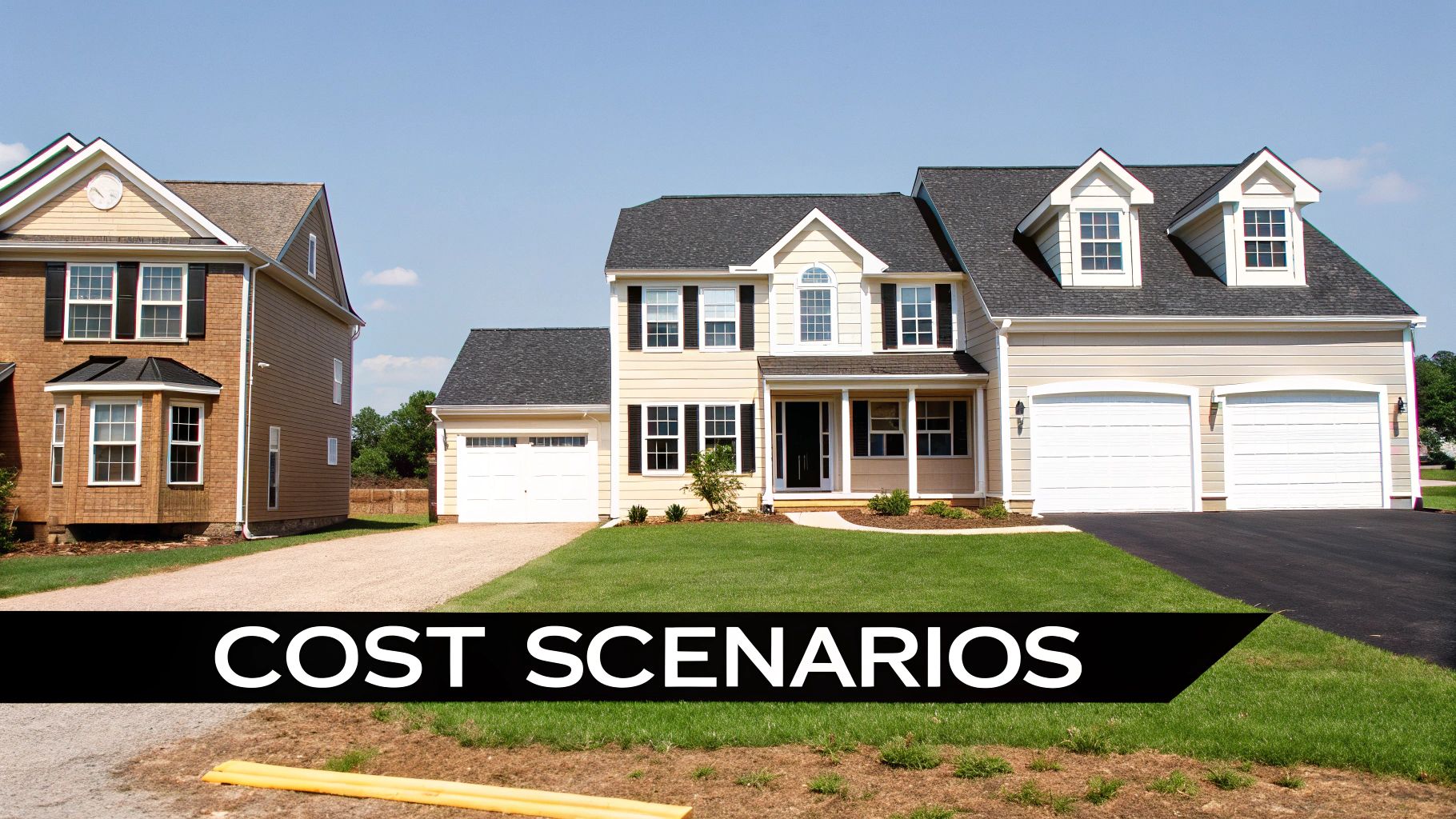
Let's walk through three common scenarios for homes you'd see around the Salt Lake City area. This should give you a much clearer picture of how the final investment shakes out based on the home's size, the materials you choose, and your overall goals.
Each example includes the total estimated project cost, which covers both the windows themselves and professional, certified installation. We'll also look at potential energy savings and incentives to give you the full financial story, from a basic, budget-friendly upgrade to a premium, high-performance renovation.
Scenario 1: The Budget-Smart Rambler Upgrade
Think of a classic brick rambler in Murray, maybe built in the 70s. It has ten old, single-pane aluminum windows that are drafty and inefficient. The homeowner is tired of high energy bills and wants to make the house more comfortable without breaking the bank.
A great solution here is to go with high-quality, double-pane vinyl windows. We're talking about a solid product with a Low-E coating and argon gas fill—it's the sweet spot for performance and value.
- Window Count: 10 standard-sized double-hung windows
- Material Choice: High-performance vinyl frames
- Total Estimated Project Cost: $11,000 – $15,000
This kind of upgrade makes an immediate difference. Drafts are gone, the furnace runs less, and the home is just cozier. Once you factor in the federal tax credit and local utility rebates, the net cost drops, making this a really smart and accessible move toward an energy-efficient home.
For a lot of Utah homeowners, a well-made vinyl window is the perfect entry point. You get most of the energy-saving benefits of more expensive options but at a price that offers a fantastic and fast return on investment.
Scenario 2: The Two-Story Performance Balance
Now let's picture a two-story home in Sandy with 18 windows. There's a mix of sizes, including a big picture window in the living room that gets blasted by the afternoon sun. The owners are looking for a durable, long-term solution that performs well and looks sharp.
They decide on fiberglass frames, which are known for their incredible strength and stability. They won't warp or bow with Utah’s wild temperature swings from summer to winter.
- Window Count: 18 mixed-style windows (double-hung, casement, picture)
- Material Choice: Durable fiberglass frames
- Total Estimated Project Cost: $25,000 – $34,000
Fiberglass is a definite step up from vinyl in both toughness and insulating power. An investment like this doesn't just cut down energy bills; it also boosts curb appeal and adds real value to the property. It’s the perfect balance of performance and price for a typical family home.
Scenario 3: The Custom Home Maximum Efficiency Project
Finally, let's head up to the mountains. Imagine a larger custom home in Park City with over 20 windows, some of which are unique architectural shapes. For this homeowner, the number one priority is peak performance and comfort, no matter how harsh the winter gets.
The choice here is a top-of-the-line, triple-pane composite window. These come with the most advanced Low-E coatings to create an incredibly efficient thermal barrier.
- Window Count: 22+ windows (including custom shapes)
- Material Choice: Premium, triple-pane composite frames
- Total Estimated Project Cost: $45,000+
This is the ultimate investment in home efficiency and comfort. The triple-pane construction provides unmatched insulation and fantastic sound dampening, making the home exceptionally quiet and comfortable all year. While it’s the highest upfront cost, the long-term energy savings are massive, delivering a truly premier solution for a homeowner who wants the absolute best.
Common Questions About Window Costs in Utah
When you start digging into a window replacement project, a few big questions always pop up. Getting straight answers is the key to setting a realistic budget and feeling good about where your money is going. Let’s tackle some of the most common questions Utah homeowners have about the cost of energy-efficient windows.
We'll cut through the jargon and get right to the point, helping you understand the real value behind popular upgrades and how each piece of the project affects the final price tag.
Are Triple-Pane Windows Worth It in Utah?
For a state with hot summers and frigid winters like ours, the short answer is almost always a resounding yes. While you can expect triple-pane windows to raise the initial project cost by 15% to 25%, the long-term payoff is significant.
That third layer of glass creates an extra pocket of insulation, which acts as a powerful buffer against Utah’s temperature swings. It means your house stays warmer in January and cooler in August, translating directly into lower heating and cooling bills for years to come. As a bonus, they're fantastic at blocking outside noise—a huge perk if you live near a busy street.
How Much Does Installation Add to the Cost?
You should plan for professional installation to make up a big chunk of your total budget—typically around 40% to 50% of the entire project cost. It might be tempting to think about a DIY job to save some cash, but a shoddy installation can cause drafts, water leaks, and even void your new windows' warranty.
Hiring certified pros is the only way to guarantee a perfect, airtight seal. This ensures your windows deliver the energy efficiency you paid for right from the start and protects your investment down the road. It’s really the best insurance policy for your window’s performance.
When you get an estimate, make sure it breaks down the cost of the windows themselves versus the labor charges. This kind of transparency is a sign of a good contractor and makes it much easier to compare quotes apples-to-apples.
What Are My Financing Options?
Most homeowners don't pay for a full window replacement out of pocket. To make the investment more manageable, nearly all reputable window companies offer financing plans. Some of the usual options you'll see include:
- Low-interest loans arranged through the company’s financial partners.
- "Same as cash" deals where you can pay off the full amount in a set time (like 12 or 18 months) without any interest.
- Home equity loans or lines of credit (HELOCs), which often have better interest rates because they're secured by your home.
It's always a good idea to discuss these options during your consultation. You can often find a plan that fits comfortably into your monthly budget.
Ready to see how new windows could transform your home's comfort and cut down your energy bills? The experts at Superior Home Improvement offer clear, upfront pricing and certified installation, so you know you're getting top-tier performance and value. Schedule your free, no-obligation consultation today.
Article created using Outrank