
Let's be honest—trying to pin down the exact cost of a new roof can feel like chasing a moving target. But for most homeowners here in Utah, a full roof replacement will typically fall somewhere between $8,700 and $12,000.
Of course, that's just a starting point. The final number really comes down to the materials you pick and the unique character of your home. It’s a major home improvement project, for sure, but once you understand what goes into the price, it all starts to make a lot more sense.
Your Guide to Roof Replacement Costs in Utah
Giving a single, flat price for a new roof is impossible because no two homes are exactly alike. It’s a bit like buying a car—the sticker price isn't just for the basic model. It rolls in the engine you chose, the tech package, and all the other fees. Your roofing estimate works the same way; it’s a sum of individual parts that come together to create a complete, watertight system protecting your family.
The Core Components of Your Estimate
Any legitimate roofing quote will break down the costs into several key areas. These are the essentials, the non-negotiables that ensure your new roof is installed right and ready to handle everything from a summer hailstorm to a heavy winter snowfall.
- Materials: This is usually the biggest chunk of the cost. It’s not just the shingles you see from the street, but also the hidden components like underlayment, flashing, and ice-and-water shield.
- Skilled Labor: A roof is only as good as the people who install it. This part of the cost covers the time and expertise of a professional crew to safely tear off the old materials and install the new system.
- Debris Removal: This fee covers the proper disposal of all the old shingles and construction waste, so your property is left spotless.
- Permits: Cities and counties across the Salt Lake area require permits for major work like a roof replacement. This ensures the job is done to current building codes.
Getting a handle on these basics is the first step. National data shows that roof replacement costs can swing wildly, from $3.50 to $15.00 per square foot, though most projects land between $4.00 and $7.00. For larger or more complex homes in Utah, especially those with steep pitches or custom details, it's not unheard of for a project to exceed $40,000. You can dive deeper into these roofing price projections to see how different variables can affect the final invoice.
A good estimate isn't just a number—it's a detailed roadmap for the entire project. It tells you the contractor has thought through every step, from the first nail to the final cleanup, so there are no surprises waiting for you later.
To give you a clearer idea of what to expect right here in Utah, we've put together a quick look at costs based on the most popular roofing materials.
Estimated Roof Replacement Costs in Utah by Material
This table gives you a ballpark idea of what you might invest, based on the material you choose. Keep in mind that these are installed prices, which include materials, labor, and all the other core components we just discussed.
| Roofing Material | Average Cost Per Square Foot (Installed) | Estimated Total for 2,000 sq. ft. Home |
|---|---|---|
| Asphalt Shingles | $4.50 – $8.25 | $9,000 – $16,500 |
| Metal Roofing | $8.00 – $17.00 | $16,000 – $34,000 |
| Designer Shingles | $9.00 – $18.00 | $18,000 – $36,000 |
As you can see, the material choice is the biggest driver of your total cost. But don't worry—we'll break down the pros and cons of each of these options next so you can make the best decision for your home and your budget.
Making Sense of Your Roofing Estimate
Getting a roofing estimate can feel a bit overwhelming. You're handed a document full of line items and industry jargon that doesn't immediately click. But a good estimate is much more than just a final price—it’s the complete game plan for your project, showing you exactly how your home will be protected for years to come. Learning how to read it is your best tool for spotting shortcuts and making a decision you feel great about.
Think of your roof as a complete system, not just a layer of shingles. It’s a lot like the engine in your car, where every single part has a critical role. If one small component fails, it can compromise the whole thing. The same is true for your roof. A contractor might try to offer a lower price by skimping on something like flashing, but that one shortcut puts the entire system at risk for leaks, water damage, and a much shorter lifespan.
The Key Line Items You Should Always See
A professional, trustworthy quote will always be itemized. If you get a vague, one-line estimate, consider it a huge red flag. When you're looking over your quote, make sure you can find these specific components. It's your proof that nothing important has been left out.
- Materials: This should be way more detailed than just "shingles." Look for the specific type (like architectural asphalt), the brand of underlayment, the ice and water shield for valleys and eaves, starter strips, and ridge caps.
- Flashing: This is the custom-fit metal that seals the gaps around chimneys, vents, and skylights. It's one of the most common spots for leaks, so your estimate must include replacing all of it.
- Ventilation: A roof needs to breathe. Proper airflow prevents heat and moisture buildup, which protects your roof's structure and helps with energy bills. The quote should specify the intake and exhaust vents being installed to meet code.
These are the non-negotiables that make up the roofing system itself. If any one of them is missing from the quote, it's a weak link waiting to break.
The "Work" Behind the Work: Labor, Removal, and Disposal
Beyond the new materials going on your roof, the estimate also has to cover all the work that happens before, during, and after. These are the costs that ensure the job is done professionally, safely, and cleanly from start to finish.
A cheap quote is almost always a sign that something is missing. It could be a corner-cutting roofer using subpar materials, hiring uninsured labor, or simply not including everything the job actually needs. A detailed estimate is your protection—it shows you exactly what you are, and are not, paying for.
Here are the other essential costs you should find on your estimate:
- Tear-Off and Removal: This covers the labor to strip every layer of old material off, right down to the bare wood decking. Simply layering new shingles over old ones is a bad shortcut that hides potential damage and voids warranties.
- Debris Disposal: This is the fee for the dumpster and the cost of hauling away all the old roofing and construction waste, leaving your property spotless.
- Permits and Fees: Your contractor should be the one to pull all necessary permits from your city or county. This is your guarantee that the work will be inspected and done to current building codes.
- Labor Costs: This covers the skilled roofing crew that will be doing the actual installation. Roofing is tough, dangerous work that requires real training and expertise to do safely and correctly.
It’s important to remember that you're paying for skilled professionals. In fact, recent industry data shows that 55 percent of roofing contractors are reporting higher labor expenses, with the average cost for labor jumping 14 percent. This is largely due to a nationwide shortage of skilled tradespeople, making experienced, certified installation crews more valuable than ever. You can learn more about what's driving these changes in the 2026 roofing industry trends report. When you see a clear labor charge on your estimate, you're not just paying for work—you're investing in expertise and the peace of mind that comes with a job done right the first time.
Choosing The Right Roofing Material For Utah Weather
Picking a new roof in Utah isn't just about color and curb appeal—it’s about making a smart investment to protect your home from our state’s wild weather. From the heavy snowfalls we get along the Wasatch Front to the intense summer sun that beats down for months, your roof is your home's most critical shield. The material you choose has a huge impact on the final average cost for roof replacement, not to mention your home's long-term durability and even your monthly energy bills.
Think of it like buying tires for your car. You could get by with all-seasons, but if you're serious about driving safely through a blizzard, you’ll want dedicated snow tires. It's the same with roofs. While any material provides basic shelter, some are built to handle Utah's specific challenges, like ice dams and extreme temperature swings, far better than others.
This flowchart gives a great visual breakdown of where the money goes in a typical roofing project, from the materials themselves to the labor and other costs involved.
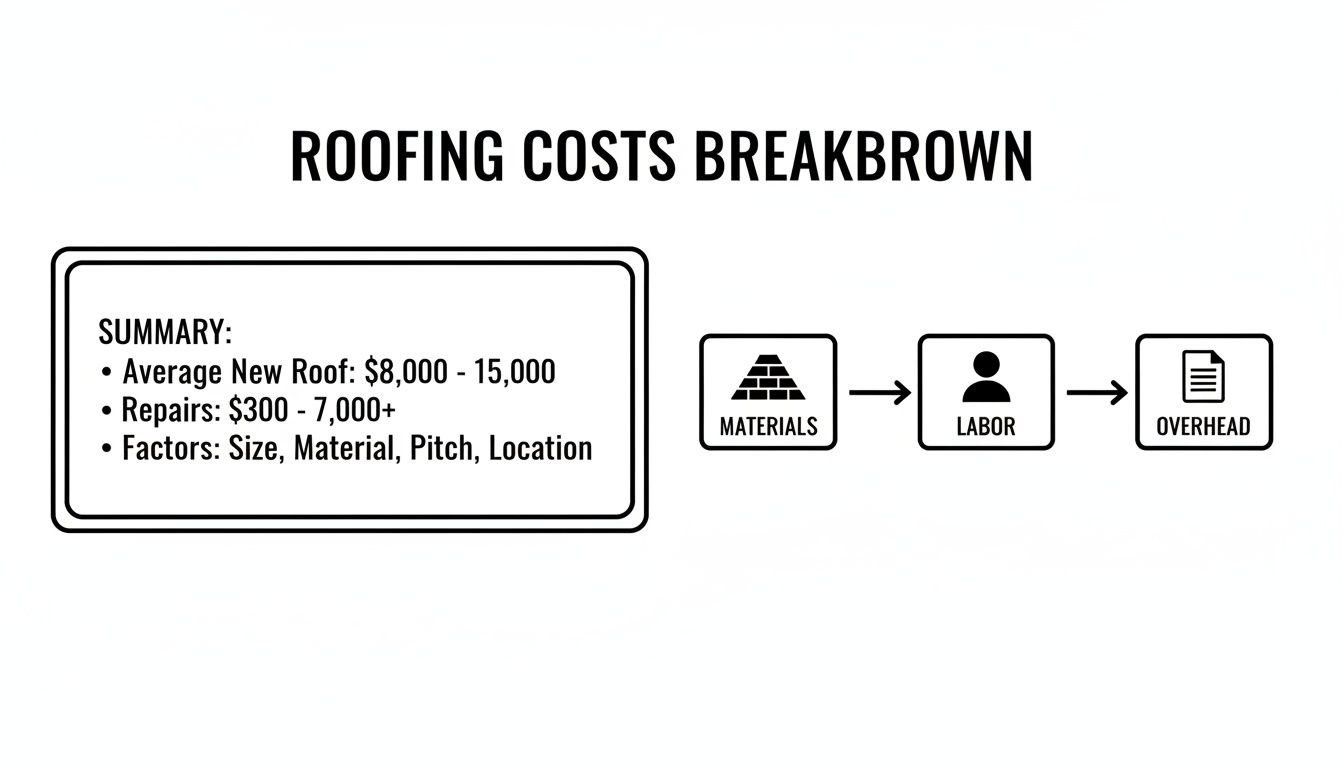
As you can see, the shingles or metal panels are just one part of the equation. The skill of the crew installing them is a huge piece of the puzzle, and it’s a major factor in your total investment.
Asphalt Shingles: The Popular All-Rounder
There's a good reason asphalt shingles are the most common roofing material you see across the country. They hit a sweet spot, offering a fantastic balance of solid performance, a wide variety of styles, and an affordable price tag. This makes them the default choice for many Utah homeowners. Today's architectural shingles look amazing, too, with a rich, dimensional appearance that can even mimic high-end materials like wood shake or slate.
Their popularity comes down to their reliability and value. You can expect a lifespan of 20 to 30 years, giving you decades of dependable protection at a budget-friendly installed price of around $4.50 to $8.25 per square foot. Plus, they come in a huge range of colors, so you can always find a perfect match for your home's exterior.
Of course, they aren't without their limits, especially in our climate. They can be vulnerable to damage from a bad hailstorm and tend to wear down a bit faster under Utah's relentless UV rays compared to some other options.
Metal Roofing: The Lifetime Defender
If you're looking for a roof that will last a lifetime and stand up to anything, metal is an incredible investment. Once seen mostly on barns and commercial buildings, metal roofing has become a huge hit for residential homes because it’s tough as nails and has a clean, modern look. A professionally installed metal roof can easily last 40 to 80 years, meaning you’ll likely never have to think about it again.
This material truly shines in Utah's harsh winters. Snow slides right off its smooth surface, which drastically cuts down on the risk of ice dams forming along your gutters—a common and destructive problem here. Metal is also fire-resistant, stands up to high winds, and does a fantastic job of reflecting solar heat, which can help keep your home cooler and your AC bills lower in the summer.
A metal roof is the ultimate "set it and forget it" solution. While the upfront cost is higher, its incredible lifespan and minimal maintenance needs often make it the more economical choice over the long haul, saving you from future replacement costs.
The demand for this kind of durability is on the rise. In fact, contractor sales for residential metal roofing recently hit 67 percent market penetration, even with some price fluctuations. As storms seem to get more severe, more homeowners are looking for robust, long-term roofing solutions. You can read more about these roofing industry growth and material trends to see why so many people are making the switch.
Designer Shingles: Premium Style and Performance
What if you love the timeless look of slate or wood shake but don't want the high cost and constant upkeep? Designer asphalt shingles are your answer. These are top-of-the-line, extra-thick shingles engineered with multiple layers to create a stunning, high-definition look that gives your home a serious boost in curb appeal.
But they're not just about looks. Designer shingles are much heavier and tougher than standard architectural shingles, offering superior protection against wind, hail, and impacts. With lifespans that can stretch up to 50 years and stronger manufacturer warranties, they perfectly bridge the gap between standard asphalt and more expensive materials like metal.
This premium quality does come with a higher price tag, but for homeowners who want to make an architectural statement while getting top-tier protection, designer shingles offer a powerful one-two punch of beauty and brawn. They are an ideal choice for historic properties or any home where distinctive style is a must.
To help you weigh your options, we've put together a quick comparison of the three most popular choices for Utah homes.
Roofing Material Comparison for Utah Homeowners
| Feature | Asphalt Shingles | Metal Roofing | Designer Shingles |
|---|---|---|---|
| Installed Cost | $ (Most Affordable) | $$$ (Highest Upfront) | $$ (Mid-to-High) |
| Lifespan | 20-30 years | 40-80+ years | 30-50 years |
| Durability | Good | Excellent | Very Good |
| Snow/Ice Dam Resistance | Fair | Excellent | Good |
| Energy Efficiency | Fair | Excellent | Good |
| Best For | Budget-conscious homeowners needing a reliable, attractive roof. | Homeowners prioritizing longevity, low maintenance, and maximum durability. | Homeowners seeking a high-end look and enhanced protection without the cost of slate or wood. |
Ultimately, the best material depends on your budget, your long-term plans for the home, and the specific look you want to achieve. Each option offers a unique set of benefits perfectly suited for life in Utah.
Hidden Factors That Impact Your Final Roofing Cost
You’ve compared materials and you have a good handle on the basic line items in an estimate. So why did your neighbor’s roof replacement cost thousands less than your quote? The answer is almost always found in the unique character of your home. Beyond the shingles you pick, several factors can dramatically influence the final average cost for roof replacement, turning a standard job into a much more involved project.
Think of it like painting. Two houses might have the same square footage, but if one is a simple rectangle and the other has gables, dormers, and intricate trim, the cost to paint them will be worlds apart. Roofing works the same way. Understanding these variables is the key to setting a realistic budget and seeing why a custom, on-site inspection is the only way to get a truly accurate price.
Your Roof’s Unique Geometry
The shape and design of your roof are huge drivers of cost. A simple, low-slope roof is far easier and faster to work on than one with a complex layout and steep angles.
-
Roof Pitch (Steepness): A roof's pitch is just its slope. A low-pitch roof is easy for crews to walk on, making the job faster. But once that pitch gets steep, everything changes. The work slows down considerably, and the crew needs extra safety gear like harnesses and roof jacks to stay secure. That extra time and equipment directly translate to higher labor costs.
-
Roof Complexity: Does your roof have dormers, valleys, hips, or skylights? Every single one of these features adds complexity. Each valley needs special underlayment and perfectly cut shingles. Every chimney and skylight needs meticulous flashing to create a watertight seal. These details don't just take more time; they also increase the amount of material waste.
A simple "up and over" gable roof is fairly straightforward. A roof with multiple intersecting planes, on the other hand, is a much more demanding job requiring a higher level of skill and, naturally, a higher price tag.
The Unseen Condition of Your Roof Decking
One of the biggest wild cards in any roof replacement is the condition of the structure hiding underneath the old shingles. No one knows for sure what’s there until the tear-off begins.
The roof decking is the layer of wood—usually plywood or OSB—that acts as the foundation for your shingles. If your old roof had even minor leaks, that water could have been quietly damaging the decking for years, leaving it soft, spongy, or rotten. Building codes are clear: we have to replace any compromised decking before installing a new roof so the nails have a solid base to grip.
Finding rotten decking is the most common reason for a change order during a roof replacement. An experienced inspector can often spot warning signs from the attic or by walking the roof, but the full extent of the damage can only be confirmed once the old shingles are removed.
This is a non-negotiable repair. Putting a brand-new roof over a weak foundation is a recipe for disaster and will instantly void your warranties. While it's an added cost, replacing bad decking is absolutely critical for the long-term health and safety of your home.
Site and Home Specifics
Finally, a few factors related to your property and its history can also move the price needle. These variables affect how efficiently and safely our crew can work.
-
Accessibility: Is your house surrounded by prized landscaping, tight fences, or other nearby buildings? If it's tough to get a dumpster close to the house or to load materials, it often requires more manual labor and time.
-
Number of Existing Layers: If a previous roofer simply installed a new roof over the old one (a "roof-over"), there will be two or more layers of shingles to remove. This can nearly double the labor for the tear-off and the fees for disposal.
-
Historic Homes: Older homes, especially those in designated historic districts, often have specific rules about which materials can be used or how they must be installed. Meeting these requirements to preserve the home's character can add to the project's cost.
By understanding these hidden factors, you can better interpret your estimate and see why a generic cost-per-square-foot calculator is so often misleading. Every roof has its own story and its own unique set of challenges.
Thinking Beyond the Price Tag
When you're staring at the numbers for an average roof replacement cost, it's natural to focus on the initial bottom line. But a new roof is so much more than a simple expense. Think of it as a long-term investment in your home's safety, value, and overall efficiency. The real payoff becomes clear when you look past that first number and consider two crucial elements: rock-solid warranties and real energy savings.
Framing it this way changes the question from, "How much is this going to cost me?" to "What am I actually getting for my money?" A quality roof, installed the right way, pays you back for decades—not just in lower energy bills, but in the simple peace of mind that your home is protected from the elements.
Understanding Your Protection Plan
Every new roof should come with two different layers of protection. It’s important to know the difference, because confusing them can lead to major headaches down the road. They’re both essential, but they cover completely separate things.
-
Manufacturer's Warranty: This guarantee comes straight from the company that made the shingles or metal panels. It covers any defects in the materials themselves. So, if a batch of shingles was manufactured improperly and starts to curl or degrade way too soon, this warranty kicks in to cover the cost of the replacement materials.
-
Workmanship Warranty: This is your contractor's promise to you. It covers the actual installation work. This is arguably the more important of the two, because the vast majority of roof failures aren't due to bad shingles—they’re due to mistakes made during installation.
A contractor’s workmanship warranty says a lot about how much they trust their own team. At Superior Home Improvement, we have total confidence in our crews, which is why we back every job with a 10-year workmanship warranty. Your investment is safe from any installation-related problems.
How a New Roof Pays You Back
A modern roof does a lot more than just keep rain and snow out. It’s an active player in your home’s energy strategy, working alongside your insulation and HVAC system to keep you more comfortable and lower your utility bills. This is where you can see a real, tangible return on your investment, month after month.
The trick is to view your roof and attic as a single system that needs to breathe.
-
Reflective Materials: Many of today’s best roofing materials, like "cool-roof" shingles and certain metal roofs, are designed to reflect a huge portion of the sun's heat. Instead of absorbing that heat and turning your attic into an oven, the roof bounces it away. This means your air conditioner doesn't have to fight nearly as hard to keep your home cool all summer.
-
Proper Ventilation: This is absolutely critical. A well-ventilated attic lets hot, humid air escape, preventing dangerous heat buildup in the summer and stopping moisture-related issues like mold and mildew in the winter. Any good roofer will make sure your attic has a balanced system of intake vents (down low at the eaves) and exhaust vents (up high near the ridge) to keep the air flowing continuously.
A new roof isn't just a defensive shield against the weather—it's an offensive move to cut your energy use. A properly installed and ventilated roof can make a serious dent in your heating and cooling costs, often leading to a noticeable drop in your monthly bills.
When you combine modern, reflective materials with a smart ventilation strategy, you turn your roof into an energy-saving machine. For many homeowners right here in Utah, the savings over the life of the roof can easily add up to thousands of dollars, helping that new roof pay for itself over time. You’re not just buying shingles; you’re investing in decades of high performance and efficiency.
How to Budget and Pay for Your New Roof
Figuring out how to pay for a new roof can feel overwhelming, but it doesn't have to be. Whether you're dealing with an emergency repair after a storm or planning a long-overdue upgrade, there are straightforward ways to manage the cost without wiping out your savings. It all comes down to knowing your options.
Here in Utah, a surprise roof replacement is often the result of a nasty hailstorm or high winds. It’s a common story—in fact, nationwide, 33% of all roof replacements are due to storm damage. If you think that’s what happened to your roof, the very first call you should make is to your homeowner's insurance agent.
Working with Your Homeowners Insurance
Trying to navigate an insurance claim on your own can be a real headache. This is where a great contractor becomes your best advocate. We’ve been through this process hundreds of times and know exactly what insurance adjusters need to see to approve a claim. We handle the detailed documentation, take the right photos, and build an itemized estimate that speaks their language, making the whole process far less stressful for you.
Here’s a quick look at how it usually works:
- Professional Inspection: We get up on your roof to find and document any wind or hail damage—the kind of stuff you can’t see from the ground.
- Filing the Claim: With our findings in hand, you’ll have everything you need to contact your insurance company and start the claim.
- Adjuster Meeting: This is a crucial step. We make sure to be there when the insurance adjuster visits to walk the roof with them, pointing out every bit of damage so nothing gets missed.
- Claim Approval: Once your claim is approved, the insurance company sends you the funds to cover the new roof, minus your deductible.
Exploring Financing and Payment Options
What if insurance isn't part of the picture? If you're paying out-of-pocket or just ready for an upgrade, financing is a fantastic tool that makes a new roof much more manageable. Many homeowners are surprised to learn they can break down the average cost for a roof replacement into simple, predictable monthly payments.
Don't let the initial sticker shock stop you from protecting your home. Modern financing is designed to fit your budget, so you can get the high-quality roof you need now and pay for it comfortably over time.
At Superior Home Improvement, we work with trusted lenders to offer flexible and accessible financing plans. This means you don't have to compromise on quality materials that will protect your home for decades to come. Our team can walk you through the simple application process right during your free consultation.
Common Questions About Roof Replacement Costs
Once you've dug into the numbers, it's natural to have a few practical questions pop up. Thinking about the average cost for a roof replacement usually leads to wondering about how long the project will take and what’s really necessary. Let's tackle some of the most common questions we hear from homeowners right here in Utah.
Getting these final details sorted out helps you move forward with confidence, making the whole process feel a lot less overwhelming.
How Long Does a Roof Replacement Take in Utah?
For a typical home in the Salt Lake City area, our crew can usually complete a full roof replacement in just 1 to 3 days. We're focused on working efficiently to get your life back to normal as quickly as possible.
Of course, some things can stretch that timeline. A sudden storm, a particularly complex roof design, or discovering hidden damage to the decking underneath can add a day or two. The key for us is communication—we’ll always give you a clear project schedule upfront so you know exactly what to expect.
Can I Install New Shingles Over My Old Ones?
It might seem like a clever way to save a few bucks, but putting a new layer of shingles over your old roof is a shortcut we strongly recommend against. In fact, many local building codes don't even allow it.
A complete tear-off is the only way to guarantee your new roof is secure, built to last, and fully covered by its warranty. It’s our only chance to inspect the roof deck and make sure the new shingles have a solid foundation to protect your home.
Taking this shortcut adds a tremendous amount of extra weight to your home’s structure, can trap moisture that leads to rot, and will almost certainly void the manufacturer's warranty on your brand-new materials. It's just not worth the risk.
Will My Homeowners Insurance Cover a New Roof?
Homeowners insurance is there to protect you from sudden, accidental damage. Generally, your policy will cover a full roof replacement if it was damaged by a specific event, like a hailstorm, a windstorm that ripped shingles off, or a tree falling on your house.
What it won't cover is a roof that's simply old and worn out from years of use or neglect. If you think a recent storm might have caused damage, we can perform a detailed inspection and provide the right documentation to help you with your insurance claim.
What Does Your Free Roofing Estimate Include?
Our free estimate is much more than just a number on a piece of paper. It’s a complete, top-to-bottom assessment of your entire roofing system, with absolutely no obligation. We get on the roof, check out the shingles, look at the flashing, and even inspect the ventilation in your attic.
We’ll take detailed measurements, walk you through material and color options that suit your home's style and your budget, and give you a straightforward, line-item quote. No hidden fees, no sales pressure—just the clear, reliable information you need to make the right decision for your home.
Ready to get a clear, accurate price for your home? The team at Superior Home Improvement provides free, comprehensive estimates to help you understand your options with no pressure. Schedule your free consultation today!
Article created using Outrank