
Feeling the pinch of high utility bills is something most homeowners can relate to, especially as rates seem to do nothing but climb. But you're not powerless. The secret to slashing those costs is to stop thinking about your house as a collection of separate parts and start treating it as a single, interconnected system.
Every component works together. The efficiency of your windows, for example, directly affects how hard your air conditioner has to work. Likewise, the quality of your insulation determines how often your furnace kicks on during a bitter Utah winter.
This guide is your roadmap. We’ll walk through everything from immediate, no-cost habits you can start today to major upgrades like a new roof or insulated siding that offer the biggest bang for your buck.
Your Action Plan for Lower Utility Bills
To really get a handle on your monthly energy costs, you have to proactively improve your home's energy efficiency. Small tweaks can certainly add up—things like programming your thermostat or sealing a drafty door. But if you’re looking for significant, lasting savings, bigger projects are where you'll see a real difference.
A comprehensive approach, like Superior Home Improvement's Energy Conservation Program, tackles the entire building envelope at once. This strategy ensures that new windows, better insulation, and an optimized HVAC system all work in harmony, maximizing their combined effect and delivering deep, long-term cuts to your energy usage.
The decision tree below outlines the two main paths toward lower bills: simple, everyday habits and more involved home improvements.
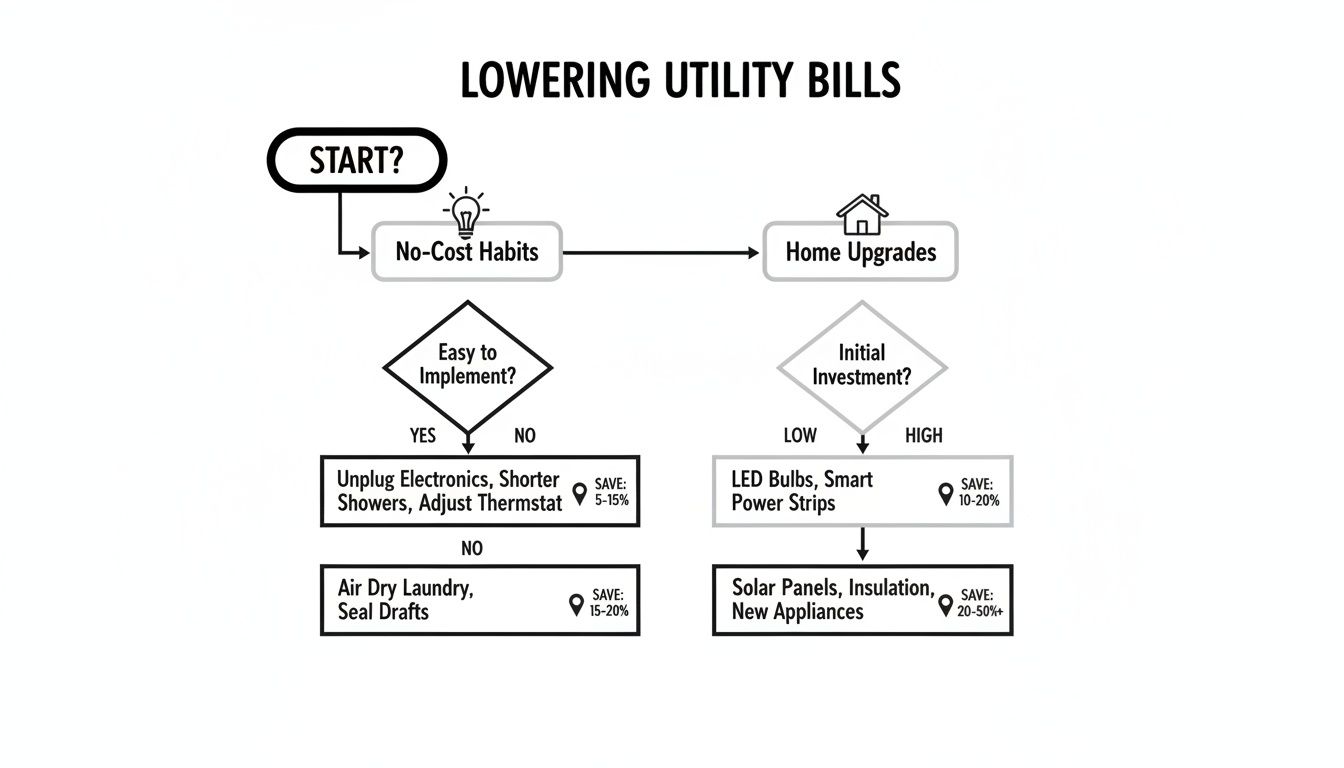
As you can see, both routes lead to savings, but the real power comes from combining them for the greatest long-term impact.
Comparing Energy-Saving Strategies
Figuring out where to start can feel a little overwhelming. To make it easier, it helps to weigh the initial investment against the effort required and the potential savings you can expect. Some fixes are quick and cheap but offer modest returns, while others require a bigger commitment for a much larger payoff.
This table breaks down some of the most common strategies so you can see how they stack up.
| Strategy | Initial Cost | Effort Level | Potential Savings |
|---|---|---|---|
| Behavioral Changes | $0 | Low | 5-10% |
| Air Sealing & Insulation | $50 – $500+ | Medium | 10-20% |
| Smart Thermostat | $100 – $250 | Low | 10-15% |
| Window Replacement | High | High | 15-25% |
| New Roofing & Siding | High | High | 20-30% |
Use this as a guide to build a plan that aligns with your budget and how quickly you want to see results. A mix of strategies is often the most effective way to start saving right away while planning for bigger future improvements.
Quick Wins for Immediate Energy Savings
Big home improvement projects can deliver a huge return on investment, but you don't have to wait for a major renovation to start seeing a difference on your monthly utility bills. The journey to a more energy-efficient home can begin today with a few simple, powerful adjustments to your daily habits.
These "quick wins" are all about being more intentional with your energy use. It's more than just turning off lights; it’s about understanding when and how your home uses the most power and making a few strategic shifts. For a family here in Salt Lake City, that means adapting to Utah’s distinct seasons—hot summers and cold winters—with smarter habits.
Master Your Thermostat
Your furnace and air conditioner are almost always the biggest energy hogs in your house. They're a huge chunk of your utility bill, but they also offer the biggest opportunity for immediate savings.
You can save as much as 10% a year on heating and cooling just by turning your thermostat back 7°-10°F for eight hours a day. It's simpler than it sounds.
Here’s how we see people make it work:
- In Winter: Set the thermostat to a comfortable 68°F while you're awake and active. Then, dial it back when you're asleep or away from home.
- In Summer: Aim for 78°F when you're home. Let it get a little warmer when the house is empty. Every single degree really does make a difference.
A programmable or smart thermostat makes this effortless. For an investment of around $100-$250, these devices can learn your family's schedule and adjust the temperature automatically. You'll never pay to heat or cool an empty house again. It’s one of the most effective low-cost upgrades you can make.
Optimize Your Appliance Usage
Think about your big appliances: the dishwasher, washing machine, and dryer. They consume a lot of power. The secret to savings here isn't just what you run, but when you run it. Most Utah utility companies have "peak hours"—usually late afternoon and early evening—when electricity demand is highest and so are the rates.
Shifting your routine can have a real impact. Try running your dishwasher or a load of laundry late at night after you've gone to bed or first thing in the morning. Using cold water for most laundry loads also cuts a surprising amount from your energy bill, since most of the energy a washing machine uses goes into heating the water.
A Pro Tip from the Field: Simple maintenance goes a long way. Your refrigerator runs 24/7, and it works much more efficiently when its condenser coils are clean. Just pull it away from the wall once or twice a year and vacuum the dust and pet hair off the coils. This small task helps the unit run cooler and use less energy.
Seal Leaks and Block Drafts
Think of small air leaks like a hole in your wallet. All those little gaps and cracks add up to a significant amount of wasted energy. Cold winter drafts and incoming summer heat force your HVAC system to work overtime to keep you comfortable. Luckily, sealing these gaps is a cheap and easy weekend project.
Here are a few common culprits to check:
- Windows and Doors: Apply weatherstripping around the frames and use caulk to fill in any stationary gaps. Even a simple draft stopper placed at the bottom of a door can make an immediate difference.
- Electrical Outlets and Switches: Foam gaskets are incredibly cheap and easy to install behind the faceplates on exterior walls. They're a surprisingly effective way to stop hidden air leaks.
- Plumbing and Ductwork: Look for gaps where pipes and vents enter your walls, floors, or ceiling. A can of spray foam or a tube of caulk can seal these up in minutes.
These small, consistent actions really compound over time. By getting a handle on your thermostat, using appliances more strategically, and sealing obvious drafts, you can start chipping away at your energy costs right now. This builds a great foundation for even bigger savings down the road.
Fortify Your Home: The Power of Air Sealing and Insulation
While quick habit changes can offer some immediate relief on your utility bills, the real, long-term savings come from strengthening your home’s "envelope." Think of your walls, attic, and foundation as a protective shell. Every time that shell has a gap, the air you’ve paid to heat or cool finds an escape route.
This forces your HVAC system into overdrive just to keep up, sending your energy costs through the roof. The fix is a one-two punch: air sealing to plug the leaks and insulation to keep the temperature stable. Here in Utah, with our blazing summers and freezing winters, a well-sealed and insulated home isn’t a luxury—it’s the best defense for your budget.
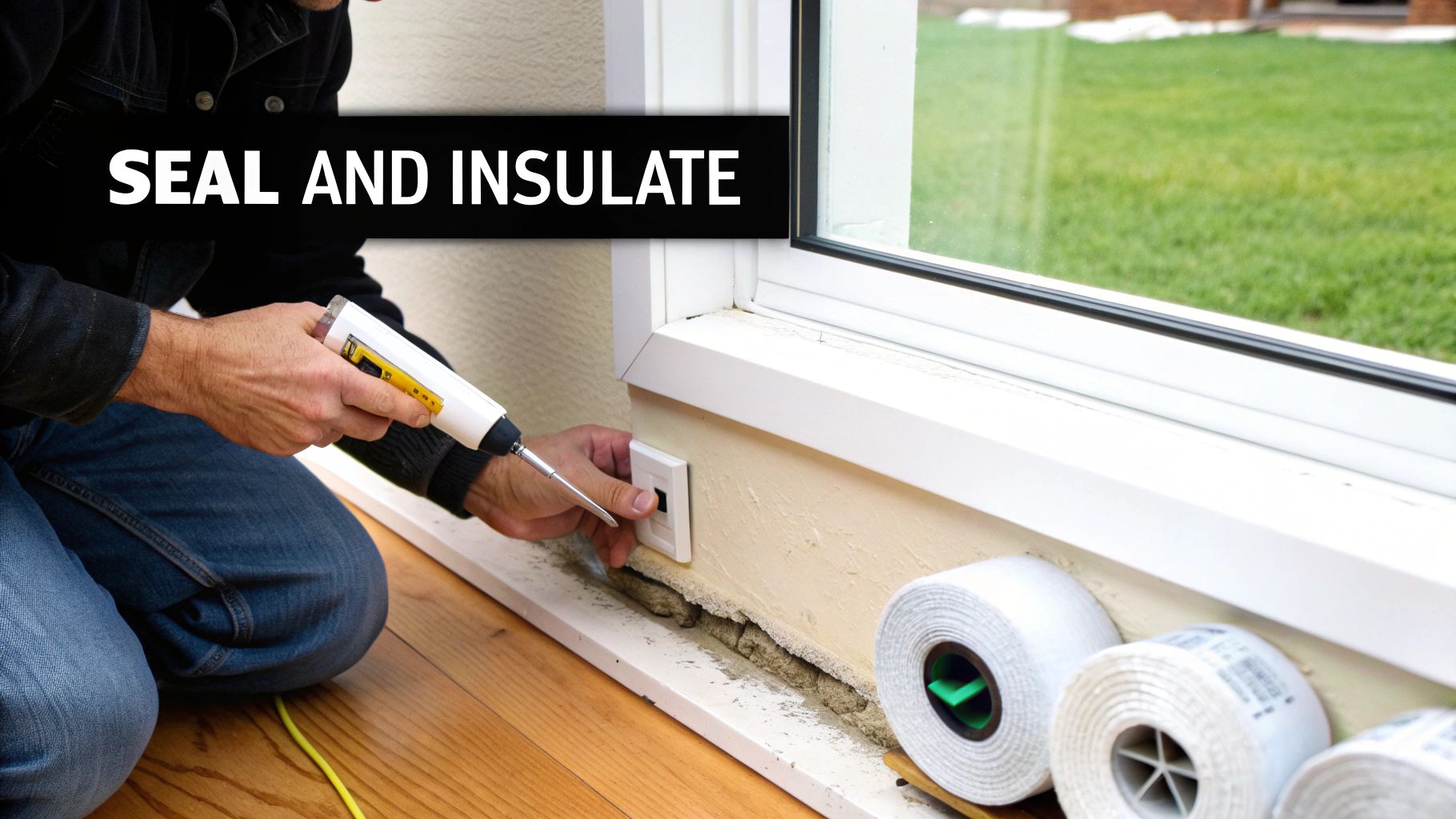
Pinpointing and Plugging Hidden Air Leaks
First, you have to play detective. The biggest energy drains are often hidden in plain sight, and you can fix most of them with a quick trip to the hardware store for caulk, weatherstripping, and spray foam.
So, where should you start your search?
- Windows and Doors: This is ground zero for drafts. If you can feel a breeze or see daylight around the frames, you're losing money.
- Electrical Outlets and Switch Plates: Pay special attention to outlets on exterior walls. They are notorious weak spots in a home's seal.
- Recessed Lighting: Those "can lights" in the ceiling often have unsealed gaps that open directly into your attic.
- Plumbing and Wiring Penetrations: Check anywhere pipes or wires enter your home from the outside, the attic, or the crawlspace.
Once you’ve found the weak spots, the fixes are surprisingly simple. Run a fresh bead of caulk around window frames, apply new weatherstripping to doors, and stick foam gaskets behind your outlet covers. Each small fix works together to build a powerful barrier against energy waste.
The Critical Role of Proper Insulation
Think of it this way: air sealing stops the drafts, but insulation is what keeps the heat where you want it—inside during the winter and outside during the summer. Insulation’s effectiveness is measured by its R-value, which is its ability to resist heat flow. The higher the number, the better it works.
For attics here in the Salt Lake City area, you should be aiming for an R-value between R-49 and R-60.
You’ve got a few common options for materials:
- Fiberglass Batts: These are the familiar pink or yellow rolls you see at home improvement stores. They’re a solid, cost-effective choice.
- Blown-In Cellulose or Fiberglass: This loose-fill material is perfect for getting into the nooks and crannies of an attic or filling existing wall cavities without a major tear-out.
- Spray Foam: This is the premium option. It expands to create an airtight seal while also providing a very high R-value, tackling two jobs in one.
Here's the bottom line: Properly sealing air leaks and upgrading your insulation can slash your annual energy waste by 5% to 30%. With the average American household spending about $2,000 a year on energy, that's $200 to $400 you could be saving right away.
Take It a Step Further with Insulated Siding
For the ultimate thermal barrier, you have to look at your home’s exterior. While insulating your attic and walls is a huge step, wrapping your home in insulated siding takes it to the next level. This is something we specialize in at Superior Home Improvement.
This creates a thermal shield by adding a continuous layer of rigid foam insulation across your entire exterior. It even covers the wall studs, which are notorious for transferring heat and cold—a phenomenon called thermal bridging. By combining interior insulation with a high-performance exterior, you create a fortress against the elements, keeping your home comfortable and your energy bills low year-round.
And don't forget the ductwork. Leaky ducts running through your attic or crawlspace can sabotage even the best insulation efforts. Getting a better handle on understanding duct sealing is another key piece of the puzzle.
Time to Tackle Your Windows: A Major Source of Energy Loss
Once you've plugged the most obvious air leaks and beefed up your insulation, your windows are the next big target in the fight against high utility bills. Think about it: old, single-pane, or even builder-grade double-pane windows are essentially weak spots in your home's armor. They bleed precious heat all winter and let the summer sun bake your interior, pushing your HVAC system into overdrive.
Moving up to modern, energy-efficient windows is one of the single most impactful investments you can make for your home. It’s not just about stopping a few drafts; it's about fundamentally changing how your home performs, and that's an upgrade that pays you back month after month.
What Makes a Modern Window So Efficient?
When you start shopping for new windows, you'll hear a lot of technical jargon. Don't get overwhelmed. Understanding just a few key terms is all you need to pick a product that will deliver real, noticeable savings, especially here in Salt Lake City where our climate throws everything at us.
Here’s a quick guide to what actually matters:
- U-Factor: This is the big one. It measures how well a window stops heat from escaping. For our cold Utah winters, you want the lowest U-factor you can get. A lower number means better insulation. Simple as that.
- Low-E Coatings: "Low-E" stands for low emissivity, which is a fancy way of saying it has a microscopically thin, invisible metallic coating on the glass. In winter, this coating acts like a mirror for heat, reflecting it back into your room. In summer, it does the opposite, reflecting the sun's intense heat away from your house.
- Gas Fills: High-performance windows, like the triple-pane models from Superior Home Improvement, are filled with argon or krypton gas sealed between the panes. These gases are much denser than plain old air, making them far better insulators.
When you get a window with a low U-factor, multiple Low-E coatings, and a quality gas fill, you’re creating a serious thermal barrier. This keeps your home’s temperature much more stable, which means your furnace and AC don't have to kick on nearly as often.
The Real-World Impact on Your Bills
The most immediate benefit you'll see from new windows is, of course, a drop in your energy bills. This isn't a small tweak; it's a game-changer, especially in a place where heating costs can eat up a huge chunk of our budgets.
Switching from old, leaky windows to ENERGY STAR certified triple-pane models can cut your utility bills by an average of 12%. When you consider that heating can account for 43% of a typical Salt Lake City home's energy use, you realize this upgrade hits your biggest expense head-on. You can dig into the data yourself by exploring ENERGY STAR's program impacts.
But the numbers on your monthly statement are only part of the story. A window replacement fundamentally changes how your home feels day in and day out.
It's About More Than Just the Money
While the financial savings are what get most people interested, high-quality windows bring a whole host of other improvements to your home life. You're upgrading your comfort, protecting your valuables, and getting a little more peace of mind.
Think about these other perks:
- A Quieter Home: Those same features that block heat—multiple panes and dense gas—are fantastic at blocking sound. Suddenly, the noise from traffic, lawnmowers, and barking dogs fades into the background. Your home becomes a more peaceful sanctuary.
- UV Protection: Low-E coatings don't just manage temperature; they also block a huge portion of the sun's damaging ultraviolet (UV) rays. This means your furniture, wood floors, and artwork are protected from fading, keeping them looking new for years longer.
- A More Secure Home: Let's be honest, old window locks can be flimsy. Modern windows come with vastly improved locking mechanisms and much stronger frames, adding a meaningful layer of security.
- A Fresh New Look: New windows give your home an instant facelift, both inside and out. With so many styles and finishes available, you can update your home’s look and boost its curb appeal at the same time.
When you add it all up, replacing your windows is a truly comprehensive upgrade. It's a strategic move that doesn't just lower your utility bills but also makes your home quieter, safer, and more comfortable to live in.
Upgrade Your Exterior with Modern Roofing and Siding
Once you've tackled the drafts and windows, it's time to zoom out and look at your home's two largest surfaces: the roof and the siding. These are more than just a shell; they’re your primary shield against the elements. Modern materials do so much more than keep the rain out—they're a crucial part of actively managing your home's temperature and slashing those utility bills.
Think of your home's exterior as its first line of defense. Here in Utah, that means standing up to the brutal summer sun and heavy winter snow. An old, worn-out roof or cracked siding doesn't just look tired; it’s a weak point that costs you money by letting heat transfer right through your walls and attic.
How a Modern Roof Fights Summer Heat
On a typical Salt Lake City summer day, a standard dark asphalt roof can bake at temperatures of 150°F or even higher. That intense heat radiates straight down into your attic, forcing your air conditioner to work overtime. It’s a battle your AC can’t win without running up your power bill.
This is where modern roofing tech makes a world of difference.
One of the smartest solutions for our climate is installing cool-roof shingles. These aren't just lighter in color; they're engineered with special granules that reflect a huge portion of the sun's infrared radiation. Instead of absorbing all that solar energy, a cool roof bounces it back into the atmosphere. This simple change can drop a roof's surface temperature by as much as 50°F. The result for you is a less-stressed air conditioner and a noticeably lower electricity bill every summer.
The Power of Insulated Siding
Just like a cool roof protects you from above, high-performance siding guards your home from all sides. Traditional siding offers almost no insulation, but modern options like insulated vinyl or fiber cement wrap your entire home in a continuous thermal blanket.
Here’s why that’s such a game-changer:
- It blankets your wall studs. Standard insulation sits between your wall studs, but the wood studs themselves are poor insulators and create "thermal bridges" for heat to pass through. Insulated siding covers these studs, putting a stop to that energy transfer.
- It boosts your home's R-value. This extra layer of rigid foam insulation effectively increases the total R-value of your walls, making it much harder for expensive heat to escape in the winter.
- It offers incredible durability. Beyond the energy savings, materials from Superior Home Improvement are designed for Utah's climate. They resist fading from our intense sun, cracking in the frigid cold, and damage from hail storms.
By combining a reflective roof with insulated siding, you are essentially wrapping your home in a high-performance shell. It’s a one-two punch that keeps your home cooler in the summer and warmer in the winter—tackling the two biggest drivers of high utility costs.
A Smart Investment for Long-Term Savings
Upgrading your roof and siding is definitely a major home improvement project, but it's one that pays you back on multiple fronts. This isn't just about curb appeal; it's a strategic investment in your home's efficiency, comfort, and resilience.
Let's break down the combined benefits:
| Feature | Impact on Utility Bills | Additional Benefits |
|---|---|---|
| Cool-Roof Shingles | Cuts down A/C usage by reflecting solar heat. | Extends the life of both the roof and your A/C unit. |
| Insulated Siding | Prevents heat loss in winter and unwanted heat gain in summer. | Boosts curb appeal, increases home value, and even reduces outside noise. |
| Weather-Resistant Materials | Seals the home's envelope, preventing drafts and moisture problems. | Dramatically lowers maintenance costs and protects your home's structure. |
When you decide to replace your home's exterior, you’re doing so much more than improving its look. You're fundamentally upgrading its performance. For anyone serious about how to lower utility bills for the long haul, this is a proactive step that creates a more comfortable, durable, and cost-effective home.
Ready for Guaranteed Savings? Here’s How We Can Help.
You've got the roadmap. From flipping a switch to major home upgrades, you now know the key strategies for slashing your utility bills. But let's be honest—the biggest wins come from treating your house as one complete system, not just a collection of parts. That’s where bringing in an experienced team can make all the difference, turning your good intentions into guaranteed savings.
Instead of playing a guessing game about which upgrade will give you the most bang for your buck, what if an expert could just show you the way? That’s exactly what we do at Superior Home Improvement with our Energy Conservation Program. We look at the whole picture, creating a custom plan where your windows, siding, and insulation all work together to achieve peak efficiency.
Making a More Affordable Home a Reality
We’ve been at this a long time—over 50 years right here in Salt Lake City—and we’ve learned that the best approach is always the most straightforward one. Our A+ rating with the Better Business Bureau comes from keeping things simple and honest for homeowners like you. It all starts with a conversation.
Here’s what you can expect when you partner with us:
- A No-Pressure Consultation: We’ll sit down with you, listen to your goals, and take a good look at where your home is losing energy right now. It's completely free.
- A Clear, Custom Plan: Based on our findings, we’ll map out the upgrades that will make the biggest impact for your home, whether it’s new triple-pane windows, insulated siding, or something else entirely.
- Upfront, Honest Pricing: You’ll get a detailed estimate from the start. No hidden fees, no last-minute surprises.
The best part? We stand behind our work with a promise. We provide a written guarantee that our energy-saving upgrades will cut your home's energy costs by up to 40%. That’s not a hopeful guess; it's a commitment we put in writing.
Getting a handle on your utility bills doesn’t have to be a complicated, frustrating process. With the right strategy and a team you can trust, you can finally make your home the comfortable, efficient, and affordable space you want it to be.
If you’re ready to stop watching energy prices climb and start locking in real savings, the next step is easy.
Contact Superior Home Improvement today to schedule your free consultation. Let's talk about how our Energy Conservation Program can start working for you.
Frequently Asked Questions
Making a smart decision about your home always starts with asking the right questions. We get a lot of them from homeowners across Utah who are tired of high utility bills. Here are some of the most common ones we hear, with straight-to-the-point answers based on our years of experience.
What Upgrade Offers the Best Return on Investment?
For the biggest bang for your buck in long-term savings, a combination of attic insulation and air sealing is hard to beat. Why? Because it tackles the #1 source of energy loss in most homes: the building envelope itself. You’d be surprised how many houses, even newer ones, just aren't properly insulated for Utah's climate extremes.
That said, if you're living with old, single-pane windows or can feel a draft every time the wind blows, new windows will deliver an immediate, noticeable improvement in both comfort and energy costs. The honest answer is that the best upgrade really depends on where your specific home is losing the most energy.
The most effective strategy is always a holistic one. Instead of one-off projects, think about how insulation, windows, siding, and roofing all work together. A coordinated approach, like our Energy Conservation Program, ensures you get the maximum possible savings.
How Much Can I Realistically Save?
Your potential savings really depend on a few things: your home's current condition, its size, and even your family's daily habits. Just being more mindful about energy use can trim your bill by 5-10%.
But when you get into bigger projects, the numbers get more exciting. A proper attic insulation upgrade can often lead to savings of 15-20% or more. From what we've seen over the years, a comprehensive project that addresses the entire home envelope can slash energy costs by up to 40%. We're so confident in this approach that we put that guarantee in writing.
Are Energy-Efficient Upgrades Worth It for an Older Home?
Absolutely. In fact, older homes usually have the most to gain. Think about it: decades-old insulation that has settled, original single-pane windows, and countless unsealed gaps all add up to massive energy waste.
Bringing these key areas up to modern standards can completely transform a drafty, inefficient house into one that's genuinely comfortable and affordable to heat and cool. While there's an initial investment, the long-term savings, combined with a huge leap in home comfort and value, make it one of the smartest decisions you can make. It’s a great way to preserve the charm of an older home while making it perform like a new one.
Ready to stop guessing and start saving? The expert team at Superior Home Improvement is here to create a custom plan for your home. Get your free, no-pressure consultation today and learn how our written guarantee can lower your utility bills.