
Putting a roof over your deck is one of the single best upgrades you can make to your home. It completely changes how you use your outdoor space, turning a simple platform into a true, all-weather extension of your house. This isn't just about adding a little shade; it's about creating an outdoor living room that boosts your home's value and your quality of life.
Why a Roof Over Your Deck Is a Game-Changer
Think about it: how often do you get driven inside by a sudden rain shower or the blistering midday sun? A roof makes your deck a reliable, go-to spot, regardless of what the weather is doing. No more cancelled barbecues or rushing to drag cushions inside.
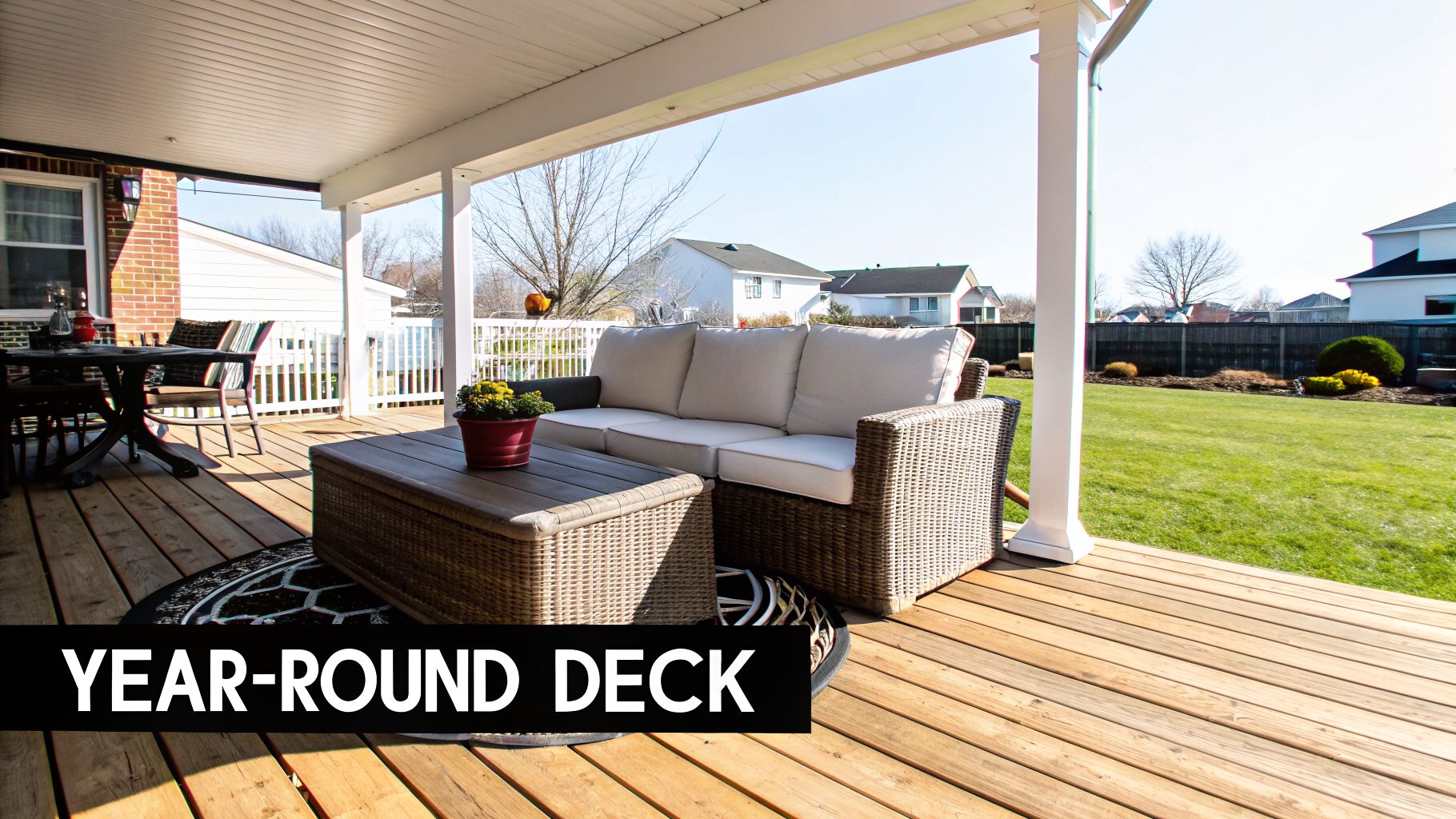
But it's more than just that. A permanent cover acts as a shield, protecting your deck boards and pricey outdoor furniture from the constant barrage of UV rays and moisture. This simple addition can dramatically extend the life of your deck, saving you a small fortune in repairs and replacements down the road.
A Smart Play for Your Home’s Value
This kind of project is also a huge financial win. The demand for quality outdoor living is skyrocketing. The global market for roof decking was valued at $10,563 million in 2021 and is on track to hit $13,085.7 million by 2025. You can dig into the growth of the roof decking market to see just how much homeowners are prioritizing these upgrades.
A thoughtfully designed covered deck isn't just a perk; it's a major selling point that can give you a great return on your investment.
When I talk to real estate agents, they tell me a covered deck is one of the top features buyers ask for. It immediately signals a premium, usable outdoor space that makes a property stand out.
Depending on your market, this upgrade can bump your home’s value by an average of 7-12%. It’s one of those rare improvements that pays you back with daily enjoyment and a higher resale price later on.
Tying Your Indoor and Outdoor Spaces Together
On top of all that, a well-built roof helps your deck feel like a natural part of your home, not just an add-on. When the design flows with your house's existing architecture, it creates an inviting transition from your living room to your new outdoor retreat.
Here’s a quick rundown of the benefits:
- More Livable Space: Your deck becomes a dependable spot for dining, relaxing, or hosting guests, rain or shine.
- Year-Round Comfort: That essential shade makes the deck enjoyable even on the hottest summer afternoons.
- Higher Property Value: A covered deck is a high-demand feature that adds real, tangible value.
- Protection for Your Investment: Your deck structure, furniture, and grill are kept safe from sun, rain, and snow damage.
Bottom line: adding a roof to your deck is a transformative project. It elevates your home’s comfort, style, and overall worth in a way few other projects can.
Your Pre-Build Blueprint: What to Plan Before You Start
Before you even think about picking up a saw, the real work of building a great covered deck happens on paper. I’ve seen it countless times: jumping into a project like adding a roof to a deck without a solid plan is the fastest way to a blown budget and a whole lot of frustration. This first phase is all about getting your ducks in a row.
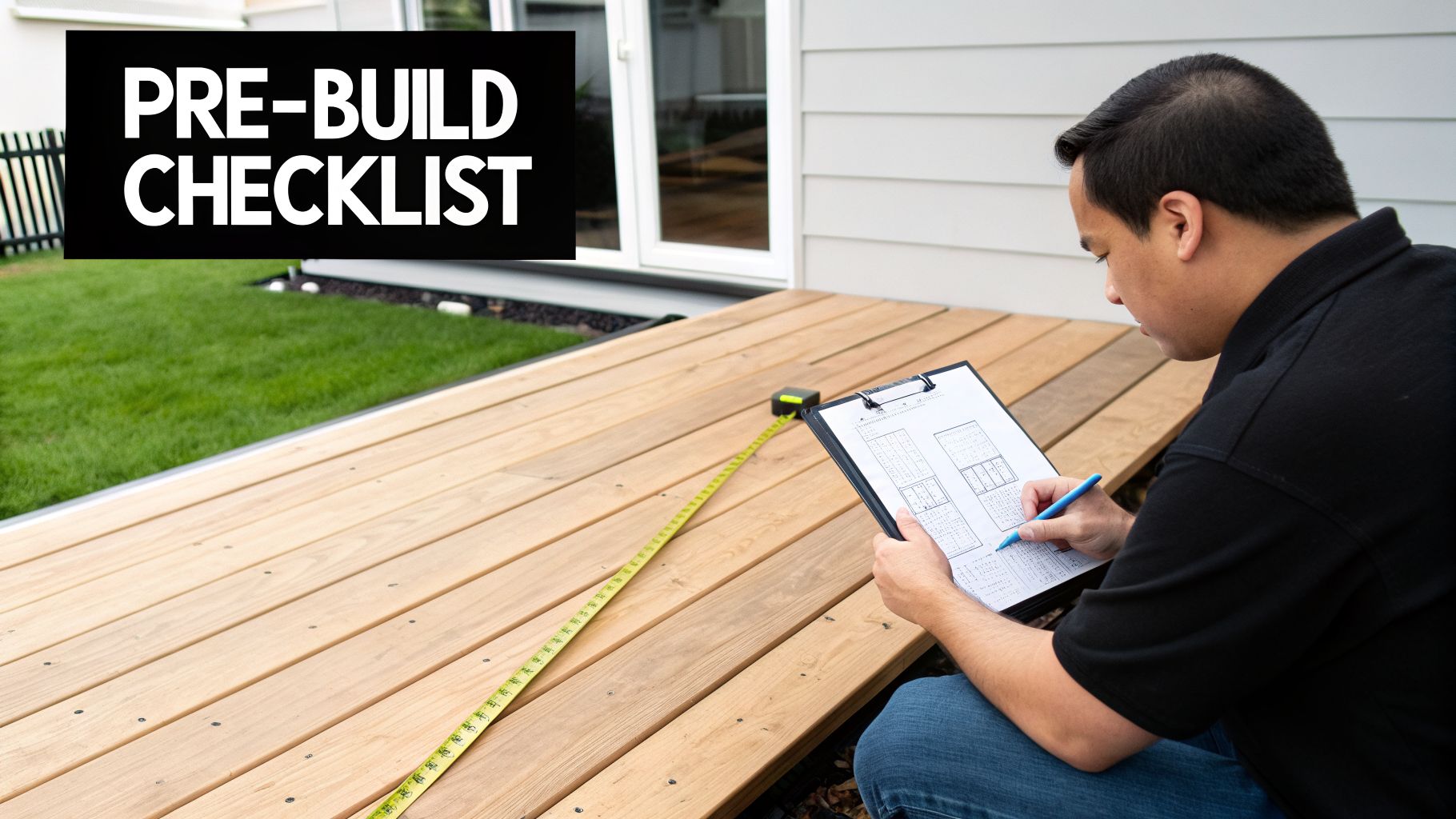
First things first, you need to have a brutally honest conversation with your existing deck. Was it built to hold up a permanent, heavy structure? Probably not. Most decks are only designed for people, patio furniture, and maybe a grill—not a roof that has to fight against wind, rain, and snow.
Assess Your Deck's Existing Structure
Start with the foundation. Get down and look at the concrete footings that anchor your deck to the ground. For a simple deck, these might be too small or shallow to properly support the weight and stress of an entire roof system.
From there, trace the load path up to the posts and beams. A roof adds a tremendous amount of downward pressure (dead load) from its own weight, plus dynamic pressure from wind and snow (live load). Those 4×4 posts that seemed perfectly fine before may need to be upgraded to beefier 6×6 posts to handle the new forces without twisting or buckling.
A Pro's Two Cents: If you don't have the original plans for your deck, spend the money to have a structural engineer come out. For a few hundred dollars, they'll give you a definitive report on what needs reinforcing. That small investment buys you incredible peace of mind.
You also absolutely have to check in with your local building department. Don't skip this. Every town and county has its own set of rules, and adding a roof is a significant structural change. Resources like this guide on New Zealand's deck building regulations are a great starting point, but your local codes are what truly matter. A quick visit to their website or a phone call will tell you exactly what permits and inspections you're in for.
Plan for Sun, Wind, and Budget
With the structural and legal homework done, you can start thinking about how you want to live in the space. The design of your roof isn't just about looks; it's about function.
- Sun Exposure: Pay attention to where the sun is at the hottest time of day. You want to angle your roof to provide the most shade when you'll need it most.
- Prevailing Winds: Is your yard a wind tunnel? A strategically placed solid wall can make the space much more comfortable. In a calmer, more sheltered spot, you can keep the design open and airy.
- Water Runoff: All that rain and snowmelt has to go somewhere. Make sure your plan includes gutters and downspouts that will carry water far away from your house's foundation.
Finally, it's time to talk money. Building a realistic budget is crucial. The cost is so much more than just lumber and roofing materials. People often forget to account for:
- Permit Fees: These can be a flat rate or, in some areas, a percentage of your total project cost.
- Structural Upgrades: The cost of new footings, bigger posts, and stronger hardware adds up.
- Specialty Hardware: You'll need specific structural screws, bolts, and metal connectors—these are not the same as standard deck screws.
- Finishing Touches: Don't forget lighting, ceiling fans, gutters, and the paint or stain to protect it all.
Mapping out every one of these costs from the beginning is the best way to avoid sticker shock and keep your project on track.
Choosing the Right Roof Style and Materials for Your Deck
Alright, this is the fun part. Picking the style and materials for your deck roof is where your vision really starts to take shape. This isn't just about what looks good—it's about making a smart investment that complements your home's architecture and stands up to the elements for years to come.
Your first major decision is the roof's overall shape. The goal here is to make it look like an intentional part of the original house, not a clunky add-on.
Matching Roof Style to Your Home
I’ve seen hundreds of these projects, and most of them fall into one of three main styles. Each has its own look and practical benefits.
Shed Roof: This is your classic, no-fuss option—a single plane that slopes away from the house. It's the most straightforward and cost-effective to build, making it a go-to for DIYers. A shed roof is a perfect fit for single-story homes or for tucking neatly under second-story windows.
Gable Roof: Think of a traditional A-frame. A gable roof has two sloping sides that meet at a peak, creating a vaulted ceiling and a more spacious, "outdoor room" feel. It’s fantastic at shedding rain and snow and looks right at home on classic ranch or colonial-style houses.
Hip Roof: If you want maximum durability, a hip roof is the answer. With slopes on all four sides, it’s a more complex and expensive build, but it offers unmatched strength against high winds. This is an obvious choice if your house already has a hip roof, as it creates a seamless look.
Take a walk outside and really look at your home's existing roofline. Putting a big gable roof on a house with a hip roof can look visually jarring. A simple shed style, on the other hand, is versatile enough to blend in almost anywhere.
Selecting the Best Roofing Materials
With a style in mind, it's time to choose the material that will sit on top of that frame. You're trying to find the sweet spot between aesthetics, budget, durability, and how much maintenance you’re willing to do.
A good place to start your comparison is with a simple table outlining the most common choices, especially for climates like we see in Utah.
Deck Roof Material Comparison
This table breaks down the pros and cons of popular materials, helping you weigh what matters most for your project—be it cost, longevity, or pure aesthetics.
| Material | Average Lifespan | Cost (per sq. ft.) | Maintenance Level | Best For |
|---|---|---|---|---|
| Asphalt Shingles | 15-30 years | $3 – $6 | Low to Moderate | Matching your home's existing roof on a budget. |
| Metal (Steel/Alum) | 40-70 years | $9 – $20 | Very Low | Long-term durability, snow shedding, and modern aesthetics, especially in heavy-snow areas. |
| Polycarbonate | 10-20 years | $5 – $10 | Low | Maximizing natural light while blocking UV rays; creating a bright, sunroom-like feel. |
| Wood Shakes/Cedar | 20-40 years | $7 – $15 | Moderate to High | Achieving a natural, rustic look that complements wooded surroundings, but requires regular upkeep. |
| Composite/Synthetic | 50+ years | $8 – $18 | Very Low | Mimicking the look of slate or wood without the heavy weight or high maintenance. Excellent longevity. |
Ultimately, the "best" material depends entirely on your home, your climate, and your priorities. While metal offers incredible longevity, the perfect color match of an asphalt shingle might be the deciding factor for you.
Asphalt shingles are hands-down the most common choice. They're affordable, offered in a huge range of colors, and make it easy to create a seamless transition from your house to the deck cover. Just be careful with installation—if you're putting them on in temperatures below 40°F, they can get brittle and crack.
For a sleeker, more modern aesthetic, standing-seam metal roofing is a fantastic upgrade. Yes, the upfront cost is higher, but a metal roof can easily last 50 years or more with almost zero maintenance. It’s also brilliant at shedding snow and reflecting heat, which helps keep your deck noticeably cooler in the summer. This move toward resilient materials is a huge trend; the global market for modular roof deck systems hit $17.4 billion in 2024, largely because homeowners want quick, weather-tough solutions. You can dive into more data on the modular roof systems market to see how energy efficiency is driving choices.
Want lots of natural light? Don't forget about polycarbonate panels. These translucent sheets are a game-changer. They block harsh UV rays but let soft, diffused sunlight pour in. They’re also lightweight and incredibly impact-resistant, perfect for creating that bright, airy feel without the burn.
Finally, give some thought to the underside—the ceiling. You can leave the rafters and framing exposed for a rustic, open-rafter look. Or, for a more finished and high-end feel, install a tongue-and-groove wood ceiling. It adds a warmth and character that truly transforms the deck into a proper outdoor room.
From Posts to Peak: The Construction Process
With your plans approved and materials stacked on the driveway, the real work begins. This is where your vision finally starts to take shape, moving from a drawing on paper to a solid structure you can stand under. It’s all about following a logical sequence, starting from the ground up to ensure everything is safe, sturdy, and—most importantly—watertight.
Everything starts with the posts. Every single pound of your new roof, from the lumber and shingles to a heavy blanket of snow, will travel down these columns. That’s why they must be anchored directly to those concrete footings you poured earlier. Don't even think about skipping the heavy-duty post base connectors; they're what lock the posts in place and prevent a strong gust of wind from turning your new roof into a kite.
Framing the Skeleton
Once your posts are set and perfectly plumb, you can start building the skeleton of the roof. This means hoisting the main beams that will span between the posts. Take your time here—these beams carry the primary load and need to be perfectly level and aligned. Next, you'll attach a ledger board to the side of your house; this is what will support the "high side" of your roof.
Here's a pro tip I can't stress enough: NEVER attach a ledger board over the top of your home's siding. It must be bolted directly into the house's structural frame (usually the rim joist). This connection has to hold thousands of pounds, and siding just isn't up to the task.
With the main supports in, it's time to cut and install the rafters. These are the angled boards that create the roof's slope. If you're building a simple shed roof, your rafters will run from the ledger board down to the outer beam. For a more traditional gable roof, you'll be building triangular trusses or framing a central ridge beam with rafters sloping down on both sides.
This diagram breaks down the key decisions you'll be making as you go, from the roof's style and materials to how much light you want to let through.
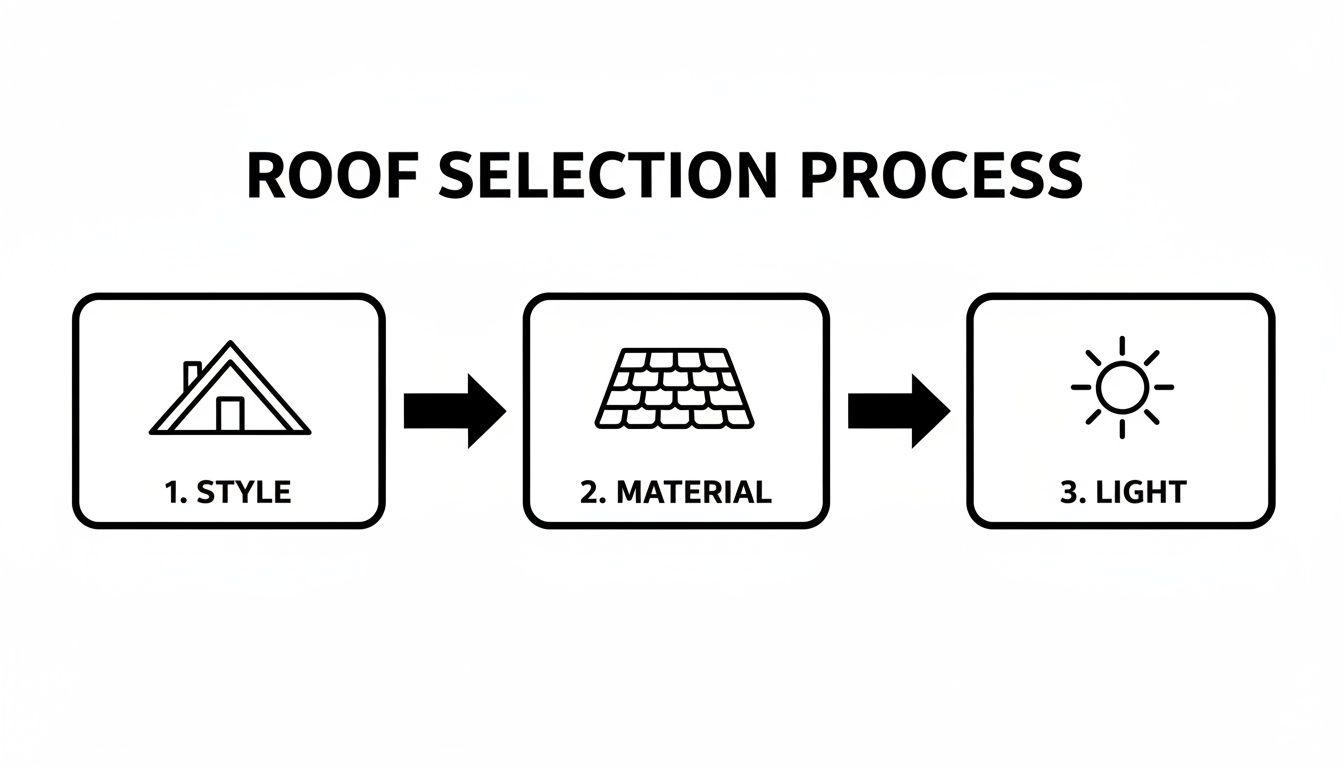
Thinking about these elements early on ensures your framing is perfectly suited for the final design you have in mind.
The Art of Flashing: Your #1 Defense Against Leaks
If there's one step where I see DIY projects go wrong, it's the flashing. Flashing is just thin metal that directs water away from the seam where your new roof meets the house, but it's absolutely critical. Improper flashing is the top cause of leaks, which quickly lead to rot and serious structural damage.
Getting it right involves carefully layering your materials to create a waterproof seal:
- First, you'll have individual pieces of L-shaped step flashing. These are woven in with each course of shingles, right up against the wall.
- Then, counter-flashing goes over the top of the step flashing. This second layer of metal gets tucked securely under your siding (or cut into the mortar of a brick wall).
This two-layer system is your best defense against water intrusion. Rushing this step is a recipe for disaster, so take your time and do it right. A meticulously flashed roof will stay bone-dry for decades.
Sheathing and Laying the Roof
With the framing and flashing done, you're on the home stretch. The next job is to cover the rafters with plywood or OSB sheathing, which creates the solid deck for your roofing material. This is also your chance to add any finishing touches like fascia boards around the edge of the roof.
Finally, you get to lay your chosen roofing material, whether it's classic asphalt shingles, sleek metal panels, or translucent polycarbonate.
A quick word of caution: if you're installing asphalt shingles in weather below 40°F, they become brittle and their self-sealing strips won't activate. The solution is to keep the shingles somewhere warm until you're ready to use them and then manually apply a few dabs of roofing cement under each tab. This will keep them secure against wind until the sun comes out and can finish the job.
Weatherproofing and Energy Efficiency Strategies
When you decide to roof your deck, you’re doing a lot more than just creating a shady spot. You're making a significant upgrade to your home's comfort and energy profile. A well-planned roof can keep your outdoor space from becoming an oven in the summer and even lighten the load on your air conditioner.
The real game-changer is choosing materials that actively fight the sun's heat. Insulated roofing panels, for example, are specifically built to stop thermal transfer. This keeps heat from beaming down onto your deck, creating a much cooler, more inviting area for you and your guests.
Another excellent route is to use "cool roof" materials designed to reflect sunlight instead of absorbing it. The market for these reflective roof coatings is booming and expected to reach $2.76 billion by 2034. It's easy to see why: homeowners who use them report cooling cost savings of 20-35% and have seen roof surface temperatures drop by a staggering 50°F.
Don't Forget Water and Weather
Managing heat is only half the battle; handling water is just as critical. Your new roof will channel a surprisingly large volume of rain and snowmelt, and that water needs a safe place to go. If it just dumps off the edge, it can saturate the soil right next to your foundation, leading to some serious, costly headaches down the road.
Key Takeaway: A deck roof isn’t finished without a proper gutter and downspout system. This is a non-negotiable step to protect your home's foundation, prevent soil erosion around your posts, and keep the space under your deck from turning into a swamp.
Thinking about the big picture, a roofed deck is also the perfect place to add other energy efficiency upgrades. You can easily wire in some low-wattage LED lights for evening ambiance or install an outdoor ceiling fan to create a comfortable breeze on still, hot days.
By pairing smart material choices with must-have weatherproofing, you turn a simple deck cover project into a long-term investment that pays off in comfort, usability, and home efficiency.
Common Questions About Adding a Roof to a Deck
Taking on a project like roofing your deck is a big step, and it's smart to have questions. Getting the right answers from the start is the difference between a successful project and a costly headache. Let's walk through some of the most common things homeowners ask us.
Does My Existing Deck Need Reinforcement?
The short answer is almost certainly, yes. Think about it: your deck was likely designed to support people, a grill, and some patio furniture. It wasn't engineered to handle the massive, constant weight of a roof structure, especially one that might have to hold a few thousand pounds of snow.
A professional structural assessment is an absolute must before you even think about buying materials. Someone needs to check your footings, posts, and joists. Chances are, your 4×4 posts will need to be upgraded to beefier 6x6s, and your footings may need to be larger and deeper to handle the new load. Skipping this step can lead to a catastrophic failure down the road.
Expert Insight: One mistake I see people make is trying to attach the new roof directly to the house's fascia board. The fascia is just trim—it has zero structural strength. You have to bolt a ledger board straight into your home's framing to create a rock-solid anchor that can safely carry the weight.
Can I Build a Deck Roof in Colder Weather?
You can, but you have to be careful. The biggest challenge is working with asphalt shingles in temperatures below 40°F (4°C). When they get cold, they become brittle and can easily crack or break during installation.
Another issue is that the self-sealing adhesive strips on the back of the shingles won't activate in the cold. To work around this, you absolutely must:
- Keep Your Shingles Warm: Store the bundles in a heated garage or basement (ideally around 70°F) for at least a full 24 hours before you bring them outside to install.
- Hand-Seal Every Single Shingle: This is critical. You'll need to apply quarter-sized dabs of roofer's cement under each shingle tab. This manually fastens them down and prevents wind from ripping them off before warm weather arrives to properly cure the factory adhesive.
What’s the Average Cost of Adding a Deck Roof?
This is a tough one because the price tag swings wildly depending on where you live, how big your deck is, and the materials you pick.
For a pretty standard 12×14 foot deck, you could be looking at $5,000 to $10,000 for a simple shed-style roof with basic shingles. If you’re dreaming bigger—say, a more complex gable roof with premium materials like standing-seam metal or high-end architectural shingles—that cost can easily jump to $12,000 to $25,000 or more. Your best bet is always to get at least three detailed quotes from trusted local builders to see what the real numbers look like for your specific vision.
Planning a major exterior upgrade requires a partner you can trust. The team at Superior Home Improvement has over 50 years of experience helping Utah homeowners enhance their properties with high-quality, energy-efficient roofing and other improvements. Find out how we can help you create the perfect covered outdoor space by visiting us at https://www.usasuperior.com.