
You’ve probably seen those ugly black streaks running down roofs in your neighborhood. What if I told you there's a permanent, set-it-and-forget-it solution that keeps your roof looking clean for decades? That solution is copper roof strips.
These aren't just for decoration; they're a functional upgrade that acts like a 24/7 cleaning crew for your roof, powered by nothing more than the rain.
What Are Copper Roof Strips and How Do They Work?
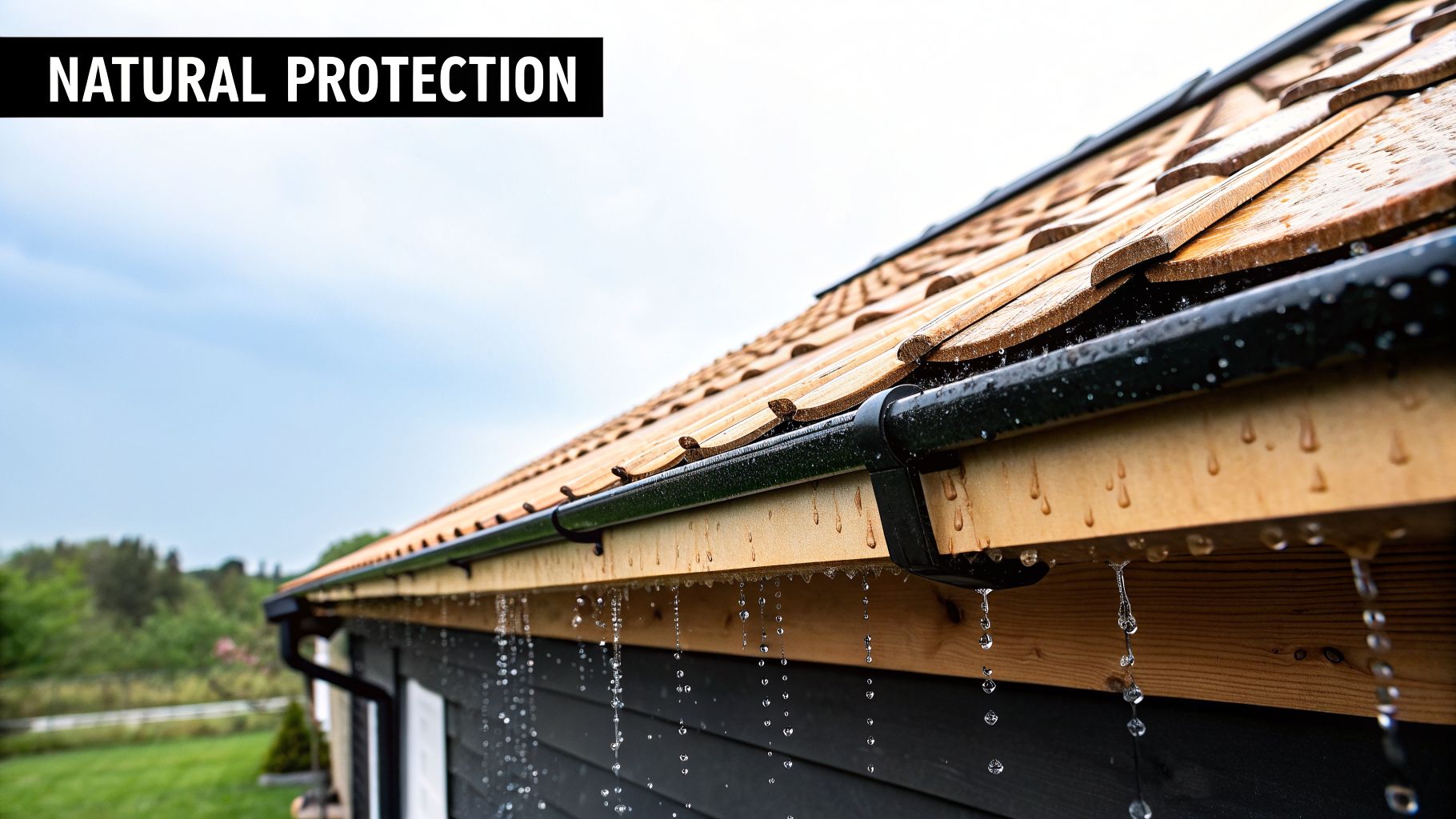
It’s a beautifully simple concept. When it rains, water flows over the copper strips, picking up microscopic copper ions. This ion-infused rainwater then travels down your roof, creating an environment where algae, moss, and fungus simply can't survive.
Think of it as a natural, chemical-free pressure wash that happens every time a storm rolls through. This process stops those dark, unsightly stains from ever taking hold, preserving your home's curb appeal year after year.
The Science of a Self-Cleaning Roof
Typically, a single strip of copper is installed right along the ridge or peak of the roof. This placement is key. It ensures that rainwater washes over the copper and then covers the largest possible area of the roof slope below. This one-time installation provides some major perks for homeowners:
- Lasting Algae Prevention: Unlike chemical sprays that need to be reapplied, copper provides a permanent fix that works for the life of your roof.
- Zero-Effort Maintenance: Once they’re up there, the strips do their job without you ever having to think about them again.
- Protects Your Shingles: Moss and algae can trap moisture against your shingles, causing them to degrade and fail prematurely. By stopping this growth, copper actually helps extend the lifespan of your entire roof.
It's a simple, elegant solution to a very common and frustrating problem. You're not just cleaning the roof; you're investing in a one-time fix that protects your home's value and appearance for the long haul.
More Than Just a Pretty Roof
The benefits of copper don't stop when the rain does. Here in Utah, our harsh winters bring their own set of challenges, namely ice dams. Because metal is a great conductor of heat, copper strips can help gently melt snow and ice along the roofline.
This subtle warming can help prevent the formation of destructive ice dams that can tear off gutters and cause water to back up under your shingles. While copper strips are a great preventative measure, for properties with severe ice dam issues, a more direct approach like installing heat tape in gutters might also be worth considering. This dual-purpose function makes copper an especially practical choice for our climate.
The Enduring Benefits of Copper for Your Utah Home
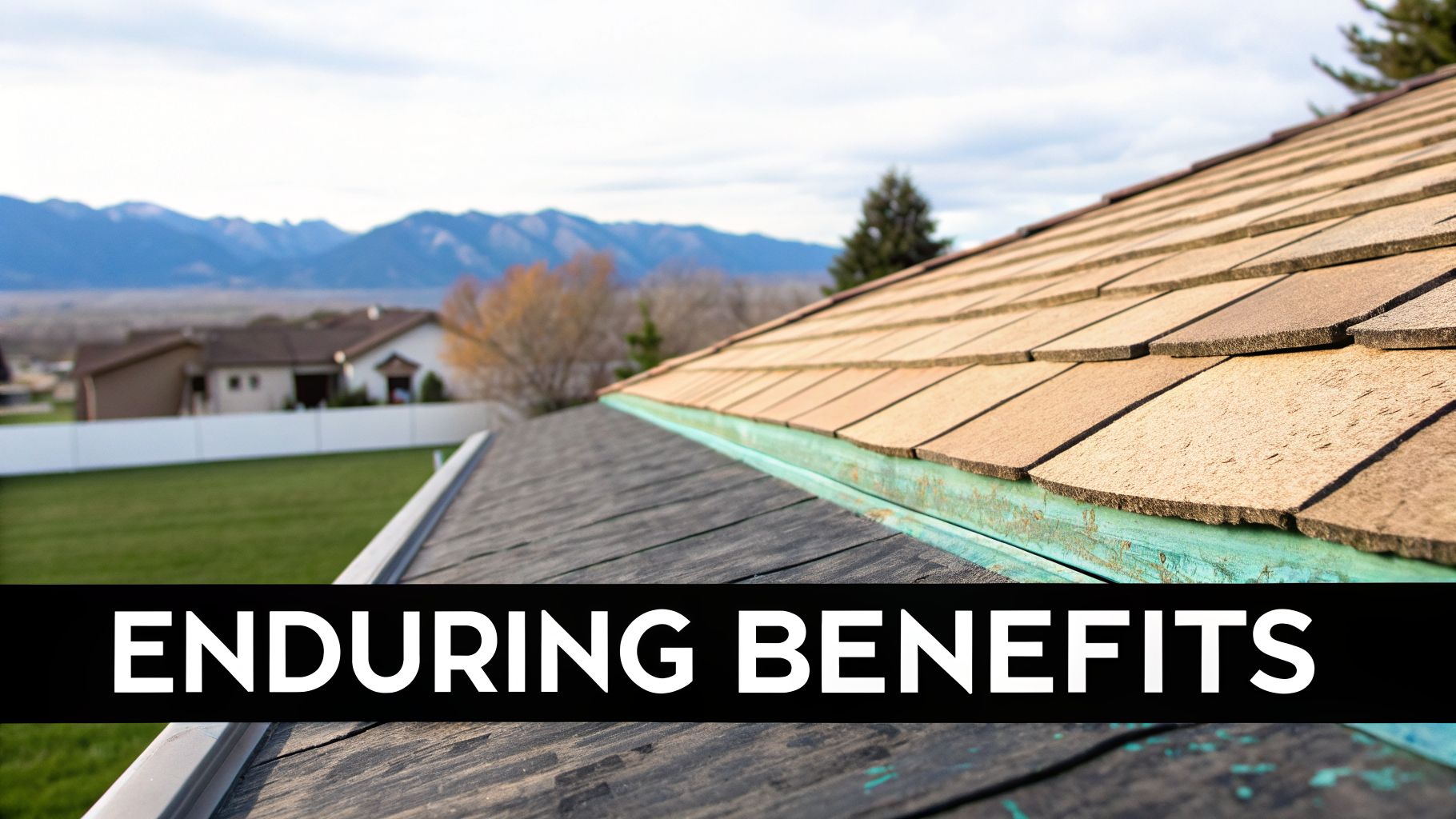
When you're choosing materials for your home's exterior, you need something that can stand up to Utah's demanding climate. Copper roof strips aren't just an aesthetic choice; they bring a level of strength and function that few other materials can touch. They're built to handle decades of everything our weather throws at them—from heavy Wasatch Front snow loads to the intense summer sun—all without rusting or breaking down.
That incredible resilience comes from the very nature of copper itself. Unlike galvanized steel, which is just regular steel with a thin zinc coating that eventually wears off and invites rust, copper is a pure metal through and through. It doesn't just resist corrosion; it works with the elements to protect itself.
The Magic of the Patina
Over time, copper reacts with the air and moisture to form that beautiful blue-green layer known as a patina. This isn't a sign of failure—it's a natural, self-healing shield.
Think of the patina as a living finish. It's a protective skin that stops further corrosion in its tracks and can even self-repair minor scratches, keeping the metal underneath structurally sound for a lifetime.
This is why copper is a hallmark of high-end architecture. It signals a material that ages with grace, adding a timeless elegance and character to your home that no synthetic material can ever hope to replicate.
A Permanent Roof Cleaning Service
Beyond its looks and strength, copper’s most impressive trick might be its ability to act as a permanent, chemical-free roof cleaner.
- How It Works: Every time it rains, water flows over the copper strips and picks up trace amounts of copper ions.
- The Effect: This ion-infused water is toxic to organic growth, preventing moss, algae, and lichen from ever getting a foothold on your shingles.
- The Result: Your roof stays clean and free of those ugly black streaks without you ever having to resort to harsh chemicals or pressure washing.
This isn't a new discovery; it's a technique that has been central to durable architecture for centuries. The use of copper on historic American buildings, like the 1727 Christ Church in Philadelphia, proved its longevity long ago. Today, modern copper roofs have a warranted life 2.5 times longer than steel, and some can easily last over 100 years. That completely dwarfs the 15–30 year lifespan of a typical asphalt shingle roof.
When you factor in the extended durability and near-zero maintenance, copper becomes a remarkably cost-effective choice over the long haul for any Utah homeowner. You can discover more architectural insights about copper’s long history and see for yourself why it remains such a smart, future-proof investment.
Where to Put Copper Strips on Your Roof
Think about how rain flows across your roof—it’s not random. Water follows predictable channels, almost like rivers and streams carving through a landscape. To get the most out of copper roof strips, you need to place them right in the middle of these high-flow areas. That's how you ensure their natural cleaning power reaches as much of the roof as possible.
The single most effective spot is right along the ridge, the peak of your roof. Installing a copper strip here means that every time it rains, the water picks up those protective copper ions and washes them down over everything below. It’s the source of the cleaning action, providing the broadest possible defense against moss and algae growth on both sides of your roof.
Key Functional Applications
Beyond just keeping things clean, copper is a fantastic material for reinforcing the parts of your roof that work the hardest. These are the spots where water concentrates or where a bulletproof seal is absolutely critical. In these areas, copper isn't just about preventing algae; it's about adding serious structural integrity.
Here are a few of the most common functional uses:
- Durable Drip Edges: The very edge of your roof (the eave) takes a beating. A copper strip here acts as a drip edge, shielding the wooden fascia board from constant water exposure and preventing rot. This is a classic failure point on many homes, and a copper drip edge is a permanent fix that easily outlasts painted wood or flimsy aluminum.
- Permanent Flashing: Leaks almost always start around chimneys, skylights, or in the valleys where two roof planes meet. Water just hammers these areas. Because copper is so easy to bend and shape, a roofer can form it perfectly to these complex angles and solder the seams. The result is a truly waterproof seal that will never dry out, crack, or fail like typical caulk-based sealants.
By targeting these high-flow and vulnerable spots, you’re doing more than just cleaning your roof. You're fortifying its weakest points with a material built to last for a century. It's a smart upgrade that pays you back in both appearance and pure, simple durability.
Advanced and Aesthetic Uses
Of course, it’s not just about function. Copper has a visual appeal that’s hard to beat. That warm, metallic glow provides a stunning contrast against almost any roofing material, from dark asphalt shingles to natural slate, adding a sophisticated, classic touch.
A really popular high-end choice is to use copper strips as an accent on a standing-seam metal roof. This mixed-metal look is incredibly sharp and gives a home a custom, architectural feel. The crisp, clean lines of the standing-seam panels, paired with the rich, evolving color of the copper trim, create a design that feels both modern and timeless. Once you understand where and why copper is used, you can start to see the best opportunities for your own home.
How Much Do Copper Accents Cost Compared to Other Materials?
Let's get right to it: when homeowners see the initial price tag for copper roof strips, there's often a moment of sticker shock. It’s definitely a premium material, and its upfront cost is higher than many common alternatives. But focusing only on that initial number is like judging a car by its first month's payment without considering its fuel efficiency, maintenance costs, or resale value down the road.
The real story with copper isn't about the day-one expense; it's about the total cost of ownership over the life of your home. Materials like galvanized steel or painted aluminum might seem like a bargain at first, but they simply don't have copper's natural resilience. They’re prone to rust or fading and will almost certainly need maintenance and replacement, maybe even a few times, long before a copper installation even begins to show its age.
This is why we talk about strategic placement. You don't need a full copper roof to get the benefits.
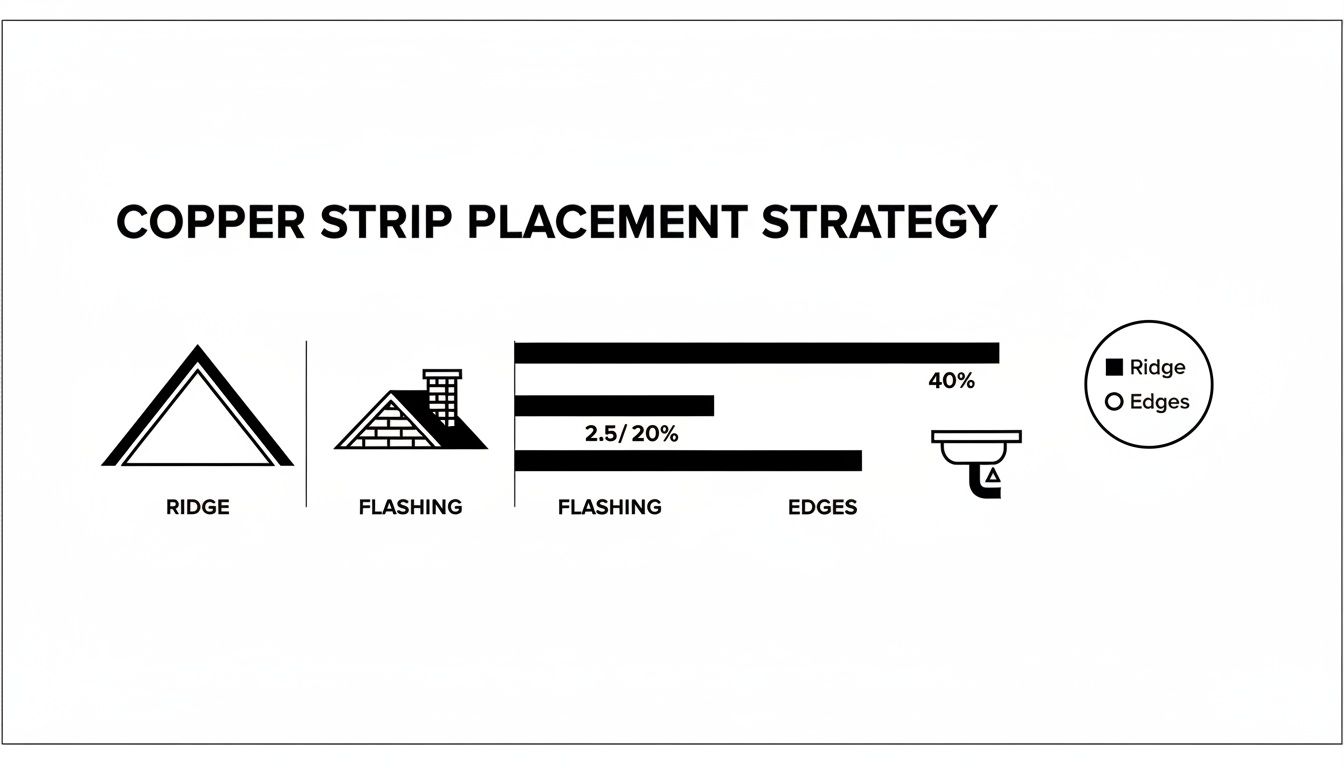
As you can see, applying copper to the most vulnerable areas—like the ridge, valleys, and drip edges—gives you the biggest bang for your buck, protecting the parts of your roof that take the most abuse.
A Lifetime Investment vs. a Short-Term Fix
Think of it this way: copper is a "buy it for life" decision. Your typical asphalt shingle roof might last 15-30 years, meaning you could be paying for a full replacement two or even three times over a 60-year span. In contrast, a properly installed copper accent can easily last over 100 years. It’s not just a roof component; it’s a permanent feature of your home that will serve generations.
This shift toward long-term value is a growing trend. In fact, the U.S. market for copper flat-rolled products, which includes these essential roof strips, hit $1.65 billion in 2024 and is projected to keep climbing. Why? Because builders and homeowners are realizing that materials like copper are built to last, especially in demanding climates like Salt Lake City’s, where it can handle heavy snow and intense UV rays for well over 50 years without breaking a sweat. If you want to dive deeper into the market data, you can explore the full research on the copper products market.
When you do the math over a 50-year horizon, the "expensive" material often turns out to be the smartest financial move.
Roofing Material Showdown: Copper vs. Alternatives
So, how does copper really stack up against other common metals used for roofing accents? While the initial price is one factor, the lifespan and long-term performance tell a more complete story.
This table breaks down the trade-offs you’re making with each choice.
| Material | Initial Cost (Per Linear Foot) | Average Lifespan (Years) | Key Benefit | Primary Drawback |
|---|---|---|---|---|
| Copper | High | 100+ | Extreme durability, self-healing patina, biostatic (prevents algae) | Higher initial investment |
| Aluminum | Medium | 20-50 | Lightweight and won't rust | Dents easily; painted finishes can fade, chip, or scratch |
| Galvanized Steel | Low-Medium | 15-30 | Affordable strength | The protective zinc coating eventually wears away, leading to rust |
As the numbers show, while galvanized steel might save you money on day one, its limited lifespan means you'll likely be paying for repairs or replacements when a copper accent would still look and perform like new.
Choosing copper for your roof’s key areas is more than just an upgrade—it's a strategic investment. You’re not only boosting curb appeal but also adding a durable, low-maintenance, and premium architectural feature that significantly enhances your home's long-term value.
Finding a Qualified Copper Installer in Utah
A copper roof strip can last for a century, but that incredible lifespan depends entirely on who installs it. Working with copper isn't like nailing down asphalt shingles; it's a true craft. You're not just hiring a roofer—you're looking for an artisan who understands how this unique material behaves.
This is why it's so important to find a contractor who provides top-tier professional roof installation services and has a proven track record with this specific metal. A general roofer, for instance, might unknowingly use aluminum nails. This simple mistake triggers galvanic corrosion, a chemical reaction that will eat away at the copper and destroy your investment.
Vetting a Copper Specialist
When searching for an installer in the Salt Lake City area, there are a few qualifications that are simply non-negotiable. The right contractor won't just have the skills; they’ll also have the credentials to protect you and your home.
Before hiring anyone, ask for these three things:
- A Portfolio of Copper Work: Don't just take their word for it. Ask to see photos and, if possible, the addresses of local homes where they've installed copper. This is the best proof of their experience.
- Proper Insurance and Licensing: Make sure they carry both general liability insurance and workers' compensation coverage valid in Utah. This protects you from any accidents on the job.
- A Strong Workmanship Warranty: A confident installer will always stand behind their work. Look for a comprehensive warranty that covers any defects in the installation itself.
Choosing an installer is about finding a long-term partner for your home's protection. A poorly installed copper accent can cause more headaches than it solves, leading to leaks, warping, and a complete failure to stop algae.
Technical Skills to Look For
Beyond the paperwork, a true copper expert understands the physics of the metal. Here in Utah, our temperatures can swing dramatically. A pro knows that copper expands and contracts with these changes and will use special fasteners and techniques that allow for this thermal movement, preventing the strips from buckling or pulling away over time.
They also know that proper soldering is critical. This is how you create permanently watertight seals at every joint and seam. A perfectly soldered connection becomes a single, seamless piece of metal that will hold strong for decades. It's a world away from a bead of caulk, which will always dry out, crack, and eventually fail. Asking about their soldering and fastening methods will tell you everything you need to know about their level of mastery.
Copper Roof Maintenance and the Patina Process
One of the best things about working with copper is how little it asks of you once it's installed. When clients ask about long-term care, my answer is usually the same: the best strategy is to let it be. The real magic of copper roof strips is watching them age gracefully and develop that iconic blue-green patina.
Don't mistake this color change for rust or decay. It's the exact opposite. This patina is a natural, protective shield that forms on the surface, stopping further corrosion in its tracks and extending the metal's lifespan. It's a look that architects and designers have coveted for centuries, signaling enduring quality and adding incredible character to a property.
Preserving the Shine or Embracing the Patina
Now, while most people love that evolving, historic look, some fall in love with the bright, "new penny" gleam. Keeping that shine is possible, but you have to be ready for the commitment.
To stop the natural aging process, the copper needs to be treated with a special clear sealant.
- How it Works: The sealant forms an airtight and watertight barrier, preventing the oxygen and moisture that trigger the patina from reaching the metal.
- The Trade-Off: This isn't a "set it and forget it" solution. Sealants degrade under the sun's UV rays and will need to be professionally stripped and reapplied every few years. If you don't, you risk a splotchy, uneven look as the finish fails.
For the vast majority of homeowners, we recommend letting nature take its course. Allowing the patina to develop is the most hands-off and cost-effective approach. It lets the copper do its job while rewarding you with a beautiful, ever-changing aesthetic that actually adds to your home's value.
Simple Steps for Care
While you don't need to polish or seal your copper, a little bit of basic housekeeping goes a long way. The only real goal is to make sure water can run freely across the copper strips.
Every so often, just check for and clear away any trapped leaves, pine needles, or other debris. This simple step prevents moisture from getting stuck in one place and ensures that with every rainfall, the copper’s natural algae-fighting properties are distributed evenly down your roof. That’s really all it takes to help your copper accents last a lifetime.
Answering Your Questions About Copper Roof Strips
When homeowners are thinking about adding copper to their roofs, a few questions always come up. It's a fantastic material that solves some real headaches, but it’s smart to get all the details before you move forward. Here are the straight answers to the things I get asked most often.
How Many Copper Strips Do I Actually Need to Stop Algae?
For a standard, straightforward roof, you usually only need one strip of copper, about 2 to 3 inches wide, running along the very peak of the ridge. When it rains, the water picks up tiny copper ions and washes them down the entire roof slope, naturally cleaning the surface as it goes.
Now, if you have a more complex roof with dormers, multiple valleys, or very long runs, we might plan for a little more. In those cases, a good installer will often recommend adding another horizontal copper roof strip every 15 to 20 feet down the roof. This just ensures every surface gets that protective copper wash and leaves no spot for algae to get a foothold.
Will Copper Strips Stain My Siding or Roof?
This is a common concern, but when installed correctly, significant staining is incredibly rare. The trick is to manage the water runoff properly and use the right fasteners that won't react with the copper.
Over the course of many years, you might see some very subtle, light streaking on certain light-colored materials below. Honestly, most people find this effect quite beautiful, as it adds to the natural, weathered charm of a home. The protection and beauty you get from copper almost always outweighs any tiny risk of discoloration.
Can I Just Install Copper Strips Myself?
I really have to recommend against going the DIY route here. Copper isn't like other materials; it takes special tools and a specific skill set to cut, shape, and secure it properly.
Trying to do it yourself can open a can of worms:
- Leaks: If the strips aren't sealed or soldered just right, you're basically creating a new pathway for water to get into your home.
- Warping: Copper expands and shrinks a surprising amount with temperature changes. Without the right fasteners and techniques, it will buckle and pull away from the roof deck.
- Wasted Effort: If you place the strips incorrectly, they simply won't prevent algae from growing, and the whole project will have been for nothing.
To get the full benefit and protect your investment, it's always best to bring in a certified roofer who has real experience working with this premium metal.
Is Copper a Good Choice for Utah’s Climate?
Absolutely. Copper is practically made for Utah’s four-season climate. It’s tough, so it stands up beautifully to heavy snow loads and the ice dams we get in the winter.
It also shrugs off the extreme temperature swings we experience—from blistering summer sun to freezing nights—without getting brittle or cracking. That resilience makes copper a smart, long-term investment for any Salt Lake City home, giving you peace of mind for decades to come.
Ready to protect your home with a solution that's as beautiful as it is permanent? The team at Superior Home Improvement brings over 50 years of experience to Utah homeowners looking for smart, lasting upgrades. Contact us today for a free expert consultation and discover how copper accents can elevate your home’s value and curb appeal.