
It’s one of the most common questions we hear from homeowners with older brick houses: "Can I put siding directly over the brick?" The short answer is yes, you absolutely can.
This approach lets you completely reinvent a dated or deteriorating brick exterior, all without the headache and high cost of a full tear-down.
Transforming Your Brick Home With Siding
So, you can do it, but it's not quite as simple as just slapping new panels over the old masonry. Think of it less like painting a wall and more like giving your home a brand-new, high-performance jacket. For the project to be a success, it demands careful planning and a pro's touch to get it right.
Here in Utah, this is a particularly smart upgrade. Adding that new "skin" over your brick, especially with a layer of insulation underneath, dramatically improves your home's thermal performance. That means a more comfortable house and real savings when dealing with our intense summers and freezing winters.
The benefits are pretty clear:
- Upgraded Curb Appeal: You can instantly trade in a tired, 1970s brick look for a modern aesthetic, with endless color and style options.
- Better Energy Efficiency: This is a big one. That extra layer can make a real dent in your heating and cooling costs.
- Higher Home Value: A fresh, low-maintenance exterior is a huge draw for potential buyers if you ever decide to sell.
It might seem strange to cover up brick, which has long been seen as a premium building material. But times and tastes change. A landmark 2013 study on what home buyers really want showed brick was a top choice, but homeowners are often driven by practical needs.
When you're facing winter energy bills that can jump by 20-30%, installing modern vinyl, fiber cement, or composite siding over that old brick becomes a very practical solution. You get to use the brick's solid structure as a sturdy base for the new siding, avoiding thousands in demolition costs.
Siding Over Brick at a Glance
To give you a quick summary, here’s a look at the main advantages and potential hurdles you should be aware of.
| Key Advantages | Potential Challenges |
|---|---|
| Avoids costly and messy demolition | Requires professional installation |
| Significantly improves energy efficiency | Can trap moisture if done incorrectly |
| Boosts curb appeal and home value | May require building out windows/doors |
| Protects original brick from elements | Not suitable for structurally damaged brick |
Ultimately, installing siding over brick is a fantastic option for many, but it’s not a DIY weekend project. The risk of trapping moisture behind the new siding is real and can cause major problems down the line if the job isn't done with precision.
Preparing Your Brick Wall for New Siding
Before you even think about hanging that first piece of siding, all the real work happens on the brick itself. It's a classic case of prep work being the most critical part of the job. You wouldn't paint a dirty wall, and you certainly can't install a brand-new exterior over a failing brick facade.
First things first, a thorough inspection is a must. A seasoned pro will go over every inch of your brickwork, hunting for red flags. They’re looking for things like significant cracks, crumbling mortar joints, and especially spalling—where the face of the brick is flaking or peeling away. You have to fix these issues before you cover them up. Simply hiding damage is asking for much bigger, more expensive problems down the road.
Creating a Secure and Breathable Framework
Once we know the brick is solid, the next step is to build out the framework that will actually hold the siding. This is a crucial step that many homeowners don't realize is necessary; you can't just nail the siding directly to the brick.
Instead, we install a grid of furring strips. These are thin strips of wood or metal fastened directly onto the brick wall. They do two incredibly important jobs:
- Create a Perfectly Flat Surface: Let's be honest, no brick wall is perfectly flat. Furring strips create a true, level plane for the new siding, which is the secret to getting that clean, seamless look.
- Build a Rain Screen Air Gap: This is absolutely non-negotiable. The space between the brick and the siding allows air to circulate freely, giving any moisture that gets trapped back there a way to dry out and escape. Without this air gap, you're creating a dark, damp breeding ground for mold and rot.
With the furring strips in place, the entire wall is wrapped in a high-quality house wrap. Think of it as a modern, one-way raincoat for your home. It's designed to stop liquid water from getting in while still allowing water vapor from inside the wall to get out. It’s your final line of defense against moisture.
The success of putting siding over brick is 90% preparation. Trying to cut corners by skipping furring strips or a proper weather barrier is a recipe for disaster. It might save a little money upfront, but it can easily lead to thousands in structural repairs from trapped moisture and decay.
This careful groundwork ensures your new siding doesn't just look fantastic but also performs as part of a complete system that protects your home for years to come.
The diagram below shows the key benefits you get when this process is done right.
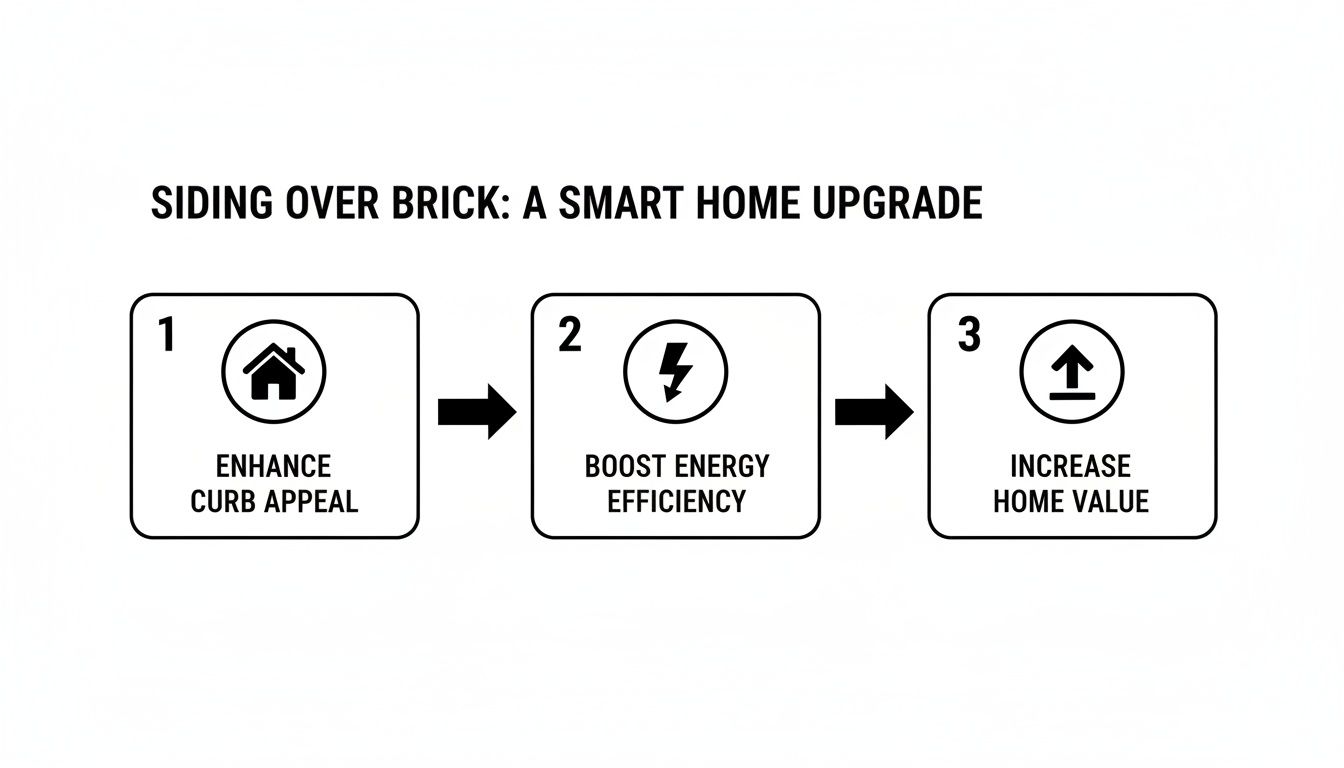
As you can see, a properly installed siding system over brick delivers a major boost to your home's curb appeal, improves energy efficiency, and directly increases its overall value.
Choosing the Best Siding for a Brick Home
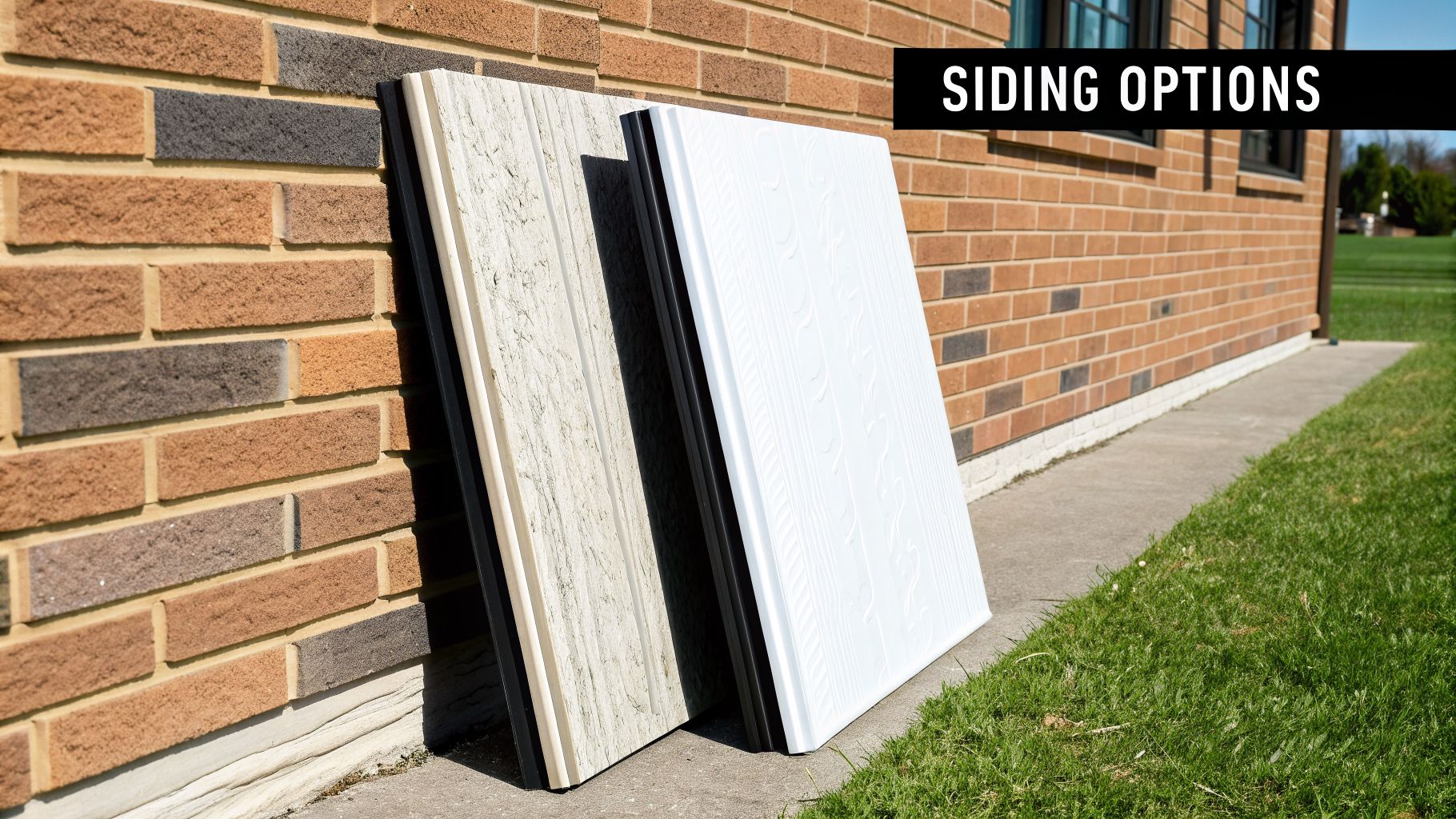
Alright, you've handled the prep work. Now for the fun part: picking the new "skin" for your house. This decision is a big one. The material you choose will determine how your home stands up to Utah's demanding weather, how much time you spend on upkeep, and what your energy bills look like for years to come.
There are some truly fantastic siding options out there that work perfectly over brick. While vinyl has long been a go-to, we're seeing more and more homeowners gravitate toward high-performance materials like fiber cement. In fact, vinyl siding replacement projects alone still make up about 33% of the entire siding market, so it’s clearly a trusted choice.
For anyone in the Salt Lake City area looking to update a tired brick exterior, you’re in luck. Proven materials like vinyl, fiber cement, and even fiberglass composites can give you a brand-new look without the headache and expense of a full brick teardown.
Comparing Siding Materials for Brick Overlay
To make the decision a bit easier, it helps to see how the top contenders stack up side-by-side. Here’s a quick comparison of the most popular choices for a brick overlay project, keeping Utah's unique climate in mind.
| Siding Type | Durability & Weather Resistance | Energy Efficiency | Maintenance Level | Average Cost |
|---|---|---|---|---|
| Vinyl | Good. Modern vinyl handles wind and rain well but can become brittle in extreme cold. | Good, especially with insulated backing. Adds R-value. | Very Low. Just needs occasional cleaning. | $$ |
| Fiber Cement | Excellent. Resists fire, impact, insects, and freeze-thaw cycles. | Moderate. Can be improved with added insulation behind it. | Low to Moderate. Requires repainting every 10-15 years. | $$$ |
| Fiberglass | Superior. Extremely strong and dimensionally stable in temperature swings. | Excellent. Very stable, preventing air gaps from forming. | Very Low. Won't rot, warp, or need repainting. | $$$$ |
Ultimately, the "best" material depends on your priorities—whether that's budget, long-term durability, or minimizing future maintenance.
Durable and Budget-Friendly Vinyl Siding
There’s a reason vinyl siding is the most popular choice in America. It’s affordable, requires almost zero maintenance, and the design options are nearly endless. You can find everything from traditional lap siding to styles that do a surprisingly good job of mimicking natural wood grain.
One of the biggest wins when you put siding over brick is the chance to add insulation, and vinyl is perfect for this. By choosing insulated vinyl siding—which has a rigid foam backing attached directly to each panel—you can significantly boost your home’s thermal barrier. That extra R-value makes a real difference in keeping your house comfortable and your energy bills down. When you’re looking at options, it's worth comparing materials like steel versus vinyl siding to see which pros and cons matter most to you.
Robust and Resilient Fiber Cement Siding
If you’re looking for something that can take a beating, it’s hard to do better than fiber cement. This stuff is a powerhouse. Made from a mix of cement, sand, and cellulose fibers, it’s incredibly tough and resistant to just about everything: fire, hail, woodpeckers, and insects.
Many homeowners love fiber cement because it just feels so solid and substantial on a wall. It's heavier and takes more skill to install, but its incredible resilience against Utah's intense sun and freeze-thaw cycles makes it a prime candidate for any brick overlay.
The color holds up beautifully, though you’ll likely need to plan for a new coat of paint every 10-15 years to keep it looking fresh.
High-Performance Fiberglass Composites
At the premium end of the market, you'll find fiberglass composite siding. Its main claim to fame is its incredible strength and dimensional stability. What does that mean for you? It barely expands or contracts, even with the wild temperature swings we get here in Utah.
That stability is a huge deal. It means the seams between panels stay tight and the siding remains perfectly straight on the wall year after year. You don't have to worry about gaps opening up that could let in moisture or create drafts. Just like vinyl, fiberglass is a true low-maintenance material that will never rot, warp, or fall victim to pests.
Calculating Your Project Cost and ROI
So, you've confirmed you can put siding over your brick. The next big question on your mind is probably, "What's this going to set me back?" It's a fair question, and understanding the financial side of things is crucial. This isn't just about the upfront cost—it's about weighing that number against the long-term value you get from better curb appeal, lower energy bills, and a boost in home equity.
It's easy to look at the estimate and see only a big expense. But with a project like this, it's smarter to think of it as an investment in your home's future. You're not just spending money; you're moving it into an asset that pays you back over time.
A modern exterior dramatically improves your home's value and how quickly it might sell one day. Let's dig into the numbers so you know what to expect for a budget and what kind of return you'll see.
Breaking Down the Installation Costs
When it comes to the bottom line, deciding to install siding directly over your brick is a clear winner compared to the alternative: a full tear-off. Tearing out old brick is a messy, loud, and labor-intensive job that adds a significant expense to the project—one you get to skip entirely.
The cost data makes the savings pretty clear. According to the 2026 RSMeans Residential Cost Data, installing brand-new brick veneer on a home runs about $10.84 per square foot. For a typical 2,000 sq. ft. house, you could be looking at a bill well over $26,000 just for the new brick, not including the demolition of the old stuff. You can see a detailed breakdown in this comprehensive siding cost analysis.
By choosing to go over the existing brick, you sidestep a huge chunk of that cost. That makes an overlay project a very attractive financial move, especially here in Utah where every dollar saved on the project can go toward better insulation.
The Real Return on Your Investment
The upfront cost is only half the story. The real value of siding over brick is found in its return on investment (ROI). This is where you see your money come back to you in tangible ways.
- Significant Energy Savings: Adding a layer of insulated siding completely changes your home's ability to hold onto heat. During those chilly Utah winters, that makes a massive difference. Our Energy Conservation Program actually guarantees a reduction in your energy consumption by up to 40%, which you'll see on every monthly utility bill.
- Increased Home Value: A home with a fresh, modern, and low-maintenance exterior doesn't just look better—it sells faster and for more money. Great curb appeal is one of the most powerful selling points in real estate.
- Reduced Maintenance Costs: Say goodbye to worrying about crumbling mortar or repainting faded brick. New siding eliminates the need for tuckpointing or other costly brick repairs, saving you time and money for decades.
By installing siding over brick, you’re not just giving your home a facelift. You are making a calculated upgrade that adds tangible value, enhances comfort, and delivers a strong financial return through energy savings and increased equity.
When you look at it through the lens of these long-term gains, the project's cost becomes a much more sensible and proactive investment in your home's future.
When You Must Remove the Brick Instead
Putting new siding over brick works for a lot of homes, but it's definitely not the right move for every situation. There are a few major red flags that tell us covering the brick isn't just a bad idea—it's a risk to your home's entire structure. Slapping a new siding system over a failing wall only hides the problem, allowing it to fester and grow into a costly, structural nightmare.
You wouldn't build a beautiful new house on a crumbling foundation, right? The same exact logic applies here. If your existing brick wall is failing, it can't possibly provide a stable anchor for thousands of pounds of new siding. A brutally honest assessment of your brick is the most critical first step, and it's why getting a professional opinion before you put siding over brick is so important.
Severe Structural Damage
The most obvious deal-breaker is significant structural failure. I'm not talking about a few hairline cracks in the mortar here and there. We're on the lookout for major warning signs that point to deep, underlying problems with the wall itself—or even your home's foundation.
You should never, ever cover brick if you see these issues:
- Widespread Spalling: This is when the face of the brick is actively crumbling, flaking, or popping off. If you can poke a finger into the brick and it just turns to dust, that’s a clear sign of advanced moisture damage and decay.
- Major Cracks: Large, deep, stair-step cracks running through both the bricks and the mortar are a huge red flag. They signal serious movement, which could mean the foundation is settling or the wall is under immense stress. This needs to be diagnosed by an expert, not covered up.
- Bowing or Bulging Walls: If any part of the brick wall is pushing outward or looks warped, it means the wall has lost its integrity. It's actively failing and simply can't be trusted to support its own weight, let alone a whole new layer of siding.
Covering up severely damaged brick is like putting a band-aid on a broken bone. The new siding won't stop the brick from deteriorating. In fact, as the weak brick continues to crumble, the fasteners holding your new siding will pull loose, causing the entire system to sag or even fall off the wall.
Pervasive Moisture Issues
Another critical dealbreaker is evidence of chronic, trapped moisture. If the brick always seems damp, or if you see efflorescence (those white, powdery salt deposits) covering large sections, it means water is getting in and can't get out.
This saturation might be from bad drainage around the foundation, failed flashing above windows, or even a coat of non-breathable paint that's preventing the brick from drying properly. Covering this up creates a dark, damp, sealed-off cavity—the perfect breeding ground for widespread mold and rot. This won't just ruin your new siding; it will compromise your home's framing and your family's indoor air quality. When moisture is the root problem, removing the compromised brick is the only safe path forward.
Why Professional Installation Is Crucial
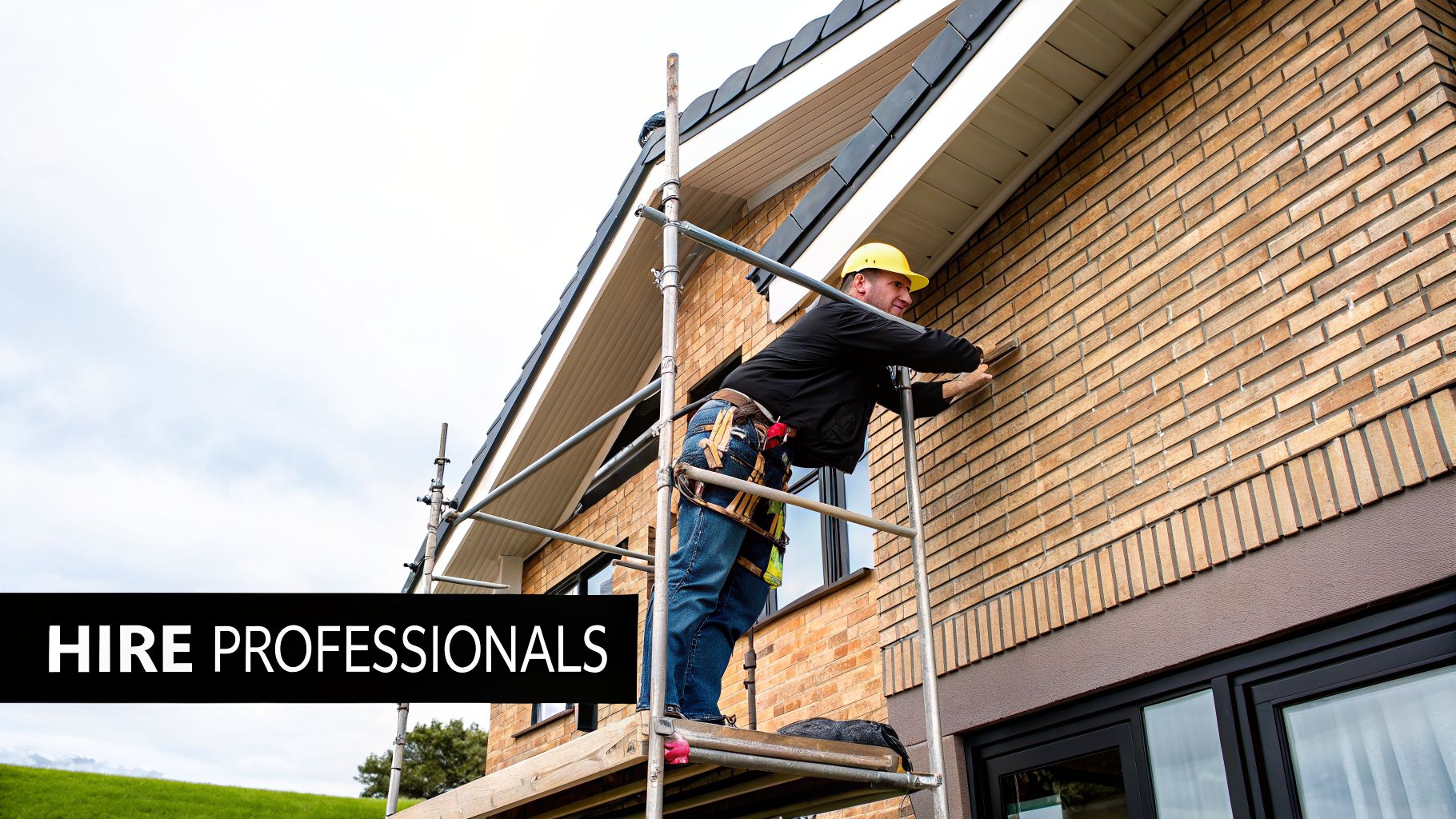
So, can you put siding over brick? Technically, yes. But that simple answer hides a mountain of complexity. This isn't a weekend DIY project—getting it wrong can lead to some truly expensive and destructive problems down the road.
The single biggest danger is trapped moisture. Without a properly installed rainscreen and weather-resistant barrier, water will inevitably find its way behind the new siding. Once it's in, it has nowhere to go. This creates a dark, damp space perfect for hidden mold and rot to slowly eat away at your home's framing. It’s an out-of-sight, out-of-mind issue until it becomes a structural catastrophe.
The Professional Difference
This is where a seasoned professional proves their worth. They don’t just hang siding on top of your brick; they engineer a complete, high-performance wall system designed to protect your home. It’s a completely different mindset.
A pro focuses on the critical details that most amateurs don't even know to look for:
- Mastering Airflow: They install furring strips with precision, creating a consistent air gap that allows any moisture to drain away and the wall to dry out completely.
- Flashing Finesse: Every window, door, vent, and corner is meticulously flashed. This isn't just about caulk; it's about creating an integrated, seamless barrier that directs water away from vulnerable points.
- Rock-Solid Fastening: They know exactly which fasteners to use and how to anchor the new siding securely into the brick and underlying structure without cracking the masonry or creating new entry points for water.
Think of it this way: a professional job is an investment in reliability. The peace of mind you get from decades of experience and a solid workmanship warranty is worth far more than the money you might save trying to tackle this yourself.
Before starting a major project like this, it's also smart to get up to speed on local requirements. Building codes and even contractor regulations are always evolving, with some areas like the Central Coast licensing rules becoming more stringent.
Ultimately, bringing in an experienced team ensures your siding project doesn't just boost your home's curb appeal, but actively protects its structural integrity for decades.
Common Questions We Hear About Siding Over Brick
Making the decision to cover a brick exterior is a big one, and it's completely normal to have a few lingering questions. We get it. Over the years, we've heard them all, so we've gathered the most common ones here to give you the clarity you need.
Will Putting Siding Over My Brick Devalue My Home?
This is probably the number one concern we hear, and the answer is a firm no—as long as the job is done right. While some homebuyers are charmed by old-school brick, far more are looking for a home that feels modern, looks sharp, and doesn't come with a long list of maintenance chores. A professional siding installation can seriously boost your home's curb appeal and even its market value.
Think of it less as covering something up and more as a strategic upgrade. A shoddy job can hurt you, but a well-executed project that enhances the home's look and R-value is a huge selling point for today's buyers.
When you replace a dated or damaged brick exterior with beautiful, modern siding, you're not losing value—you're trading an old feature for a high-performance upgrade that today's buyers appreciate.
How Much Thickness Does This Add to My Walls?
On a practical note, homeowners often wonder how bulky the new wall will be. The new siding system typically adds about 1.5 to 2.5 inches of total thickness. This comes from the furring strips (usually ¾-inch thick), any optional rigid foam insulation you add (½ to 1-inch), and finally, the siding panel itself.
An experienced crew knows exactly how to handle this. We build out the trim around your windows and doors so they don't get that "sunken-in" look. When it's all done, the final result looks clean, cohesive, and completely intentional—not like something was just tacked on.
Can I Install Siding Over Painted Brick?
Yes, you can, but this is where a professional eye is absolutely critical. The real question is the condition of that paint and the brick underneath. If you see paint that’s peeling, flaking, or blistering, that’s a major red flag. It’s often a sign that moisture is trapped, which can cause the brick to become brittle and start to spall or crumble.
Before any furring strips go up, the wall has to be inspected. If the paint is failing and compromising the brick, that issue has to be addressed first. The new siding needs a solid, stable, and dry foundation to last, and a painted-over problem will only get worse.
Ready to see how a siding upgrade could completely transform your home's look and feel? The team at Superior Home Improvement has been helping Utah homeowners make smart, lasting improvements for over 50 years. Reach out today for a free, no-pressure consultation and we'll walk you through the possibilities.