
On a national level, you'll see siding replacement costs ranging anywhere from $8,000 to $25,000. Most homeowners end up somewhere in the middle, landing around $15,000. But here in Utah, that number can shift quite a bit depending on your home's size, the materials you pick, and the going labor rates along the Wasatch Front.
Your Quick Guide to Utah Siding Costs in 2026
Trying to pin down the exact cost of replacing your siding can feel a little overwhelming. It's not one single number—it’s a mix of a few key ingredients that all contribute to the final price.
Think of it less like buying a product off the shelf and more like a custom project. Your total investment comes down to a few major variables:
- Material Choice: This is the biggest piece of the puzzle. The price difference between a budget-friendly vinyl and a high-end fiber cement or natural wood is significant.
- Home Size & Complexity: A straightforward, single-story rambler is a much different job than a two-story home loaded with dormers, gables, and tricky angles. More complexity means more time and skill.
- Labor Rates: The cost for a skilled, professional crew in the Salt Lake City area is a major factor in the final bill.
- Prep Work: Before new siding goes on, the old stuff has to come off. That includes tear-off, disposal, and fixing any rot or damage we might find underneath.
This first look gives you a solid starting point before we dig into the details. The chart below gives you a quick visual on how the most popular siding materials stack up against each other in terms of price.
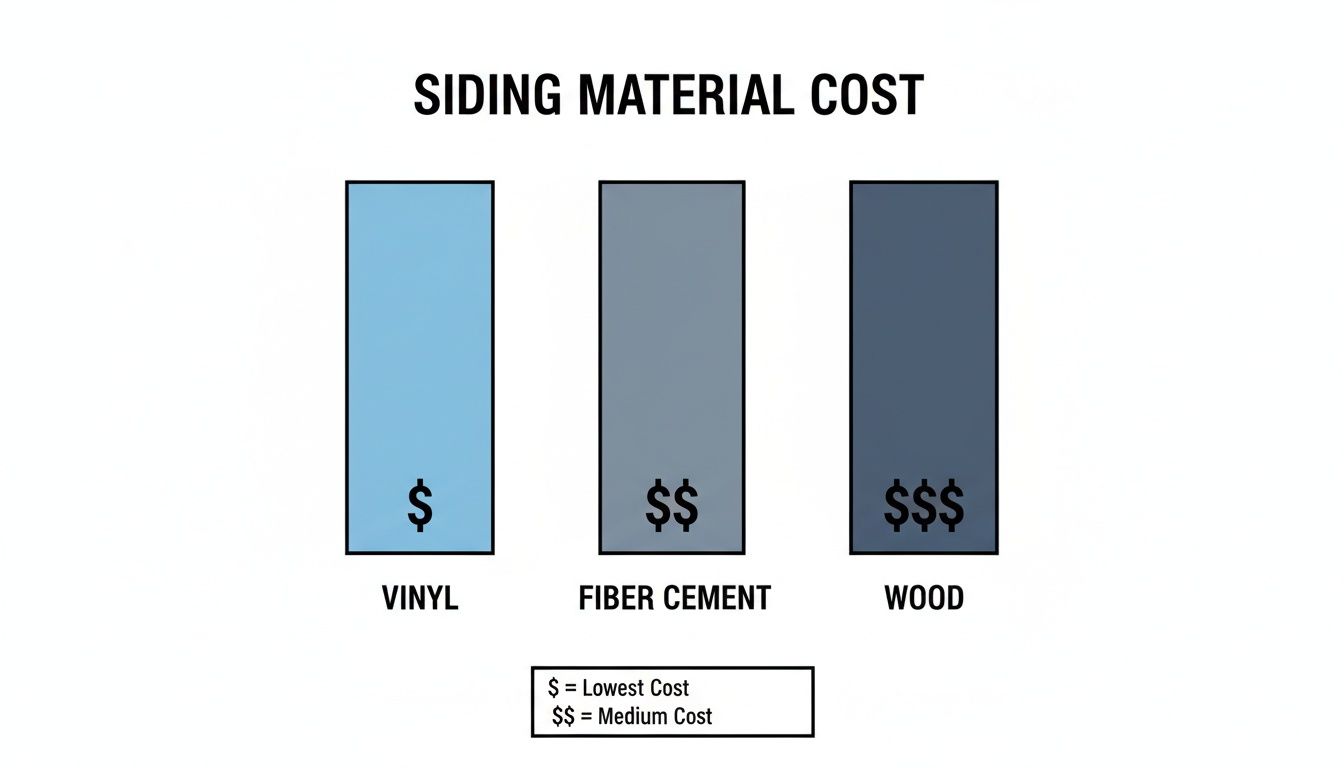
As you can see, vinyl is the most budget-conscious starting point. Fiber cement sits comfortably in the middle, offering a great balance of performance and price, while natural wood occupies the premium end of the scale.
Key Takeaway: Your total siding cost is always a blend of materials, labor, and your home’s specific layout. The best way to get a realistic budget is to start with the per-square-foot cost.
Estimated Siding Replacement Cost Per Square Foot in Utah (Installed)
To give you a clearer picture for planning, here’s a table with the average installed costs for common siding materials you'll find in the Salt Lake City area. These numbers are a good benchmark because they include both the materials and the professional labor needed to get the job done right.
| Siding Material | Average Cost Per Square Foot |
|---|---|
| Vinyl Siding | $5 – $9 |
| Fiber Cement Siding | $8 – $14 |
| Wood Siding | $9 – $16 |
| Composite Siding | $8 – $13 |
Using these per-square-foot ranges is the most reliable way to build a baseline budget for your project. With this financial footing, you’ll be much better prepared as we dive into the more specific costs in the next sections, helping you make a smart, informed decision for your home.
Choosing Your Siding Material: A Guide to Your Home's New Look
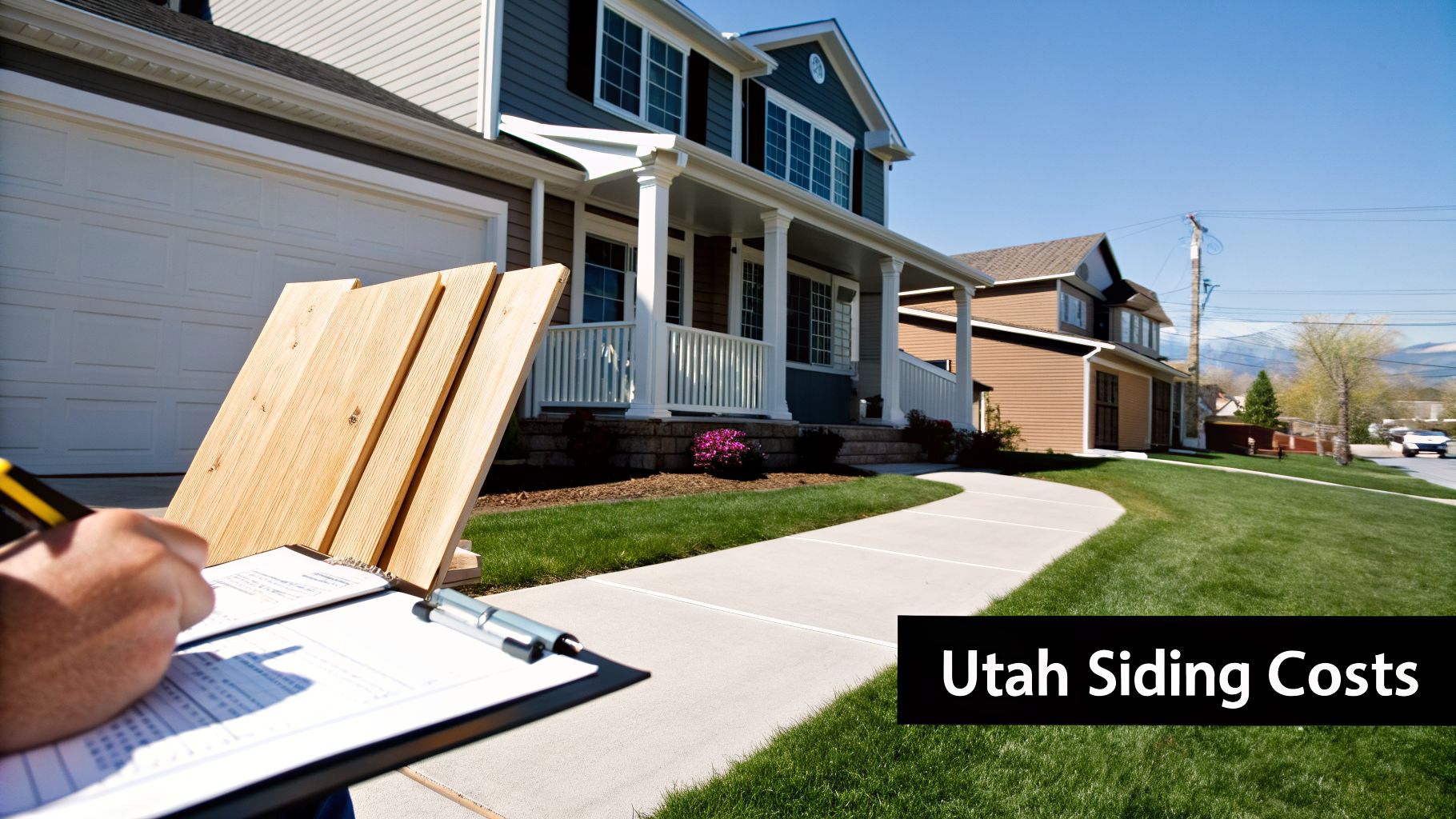
The material you pick for your new siding is, without a doubt, the biggest driver of the average cost to replace siding. But the decision goes way beyond the initial price tag. Think of it as choosing the right jacket for your house—some are lightweight and stylish, others are heavy-duty and built for a blizzard, and the best ones manage to do a little of both.
Getting a feel for the real-world pros, cons, and costs of each material is the key to making a choice you'll be happy with for decades. Let's walk through the most popular options we see on homes here in Utah, looking past the price to find the true long-term value.
Vinyl Siding: The Budget-Friendly Workhorse
There’s a good reason vinyl is the most popular siding in America. It’s the most affordable choice right out of the gate, which puts a full siding replacement within reach for many homeowners. And forget the faded, flimsy vinyl of the past—modern materials use "capstock" technology to offer rich, deep colors that hold up against Utah's intense sun.
Best of all, it's the undisputed champion of low maintenance. You’ll never have to paint, scrape, or stain it. A quick wash with soap and water is all it ever needs to look good as new, saving you a ton of time and money down the road.
- Cost: You can expect to pay $5 to $9 per square foot, installed.
- Best For: Anyone prioritizing affordability and minimal upkeep. It also comes in a huge range of colors and styles.
- Keep in Mind: Standard vinyl can get brittle in freezing temperatures and might crack if hit hard. Upgrading to an insulated vinyl panel helps with both durability and your home's energy efficiency.
Fiber Cement Siding: The Resilient All-Rounder
If you're looking for a perfect blend of good looks and sheer toughness, fiber cement is hard to beat. James Hardie is the brand most people know, but the material itself is a smart composite of sand, cement, and cellulose fibers, all pressed into an incredibly durable board.
It does an amazing job of looking like real wood, stone, or stucco, but you get to skip all the maintenance headaches. It won't burn, it doesn't rot, and it's built to resist the warping and fading that our climate can throw at it. That impressive resilience is why it commands a higher price.
Fiber cement is engineered for the long haul. It stands up to hail, wind, pests, and even fire, offering a level of security that few other materials can touch. Its durability makes it an excellent long-term investment in your home.
While the upfront cost is more than vinyl, its strength and low-maintenance needs—just a fresh coat of paint every 10-15 years—deliver fantastic value over time. It also consistently ranks as one of the home improvement projects with the highest return on investment.
Wood Siding: The Timeless Classic
Let's be honest: nothing can truly replicate the authentic, natural beauty of real wood. Whether it's the rustic look of cedar shakes or the clean, traditional lines of clapboard, wood gives a home a classic, premium feel that boosts curb appeal like nothing else.
That timeless aesthetic, however, comes with a serious commitment. Wood siding demands consistent maintenance. You’ll be staining, sealing, or painting it every few years to protect it from moisture, pests, and rot. When exploring options for your home's exterior, different types of timber cladding can provide a range of beautiful and functional choices.
- Cost: Typically runs $9 to $16 per square foot installed, with the final price depending heavily on the type of wood.
- Best For: Historic homes or for those who want that top-tier, authentic look and are ready for the upkeep involved.
- Keep in Mind: Wood is the priciest and most high-maintenance option. It's vulnerable to everything from insects and woodpeckers to water damage if it's not perfectly maintained.
Composite Siding: The Modern Innovator
Composite siding, like the engineered wood from brands such as LP SmartSide, strikes a fantastic balance. It’s made by pressing wood fibers together with resins and waxes and then treating the final product to stand up to moisture and decay.
This process gives you a board with the deep, textured grain of real wood but with far better durability and much less work. It's also tougher against impacts than both vinyl and fiber cement, which is a huge plus in hail-prone areas.
The end result is a siding that delivers a premium look without the weaknesses of natural wood. It offers a strong mix of price, performance, and style, making it a compelling option that fits nicely in the middle of the siding cost spectrum.
Understanding Your Labor and Installation Quote
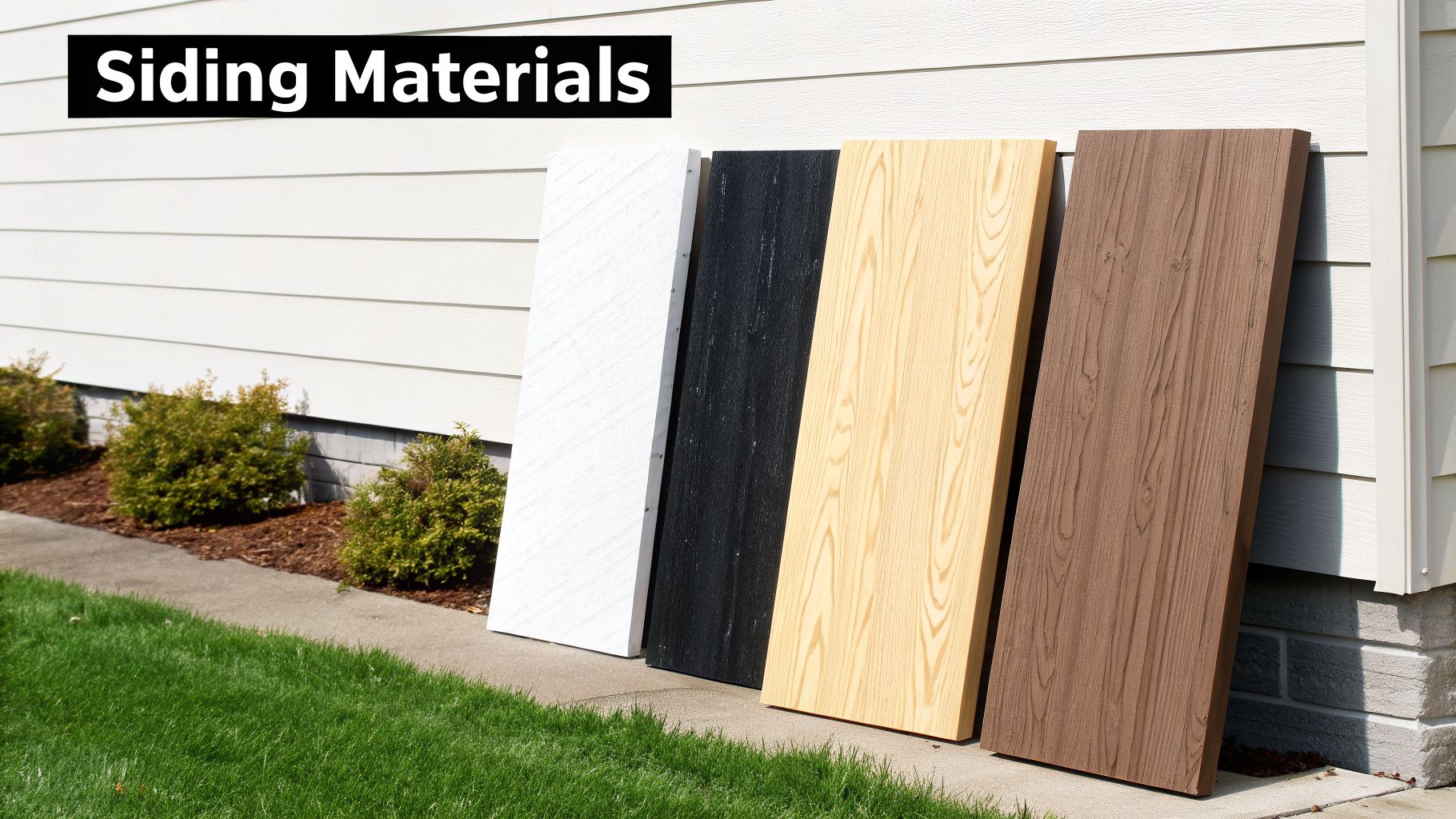
When you get a siding estimate, it’s natural for your eyes to jump straight to the material costs. But the labor line item is just as important—often making up 30% to 50% of your total project cost. So, what are you actually paying for when you hire a professional crew?
Getting a handle on this part of the quote is crucial to understanding the real value of a job done right. Labor isn’t just about nailing up some new panels. It’s a complete, multi-step process that ensures your home is protected from the elements and looks fantastic for years to come.
Beyond the Basics: What Quality Labor Includes
A proper siding quote should detail more than just the final installation. The price reflects a whole system designed to protect your home’s structure. Think of it less like simple construction and more like getting a custom-tailored, protective jacket for your house.
A good crew handles several critical steps that are completely hidden once the job is finished but are absolutely essential for long-term performance.
At a minimum, your labor costs should cover these core services:
- Complete Tear-Off and Disposal: Your old siding has to go. Crews carefully remove every last piece and haul it away, which is the only way to do a proper inspection and installation.
- Structural Sheathing Inspection: With the old siding gone, the crew gets a clear look at the wood sheathing underneath. This is their chance—and yours—to spot any water damage, rot, or pest issues before they get covered up again.
- Detailed Preparation Work: This is where the magic happens. The team will install a new weather-resistant barrier (like house wrap), meticulously tape all the seams, and install flashing around every window, door, and penetration to create a bulletproof seal against water and air.
A professional siding job is all about what you don't see. The stuff that happens before the new siding even goes on—proper flashing, sealed seams, and a thorough sheathing inspection—is what prevents rot, leaks, and high energy bills down the road. Cutting corners here to save a few bucks is a mistake you’ll pay for later.
How Your Home's Design Affects Labor Costs
When it comes to siding, not all houses are built the same. The complexity of your home’s architecture is one of the biggest drivers of labor costs, directly impacting the time and skill needed to get the job done right.
A simple, one-story rectangular home? That’s about as straightforward as it gets, making it the least expensive to side. But most homes have features that require hours of extra, detailed work that can really add up.
Here are a few common architectural details that will increase your labor quote:
- Multiple Stories: The moment a crew has to work off the ground, the job gets more complex. Second or third stories require scaffolding, extra safety measures, and more time.
- Numerous Corners: Every single inside and outside corner needs a precise cut and a special trim piece, which takes time to fit perfectly.
- Gables and Dormers: Those triangular sections at the top of your roofline involve tricky angled cuts that have to be measured and sealed with absolute precision.
- Obstructions: Working around decks, porches, A/C units, spigots, and even mature landscaping slows down the whole process.
A home with a lot of these features can easily add 25% or more to the labor side of your estimate. A good contractor will walk the property and account for all this complexity in their initial quote, so there are no surprises. That meticulous work is what separates a beautiful, weather-tight finish from a sloppy one.
Budgeting for Hidden Costs and Smart Upgrades
The number on your siding quote is a big one, but it rarely tells the whole story. A truly successful siding project goes beyond the panels you see on the surface. To sidestep surprise charges and get the most from your investment, you have to think about what goes on behind the walls.
Think of your new siding like a high-quality winter coat. It looks great and offers solid protection, but on a freezing, stormy day, the coat alone won't cut it. You need the layers underneath to stay truly warm and dry. For your house, those layers are things like house wrap and insulation—smart upgrades that can massively improve your home’s performance and comfort.
When you plan for these essentials from the get-go, you're not just giving your home a facelift. You're performing a complete exterior overhaul that will protect it for years to come and ensure the average cost to replace siding delivers a real, tangible return.
The Unseen Heroes: House Wrap and Insulation
Once the old siding is torn off, your contractor has a golden opportunity to access your home’s "building envelope." This is the perfect time to add or upgrade two critical components that are essential for energy efficiency and moisture control.
First up is the weather-resistant barrier, which you probably know as house wrap. This special fabric is wrapped around your home’s sheathing before any new siding goes on. Its job is simple but brilliant: it keeps rainwater from seeping in while letting water vapor escape. This one-way street prevents moisture from getting trapped inside your walls, which is the number one cause of rot and mold.
A weather-resistant barrier is the unsung hero of any siding project. I've seen homeowners try to save a few hundred dollars by skipping it, and it's almost always a costly mistake. That small savings can lead to thousands in structural water damage repair down the line.
Next, let's talk about insulation. A surprising number of older homes in Utah have very little, if any, insulation in their walls. This is your chance to fix that. Adding rigid foam insulation boards over the sheathing creates a continuous thermal blanket around your home. It drastically cuts down on thermal bridging (heat escaping through the wood studs) and can make a huge difference in your utility bills. It's an upfront cost, but the year-round energy savings often pay for the investment over time.
Don't Forget Your Soffits, Fascia, and Gutters
Your siding is the star of the show, but it's part of a larger team. The trim and water-management system along your roofline are just as important. It’s almost always more practical and cost-effective to replace these elements at the same time as your siding.
Here’s a quick rundown of these supporting players and what they do:
- Soffits: These are the vented panels on the underside of your roof's overhang. They are crucial for attic ventilation, helping to stop ice dams from forming in the winter and letting hot air escape in the summer.
- Fascia: This is the long, straight board that runs along the roof's edge, right behind your gutters. It’s what the gutters are mounted to, and it gives your roofline a clean, finished appearance.
- Gutters: This one's obvious. Your gutters and downspouts catch all the rainwater from your roof and channel it safely away from your home's foundation, preventing water damage.
If your current soffits, fascia, or gutters are old, damaged, or will clash with your new siding, it just makes sense to do it all at once. The crew is already there, and the scaffolding is already up. The labor cost will be significantly lower than if you hired a separate company to come back and do it later. This way, you get a complete exterior that is sealed, functional, and looks great from top to bottom.
Factoring these potential upgrades into your budget from the beginning gives you a realistic picture of the total investment. It eliminates the stress of last-minute costs and ensures your home gets a complete, durable shield that will protect it for decades.
How New Siding Delivers a Powerful Return on Investment
It’s easy to get sticker shock when you see the average cost to replace siding. But looking at it as just an expense is missing the point. A siding replacement is one of the smartest upgrades you can make, paying you back through a huge boost in curb appeal and real, long-term energy savings.
This isn’t just another repair job—it’s a genuine investment. Let's get into how this project delivers such a strong return, turning a big-ticket item into a financial win for your property.
Boost Your Home's Value with Instant Curb Appeal
You only get one chance to make a first impression, and in real estate, that impression is everything. Faded, cracked, or just plain dated siding can make a great house look neglected, turning off potential buyers before they even step inside. On the flip side, fresh, modern siding gives your home an immediate and stunning facelift.
This isn't just about looking good; it has a measurable impact on your home's market value. Year after year, siding replacement ranks as one of the top home improvement projects for return on investment (ROI).
- Fiber Cement Siding: It’s not uncommon for homeowners to recoup up to 88% of the project cost when they sell their home.
- Vinyl Siding: Even this more budget-friendly choice packs a punch, often bringing an ROI of up to 80%.
Think about it from a buyer's perspective. New siding instantly signals that a home is well-cared-for and protected from the elements. That "move-in ready" feeling can help your house sell faster and for more money, making the upfront cost feel a lot more like a savvy financial move.
A home with fresh, modern siding doesn't just look better—it feels more valuable. Buyers see it as one less major project they have to worry about, a perception that directly translates into a higher market value and a faster sale.
Lower Your Bills with Real Energy Savings
New siding does more than just look pretty. A modern siding system, when installed correctly, acts as a powerful thermal blanket for your home. Old, failing siding is often full of gaps and cracks, allowing expensive conditioned air to leak out and the outside elements to creep in. It also does nothing to stop "thermal bridging," where heat easily escapes through the wooden studs in your walls.
This is where a professional installation really makes a difference. By adding a layer of rigid foam insulation right under the new siding, you create a continuous barrier that wraps your entire home. This single step can make a huge dent in your heating and cooling costs.
Investing in new siding can be a powerful step towards a more energy-efficient home. Consider the broader impact of such an upgrade within the context of green retrofitting to understand how it can significantly cut energy costs and boost your property's overall value. This approach transforms your siding project from a simple replacement into a strategic energy upgrade.
How the Savings Add Up
You will feel the impact on your monthly utility bills. When your home is properly sealed against Utah's cold winters and hot summers, your furnace and AC simply don't have to run as hard to keep you comfortable. That means you’re using less energy, month after month.
Imagine wrapping your entire house in a high-performance jacket. That’s exactly what insulated siding does.
- Reduces Heat Loss in Winter: The insulation and weather barrier work together to keep your cozy, warm air inside where it belongs.
- Blocks Heat Gain in Summer: In the heat of July, it reflects solar radiation, keeping your home cooler and giving your air conditioner a break.
- Creates a Quieter Home: As a bonus, that extra layer of insulation is great for dampening outside noise from traffic or neighbors.
While your exact savings will depend on your home's current state and the materials you choose, most homeowners see a noticeable drop in their energy bills almost immediately. Over the 20- to 30-year lifespan of your new siding, those savings can easily add up to thousands of dollars, helping the project pay for itself over time. Suddenly, the initial average cost to replace siding starts to look a whole lot more manageable.
Common Questions About Siding Replacement Costs
When you’re looking at a project this big, questions are bound to come up. Budgeting for a full siding replacement can feel overwhelming, and you want to be certain you're making a smart investment. To help, we've pulled together answers to the most common questions we hear from Utah homeowners about the average cost to replace siding.
Getting a handle on these details upfront helps you plan with confidence and avoid any surprises down the road.
Does the Time of Year Affect My Siding Replacement Cost?
It absolutely can. Like any construction trade, siding has a definite busy season. That typically runs from spring through fall when the weather is most predictable. During these peak months, demand for top-notch crews is at its highest, and their schedules fill up quickly.
If your timeline is flexible, you might find some savings by booking your project in the "off-season"—think late fall or even winter. With less demand, some contractors may offer more competitive pricing to keep their crews busy. Just keep in mind that Utah winters bring their own challenges, and snow or freezing temperatures can sometimes lead to minor project delays.
- Peak Season (Spring/Fall): Higher demand can mean higher prices and longer waits to get on the schedule.
- Off-Season (Winter/Late Fall): You might find better pricing and more immediate availability, but weather can be an unpredictable factor.
Of course, the best time to replace failing siding is right when you need it. But if you have the luxury of planning ahead, it never hurts to ask a contractor if they offer any seasonal discounts.
Is It Cheaper to Install Siding on a New Construction Home?
Generally, yes. Siding a brand-new home is almost always less expensive than a replacement job, and the reason is all about labor.
On a new build, the walls are a clean slate—prepped, clean, and ready for installation. The crew doesn’t have to spend a day or more carefully tearing off the old siding. They also don't have to deal with the logistics and costs of hauling away and disposing of all that old material.
Think of it like this: installing siding on a new house is like painting a fresh, primed canvas. On an existing home, we first have to carefully strip away the old, cracked painting, repair the canvas underneath, and then we can start fresh. Those extra steps on a replacement job add both time and money.
Plus, replacement projects often come with surprises. It’s not uncommon to pull off old siding and discover hidden water damage or sections of rotted sheathing that must be fixed before the new siding can go on. These unforeseen repairs naturally add to the final bill.
How Much Value Does New Siding Add to My Home?
New siding is consistently one of the best home improvement projects you can tackle for return on investment (ROI). While it's a significant upfront expense, it pays you back by instantly boosting your home’s curb appeal and, as a result, its resale value.
Industry reports regularly show that homeowners can expect to recoup a huge chunk of their investment. The exact ROI depends on the material you choose, but the numbers are compelling:
- Fiber Cement Siding: Often sees a return on investment of up to 88%.
- Vinyl Siding: Can deliver an impressive ROI of around 80%.
Potential buyers are drawn to a home that looks protected and well-maintained. New siding sends a powerful signal that the house has been cared for, freeing the new owner from the worry of a major exterior project for decades to come. That peace of mind translates directly into a higher asking price and can help your home sell much faster.
Are There Financing Options Available for Siding Replacement?
Absolutely. A full siding replacement is a major investment, so it’s natural for homeowners to look for ways to make the cost more manageable. Any reputable contractor understands this and should be able to offer flexible financing options.
Most established siding companies have partnerships with lenders who specialize in home improvement loans. These plans often come with competitive interest rates and payment terms designed to fit your budget. It's one of the first things you should ask about when getting estimates.
Beyond contractor-specific financing, you can also explore a few other common avenues:
- Home Equity Line of Credit (HELOC): This allows you to borrow against your home's equity, often with a lower interest rate than other loan types.
- Home Equity Loan: Similar to a HELOC, but you get the funds in a single lump sum with a fixed rate, which means predictable monthly payments.
- Personal Loan: An unsecured loan from a bank or credit union that you can use for any purpose, including home improvements.
Don't let the sticker shock prevent you from protecting your home. Talking about financing early on can make the average cost to replace siding fit comfortably into your financial plan.
Ready to transform your home's exterior and start saving on energy bills? The team at Superior Home Improvement has over 50 years of experience helping Utah homeowners with high-quality, energy-efficient siding solutions. Get a free, no-obligation estimate today and see how we can protect and beautify your home for years to come.