
What if you could wrap your home in an exterior that has the classic, charming look of wood shingles but the rugged durability of stone? That’s exactly what you get with cement shingles siding. It’s a specific type of fiber cement siding that gives you timeless style without the constant upkeep that traditional materials demand.
What Is Cement Shingles Siding
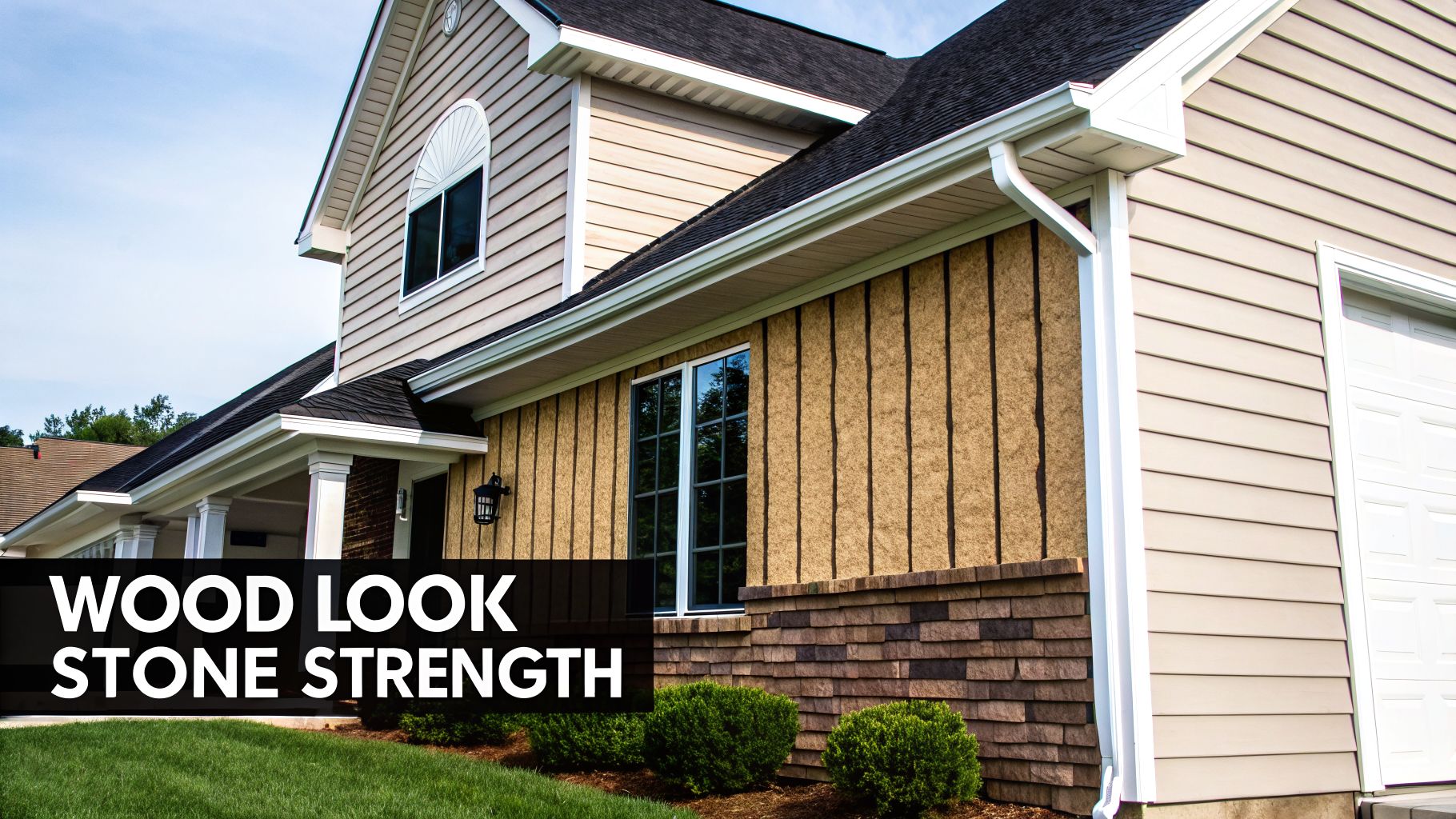
Think of it as a high-performance shell for your house. Cement shingles siding delivers the beautiful, textured look of cedar shakes, but it’s made from something else entirely—a tough composite built for incredible resilience. And while the word "cement" might make you think of a flat, gray sidewalk, the reality is far more sophisticated.
At its core, this material is a carefully engineered blend of Portland cement, sand, water, and cellulose (wood pulp) fibers. This mixture is pressed into molds that can replicate the detailed grain and staggered edges of real wood shingles with stunning accuracy. This process gives you a product with all the character of traditional siding, but none of the weaknesses.
The Best of Both Worlds
The real magic of cement shingles siding is how it combines two things that don’t usually go together: authentic beauty and serious brawn. For years, homeowners had to choose between the look they loved and the durability they needed. This material finally lets you have both.
- Looks for Any Style: It’s available in tons of shapes, sizes, and textures. You can get staggered-edge shakes for a rustic, mountain-home vibe or straight-edge shingles for a crisp, clean look.
- Built to Last: Unlike wood, it will never rot, warp, or become a meal for termites. It also holds its own against impacts, harsh winds, and moisture.
- Color That Stays Put: Many products come pre-finished with a factory-baked-on color. This finish is incredibly durable and resists fading far better than a standard paint job ever could.
By mixing the strength of cement with the slight flexibility of wood fibers, manufacturers created a siding that solves most of the headaches that come with older exterior materials. It’s simply a smarter choice for anyone who values performance that lasts.
This type of siding is often called "fiber cement," and the most well-known name in the game is James Hardie. They were pioneers in this technology. If you want to get into the nitty-gritty of how it’s made, this article on What Is Hardi Plank is a great resource.
Ultimately, choosing cement shingles siding is an investment in a tough, beautiful exterior that will protect your home and keep its curb appeal high for decades.
The Protective Power of Fiber Cement
Looks are one thing, but where cement shingle siding really proves its worth is in its sheer toughness. You're not just getting a pretty facade; you're wrapping your home in a shield that stands up to the kind of abuse that makes other materials buckle. This stuff isn't just tough on the surface—it’s engineered from the inside out for decades of real-world protection.
There's a reason this siding has become a go-to for savvy homeowners. In fact, a staggering 40% of all exterior upgrades in the U.S. during 2023 involved fiber cement, with durability and safety being the top reasons for choosing it. The demand is booming, and North America accounts for over 25% of that global growth, driven by projects that need materials proven to last. You can dig into the [siding market trends](https://www.fortunebusinessinsights.com/siding-market-1022 siding-market-1022) yourself to see just how popular it’s become.
Built to Resist Fire, Rot, and Pests
One of the biggest peace-of-mind features you get with cement shingles is their incredible fire resistance. The material earns a Class A fire rating, which is the highest safety classification available. Simply put, it won’t ignite when hit with a direct flame, and it won’t add any fuel to a fire.
For anyone living in Utah, where dry seasons can make fire risk a serious concern, this is a huge deal. Wood siding is basically kindling, and vinyl can melt and give off toxic fumes. Fiber cement, on the other hand, creates a non-combustible barrier that helps keep your home and family safe.
That same toughness extends to other common homeowner headaches. Because it's mostly cement and sand, this siding is completely unfazed by the issues that constantly plague wood:
- Rot-Proof: It doesn’t soak up moisture, so you never have to worry about it rotting, warping, or swelling, no matter how much rain or snow it sees.
- Pest-Resistant: Termites, carpenter ants, and other wood-boring bugs want nothing to do with it. That saves you a fortune in potential pest control bills and structural repairs down the line.
Imagine never having to worry about woodpeckers damaging your siding or finding soft spots from hidden moisture. Fiber cement eliminates these chronic maintenance issues, allowing you to simply enjoy your home's beautiful exterior.
Standing Strong Against Harsh Weather
Utah's four-season climate is a true test for any home exterior. We get intense summer sun, brutal hailstorms, and deep winter freezes. Cement shingle siding is built to take it all in stride. Its dense, heavy composition makes it exceptionally resistant to impact damage from hail or debris kicked up by high winds.
It’s also a champion against the freeze-thaw cycles we see every winter in Salt Lake City. When moisture gets into other siding materials and freezes, it expands, causing cracks and splits. Because fiber cement absorbs very little moisture, this destructive cycle can’t get a foothold, keeping your siding stable and intact year after year. It's an upfront investment in durability that pays off by cutting down on future repair bills and the constant stress of exterior upkeep.
How Cement Siding Compares to Other Materials
Picking the right siding for your home means weighing what you want it to look like, what you can afford, and how much work you're willing to put in down the road. While common options like vinyl and wood siding certainly have their appeal, a head-to-head comparison shows why cement shingles siding is often the smartest long-term investment, especially for homeowners who put a premium on toughness and peace of mind.
There's a reason you're seeing more and more fiber cement in neighborhoods across the country. The market is exploding—projected to top $8 billion by 2033—and for good reason. Nearly 30% of all new single-family homes built since 2000 are clad in it. Homeowners are catching on to its impressive 50+ year lifespan, which handily beats the 20-40 years you might get from vinyl. It also resists moisture 90% better than wood, which all but eliminates rot, and remodeling reports consistently show it recoups 80-95% of its value at resale. You can even find more global siding market projections that highlight this trend.
To really see where cement shingles shine, let's put them side-by-side with the two other most common choices.
Siding Material Comparison
This table breaks down how the three big players stack up against each other on the factors that matter most to homeowners.
| Feature | Cement Shingles Siding | Vinyl Siding | Wood Siding |
|---|---|---|---|
| Lifespan | 50+ years | 20-40 years | 20-50 years (with high maintenance) |
| Durability | Excellent; resists impact, fire, pests, and rot. | Fair; prone to cracking, warping, and fading. | Poor; susceptible to rot, pests, and fire. |
| Maintenance | Low; repaint every 10-15 years. | Low; regular cleaning needed. | High; requires frequent staining/painting. |
| Cost | Mid-to-High | Low | High (including maintenance costs) |
| Aesthetics | Can mimic wood grain, stone, or stucco. | Limited textures; can look artificial. | Authentic, classic look. |
As you can see, while vinyl is cheap and wood is beautiful, cement siding offers a powerful blend of durability, low maintenance, and great looks that neither can match on its own.
Cement Shingles vs. Vinyl Siding
Vinyl siding’s biggest selling point has always been its low upfront cost. It’s a budget-friendly material that’s lightweight and fairly simple to install, which helps keep labor costs in check. But that initial savings often comes at the cost of long-term performance.
Here in Utah, with our dramatic temperature swings, vinyl's weaknesses become very apparent. The bitter cold of winter can make it brittle and easy to shatter from a stray baseball or a bad hailstorm. Then, the intense summer sun causes it to fade and warp. It can even melt if a barbecue gets too close. What starts as a cheap option can quickly become a cycle of repairs and replacements.
Cement shingles, on the other hand, are built for exactly this kind of environment. The material’s sheer density makes it incredibly tough against hail and wind-blown debris. It holds paint beautifully, so it won’t fade like vinyl, and it’s completely non-combustible—a safety feature that vinyl just can't offer.
Cement Shingles vs. Wood Siding
There’s no denying the timeless beauty of real wood siding. It gives a home a warm, classic charm that’s hard to replicate. But that natural aesthetic comes with a hefty price tag, and I’m not just talking about the initial cost—I’m talking about the constant, demanding upkeep.
Wood is a magnet for moisture, which leads directly to rot, warping, and splitting. It’s also a favorite snack for termites, a drumming post for woodpeckers, and a home for all sorts of pests. To keep it looking good and performing well, you're locked into a frustrating cycle of scraping, sanding, and re-painting or re-staining every few years. It's a serious commitment of time and money.
This is where cement shingles siding becomes the perfect compromise. It can be manufactured to perfectly mimic the deep, rich grain of cedar shakes and other wood styles, but it’s completely immune to all of wood’s natural weaknesses. You get the high-end look you want without ever having to worry about rot, insects, or weekend-stealing maintenance projects.
This simple graphic really drives home the protective advantages of choosing fiber cement.
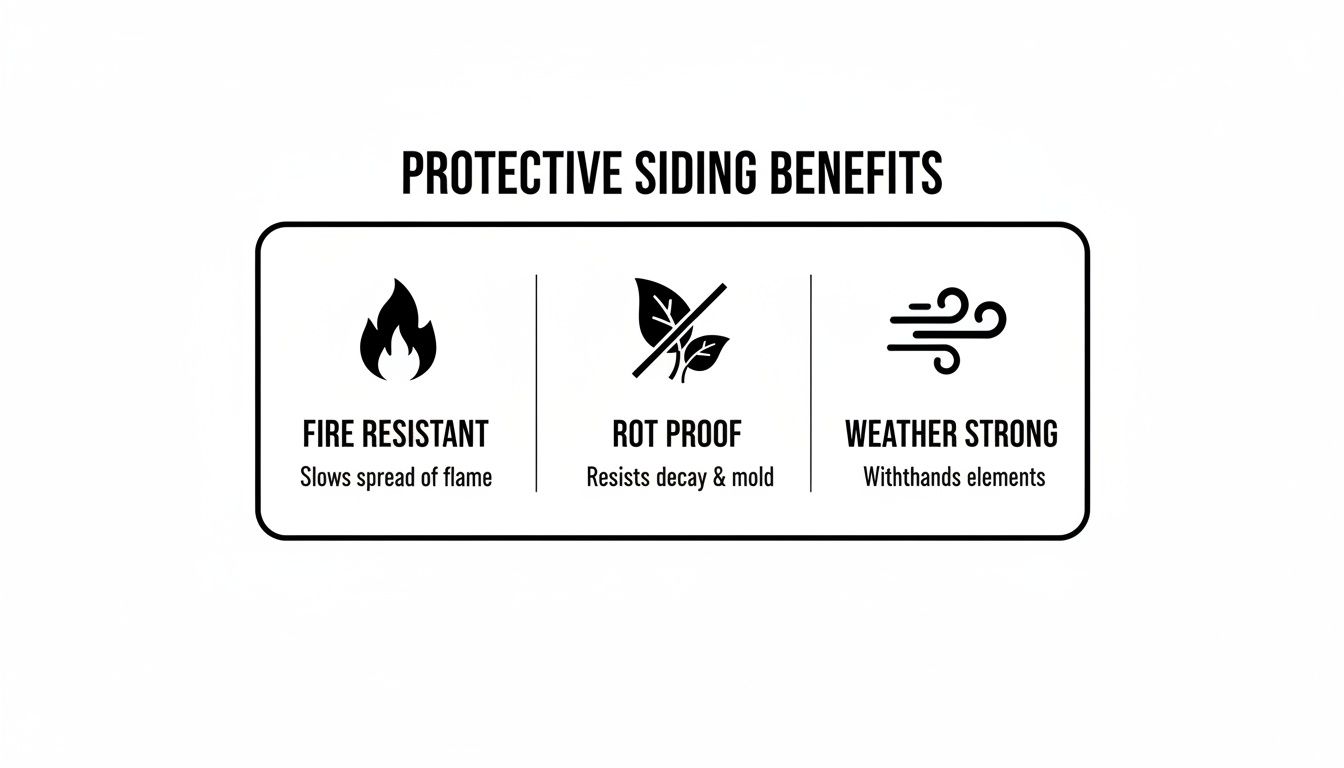
As the icons show, cement siding is engineered from the ground up to be fire-resistant, rot-proof, and strong enough to stand up to the elements—all qualities where wood and vinyl fall short. It truly delivers the best of both worlds: the beautiful look you want and the tough, worry-free performance your home needs.
Understanding Installation and Lifetime Costs
When you first see the price for cement shingle siding, it's easy to get a little sticker shock. It's definitely a bigger number upfront than vinyl. But to really understand the investment, you have to look at the total cost over the entire life of the siding.
Think of it like this: you can buy a cheap raincoat that works fine in a light drizzle, but you know it’s going to fail in a real downpour and you’ll be buying another one next year. Cement siding is the high-performance, all-weather gear. It costs more at the start, but it provides solid, reliable protection for decades, ultimately saving you a ton of money and headaches down the road.
Why Professional Installation Is Non-Negotiable
Let's be clear: this is not a weekend DIY project. Unlike hollow vinyl siding that you can carry around with ease, cement shingles are heavy and surprisingly brittle before they're secured to the wall.
Getting it right requires specialized tools, extensive training, and a deep understanding of how the material behaves. Without that expertise, you risk cracking the planks, creating gaps, and compromising the weathertight seal. A botched installation won't just look bad—it can completely void the manufacturer’s warranty and lead to major issues like water getting behind the siding.
This is why certified installers, like our team at Superior Home Improvement, are essential. We have the training to handle the material exactly as the manufacturer intended, ensuring it performs flawlessly for its full 50+ year lifespan.
Factors That Influence Your Total Cost
The final quote for your siding project isn't just one number; it's a combination of several key factors. Knowing what they are will help you understand your estimate and budget with confidence.
- Home Size and Architecture: A simple, single-story ranch home is far more straightforward than a large, multi-story house with complex features like gables, dormers, and curved walls. More complexity means more material and more labor.
- Your Choice of Finish: You can get siding that is pre-finished at the factory with a durable, baked-on color, or you can opt for a primed version that gets painted after it's installed. The pre-finished option often provides the best long-term value and a perfectly consistent look.
- Removal of Old Siding: The cost to tear off and properly dispose of your home's existing siding will also be included in the project total.
The demand for fiber cement is surging, with the market projected to hit $23.36 billion by 2030. This boom is fueled by its incredible durability—it's termite-proof and boasts fire resistance up to 4x better than wood.
For homeowners in Salt Lake City, this means top brands like James Hardie are not just boosting curb appeal, they're adding real, measurable value. A professional installation often leads to a 15-20% increase in home value. It also contributes to the kind of energy efficiency that backs Superior Home Improvement’s 40% utility savings guarantee. You can dive deeper into this trend by exploring the full fiber cement market report.
Keeping Your Siding Beautiful with Simple Upkeep
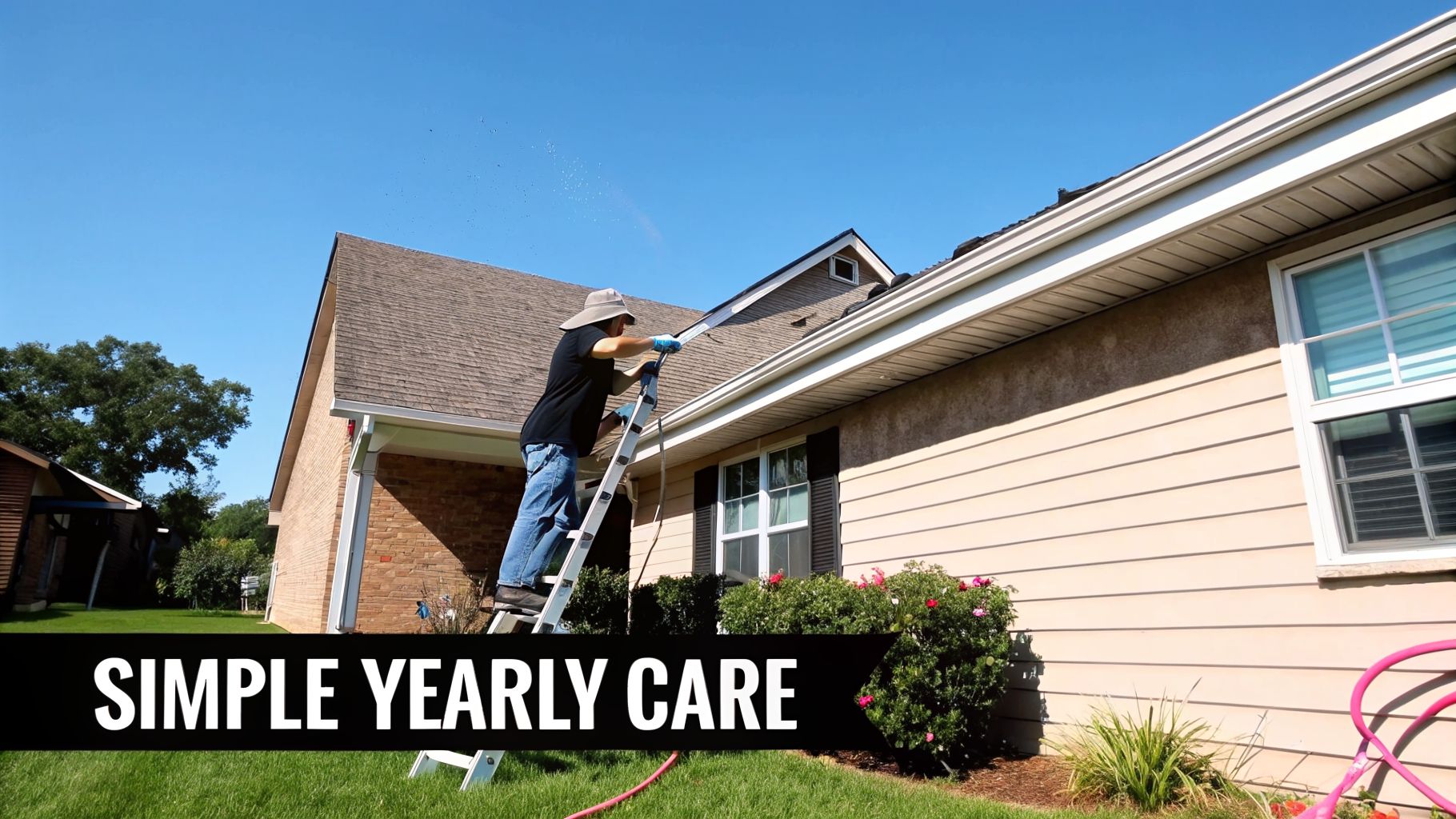
One of the biggest draws of cement shingle siding is how little work it takes to maintain. But it’s important to remember that “low-maintenance” isn’t the same as “no-maintenance.” A little bit of attention once a year is all it takes to keep your siding looking brand new and doing its job for decades to come.
Think of it this way: you wouldn't buy a great car and never wash it or check the tires. The same logic applies here. A simple, proactive routine protects your home's value and curb appeal, and thankfully, it won't eat up your weekends.
Your Annual Maintenance Checklist
The game plan for taking care of your cement siding is refreshingly simple. Just a few easy steps each year will keep your home’s exterior in fantastic shape and let you spot tiny issues before they ever become real problems.
Here’s what we recommend doing once a year:
- A Gentle Rinse: Give your siding a good wash with a soft-bristled brush (the kind you’d use on a car works great) and a regular garden hose. This clears off the year's accumulation of dust, dirt, and pollen, keeping the color looking sharp. Just be sure to avoid high-pressure power washers, as they can be too aggressive and damage the siding's surface or caulking.
- Check the Seams: Take a slow walk around the house and look closely at the caulk lines, especially where the siding meets windows, doors, and corner trim. Caulk can sometimes shrink or pull away over the years. If you find any gaps, just clean the area and apply a fresh bead of high-quality, paintable exterior caulk to keep everything sealed tight against moisture.
- Clear the Gutters: Make sure your gutters and downspouts are free of leaves and other gunk. When gutters get clogged, water has nowhere to go but over the edge and down your siding, which can lead to ugly stains and constant moisture exposure.
The biggest maintenance job you’ll face is repainting, but with fiber cement, that’s only necessary about every 10 to 15 years. Compare that to wood siding, which often needs to be scraped and repainted or re-stained every two to five years. That massive difference in painting frequency is a huge win for homeowners.
Is Cement Siding the Right Choice for Your Home?
So, after looking at all the details, the big question remains: is fiber-cement siding the right fit for your house? It's a significant investment, after all. Think of it less as just a new look and more as a long-term upgrade to your home's core protection and overall value.
What you're really getting is a tough, reliable barrier against the elements. Its Class A fire rating is a huge peace of mind, especially in our dry Utah climate. Plus, it completely sidesteps the rot and pest problems that can turn wood siding into a constant maintenance headache. If your goal is to install something once and not worry about it for decades, cement siding is one of the smartest choices you can make.
Final Considerations Before You Decide
Choosing your home's exterior is a major decision, and it’s smart to think through every angle. People often have specific questions, like wondering about the process of putting siding over brick or other existing surfaces.
Ultimately, picking the right siding comes down to what you value most. It helps to ask yourself a few key questions:
- Long-Term Value: Are you focused on the lowest price today, or the best value over the next few decades? The 50+ year lifespan and minimal upkeep of cement siding deliver an incredible return on investment.
- Performance: Do you need siding that can stand up to everything Utah throws at it? We're talking intense sun, surprise hailstorms, and harsh freeze-thaw cycles.
- Aesthetics: Do you love the classic, high-end look of wood but dread the thought of all the sanding, sealing, and painting?
If you found yourself nodding "yes" to those questions, there’s a very good chance that cement shingles siding is exactly what you’re looking for. It’s a fantastic blend of good looks, pure strength, and lasting peace of mind.
Ready to see how this incredibly durable and beautiful siding could look on your home? The best next step is to talk with an expert who truly understands our local climate and building codes here in Utah.
Here at Superior Home Improvement, we can walk you through all the options, show you physical samples, and give you a clear, detailed estimate for your project. Schedule your free, no-obligation consultation today and take the first step toward a stronger, more beautiful home.
Got Questions About Cement Siding? We’ve Got Answers.
It’s natural to have questions when you're thinking about a big home project like new siding. We get it. To help you feel confident in your decision, we've gathered the most common questions we hear from homeowners right here in the Salt Lake City area.
How Long Does Cement Siding Actually Last?
This is probably the number one question we get, and for good reason! When properly installed by a professional team and given just a bit of routine care, you can realistically expect cement shingles to last for 50 years—sometimes even longer.
To back that up, top-tier manufacturers like James Hardie provide a 30-year non-prorated warranty. That kind of confidence from the maker speaks volumes, especially when you compare it to vinyl, which can start looking faded and brittle in as little as 20 to 40 years.
Is Fiber Cement Siding an Eco-Friendly Option?
Yes, and for a couple of very practical reasons. First off, its incredible lifespan means you aren’t tearing off and replacing your siding every couple of decades. Over the life of your home, that drastically reduces the amount of material heading to the landfill.
It's also made from simple, stable components that are sourced from nature:
- Portland cement
- Sand
- Water
- Cellulose (wood) fibers
And here's a key safety benefit: unlike vinyl siding, fiber cement is non-combustible and won't release dangerous toxins if it's ever exposed to fire. That makes it a much healthier and more responsible choice for your family and the environment.
Can You Paint Cement Shingles Siding?
Absolutely! This is one of the best things about it. You have two great options: you can get siding that arrives pre-finished from the factory in a huge variety of colors, or you can order it primed and ready for a custom paint job after it’s up on the walls.
The real magic is how well the paint holds. It bonds so tightly to the cement surface that it's extremely resistant to the chipping and peeling you often see with wood. A high-quality paint finish can easily last 10 to 15 years before you’d even need to consider a fresh coat.
Ready to protect your home with the unmatched durability and beauty of Superior Home Improvement's cement siding options? Contact us today for a free, no-obligation consultation and discover how we can enhance your home's value and curb appeal.