
When people ask for the best exterior paint for stucco, the answer isn't one-size-fits-all. Generally, your top contenders are a high-quality, 100% acrylic latex paint or a purpose-built elastomeric coating. Both are excellent, but the right choice really comes down to the current condition of your stucco and your home's specific needs, especially here in Utah.
Why Your Stucco Paint Choice Matters in Utah
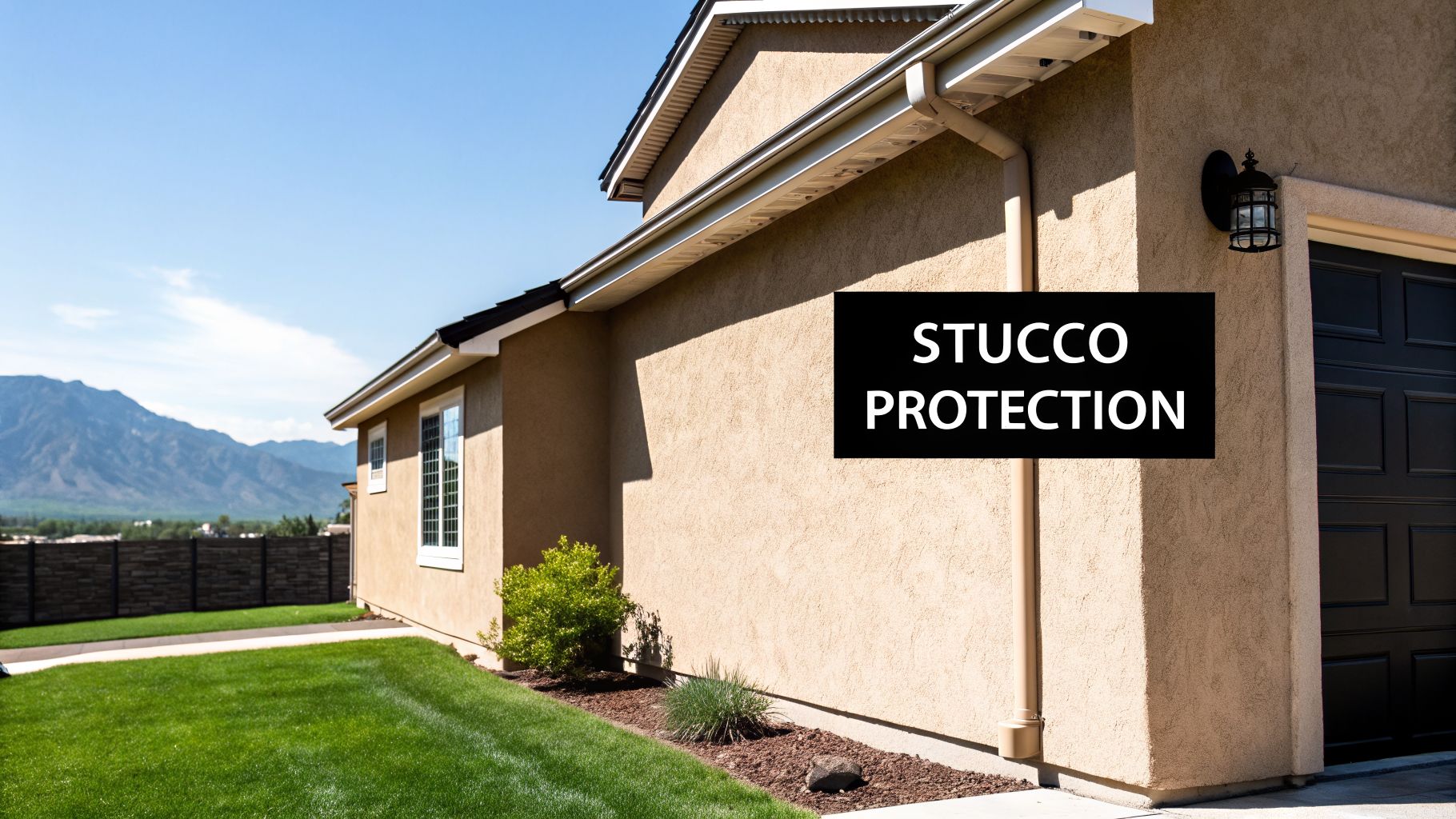
Painting a stucco home in Utah is far more than a cosmetic touch-up. The coating you choose is your primary defense against our state’s uniquely harsh climate—from the intense UV exposure in Salt Lake City summers to the brutal freeze-thaw cycles we see every winter. Using the wrong paint can quickly lead to cracking, water damage, and costly repairs down the road.
There’s a reason stucco is so popular. In 2022, it was the number one exterior finish for new homes in the U.S., claiming 28% of the market and a whopping 53% in the Mountain West region. Protecting that investment is critical. For instance, advanced elastomeric paints can show 40% less water absorption than standard acrylics, which can reduce long-term repair costs by up to 30% over a decade. You can explore more of the findings in the stucco market on polarismarketresearch.com.
The Role of High-Performance Coatings
Think of your exterior paint as a high-tech shield for your home. It has to do several jobs at once to protect your property's value and structural integrity. For stucco, any quality coating must be:
- Breathable: Stucco needs to breathe. The paint must allow trapped water vapor to escape from inside the wall, which prevents the blistering, peeling, and rot that can occur when moisture gets stuck.
- Flexible: Stucco naturally expands and contracts with temperature swings. A flexible paint film moves right along with it, effectively bridging minor hairline cracks instead of becoming brittle and failing.
- Water-Resistant: While it lets vapor out, a good paint must also block liquid water from rain and snowmelt from getting in. This is key to preventing moisture from soaking into the porous stucco.
- UV-Durable: Utah's high altitude means intense sun exposure. Those UV rays break down pigments and binders in cheap paint, causing fading and chalking. Premium paints are formulated with superior ingredients that stand up to the sun.
Key Insight: The best exterior paint for stucco isn’t just a color; it’s an engineered system designed to manage moisture, bridge micro-cracks, and endure extreme weather. It’s a crucial investment in your home’s long-term health.
To make the right call, you need to understand the main types of coatings available. Each one offers a unique balance of benefits designed for different situations.
To simplify your options, here’s a quick overview of the most common paint types for stucco. This table breaks down their primary features to help you narrow down the best fit before we dive deeper.
Quick Guide to Stucco Paint Types
| Paint Type | Key Feature | Best For |
|---|---|---|
| High-Performance Acrylic | Excellent breathability & color retention | Homes with stucco in good condition needing a durable, vibrant finish. |
| Elastomeric | Superior flexibility & waterproofing | Older stucco with numerous hairline cracks that need to be bridged. |
| Silicone | Extreme durability & self-cleaning properties | High-end projects where long-term performance and low maintenance are top priorities. |
By understanding these core differences, you can move beyond just picking a color and start thinking about which protective system will truly preserve your home. This guide will walk you through making a smart, informed decision that prevents headaches and keeps your home looking great for years to come.
Diagnosing Your Stucco Before You Paint
Before you even think about picking a paint color, you need to play detective with your home’s exterior. A great paint job that actually lasts starts with a thorough diagnosis of your stucco. If you skip this step and jump straight to painting, you’re just setting yourself up for peeling, cracking, and a whole lot of wasted money down the road.
First things first: what kind of stucco are you dealing with? Is it the old-school, traditional stuff, or a more modern Exterior Insulation and Finish System (EIFS)? You can usually tell by giving it a gentle knock. Traditional stucco is a hard, cement-based mix that feels and sounds solid, almost like tapping on concrete.
EIFS, on the other hand, is a synthetic coating over a foam insulation board. A knock on EIFS will sound hollow, and the surface might even feel a bit softer to the touch. Knowing the difference is crucial because they have completely different needs—EIFS demands a more flexible and breathable paint, while traditional stucco has its own set of requirements.
Identifying Common Stucco Issues
Once you’ve figured out the stucco type, it’s time for a walk around your home. You're looking for tell-tale signs of trouble that absolutely must be fixed before any paint goes on. After all, the new finish is only as good as the surface it’s sticking to.
Keep an eye out for these common culprits:
- Hairline Cracks: These tiny, web-like cracks might seem harmless, but they are open doors for moisture to seep into your walls.
- Chalking: Run your hand across the surface. Does a chalky powder come off on your fingers? That’s a sign the old paint is breaking down from years of sun exposure, and new paint won't stick to it properly.
- Efflorescence: See any white, salty-looking stains on the stucco? That’s efflorescence. It’s a clear indicator that moisture is traveling through the stucco and leaving mineral deposits behind as it evaporates. Painting over it won’t fix the underlying moisture problem.
Fixing these problems isn't optional. Cement-based stucco is incredibly popular for its durability, making up a huge 63% revenue share of the global market in 2024. But even this tough material fails without the right prep. By using high-build acrylics or 100% acrylic elastomeric paints, which boast adhesion rates over 95%, you can cut down on future chalking and efflorescence by as much as 70%. You can explore the full stucco market research on grandviewresearch.com.
The Foundation of a Lasting Finish
The real secret to a paint job that looks fantastic and is backed by a solid warranty is all in the prep work. This goes way beyond just a quick power wash.
The process starts with a deep, meticulous cleaning to get rid of every trace of dirt, grime, mildew, and that chalky residue. To do it right without harming the surface, you need to use safe pressure washing techniques for stucco.
With a clean slate, every single crack needs to be properly repaired. Slapping some standard caulk in there is just a temporary patch. We use elastomeric patching compounds that stay flexible, allowing them to move with the stucco as it expands and contracts, which stops the cracks from coming back.
The final, crucial step is applying the right primer or masonry conditioner. A quality conditioner penetrates the porous stucco, creating a stable, uniform surface that seals against moisture and gives the topcoat the perfect foundation to grab onto.
Professional Tip: Never, ever skip priming—especially on new stucco or a wall with heavy chalking. A good masonry primer will neutralize the high pH of the stucco, creating an ideal surface that prevents the paint from failing to adhere later on.
Only after this full diagnostic and preparation process is your home actually ready for its new protective coating. This is the difference between a simple paint job and a high-performance system designed to protect your investment for years to come.
A Detailed Comparison of Stucco Paint Technologies
Picking the right paint for your stucco is about a lot more than just the color. It's really a decision about chemistry—choosing a coating system that will protect your home from Utah's harsh weather, not just cover it for a season. Each type of paint brings a different mix of protection, breathability, and flexibility to the table.
We're going to break down the three main players in stucco coatings: high-performance 100% acrylic, specialized elastomeric, and top-of-the-line silicone paints. We’ll look at how they stack up in our climate, giving you a clear picture of what makes the most sense for your home's specific condition.
This flowchart maps out the essential prep work, walking you through the steps from figuring out your stucco type to making sure it’s clean and sound before you even think about painting.
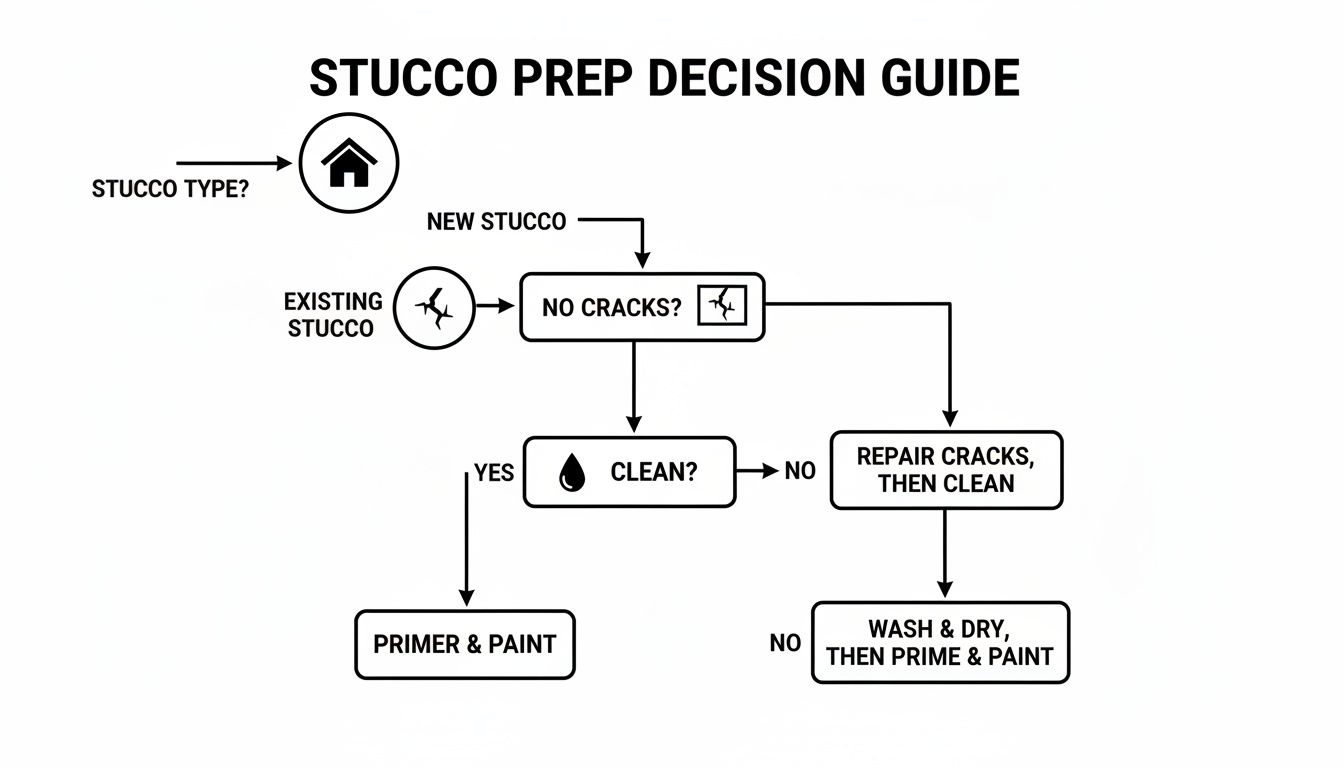
As you can see, getting the diagnosis and repairs right from the start is absolutely non-negotiable. It’s the foundation for a paint job that will actually last.
The Workhorse: 100% Acrylic Paint
A high-quality 100% acrylic latex paint is the industry standard for a reason. It’s the reliable go-to for most stucco homes, especially those that are in good shape. Unlike cheaper paints bulked up with vinyl fillers, true 100% acrylic formulas rely on superior resins that deliver fantastic adhesion, solid color retention, and—most importantly—breathability.
Think of it like a good jacket. It protects you from the elements but still lets your skin breathe. For a stucco home without a lot of cracking, a premium acrylic offers an excellent balance of performance and cost. It creates a durable film that stands up to Utah's intense sun, resisting the chalking and fading that ruins lesser paints.
Its real superpower, though, is its breathability.
Breathability (Perm Rating):
Acrylics typically have a high perm rating, usually around 10-20 perms. This means they let trapped water vapor escape from inside the wall system. That single characteristic is vital for preventing moisture buildup, which is the root cause of blistering, peeling paint, and long-term water damage to the stucco itself.
Flexibility and Durability:
While it’s not as rubbery as an elastomeric, a quality acrylic has enough give to handle the normal, minor expansion and contraction of healthy stucco. It's also tough against dirt pickup, which keeps your home looking fresh. If you have a newer home or your stucco is in solid condition, a 100% acrylic paint is almost always the right call.
The Problem-Solver: Elastomeric Coatings
Elastomeric paint is a completely different animal. It’s an incredibly thick, high-build coating engineered to do two things: waterproof a surface and bridge cracks. If your stucco looks like a roadmap of hairline fractures, applying an elastomeric is like wrapping your house in a thick, flexible, waterproof blanket. We’re talking about a coating that can be up to 10 times thicker than regular paint when dry.
That thickness is what allows it to stretch and contract right along with the stucco, sealing up existing cracks and keeping new ones from showing through. It’s the perfect solution for older stucco that needs both a cosmetic facelift and serious weather protection in a single application.
But that incredible waterproofing power comes with a serious catch.
Crucial Consideration: The very trait that makes elastomeric paint a fantastic waterproofer—its thick, non-porous nature—is also its biggest potential weakness. Most elastomeric coatings have a very low perm rating (often below 2.0), meaning they're not breathable. If moisture finds its way behind this coating (from an ice dam, a leaky window, or wicking up from the foundation), it gets trapped. The result is often catastrophic blistering and peeling as the water tries to force its way out.
For this reason, elastomerics should only be applied by a pro after a thorough inspection confirms there are no existing moisture intrusion problems. They are excellent problem-solvers but can create a much bigger, more expensive problem if misapplied.
The Premium Performer: Silicone Technology
Silicone-based paints are the pinnacle of stucco coating technology. They offer a unique trifecta of extreme durability, incredible breathability, and a hydrophobic (water-shedding) surface. While acrylics resist water and elastomerics block it, silicone coatings actively repel it. Water beads up and rolls right off, taking dirt and grime along for the ride and creating a self-cleaning effect.
Unmatched Breathability and Water Repellency:
The magic is in the molecular structure of silicone paint. It forms a microporous membrane where the pores are large enough to let water vapor out with ease but far too small for liquid water droplets to get in. You truly get the best of both worlds: a perm rating that’s often higher than acrylics (sometimes 40+), combined with waterproofing that rivals an elastomeric.
This makes silicone an outstanding choice for nearly any stucco home, especially in a demanding climate like Utah's, where freeze-thaw cycles and moisture management are a constant battle.
To help put all this into perspective, here's a direct comparison of how these coatings perform on the factors that matter most for stucco.
Stucco Paint Performance Comparison Matrix
This table breaks down the key differences to help you see which technology aligns with your home's needs and your long-term goals.
| Performance Metric | 100% Acrylic | Elastomeric | Silicone |
|---|---|---|---|
| Breathability (Perms) | High (10-20) – Allows vapor to escape easily. | Low (1-3) – Can trap moisture if not applied correctly. | Very High (40+) – The most breathable option. |
| Flexibility | Good – Handles minor thermal movement. | Excellent – Bridges existing hairline cracks. | Very Good – Stays flexible in extreme temperatures. |
| Water Resistance | Good – Resists wind-driven rain. | Excellent – Creates a waterproof barrier. | Excellent – Actively repels water (hydrophobic). |
| UV Durability | Very Good – Resists fading and chalking well. | Good – Can be prone to attracting dirt over time. | Excellent – Highly resistant to UV degradation and fading. |
| Best Use Case | Healthy stucco with no major cracking. | Older stucco with numerous hairline cracks. | Any stucco where maximum longevity and performance are desired. |
Ultimately, choosing the best exterior paint for stucco comes down to the situation. If your stucco is in great shape, a top-tier 100% acrylic is a fantastic, breathable choice. If your home is covered in hairline cracks, an expertly applied elastomeric system can make it look new and waterproof it at the same time. And if you’re looking for the absolute best in durability, breathability, and low-maintenance performance, a silicone coating is the premium investment.
Choosing the Right Paint Finish and Color
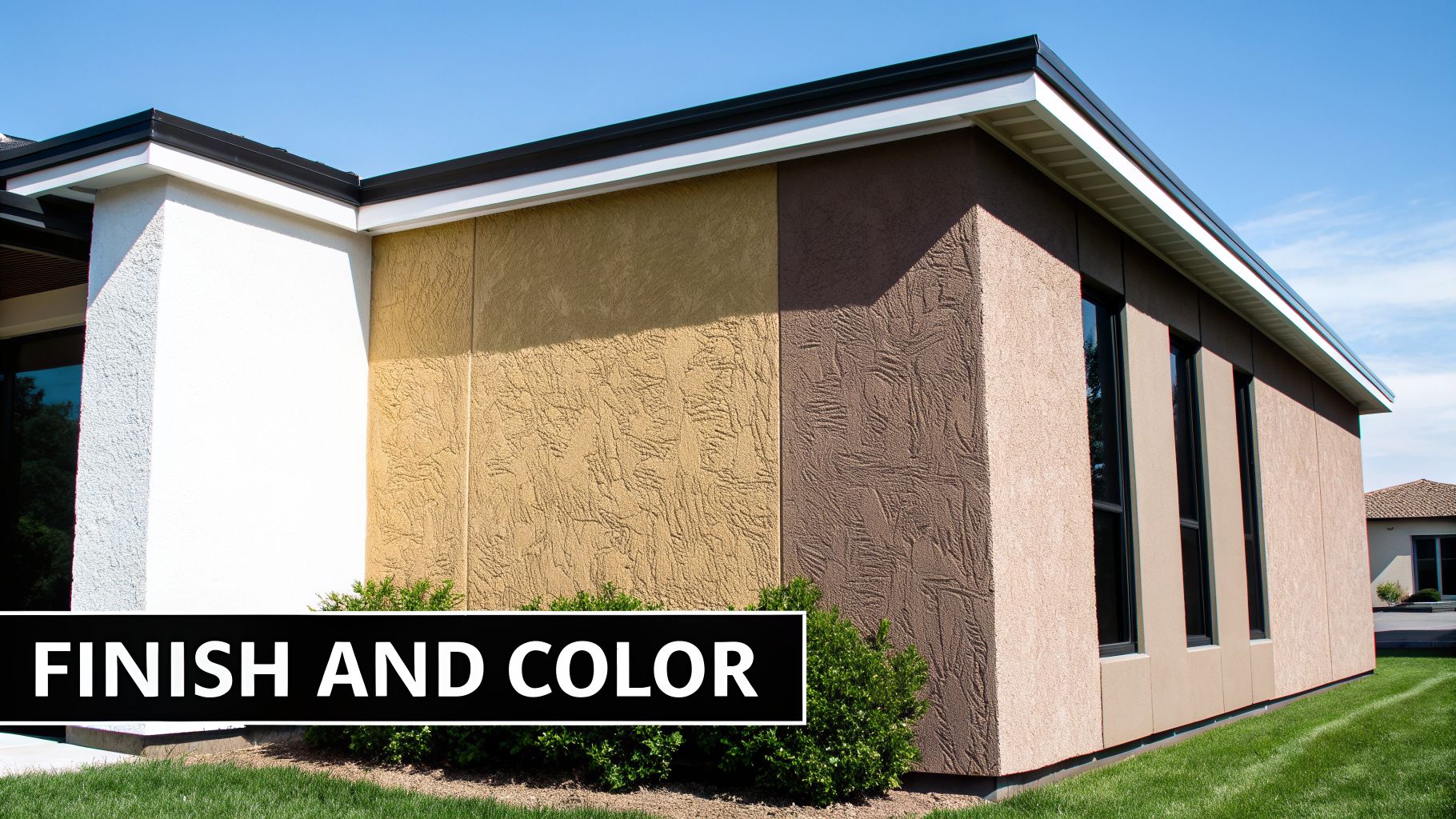
Once you've zeroed in on the right type of paint, the next big decisions are finish and color. These aren't just about looks; they directly affect how your paint performs, how long it lasts, and even how much you spend on energy. On a textured surface like stucco, getting the finish right is absolutely critical.
For stucco, your main choices are flat (or matte) and satin. Each one has a specific job to do, and understanding their strengths will help you make a choice that not only looks fantastic but also holds up to the elements.
Flat vs. Satin Finish: A Head-to-Head Comparison
The debate between a flat and satin finish is really about appearance versus practicality.
A flat finish is the undisputed champion for hiding imperfections. Stucco, by its nature, is an uneven surface that catches light from every angle. Flat paint absorbs that light instead of reflecting it, which gives the wall a soft, uniform look that brilliantly masks small trowel marks, minor cracks, and patched areas. It's the go-to choice for older stucco homes where the surface is far from perfect.
A satin finish, on the other hand, has a subtle sheen that makes it much more durable and easier to clean. The binders in satin paint form a less porous surface that doesn't hold onto dirt and grime as easily. If your home is in a dusty area or near a busy road, or if you just want a low-maintenance finish you can wipe down, satin is an excellent call.
Key Takeaway: Choose a flat finish to hide texture and flaws for a classic, velvety appearance. Go with a satin finish if durability and easy cleaning are your top priorities, especially in high-traffic or dusty environments.
You'll almost never see a semi-gloss paint used on the main body of a stucco house. Its high shine would highlight every single bump and imperfection, creating a distracting, almost wobbly look. Save the semi-gloss for trim and doors.
How Color Choice Impacts Your Home and Wallet
The color you pick does more than set the style for your home—it plays a real role in heat absorption, a major factor during Utah's intense summers. This is all measured by a metric called Light Reflectance Value (LRV). It’s a simple scale from 0 (absolute black) to 100 (pure white) that tells you exactly how much light a color reflects.
A dark color with a low LRV will drink in solar energy, heating up your home's exterior walls and forcing your air conditioner to work overtime. In contrast, a lighter color with a high LRV reflects sunlight, keeping the surface cooler and helping to lower your energy bills.
The global stucco market is on track to hit USD 18.67 billion by 2033, with a huge focus on coatings that extend the life of the siding. In our experience, premium paints with UV-stable pigments can keep their color 40% longer than cheaper options, while breathable coatings can slash moisture-related failures by up to 60%. You can dig deeper into these stucco market trends and statistics at Straits Research.
Putting your money into a high-quality paint with fade-resistant pigments ensures the color you fell in love with stays true for years, even under our harsh sun. This protects your home's curb appeal and your investment, making it a crucial part of finding the best exterior paint for stucco.
Professional Application Versus a DIY Approach
Choosing a high-quality paint is a great start, but even the best product on the market is only as good as the person applying it. I’ve seen it time and time again: a homeowner invests in a premium coating, but a few years later, it's failing. The difference between a weekend DIY attempt and a lasting professional finish comes down to the critical details that can’t be skipped.
A true professional job begins with preparation, and it’s far more involved than a quick rinse with a garden hose. Proper pressure washing is a skill. You need just the right pressure to scour away years of chalking, mildew, and grime without gouging or damaging the stucco’s texture. After cleaning, we meticulously hunt down every crack. We don’t just smear some all-purpose caulk in there; we use specialized elastomeric patching compounds that flex with the stucco as it expands and contracts, preventing those cracks from returning.
The Importance of Correct Film Thickness
Here’s a detail that almost always separates the pros from the amateurs: film thickness. This is where many DIY paint jobs go wrong, especially with elastomeric coatings. These high-build paints aren’t just for color; their thickness is what gives them their incredible waterproofing and crack-bridging power.
Applying a thin coat is like buying a raincoat with a hole in it—it simply won't work as advertised. To create a seamless, waterproof membrane, an elastomeric coating needs to be applied at a specific wet film thickness (WFT), which typically dries to about 10-15 mils. That’s anywhere from 5 to 10 times thicker than a standard coat of acrylic paint. Achieving this requires professional-grade spray equipment and a technique that lays the paint on thick and even, without creating sags or runs.
Critical Insight: A professional understands that paint thickness is a functional requirement, not just an aesthetic one. Without that specified thickness, an expensive elastomeric coating offers little more protection than a basic paint and is destined to fail, often within just a few years.
The Risks of DIY Versus the Guarantee of a Professional
Trying to save a few bucks by painting your stucco yourself can be a risky gamble. Improper prep or a thin paint job can lead to widespread peeling, bubbling, and moisture seeping into your walls—problems that cost thousands to fix correctly. Worse yet, most high-performance paint manufacturers will void their material warranty if the product isn't applied to their exact specifications.
This is why hiring a proven professional is an investment in your home’s future and your own peace of mind. When you work with a reputable contractor like Superior Home Improvement, you’re not just paying for painters; you're paying for certified expertise and a guaranteed outcome.
- Expert Crack & Damage Repair: We use industry-best compounds and methods to ensure structural repairs are permanent.
- Surface Conditioning: Before any paint goes on, we apply specialized primers and conditioners to neutralize the stucco’s pH. This creates the perfect surface for the topcoat to grab onto, ensuring it won't peel.
- Guaranteed Film Thickness: Our crews are trained to apply every coating to the precise thickness required by the manufacturer, locking in its peak performance and longevity.
If you decide to hire a pro, finding experienced local stucco paint applicators in Utah is key to a beautiful, long-lasting result. Ultimately, a professional application gives you two layers of protection: the manufacturer’s material warranty and our own workmanship warranty. This dual guarantee means your investment is safe, your home is protected, and the finish will last for a decade or more, not just a single season.
Your Stucco Painting Questions, Answered
Even after going through all the details, you probably still have a few questions. That's completely normal for a project this big. Here are some of the most common things we hear from Utah homeowners when it's time to choose the right paint and get the job done correctly.
How Often Should You Paint Stucco In Utah?
How long your stucco paint job will last really boils down to two things: the quality of the prep work and the quality of the paint itself. If you go with a standard exterior paint and skimp on the preparation, you might only get 5-7 years before you start seeing chalking, fading, or peeling. Utah's intense sun and freeze-thaw cycles are especially tough on cheap finishes.
On the other hand, a high-performance system applied by a professional is a totally different story. When you use a top-tier coating—like a breathable 100% acrylic, a thick elastomeric, or a premium silicone paint—over a surface that has been meticulously prepared, that finish can easily last 15-20 years, sometimes even longer. It’s always more cost-effective to invest in a durable system from the get-go than to find yourself repainting every few years.
Can You Paint Over Old Stucco Paint?
Yes, you can paint over an existing coating, but your success hinges entirely on the prep work. Just slapping a new coat of paint over an old, failing finish is a guaranteed way to waste your money. The new paint will simply peel off, taking the old layer with it.
Before any new paint touches the wall, the surface has to be:
- Perfectly Clean: All dirt, mildew, and that chalky residue have to be completely gone.
- Structurally Sound: Any paint that is peeling, blistering, or flaking must be scraped off and the edges sanded smooth.
- Bone Dry: The stucco needs to be fully dry to let the new paint or primer grab on properly.
It's also critical to figure out what kind of paint is already on there. For instance, putting a standard acrylic paint directly over an old, weathered silicone coating without the right bonding primer will almost certainly fail. A professional inspection is the only surefire way to know what you're dealing with and ensure the new coat will last.
Is Elastomeric Paint Always The Best Choice?
Not at all. While elastomeric paint is fantastic for waterproofing and hiding a web of hairline cracks, it's not the right solution for every home. Its greatest strength—its thick, flexible, waterproof membrane—can also be its biggest weakness.
A Word of Caution: Because most elastomeric coatings don't breathe well, they can trap moisture that finds its way in from other places, like a small roof leak or moisture wicking up from the foundation. This trapped water can cause huge blisters and make the paint peel off in sheets, leaving you with a much bigger problem than you started with.
For homes that have had moisture issues in the past, certain types of EIFS, or historic stucco that absolutely must breathe, a highly permeable 100% acrylic or a silicate mineral paint is often a much safer bet. The "best" paint is always the one that’s right for your home's specific needs.
How Much Does Professional Stucco Painting Cost?
The cost of a professional stucco painting project can vary quite a bit. It really depends on the size of your house, the current condition of the stucco, how much prep work is involved, and which paint system you ultimately choose. A professional quote is about much more than just the price of paint and labor.
That price reflects the expertise and hours needed for thorough surface preparation, the higher cost of premium materials built for longevity, and the skill required to apply them correctly. It's also why a professional job comes with a solid warranty. While the upfront investment is higher than doing it yourself, it protects your home from costly failures down the road and guarantees a beautiful, durable finish for years to come.
Ready to protect your stucco home with a finish that’s built to last? The experts at Superior Home Improvement have over 50 years of experience helping Utah homeowners make smart, long-term investments in their properties. Contact us today for a free, no-obligation consultation and estimate.