
Cleaning out the gutters might seem like just another task on the weekend to-do list, but it’s easily one of the most dangerous jobs a homeowner can tackle. Knowing how to clean gutters safely is about more than just avoiding a few scrapes—it’s about having a deliberate plan to prevent a serious, life-altering fall. That means using the right gear, getting comfortable with your ladder, and refusing to take shortcuts.
More Than Just a Chore: Why Gutter Safety Comes First
It’s easy to get complacent. You’re up on a ladder, you see one last clump of leaves just a few inches out of reach, and you lean. That’s the moment accidents happen. Many homeowners simply don't realize how risky this chore is until it's too late.
But the danger isn't just about falling. That black, smelly muck clogging your gutters can hide some nasty surprises. I’ve seen everything from sharp metal scraps and broken glass to hornet nests. A simple cut from something festering in that bacteria-rich environment can lead to a serious infection. This is why you have to prepare for the risks before you even think about setting foot on a ladder.

The Real Risks: To You and Your Home
The numbers are pretty sobering. Ladder falls are the biggest threat, and the statistics reveal a danger many people overlook. In the U.S., over 500,000 people end up in the emergency room each year from ladder-related injuries. Of those, about 20,000 are directly tied to cleaning gutters. Even more telling, falls from ladders cause nearly 81% of all fall-related injuries at home, and they usually happen from heights of 8 to 20 feet—exactly where your gutters are. As you can learn more about these startling statistics from A&F Aluminum, it’s clear this simple task can turn catastrophic in an instant.
And if the risk of a fall isn't enough to get your attention, think about what clogged gutters are doing to your house. Gutters have one job: get water away from your foundation. When they're full of debris, they fail, and that water has to go somewhere.
- Foundation Woes: Water spills over the sides, pools around your home, and starts eroding the soil. This can lead to cracks in your foundation and a flooded basement.
- Roof and Fascia Rot: The trapped water soaks into the roof decking and the wooden fascia board your gutters are mounted on, causing them to rot from the inside out.
- Unwanted Guests: That damp, decomposing gunk is an open invitation for mosquitoes, termites, and even rodents looking for a place to nest.
- Ice Dams: Here in Utah, this is a big one. Clogged gutters trap water that freezes in winter, forming massive ice dams. The weight can tear gutters right off the house, and the melting ice can back up under your shingles, causing leaks in your attic and ceilings.
Think of It as Protecting Your Biggest Assets
Ultimately, learning how to clean gutters safely is about protecting two things you can't replace: your health and your home. When you make safety your top priority, you turn a hazardous chore into a smart, preventative maintenance routine.
A clean gutter system is your home's first line of defense against water damage. Treating this task with the seriousness it deserves not only prevents costly repairs but also ensures you'll be around to enjoy your home for years to come.
This means you can't cut corners. Ever. Take the extra five minutes to climb down and move the ladder instead of stretching. Invest in good gloves and eye protection. Make sure your ladder is on solid, level ground. By adopting this mindset, you’re not just clearing out leaves—you’re actively protecting the value of your property and your own well-being.
Gearing Up: Your Gutter Cleaning Arsenal
Before you even think about pulling that ladder out of the garage, let's talk about gear. Showing up to this job unprepared is more than just inefficient—it’s how accidents happen. Getting the right tools and safety equipment together first is the single most important step in cleaning your own gutters.
This isn't about just grabbing any tool; it's about having the right one for the job. For example, those thin garden gloves you use for planting flowers? They won’t cut it here. You’re going to be dealing with sharp metal edges, hidden screws, and a disgusting, bacteria-filled sludge. You need something that can stand up to that.
The same goes for your footwear. Kicking on a pair of old sneakers with worn-out soles is asking for a slip. You need sturdy, closed-toe boots with a deep, non-slip tread. That grip is what keeps you stable on a ladder rung, which can get surprisingly slick.
Don’t Skip the Safety Gear—Seriously
Your personal protective equipment, or PPE, is what separates a routine Saturday chore from a trip to the emergency room. Trust me, you have no idea what’s really lurking up there. It’s not just a few leaves.
I’ve seen it all: nests, dead rodents, broken glass, and foul-smelling water that’s been stewing for months. That gunk is a breeding ground for mold and bacteria, and a simple splash in the eye can lead to a nasty infection. This isn't a task to take lightly.
To tackle this job safely, you'll need to gather a few essentials. Having the right equipment on hand not only protects you but also makes the entire process go much smoother.
Essential Gutter Cleaning Tools and PPE
| Item | Purpose | Safety Tip |
|---|---|---|
| Extension Ladder | To safely access gutters on single or multi-story homes. | Choose a ladder rated for your weight plus your tools. Type IA (300 lbs) is a solid choice for homeowners. |
| Heavy-Duty Gloves | Protects hands from sharp edges, screws, and bacteria. | Look for thick, waterproof, and puncture-resistant gloves. Don't use flimsy gardening gloves. |
| Safety Goggles | Shields your eyes from flying debris and dirty water splashback. | Always wear snug-fitting high-quality safety glasses. Your eyesight is irreplaceable. |
| Sturdy Boots | Provides secure footing on ladder rungs and protects feet. | Wear closed-toe boots with deep, non-slip rubber soles. Never climb a ladder in sandals or worn-out shoes. |
| Bucket with a Hook | To collect debris and keep your hands free. | An "S" hook from any hardware store lets you hang the bucket directly from the ladder. |
| Gutter Scoop | To easily pull out matted leaves and thick gunk. | A flexible plastic scoop works best because it can bend to the shape of your gutter trough. |
| Garden Hose & Nozzle | For rinsing the gutters and flushing the downspouts. | A pistol-grip or fireman-style nozzle gives you precise control over the water flow. |
Think of this list as your non-negotiable starting point. Every item here plays a critical role in keeping you safe and getting the job done right.
The Right Tools for Scooping and Rinsing
Once you're geared up, the actual cleaning process is pretty straightforward. Your main tools will be a gutter scoop and a garden hose.
A good gutter scoop is worth its weight in gold. It’s designed to fit the U-shape of a standard gutter, letting you pull out large handfuls of matted leaves and sludge in one go. You’ll scoop the debris into the bucket hanging from your ladder.
After you’ve cleared the bulk of the debris, it's time for a rinse. Use a garden hose with a spray nozzle to wash out any remaining grit and flush the entire system. This is also the perfect time to check your downspouts and make sure water is flowing freely all the way to the ground.
What about a leaf blower or a wet/dry vac? Some people swear by them, and they can work for very light, dry debris. But more often than not, they just create a bigger mess, blasting old leaves and dirt all over your siding, windows, and landscaping. For a truly thorough clean, nothing beats the control of scooping by hand and finishing with a targeted rinse.
Mastering Ladder Safety and Preventing Falls
Let’s be honest: working up on a ladder is the one part of cleaning gutters that gives most homeowners pause, and for good reason. This is where you absolutely cannot cut corners. Falls from ladders are a huge source of serious home-related injuries, but they are almost entirely preventable if you slow down and do things the right way.
Before a single leaf comes out of that gutter, your entire focus needs to be on your ladder. It's your only connection to the ground. If it’s not rock-solid, nothing else you do up there matters. Safe gutter cleaning starts and ends with ladder mastery.
Your Pre-Climb Ladder Inspection
Every single time you pull that ladder out, give it a quick but thorough once-over. It takes less than a minute and can literally save your life. Don't just assume it’s fine because it was okay last spring.
Look for these tell-tale signs of trouble:
- Dents or Bends: Eyeball the side rails and rungs. Any visible cracks, dents, or warping means that ladder's career is over.
- Loose Parts: Grab the rungs and give them a good shake. Check the joints and rivets. If anything feels wobbly or loose, that's a massive red flag.
- Slippery Substances: Check the rungs for mud, grease, or even wet leaves. Your boots need a clean, solid grip.
- Safety Feet: Look at the rubber feet at the bottom. If they're worn smooth, cracked, or gone, the ladder has lost its grip.
Find a problem? Stop. Don't even think about using it. It's far smarter to delay the job and get a safe ladder than to take a life-altering risk.
Setting Up for Success: The 4-to-1 Rule
A good ladder is only half the battle; setting it up correctly is just as crucial. For an extension ladder, the angle is everything. The golden rule here is the 4-to-1 ratio: for every four feet of height where the ladder touches the house, the base should be one foot away from the wall.
So, if your ladder rests against the roofline at 16 feet high, its feet should be exactly four feet out from the foundation. This angle is the sweet spot—it keeps the ladder from tipping back or sliding out from under you. Most modern ladders even have a little diagram on the side to help you eyeball it.
Always, always set your ladder up on firm, level ground. If you're on soft dirt or a sloping lawn, lay down a large, thick piece of plywood to create a stable base. Never use bricks or small blocks to level the feet—that's just asking for a slip.
Safe Practices While on the Ladder
Okay, your ladder is inspected and perfectly placed. Now it’s time to climb, but the focus on safety doesn’t stop. The way you move and work is what keeps you steady.
Before you take that first step, make sure you have the right gear. These simple tools are non-negotiable for staying safe.
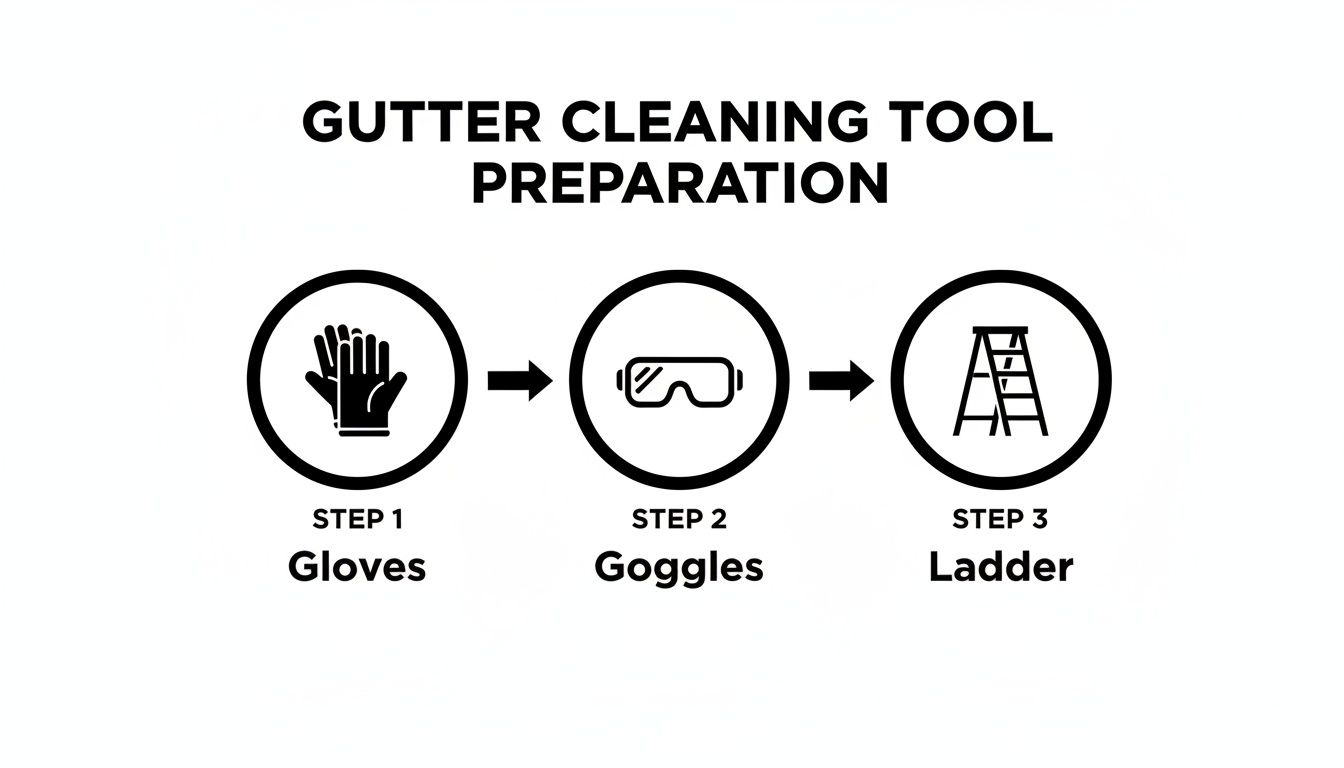
Think of it as a simple, layered system—gloves protect your hands, goggles protect your eyes, and a stable ladder protects your whole body.
Three Points of Contact
This is the cardinal rule of working on a ladder. At all times, you must maintain three points of contact. That means either two feet and one hand, or two hands and one foot.
When you need both hands for a moment to scoop out a big clump of gunk, brace your hip or thigh firmly against the ladder. This simple move keeps you locked in and stable.
The Belt Buckle Rule
Overreaching is the most common mistake people make, and it's an incredibly dangerous one. To avoid it, just follow the "belt buckle rule." Your hips—and your belt buckle—should stay within the two vertical rails of the ladder at all times.
If you have to lean out so far that your buckle crosses over one of those rails, you're leaning too far. It's tempting to stretch for that last little bit, but don't do it. Climb down, take 30 seconds to move the ladder over a few feet, and climb back up. It’s a small inconvenience that prevents a big disaster.
The Value of a Spotter
Never underestimate the power of a partner. Having someone on the ground as a spotter is an invaluable layer of safety. They can hold the base of the ladder steady, especially as you’re going up or coming down.
A spotter can also be your "ground crew," handing you a tool so you don't have to awkwardly carry it. Most importantly, if something goes wrong, they’re right there to call for help. Here in the Salt Lake City area, neighbors are usually happy to help out for a few minutes. Don't be shy about asking—that extra set of eyes makes the whole job feel, and be, much safer.
Getting the Gunk Out: The Actual Gutter Cleaning Process
Alright, you've done the prep work, your ladder is solid, and you're ready to get your hands dirty. Knowing how to clean gutters safely is half the battle; the other half is choosing the right technique for the job. There isn't one single "best" way—it really depends on what kind of mess you're facing.
Let's walk through the most common methods I've used over the years. We'll cover everything from classic hand-scooping to using power tools, so you can figure out what makes the most sense for your home.
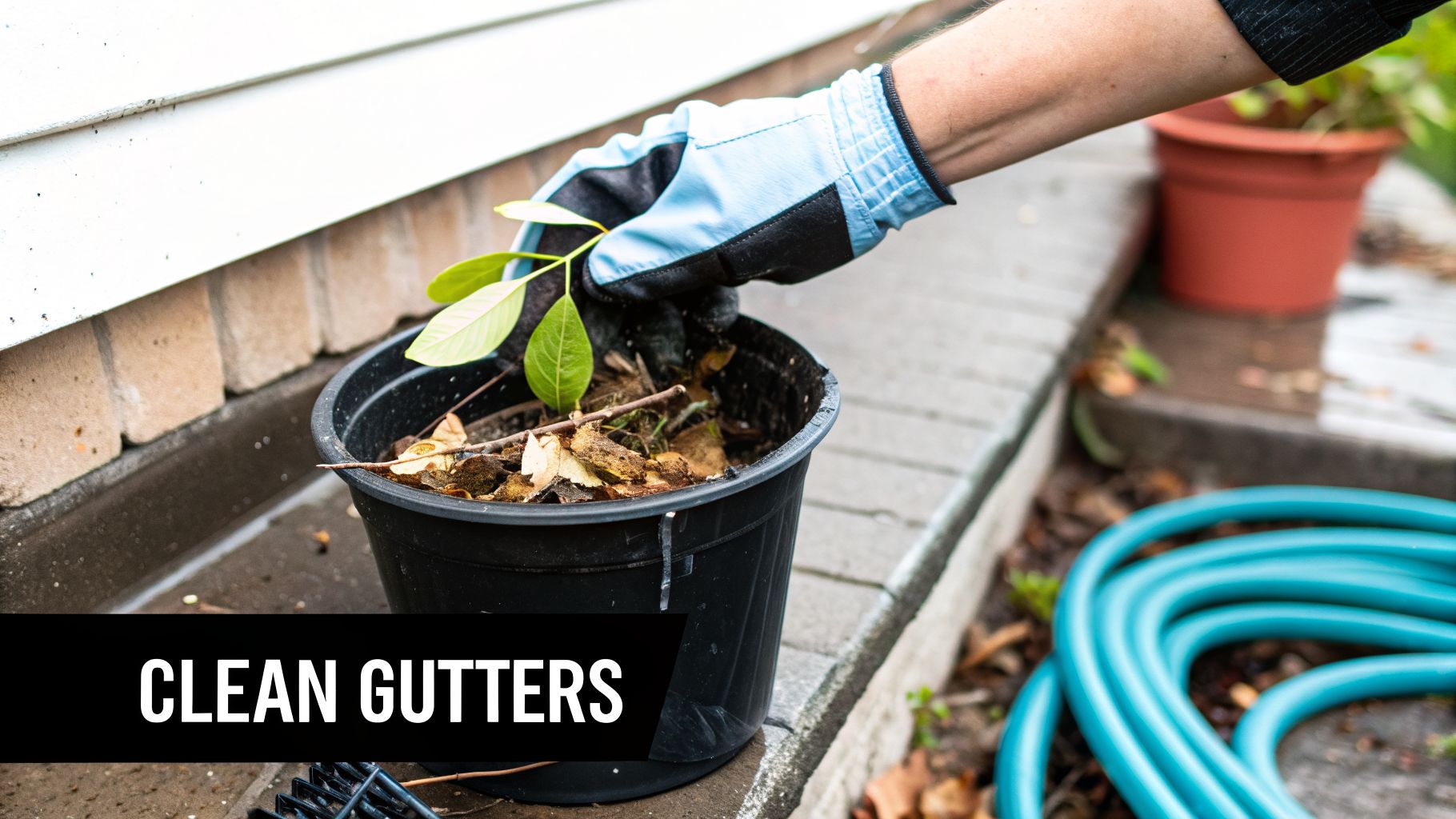
Method 1: The Classic Hand Scoop
This is the tried-and-true method for a reason. It’s slow, but it's incredibly thorough and gives you a chance to see exactly what’s going on with your gutters. Nothing beats it for packed-down, heavy gunk.
I always start at the downspout end of a gutter run and work my way away from it. Use a plastic gutter scoop to pull the debris toward you, dumping it into a bucket hanging from your ladder. This simple trick prevents you from accidentally shoving a clog farther down the pipe.
- Best for: All types of debris, especially the wet, heavy sludge that builds up over winter.
- The downside: It’s easily the most time-consuming and physical method. You'll be up and down that ladder a lot.
- A critical safety reminder: Never lean or overreach. Clean the section you can comfortably access, then climb down, move the ladder, and start again. It’s a pain, but it’s not worth a fall.
Method 2: The Leaf Blower Blitz
If your gutters are mostly full of dry, fluffy leaves from a recent Salt Lake City autumn, a leaf blower can be a huge time-saver. You'll need a specific gutter-cleaning nozzle attachment to aim the air correctly.
Work your way along the roofline, blasting the leaves out. Just be a good neighbor and pay attention to where all that debris is flying. You don't want to cover your freshly washed windows—or your neighbor's car—in gutter confetti.
This technique is fast, but it's messy and has its limits. If the gunk is wet or matted down, a leaf blower will just make a mess without actually clearing much.
Method 3: The Wet/Dry Shop Vac
For a less messy but equally powerful approach, a wet/dry shop vacuum is a game-changer. With the right hose extensions, you can suck out everything from dry twigs to the grossest, water-logged sludge.
You can work from a ladder or, with some kits, directly from the ground. The big advantage here is containment—all the muck goes straight into the vacuum canister. In fact, studies show vacuums can be way more effective than hand-scooping, removing 60-92% of debris compared to just 20-31% by hand.
My Two Cents: If you're looking at a gutter full of heavy, wet muck, the shop vac is your best friend. It tackles the kind of dense sludge a blower can't touch and saves you from the messy, unpleasant job of scooping it by hand.
Dealing With Stubborn Downspouts
Clean gutters are pointless if your downspouts are clogged. This is where the real trouble starts—water backs up, spills over against your foundation, or freezes into destructive ice dams. Always check them after clearing the main channels.
A quick way to check is to tap on the outside of the downspout. A hollow ring means it’s likely clear; a dull thud suggests you’ve got a blockage.
- Start with a Hose: First, try forcing the clog out. Shove a garden hose down from the top and turn the water on full blast. If the water quickly backs up and spills over the gutter's edge, you’ve confirmed the clog.
- Break It Up with a Snake: If water pressure alone doesn't do it, a plumber's snake (or auger) is your next best tool. Feed the snake down into the pipe until you hit the obstruction, then crank the handle to break it apart. You’ll feel a sudden give when it clears.
- Give It a Final Flush: After snaking, run the hose through it one more time to wash out any remaining debris. Make sure you see a strong, steady stream of water flowing out the bottom.
The Final Rinse and Inspection
Once the big debris is gone and the downspouts are clear, don't pack up just yet. Grab your hose and give the entire gutter system a final, low-pressure rinse.
This last step accomplishes two crucial things:
- It clears out all the small, gritty sediment left behind.
- More importantly, it’s a real-world test. You get to see with your own eyes that water is flowing smoothly and exiting the downspouts properly.
As the water runs, keep a close watch on all the seams, corners, and joints. This is the perfect moment to spot drips or leaks that signal a need for sealant or a small repair, letting you fix them before they turn into major water damage.
Alright, you've scooped out the last of the gunk and given the channels a good rinse. Before you pack up and call it a day, there's one more crucial step.
Don't rush to get off that ladder. This is the perfect moment—and really, the only time you'll get a clear view—to give your gutter system a quick health check. Spotting a small issue now can save you from a massive, wallet-draining headache later on.
Give Everything a Quick Once-Over
With the channels clear, you can finally see the true condition of your gutters. While you're still up there, take a few extra minutes to inspect the entire system. You're looking for any little sign of trouble that could lead to water going where it shouldn't.
Here’s what I always look for on a job:
- Cracks and Pinholes: Pay close attention to the seams and corner joints. These are weak spots. Even a tiny hole can let water trickle down behind the gutter and start rotting out your fascia board.
- Rust and Corrosion: If you have metal gutters, any hint of rust is a bad sign. It means the protective coating is gone, and the metal itself is starting to break down.
- Sagging or Pulling Away: Step back from the house and eyeball the gutter line. Does it look straight? Any dips or sags mean water will pool there instead of flowing. This is usually caused by loose or broken hangers.
- Loose Fasteners: Give the gutter a gentle wiggle. It should feel solid. If there’s any play, check the hangers or spikes holding it to the house. Tighten them up or replace any that are missing.
Catching a loose hanger or a small rust spot now is the difference between a five-minute fix and a full-scale replacement project. Think of this quick check as an investment, not just a chore.
Don't underestimate how valuable this quick inspection is. The financial fallout from water damage is no joke. In the U.S., over 50% of residential water damage claims trace back to problems with exterior water management, and gutters are a huge part of that. Those claims can run anywhere from an average of $11,605 to $14,000. You can see more eye-opening gutter statistics on NGutter.com that really drive home the cost of neglect.
Get on a Regular Cleaning Schedule
Consistency is everything. To keep your gutters working properly and your home safe, you need a routine. For most of us here in Utah, that means a solid cleaning at least twice a year.
Late Fall Cleaning
This one is non-negotiable. Once most of the trees have dropped their leaves, get up there and clear everything out. This single clean-up is your best defense against ice dams, which can form when trapped water freezes, expands, and wrecks your roof.
Late Spring Cleaning
Winter storms, wind, and snowmelt leave behind a surprising amount of grit, pine needles, and granules from your shingles. A good spring cleaning flushes all that out, making sure your gutters are clear and ready to handle those heavy spring and summer downpours.
If your property is surrounded by cottonwoods, pines, or other messy trees, you'll probably want to add a mid-summer cleaning to the calendar. The goal is simple: never let debris build up enough to cause a clog. It’s preventative medicine for your house.
Knowing When to Call a Professional
Look, I'm all for rolling up your sleeves and saving some money. But when it comes to gutter cleaning, there are definitely times when the DIY approach is just not the right move. Knowing your limits isn't a sign of failure—it's just plain smart.
Sometimes the decision is easy. If you’re not a fan of heights, or if your home is two or more stories tall, do yourself a favor and call a pro. The risk of a serious fall just isn't worth the cash you might save. A professional crew has the right ladders, harnesses, and stabilizers to work safely on multi-story homes, especially here in Salt Lake City where rooflines can be complex. They also carry insurance, which is a huge peace of mind.
Red Flags That Scream "Hire an Expert"
Beyond a basic fear of heights, some situations are clear indicators that the job is bigger than it looks. If you spot any of these, it’s time to get a quote from a professional service:
- A Seriously Steep Roof: Got a roof that looks more like a ski slope? Setting up a ladder safely can be next to impossible. Professionals are trained to work on these tricky angles without putting themselves—or your property—at risk.
- Gutters Turned into Garden Beds: If you can see little saplings or a solid mat of green growing out of your gutters, you're dealing with a severe clog. This isn't just a few leaves; it's a deep-rooted blockage that will fight you every step of the way.
- Obvious Gutter Damage: Are your gutters sagging, pulling away from the fascia board, or showing large cracks? That’s a structural problem, not a cleaning one. You need someone who can assess the damage and probably perform a repair, not just scoop out debris.
A good gutter professional does more than just clean. As they work, they're constantly scanning for subtle problems—failing sealant, an improper gutter pitch, or hidden leaks—that the average homeowner would miss. Catching those things early can save you from a massive repair bill down the road.
At the end of the day, it's a judgment call. But if you have any hesitation at all, whether it's about your safety, your physical ability, or the scale of the job, just hire someone. It’s the safest and wisest decision you can make.
Answering Your Gutter Cleaning Questions
It's totally normal to have a few questions before you climb up that ladder. In fact, thinking through these common concerns is what separates a safe, successful job from a risky one. Let's cover some of the things I get asked about all the time.
How Often Should I Clean My Gutters Here in Utah?
This is probably the number one question. For our local climate, you really need to do it at least twice a year. Your first cleaning should be in late fall, after all the cottonwoods, aspens, and maples have finished dropping their leaves. The second round comes in late spring to clear out any leftover winter gunk and "helicopters" from the maples.
If your yard is filled with trees or you want to dial in the perfect timing, check out an insightful guide on when to clean out your gutters for more detailed tips and warning signs.
Is It Okay to Clean Gutters in the Rain?
I get why people ask this—the water is already flowing, so why not? But please, don't do it. A wet ladder or a damp roof is incredibly slippery, and it's just not worth the risk of a serious fall. Always wait for a clear, dry day when you can be sure of your footing.
Do Gutter Guards Mean I Never Have to Clean Again?
That's the dream, isn't it? While gutter guards are a huge help in keeping out big leaves and sticks, they aren't a magical, maintenance-free solution.
Gutter guards are great, but they can't stop everything. Fine silt, grit from your shingles, and tiny bits of organic debris will still find their way in. Over a year or two, this stuff turns into a dense sludge that can clog your system just as badly as a handful of leaves.
You'll definitely find yourself cleaning less often, but you can't skip it entirely.
What's the Safest Way to Clean Gutters on a Two-Story House?
Working on a tall extension ladder is a different ballgame. If you’re very experienced with ladders, have a proper stabilizer bar, and a reliable person on the ground as a spotter, you might feel comfortable tackling it.
However, for most homeowners, my honest advice for high, second-story gutters is to hire a professional. It’s the single safest option. A pro has the right equipment, extensive safety training, and the insurance to handle the job without putting you or your home at risk.
If protecting your home's exterior is on your mind, Superior Home Improvement specializes in more than just clear gutters. We're Utah's experts in energy-efficient windows, durable siding, and new roofing. See how we can enhance your home's beauty and resilience at https://www.usasuperior.com.