
Window replacement typically costs $450 to $1,200 per installed window, door replacement runs $500 to $2,000 per installed door, and a whole-house project often lands around $10,000 to $15,000. Your final window and door replacement cost depends on the number of openings, materials, installation method, repairs, access, and finishing work.
You notice the problem gradually. A cold draft appears near the living-room window, the caulk around the back door begins peeling, and winter utility bills keep climbing. A contractor may quote an attractive price for one replacement window, but that number won't tell you what happens when several openings need trim repair, old-unit removal, disposal, permits, or weather sealing.
For Utah homeowners, project-level budgeting matters even more. Salt Lake City homes face strong temperature swings, intense sun, dry air, snow, and occasional storm exposure. The right estimate needs to account for the entire installation, not just the product label.
Introduction to Replacement Costs
A homeowner sees a draft near the living-room window and starts with one question: what does a replacement unit cost? That figure can orient the discussion, but it is not a project budget. An insert installed in a sound frame differs from removing a deteriorated frame, repairing trim, and fitting a larger, higher-performance window.
The finished invoice includes several layers. Product selection sets the base, while installation, access, removal and disposal, surrounding repairs, permits, weather sealing, and performance upgrades can add separate line items. A door may also require adjustments to the opening, hardware, sidelites, or finish work.
Utah conditions make the full scope especially relevant. Strong temperature swings, intense sun, dry air, snow, and occasional storms can expose weak sealing or damaged materials. Ask for an itemized estimate that shows each opening, the work required around it, and allowances for repairs. That approach replaces a misleading per-unit average with a clearer project-level budget.
Understanding Window and Door Replacement Cost Ranges
A homeowner comparing quotes may see one contractor price a window by the unit and another price the entire opening. Both figures can be accurate while describing different scopes. An insert replacement fits inside an existing frame, much like replacing a drawer without rebuilding the cabinet. Full-frame work removes more of the opening and may include framing, trim, insulation, or exterior repairs.
Use published ranges as an early screening tool. Installed replacement windows may fall between $450 and $1,200 per window, while a whole-house project involving 10 to 15 windows may run about $6,500 to $18,650, according to Get Window Cost's replacement pricing overview. Those figures are not bids. They combine different products, labor conditions, installation methods, and repair assumptions.
Doors need a separate comparison. An exterior replacement may cost $500 to $2,000 installed, with many projects near the low four figures, according to NerdWallet's door replacement cost guidance. A standard-size door in a sound opening is a simpler job than a custom-size fiberglass or steel door with sidelites, upgraded hardware, or structural adjustments.
| Item | Low | High | Average |
|---|---|---|---|
| Installed replacement window | $450 | $1,200 | Varies by product and scope |
| Installed exterior door | $500 | $2,000 | Near the low four figures |
| Whole-house window project, 10 to 15 windows | $6,500 | $18,650 | Project-specific |
Treat the table as a starting filter, not a project budget. A quote can appear inexpensive when it excludes removal, disposal, flashing, air sealing, interior casing, exterior trim, permits, or repairs found after demolition. For Utah homeowners, temperature swings, intense sun, dry air, snow, and occasional storms make sealing and surrounding-material repairs especially relevant.
One independent energy analysis observed installed window costs around $600 per window, with a real-world range of roughly $200 to $980. It also found that whole-home projects can average about $30,000 when additional construction work is required. The National Laboratory of the Rockies analysis supports a practical budgeting rule: price the opening and its surrounding construction, not only the replacement unit.
Ask each contractor to identify the work included at every opening. That itemized view makes competing estimates easier to compare and exposes hidden line items before they become change orders.
Breaking Down Line-Item Cost Drivers
Think of a replacement project as a recipe. The window or door is the main ingredient, but the finished result also depends on preparation, skilled labor, cleanup, and optional features. A quote that lists only the product is like pricing flour without counting the oven, preparation, or time needed to bake the meal.

The core ingredients
Materials establish the starting price. Vinyl windows usually occupy a different price position than wood, fiberglass, or composite products. Wood may offer a traditional appearance and custom finishing, while fiberglass can provide a durable frame option. For doors, steel, fiberglass, and wood each bring different appearance, maintenance, insulation, and security considerations.
Labor determines how well the ingredients come together. Installers must measure, level, fasten, insulate, flash, seal, and test each opening. A window that looks inexpensive on paper can become costly if the crew must work around masonry, steep access, damaged framing, or unusual dimensions. For large window and door projects, labor represents about 75% of spending, and homeowners spend about $14,000 on average, according to This Old House's replacement-cost coverage.
Removal and disposal clear the work area. Old windows and doors don't always come out cleanly. Crews may need to detach trim, remove fasteners, protect interior finishes, haul away debris, and dispose of materials properly. Ask whether these tasks appear as separate line items or are included in installation.
Permits protect compliance. Local requirements vary by municipality. A permit may be relevant when the opening changes, structural work is involved, or safety and egress requirements apply. Your proposal should identify who handles permit research, filing, inspections, and fees.
Upgrades change the performance package. Laminated glass, specialty coatings, stronger frames, custom finishes, impact resistance, upgraded locks, and smart-home integrations can all increase the total. The key is to specify why you want each upgrade, rather than paying for features that don't solve a problem in your home.
Practical rule: Ask for a complete installed price that separates the product, labor, removal, repairs, permits, finishing, and optional upgrades.
A simple quote comparison can also benefit from looking at how other service businesses build bill rates. This explanation of cost factors influencing security bill rates offers a useful general budgeting perspective: labor pricing reflects more than the worker's time. Scheduling, supervision, insurance, overhead, expertise, and operating requirements also affect what a professional service charges.
The cheapest material may therefore produce only a modest project-level reduction if labor, access, and finishing dominate the bill. Compare the completed scope, not just the frame material.
Regional Factors and Utah Considerations
Utah pricing starts with the national ranges, but local conditions shape the final proposal. A Salt Lake City home may need products selected for cold winters, strong summer sun, dry conditions, and rapid changes between indoor and outdoor temperatures. These conditions make frame stability, glass performance, air sealing, flashing, and installation quality important parts of the conversation.
Climate and installation conditions
Cold air can expose weak seals and poor perimeter insulation quickly. Summer sunlight can make solar-control glass attractive on heavily exposed elevations, while south- and west-facing openings may need a different performance strategy from shaded north-facing windows. A contractor should evaluate orientation, existing wall construction, exterior cladding, and the condition of the rough opening before recommending a package.
Snow and weather exposure can also affect detailing around doors and windows. Threshold height, drainage, sill protection, and exterior sealants deserve attention, especially where meltwater or wind-driven precipitation may reach the opening. These details may not change the sticker price of the unit, but they can change labor and preparation requirements.
Local labor and approvals
The Salt Lake City labor market, travel distance, crew availability, and seasonal demand all influence scheduling and installation pricing. Busy periods can make appointments harder to secure, while a flexible schedule may give you more contractor options. Spring and fall can be practical planning windows, but availability and weather still depend on the specific project.
Permit fees and inspection rules vary across Utah cities and counties. Don't assume a permit is unnecessary because a neighbor replaced windows without one. Ask the contractor to confirm requirements with the local building department and state clearly whether those costs are included in the proposal.
Utah homeowners should treat local code review as part of the estimate, not as an afterthought.
A Utah quote should identify the installation method, opening condition, weather-sealing plan, exterior finishing, interior repair expectations, and responsibility for permits. Those details make a local estimate more meaningful than a national per-window average.
Estimating ROI and Energy Savings
Energy efficiency can improve comfort and reduce heating and cooling demand, but the financial return depends on the building, utility rates, existing conditions, and how much of the envelope you replace. A drafty opening may make a room feel uncomfortable even when the total energy savings are difficult to isolate from insulation, HVAC operation, air leakage, and weather.
The product package also changes the investment substantially. An ENERGY STAR-qualified 3-by-5-foot double-hung window can cost about $400 at the entry level, while premium features such as specialty wood finishes, historically accurate designs, laminated impact-resistant glass, or stronger frames can raise the price to $1,600 or more, according to Home Genius Exteriors' energy-efficient window cost guide.
That spread makes a simple payback calculation risky. If the project price is higher because of premium glass or structural work, utility savings alone may not recover the added cost quickly. Comfort, reduced drafts, easier operation, noise control, appearance, maintenance, and resale appeal may be part of the value, but they shouldn't be presented as guaranteed financial returns.

A better way to evaluate payback
Start with your current utility history and identify rooms with noticeable drafts, uneven temperatures, condensation, or excessive solar gain. Then ask the contractor to separate expected energy benefits from non-energy benefits. Compare the additional cost of a performance feature with the problem it addresses.
Use rebates or tax incentives only after confirming current eligibility, product requirements, filing rules, and timing. Programs can change, and a qualifying label alone may not guarantee that every installation meets an incentive's conditions.
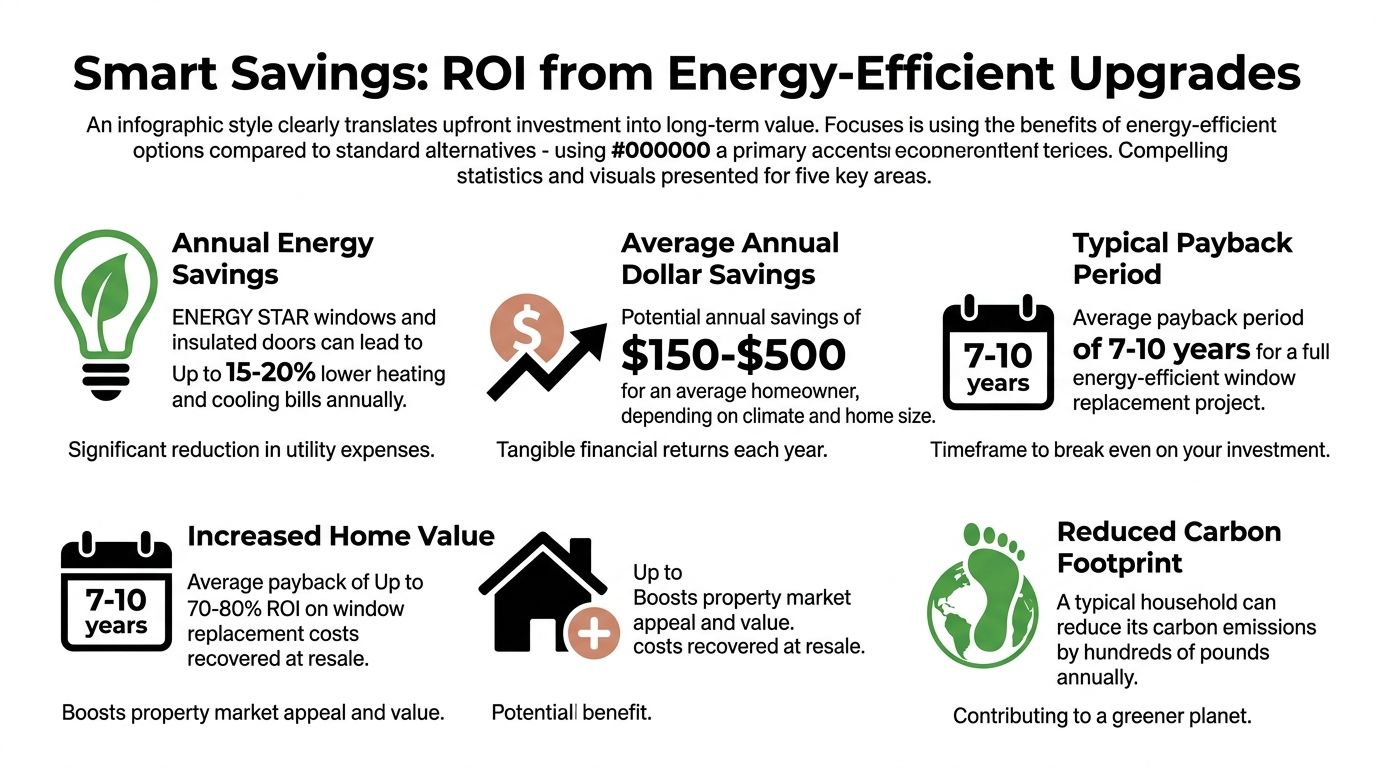
For a visual explanation of how energy-efficient windows and insulated doors can affect household finances and comfort, use the accompanying energy-savings infographic as a discussion prompt with your installer.
Financing Options and Warranty Impacts
Financing affects the project total, not only the monthly payment. Before accepting an offer, compare the cash price, interest rate, loan term, fees, deferred-payment conditions, and total repayment amount. A promotion that delays payments may still add conditions or charges to the final bill. In Utah, seasonal installation demand and weather-related scheduling can also affect when charges occur, so confirm the payment timeline before work begins.
Compare the main funding routes
A home equity loan provides a structured repayment schedule and may offer a lower rate than unsecured borrowing, but your home secures the debt. Contractor financing can be convenient because it is arranged during the purchase process. Review promotional periods, accrued interest, fees, and payment changes before signing.
Energy-efficiency rebates and tax credits may reduce the net project cost when both the products and installation qualify. Verify current rules with the utility, government agency, or tax professional. Keep incentive money outside the working budget until you understand the documentation, eligibility, and filing requirements. A qualifying product label alone may not satisfy every program condition.
Homeowners planning a broader renovation can also review rehab loan programs during their financing research. These programs may apply when windows and doors are combined with other eligible improvements. Confirm property, credit, contractor, and project requirements before treating the funds as available.

Read warranties before signing
A product warranty and an installation warranty address different risks. The product warranty may cover defects in the frame, glass, hardware, or finish. The workmanship guarantee may address installation errors, sealing problems, or adjustment issues. Ask who performs warranty service, how claims are submitted, what labor is covered, and whether coverage transfers to a future owner.
Warranty protection works like a safety net, while installation quality forms the structure underneath it. Confirm that the contract identifies measurement responsibility, flashing, fastening, perimeter insulation, and final inspection procedures. Keep the contract, product specifications, warranty documents, and photographs of concealed work together.
For a Utah project, clarify how warranty service will be handled if seasonal temperature changes reveal adjustment or sealing problems after installation. The best financing choice fits your cash flow, while the best warranty matches the work included and the risks you want covered.
Tips for Accurate Estimates and Reducing Costs
A reliable estimate begins with a written scope, not a verbal promise. Ask each proposal to identify every opening, product line, material, glass specification, installation method, removal and disposal task, trim repair, permit responsibility, cleanup standard, payment schedule, and warranty. These details turn an attractive per-window price into a project budget you can compare.
Make competing bids comparable
Give every contractor the same questions:
- Installation method: Is the work an insert replacement or a full-frame installation?
- Opening repairs: How will the bid handle rot, damaged framing, or failed flashing discovered after removal?
- Finishing: Are interior casing, exterior trim, paint, stain, and drywall repairs included?
- Performance: Which glass, frame, air-sealing, and hardware features are specified?
- Responsibility: Who obtains permits, schedules inspections, removes debris, and handles warranty claims?
Read the answers beside the price. A lower bid may leave more line items for you to pay later.
Bundling windows and doors can reduce repeated setup and scheduling work, yet it does not automatically lower the total. Request an itemized bundled proposal, then compare it with separate window and door pricing.
Choose materials according to the problem being solved. A low-maintenance vinyl window may suit a straightforward opening, while fiberglass or wood may better match design, durability, or historic requirements. Material choice is only one part of the budget. Access, finishing, repairs, and installation can remain significant even when the product price changes.
For a planning framework, Estimating renovation costs can help organize the scope before bids arrive. In Utah, ask whether seasonal scheduling affects crew availability, material storage, or weather protection. Those questions are especially useful when an opening will remain exposed during removal and installation.
Superior Home Improvement provides Utah homeowners with consultations and project estimates for energy-efficient windows and patio doors. Visit Superior Home Improvement to request a consultation and compare your home's needs with a documented, project-level replacement plan.